

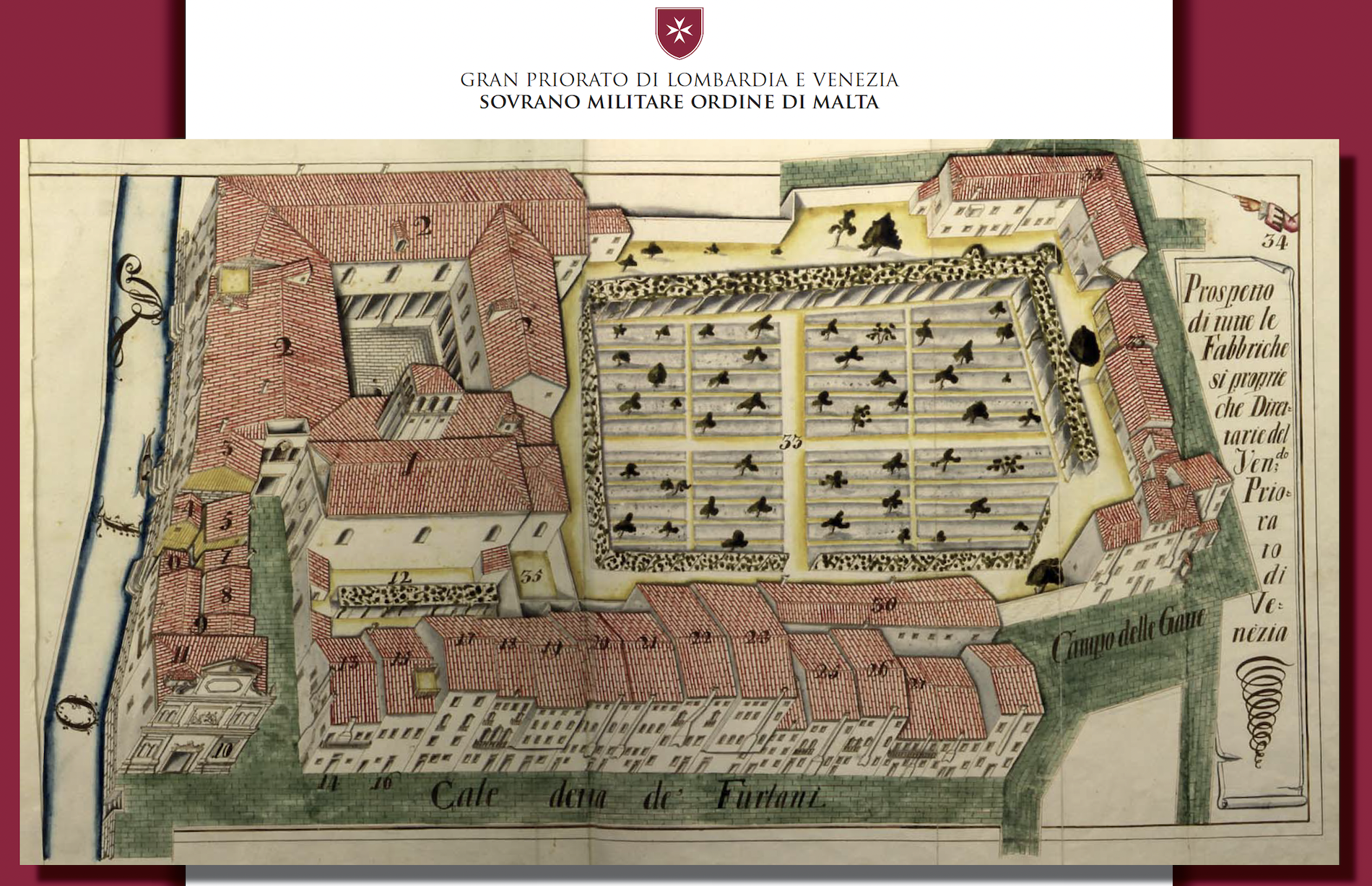
The Palazzo Gran Priorale in Venice, which will open its doors free of charge (reservations at www.dimorestoricheitaliane.it), is one of the Order’s oldest sites. The first document attesting to the presence of the Knights of St. John in the city is a will dated 1144. As early as 1180, the Order had a seat in Venice with the status of a “Priory” dedicated to Saint Egidio, to which the estates scattered throughout the Northeast were subordinate.
Although in the famous Venetian map engraved by Jacopo de’ Barbari in 1500 the location is identified by the name “del Tempio”, the current seat of the Grand Priory has never belonged to the Order of the Templars.
Following the Napoleonic decree of April 30, 1806 the Order was subsequently stripped of all its assets, which were transferred to the state or sold to private individuals. The only exceptions were the church, the palace, and the adjoining garden, which were returned to the Order by Emperor Ferdinand I in 1841. After the Restoration, the Grand Priory of Lombardy and Venice He also managed to recover the archives of the ancient Venetian Priory—which had previously been transferred to the Frari—as well as part of the Lombard archive.
Among the most interesting pieces in the exhibition—selected from the archives for this occasion by the Chancellor—is an example of cabreo—that is, a detailed inventory of the Grand Priory’s assets, which served to record its assets and demonstrate sound administration to the Receivers of the Public Treasury.
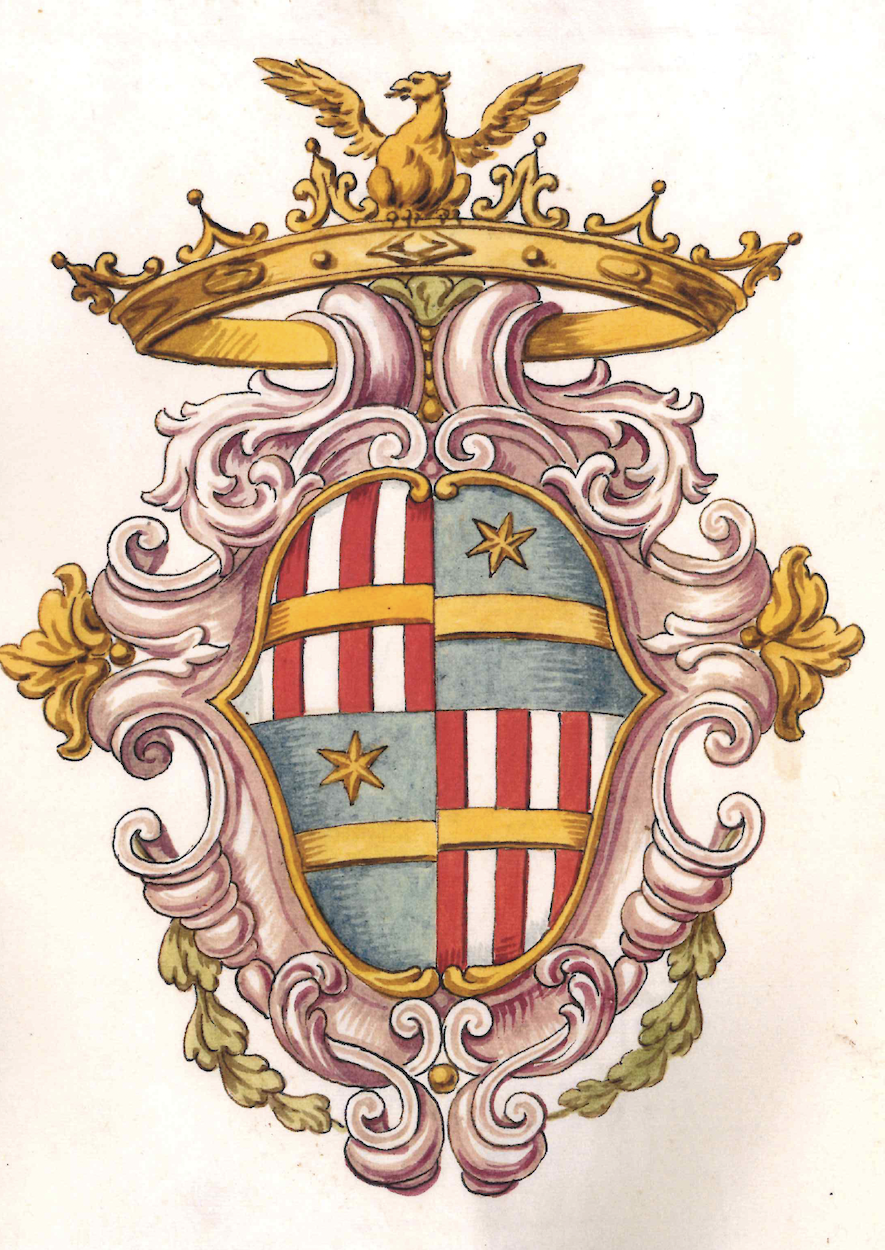
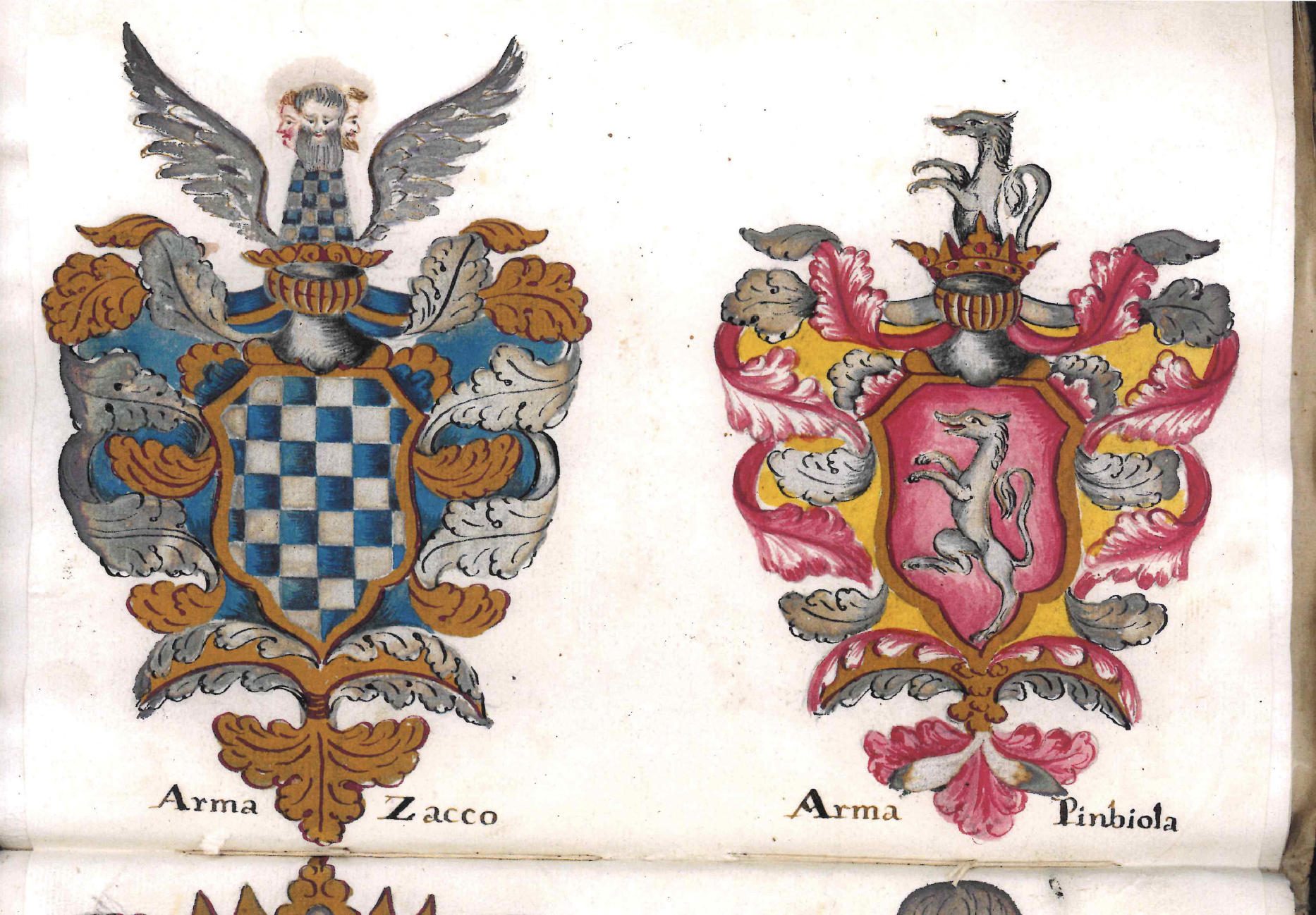
Other documents on display date back to the first two decades of the 18th century and come from the “Cavalieri di Giustizia” collection, which consists of coat-of-arms certificates and genealogical banners that were presented during the noble trials required for admission to the Order, with the aim of proving the candidate’s lineage and the nobility of his four ancestors.
This is a typical record of the Order, of extraordinary historical interest and great archival value, given that the noble trials compile documents drawn from various sources, such as parish, notarial, and municipal archives, which have been scattered over the centuries, to the extent that the Venetian collection preserves the only surviving copy of originals that have since been destroyed.
Furthermore, these tests, thanks to the the dense networks of inter-family relationships that emerge, allow scholars to better understand the social dynamics that shaped the various territorial areas under the jurisdiction of the ancient Priory of Venice.
Furthermore, these manuscripts were not merely bureaucratic tools; the quality of the colors and calligraphy in fact demonstrate that they were considered true objects of prestige, intended to highlight the social status of the suitor and his ancestors.
It is interesting to note the variety of graphic styles determined not only by the taste and skill of individual artists, but also by the distinctive “heraldic dialects” typical of various geographical regions.
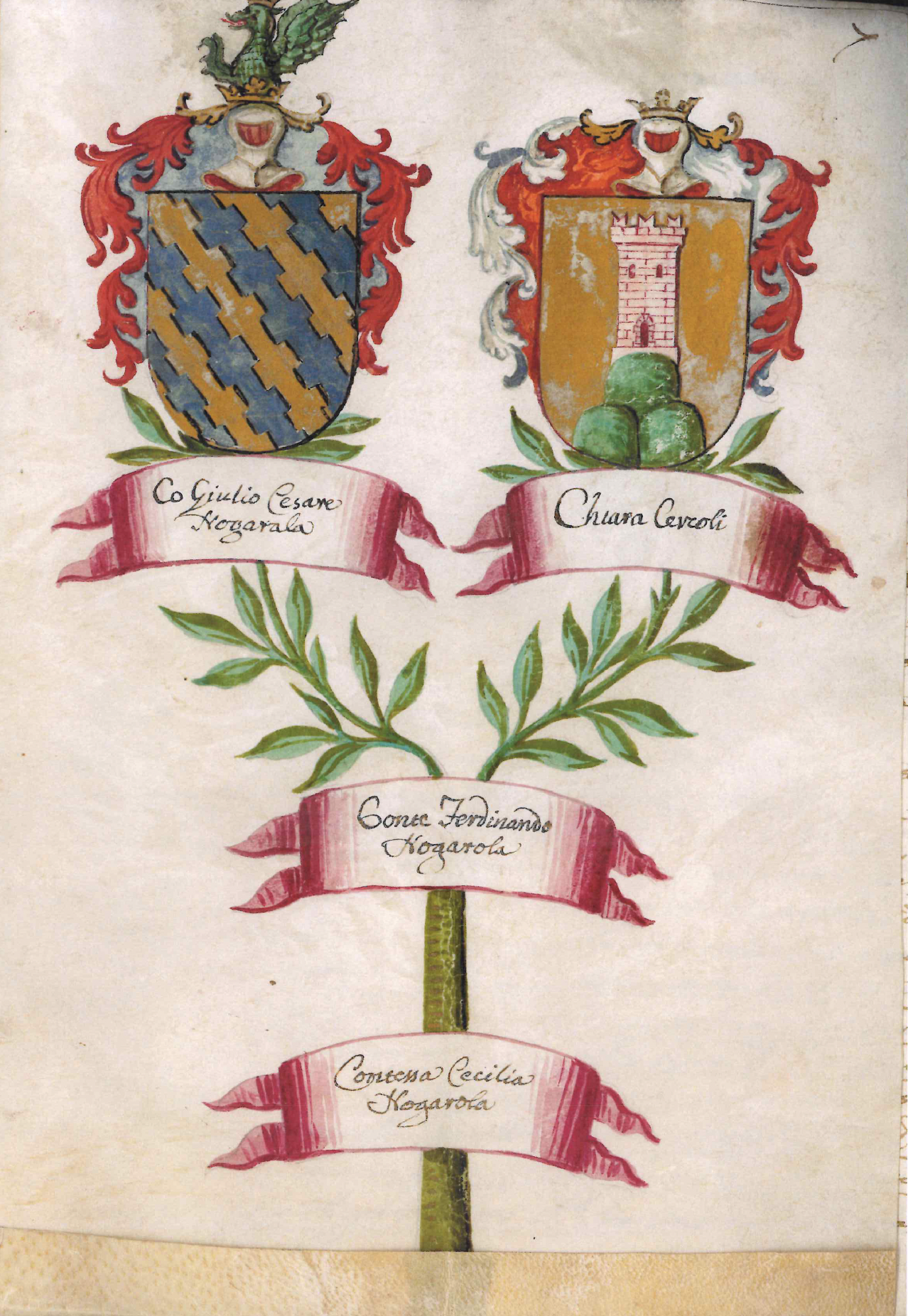
In particular, the archive holds some very unique documents from that period. Among these, The “Trial of Alemagna” by In 1727, two families from Verona—the Nogaroles and the Cevolies—descendants of the Bohemian nobleman Filippo Giuseppe Conte Breiner, but also the “Probationes Nobilis Constantini Pinelli Patritij Januensis”, a Genoese document from 1728 that showcases the rich graphic design intended to highlight the prestige not only of the candidate but, more broadly, of the Genoese patriciate and the Republic itself.
Also on display are the ““Two Quartos by the Noble Gaetano Bandinelli of Siena” from 1728. The file preserved in Venice concerns the maternal lineage, that is, the mother’s family. In this case, however, the coat of arms records are separate from the genealogical chart. In fact, this complete copy, with its four quarters and illuminated coats of arms, is preserved in Rome at the Magistral Library.
Also on display will be the “Receipt records for Mag.co Don Flaminio, son of the Marquises Don Fabrizio Crivelli and Donna Barbara Simonetti”, a document from Milan dated 1729, concerning two of the most prominent families of the Milanese aristocracy, along with the “Proofs of Nobility of Alviero Zacco””. In this case as well, the “coat of arms,” which originated in Padua in 1727, is separate from the genealogical banner and consists of a large sheet of paper on which are tempera paintings of family coats of arms.