




The problem, if anything, could resurface when medication is discontinued: Reflux, in fact, is a chronic condition, and if in the meantime we haven’t made some lifestyle changes—we’ve discussed this before, I believe: eating small, frequent meals, avoiding certain foods that don’t agree with us, and getting regular exercise—the symptoms can quickly return. We’ll then have to resume treatment, perhaps at a different dosage: before long, we find ourselves “forced” to rely on medication, even when, with a little care, we could do without it!
Sometimes, however, the “typical” symptoms are mild or absent altogether: the diagnosis is made based on a cough, a sore throat, or some difficulty swallowing. At this point, treatment begins with the same “acid-reducing” medications—the legendary proton pump inhibitors… They’re practically superheroes!
But—be careful!—with these “atypical” symptoms, things are a bit more complicated: the same medication must be taken for a longer period of time and at a higher dose in order to see any results, and if it doesn’t work, doubts about the diagnosis should arise. We have effective medications, but if the diagnosis is incorrect, their effectiveness will obviously decrease—and significantly so.
But how can this so-called diagnosis be made? First, a fundamental clarification: reflux is actually a normal condition that occurs in all of us several times a day. In our part of the world, up to 20% of people may complain of symptoms of this kind: considering that the first-line test is, of course, an endoscopy, it immediately becomes clear that a screening criterion must be put in place. We certainly cannot subject one-fifth of the population—including children—to an invasive—that is, a gastroscopy—and potentially uncomfortable procedure. Forget about waiting lists.
Therefore, several factors must be taken into account: symptoms (minor or “alarming”), age (the risk of serious illnesses generally increases with age), the frequency of symptoms, and, perhaps, the response to empirical treatment.
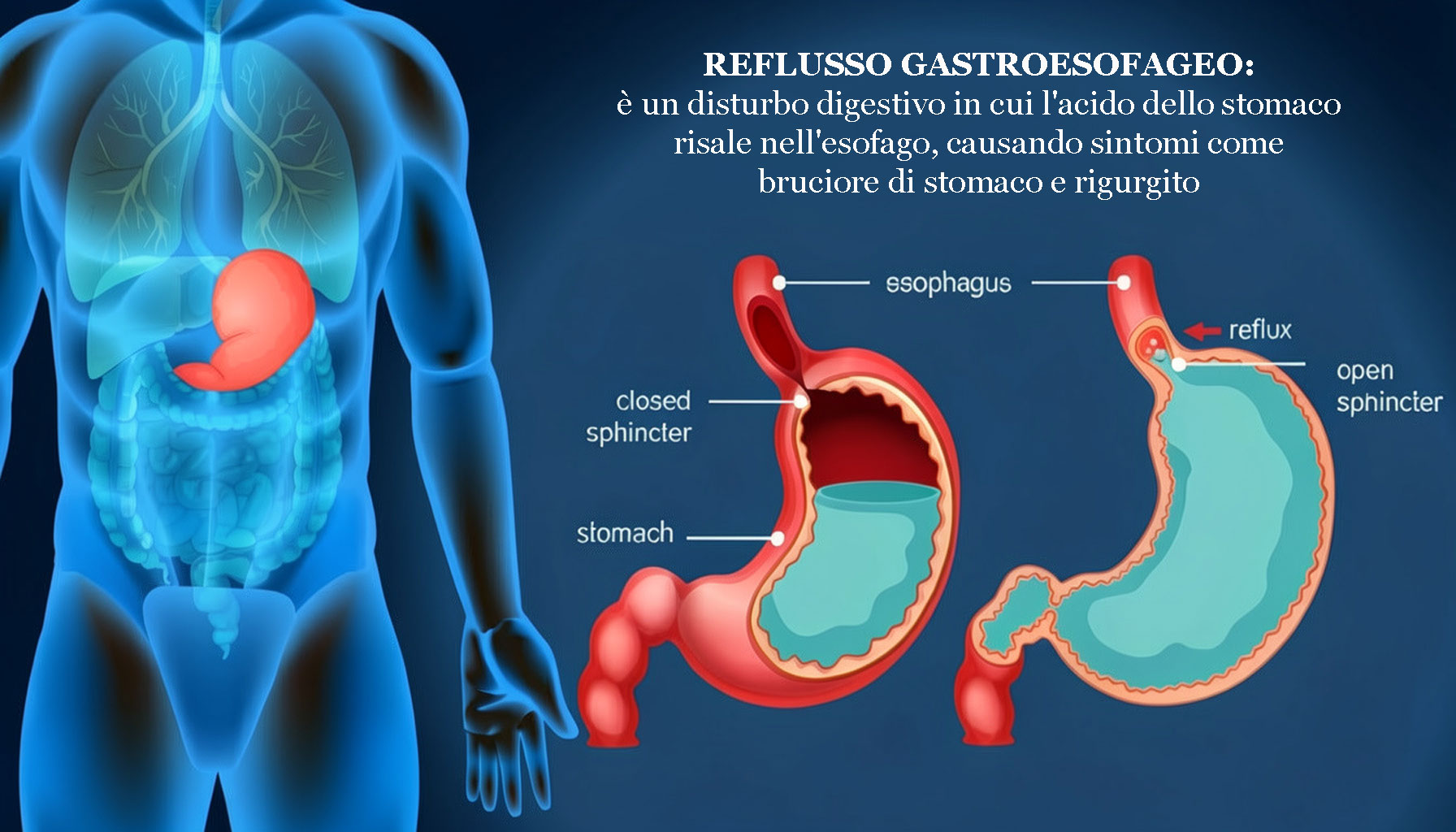
For “normal” symptoms and in young people—broadly speaking, those under 45–50 years of age—the diagnosis is usually based on a short course of treatment with medications that reduce acid production. Traditionally, this involves two or at most four weeks of treatment with a proton pump inhibitor—those well-known medications whose names end in “prazolo.”
If the symptom resolves quickly, the diagnosis is confirmed. At this point, we focus on lifestyle changes, some symptomatic treatment as needed, perhaps testing for Helicobacter—a bacterium whose presence in the gastrointestinal tract is linked to many digestive disorders, including gastroesophageal reflux—and keep going!
If, on the other hand, our patient reports additional symptoms—difficulty swallowing food, weight loss, severe heartburn, progressive worsening, unexplained anemia—or even if they simply can’t do without the legendary “prazolo” anymore and are perhaps over 50 years old, then a gastroscopy is certainly warranted, with varying priority depending on the doctor’s assessment.
The diagnosis may or may not be confirmed, and treatment will then need to be “tailored” to the outcome: all too often, treatment with “prazole” drugs becomes routine, and it isn’t always really necessary… But that’s yet another story, which I’ll tell you about in a new episode of this gripping saga.