


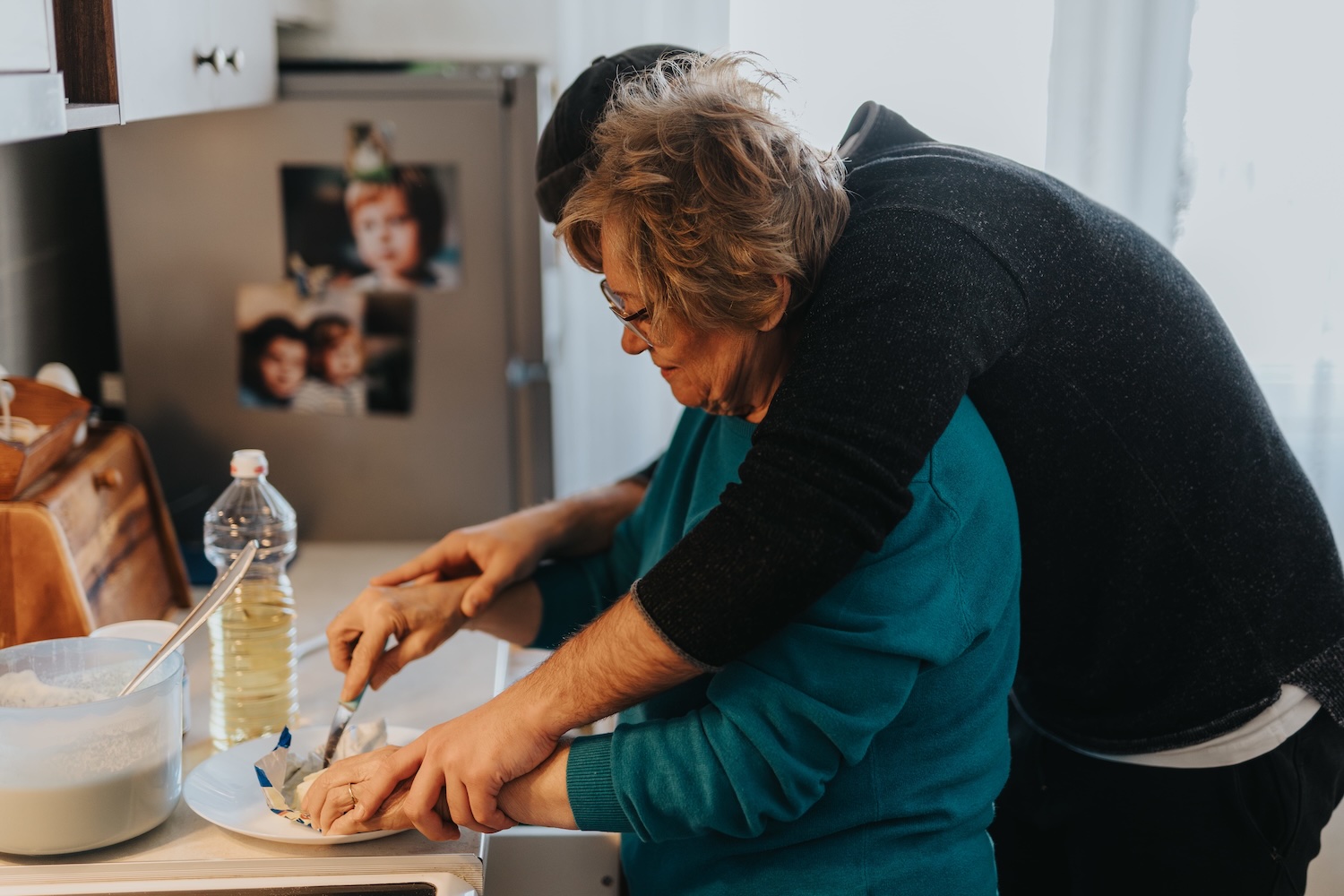
Among the measures under consideration is a regional register of carers. It should not merely be a list of names, but a gateway to the network of services. ‘We will assess, together with the Working Group, the possibility of establishing a register as a virtual platform that allows carers themselves to be recognised and through which they can access the network of services more easily,’ explains Roma. It could be used, for example, to receive information on available opportunities or to request psychological support in confidence. The criteria for registration and how the scheme will operate still need to be defined; the intention is that it should help families navigate the often poorly coordinated social, health and administrative services.
It is precisely the gap between formal recognition and the day-to-day difficulties that is causing the greatest concern amongst the associations. ‘The new regional law recognises the role of the carer, as did the previous national law, highlighting their role in the lives of our loved ones affected by these diseases,’ says Clara Urlando, president of the Alzheimer’s Association of Venice. Anyone caring for a person with Alzheimer’s is well aware of the burden of a commitment that can last for years and become progressively more complex as the disease reduces the family member’s independence.
The law establishes a regional carer fund, with 250,000 euros for 2026 and approximately 937,000 euros for each of the years 2027 and 2028. Associations consider this allocation to be limited given the potential number of beneficiaries and the variety of needs. Above all, there are no provisions for direct financial allowances or grants to families. ‘A regional fund is being set up with funding for carer training, which we as associations had requested,’ recalls Urlando. ‘However, there are no provisions for direct financial support or reimbursements, nor for the expansion of local social services, such as home care.’
The requests also include more affordable fees for residential care homes, ISEE thresholds that would allow a greater number of families to access services, and a strengthening of home care. Furthermore, psychological support is considered essential to prevent stress, anxiety and depression in those who face highly stressful situations on a daily basis. “We had asked for this to be provided for carers, who are increasingly at risk of burnout when caring for people with Alzheimer’s at home,” adds the president. The law, however, provides specific support for young people under 24 who care for those with severe disabilities, through agreements with schools and universities to facilitate psychological support and help them balance their studies with their caregiving responsibilities.
Councillor Roma urges, however, that we should not focus solely on the resources allocated directly by the new legislation. ‘To put services for carers into practice, there are not only the resources directly allocated by the law.’ The Region aims to supplement the Fund with funding and tools already available, making the most of local home-care services, ranging from social and social-healthcare assistance to financial aid. Resources from the National Plans for Disability and Vulnerability, European funds for training and skills certification, and healthcare funds for psychological support may also be utilised, within the limits of the benefits provided for.

Just how difficult it is to balance family and work responsibilities is illustrated by a story recounted by Clara Urlando. A young man, who had recently become a father, was caring for his mother, who was suffering from cognitive decline, and was able to manage both responsibilities thanks to working from home. However, the non-renewal of his contract changed the situation. Looking for a new job might have taken him far from home, but his mother could not be left alone. To entrust her care to external help would have required sufficient resources to pay for two carers, an expense the family could not afford. ‘The family’s peace of mind and life prospects were called into question,’ says Urlando. ‘It is in situations like this that recognition of the carer should translate into practical support.’
The law also opens up the possibility for a family member to be recognised as a key contact by GPs and specialists. This is an important aspect, particularly when the person being cared for is no longer able to describe their own symptoms or understand medical advice. “Some family members have told us of the frustration of having to wait outside the surgery, even though they knew their loved one was unable to answer the doctor’s questions properly,” reports the president of Alzheimer Venezia.

The success of the law will also depend on the ability to bring together organisations that often operate separately: local councils, Local Health Authorities (ULSS), local social services, IPABs, service providers and third-sector organisations. ‘The law gives us a great opportunity: that of bringing together a wide range of established and new services centred on the caregiver, moving from a fragmented provision to an integrated approach tailored to the needs of the individual,’ says Roma.
The Region intends to measure results based on the number of carers reached, the services activated and the ability to involve local practitioners. For the associations, however, the key criterion will be, above all, the ability to provide timely responses to families seeking help. “Recognition is important, but it is not enough on its own: we need accessible services, adequate resources and a network that does not leave families to manage everything on their own,” concludes Urlando.
The new law therefore marks a shift in how we view those who care for a family member: no longer a presence taken for granted, but a person with their own needs and rights. It remains to be seen whether this recognition will translate into more home care, respite care, psychological support and the means to avoid having to choose between work and caregiving. It is in this area, rather than in declarations of principle, that its effectiveness will be measured.