


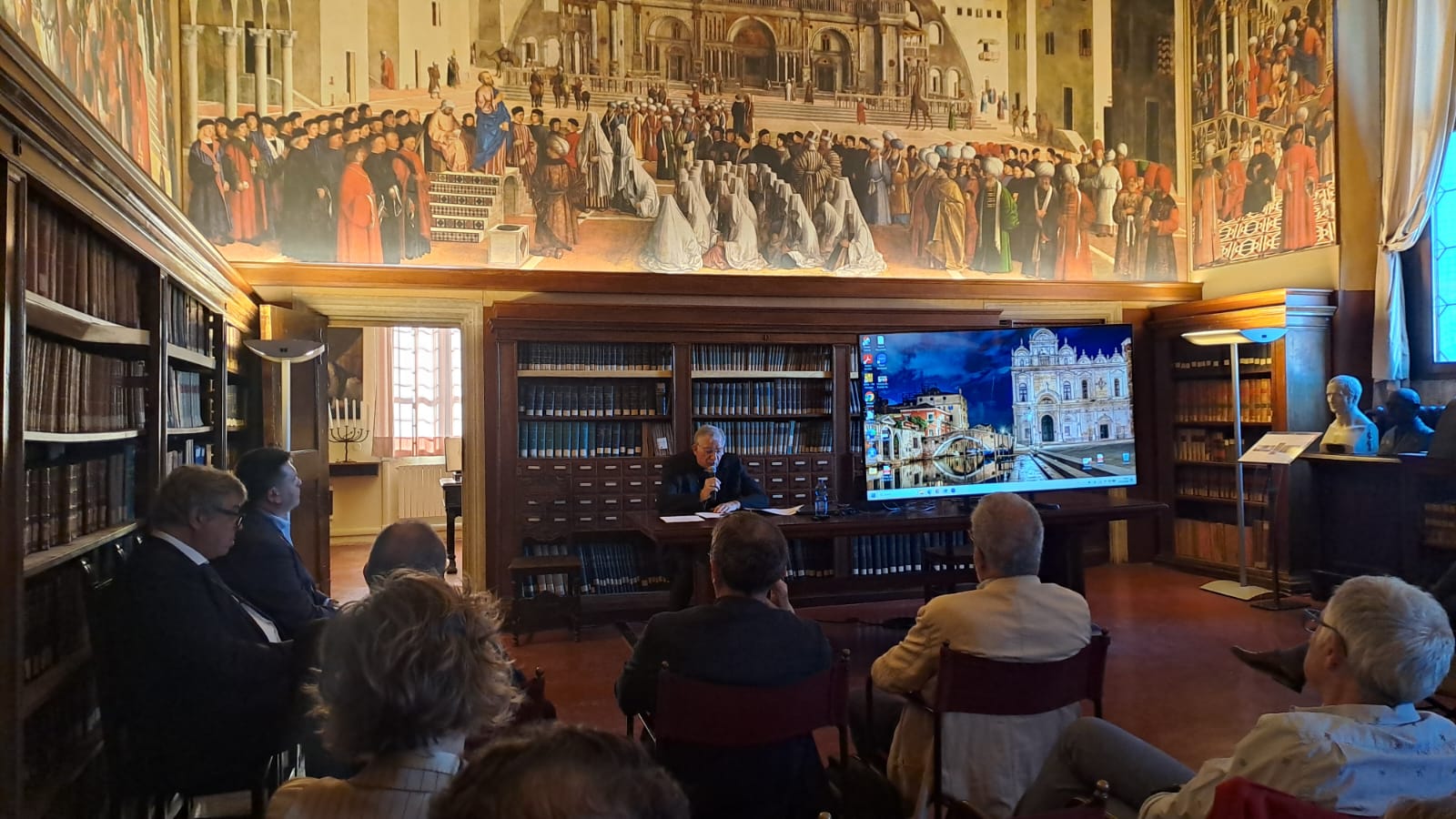
This frontier, in particular, raises unavoidable philosophical questions. Warning against the risk of viewing the body as a mere biological “obstacle” to be enhanced or replaced, Moraglia reaffirmed the fundamental value of corporeality: “The body is not simply what we have, but what we are. It is the locus of our concrete identity. It is neither a prison for the person nor a mere support, but the very possibility of relationship.” Hence the central issue tied to longer life spans: “Living longer is certainly a good thing, but it does not automatically mean living more humanely. The fundamental question is not: for how many years? But: for what purpose and with whom? And toward what fulfillment?”
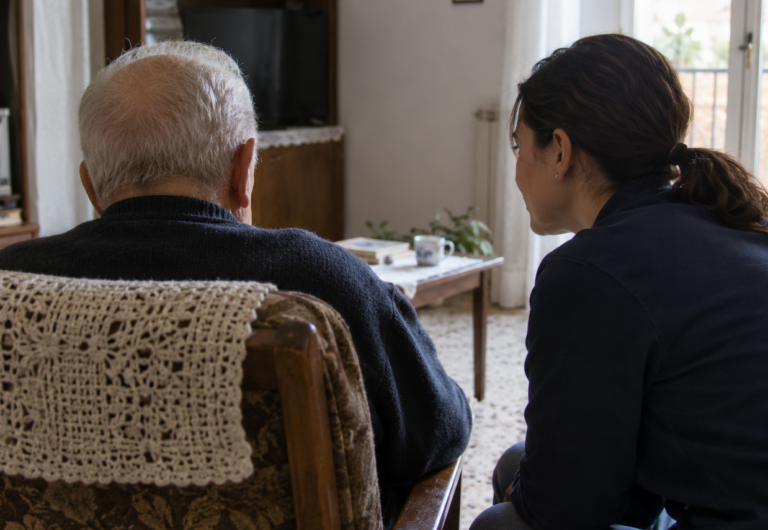
A particularly intense section was devoted to the relational and social implications of technology. Invoking the concept of “techno-solipsism,” the prelate explained how technology risks shaping a world entirely tailored to the desires of the individual, eliminating what disrupts the social order: the other. “The other—a child, a spouse, an elderly person, a sick person—cannot be programmed; they always introduce an element of the unexpected that teaches us about reality.” The gradual elimination of what eludes control thus risks making human beings “less relational, resulting in an enormous anthropological loss.”
On a social level, the prospect of “pay-for” longevity and cognitive or genetic enhancement raises the specter of a dramatic divide. Citing the concerns of essayist Jacques Testart, Monsignor Moraglia raised the danger of a “two-tiered” humanity, asking: “If enhancement becomes a criterion of value, what will happen to the vulnerable? What will happen to people with disabilities? To the elderly? To the sick? To those who cannot afford enhancement or simply do not want it? A civilization is also measured by how it treats those who cannot compete.”

Referring to the distinction between biologicallifespan and existential quality and meaning (healthspan), the Patriarch reiterated that “longevity is not yet the good life” and that limits should not be seen as the enemy, but as the very bedrock of freedom and history. “I can say ‘yes’ because I can also say ‘no.’ I can dedicate my life to someone or something precisely because life is limited. Limits make freedom concrete.”
To guide the transformations currently underway, the prelate drew on contemporary Church teaching and Leo XIV’s encyclical *Magnifica humanitas*, dedicated to the protection of the person in the age of AI. The goal—he emphasized—is not a rejection of modernity or a nostalgic return to the past: “We must not go backward. Rather, we must learn to do something more difficult: to move forward without losing sight of the human person. The expression ‘remaining human’ requires that human intelligence—with its conscience and freedom—guide innovation and responsibly establish its uses and limits.”
The speech drew to a close by rejecting any ideological opposition to scientific progress. “The response to transhumanism cannot be a war against science. We don’t need less science: we need more science and more philosophy, more technology, and more ethics. We need a humanism that is not afraid of technology, but does not bow down before it either.”
In a final paradox, Monsignor Moraglia turned the common conception of fragility on its head: it is precisely our limitations—and not our self-sufficiency—that are the true foundation of community and connection. “I need others because I am not self-sufficient. I need to be cared for because I am vulnerable. I need to be loved because I am not enough on my own. Our limitations prevent us from being gods, and, precisely for this reason, allow us to be human.”