



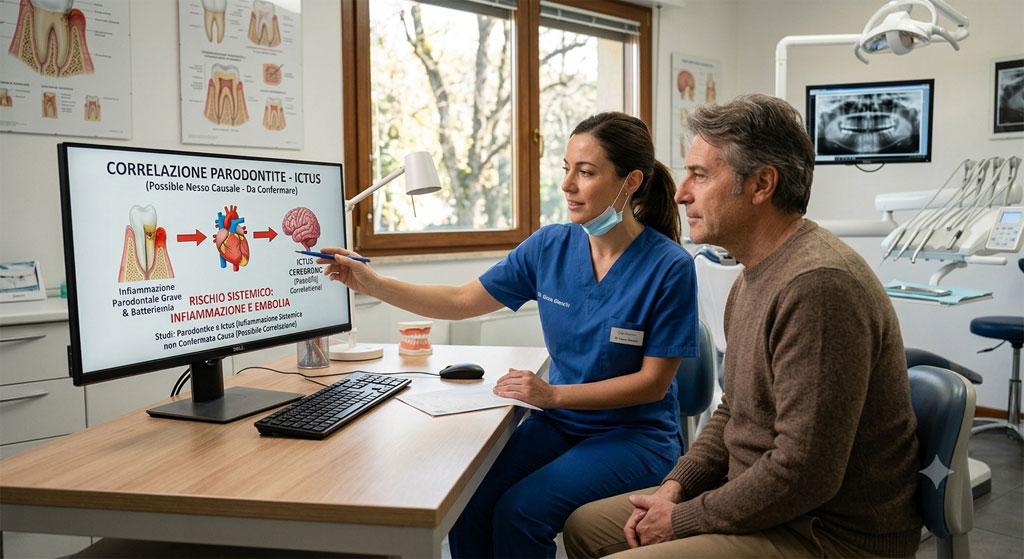
But what biological mechanisms explain the potential link between oral health and stroke risk? First and foremost, systemic inflammation: periodontal bacteria and their byproducts enter the bloodstream, triggering a generalized inflammatory response throughout the body. Systemic inflammation is a well-known risk factor for cardiovascular diseases, including stroke, as it can promote atherosclerosis—that is, the formation of plaques in the arteries.
Direct infection may also play a role: in fact, some studies have identified the oral bacteria Porphyromonas gingivalis and Streptococcus sanguinis within atherosclerotic plaques and in cerebral thrombi of stroke patients. This would suggest that oral bacteria may directly contribute to the pathogenesis of stroke by promoting thrombus formation or vascular inflammation.
In addition, periodontitis causes an increase in blood viscosity and alterations in blood clotting, thereby raising the risk of thromboembolic events, including strokes. Finally, one must consider the individual’s immune response to periodontal infection, which can contribute to systemic inflammation and endothelial dysfunction—key factors in the development of atherosclerosis and stroke.
Numerous epidemiological studies have shown that individuals with poor oral health—and in particular those with periodontal disease—have a slightly increased risk of stroke. However, it is worth reiterating that these are, for now, observational studies; therefore, a direct causal relationship cannot be established. In fact, there could be a reverse causality: general health conditions that increase the risk of stroke could also affect oral health. Nor should we overlook other factors that might play a role, such as socioeconomic status, smoking habits, and access to medical care.

Therefore, although further research is needed to establish a definitive causal relationship, current evidence suggests that good oral health, as well as the prevention and timely treatment of periodontal disease, may also be important for cerebrovascular health.
Here, then, are some clinical recommendations: it is best to focus on prevention and undergo regular dental checkups. Dental professionals should be advised to diagnose and treat periodontal disease promptly to reduce bacterial load and oral inflammation, while raising awareness among healthcare professionals about the potential link between oral health and stroke risk. Oral health should be considered part of the overall cardiovascular risk assessment.
In light of the potential implications for public health, therefore, promoting good oral hygiene and managing periodontal disease represent a prudent and potentially beneficial strategy for stroke prevention as well.