




Over the years, the range of available antibiotics has expanded, and their use – initially restricted to cases of clear-cut bacterial infections – has become so widespread that it has turned into a ‘habit’ that is not always consistent with or appropriate to the clinical condition.
It is always worth remembering, in fact, that antibiotics are only effective against bacterial infections and not against infections in general. In particular, antibiotics are of no use whatsoever against viruses and the infections they cause – for example, all seasonal respiratory conditions such as colds, flu and parainfluenza, all of which are caused by viruses and not by bacteria – and may even be contraindicated.
This excessive medical use of antibiotics, combined with their equally indiscriminate use in the livestock and agricultural sectors, has led to the development and spread of numerous species of bacteria that are resistant to these treatments; this is particularly the case in settings where high levels of antibiotic use coincide with the presence of individuals in a more compromised state of health, namely healthcare settings.
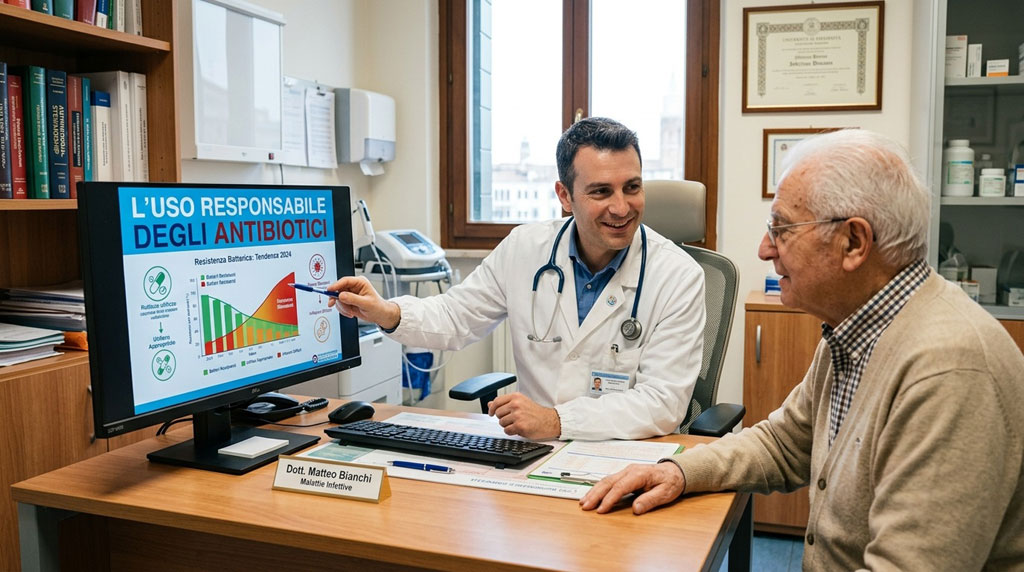
This phenomenon, therefore, has been going on for a long time but is now reaching a stage of increasing severity, to the extent that the entire health service is engaged in a wide-ranging campaign to tackle it. I believe, however, that it is particularly important for all of us – that is, users of the health service – to be aware that the unnecessary use of antibiotics does more harm than good.
The fight against antibiotic resistance therefore also depends on patients adopting the right attitude towards their treating doctors, whose diagnostic and prescribing autonomy must be respected so that they can always act ‘in good faith and to the best of their knowledge’, a key factor in ensuring the maximum effectiveness of any medical treatment.