
Diocesan Bible School: A New Year Following in the Footsteps of Ruth, Tobit, Esther, and Judith

The courses will provide an in-depth exploration of four Old Testament books often considered “minor.” Scaiola: “Texts that contain elements of great relevance today.” Don Deppieri: “True literary and theological masterpieces.”

Ruth, Tobit, Esther, and Judith: not one but four books of the Old Testament —ones that aren’t usually read very often—will be the focus of attention, discussion, and in-depth study during this year’s sessions at the Diocesan Bible School of Venice. “Often considered ‘minor books’ because of their brevity,” writes Director Fr. Mauro Deppieri, “they are true literary and theological masterpieces, capable of speaking with extraordinary relevance to our daily lives. In a world dominated by men, Ruth, Esther, and Judith stand out for their courage, their political acumen, their unshakable faith, and their ability to change the course of history. And the Book of Tobit shows the power of daily fidelity within family relationships. Unlike other great books, here God acts in silence through the free choices, generosity, and determination of human beings. These texts address issues of burning relevance today: welcoming the stranger and integration (Ruth); the value of family bonds, care, and support in times of darkness (Tobit); and resistance against injustice and the abuse of power (Esther and Judith).” As is tradition, the new academic year of the Bible School began with a series of introductory sessions led by biblical scholar Donatella Scaiola, vice president of the Italian Biblical Association. For her, it was a particularly fitting choice to dedicate a year to seriously exploring four Old Testament books that are not very well known and, moreover, rarely used in the liturgy. “These are very interesting texts that contain elements of great relevance today.” For the vice president of the Italian Biblical Association, the women who are the protagonists of some of these books will offer many significant insights. The title of the first lecture—“A Stranger Among Us”—already says a lot:“Ruth is a foreigner; she is a Moabite who moves to Bethlehem and later becomes the wife of Boaz and, thus, the ancestor of King David. Esther, on the other hand, is a Jewish woman living at the court of a foreign king. Both are outsiders within their respective contexts. And yet both are agents of liberation. Ruth becomes one for her family—first and foremost for Naomi, her mother-in-law, and then also for Boaz, to whom she will bear a son. She thus liberates them from a situation of mourning and poverty. Esther is, in a sense, a queen who could have lived in seclusion but instead decides—as we would say today—to step into the fray, that is, to put her life at risk to save her people, who are threatened with extermination. “The outsider, the foreigner—here, rather than being a problem, becomes a resource, both at the family level and for the people as a whole.”

"Women Who Go Against the Grain"

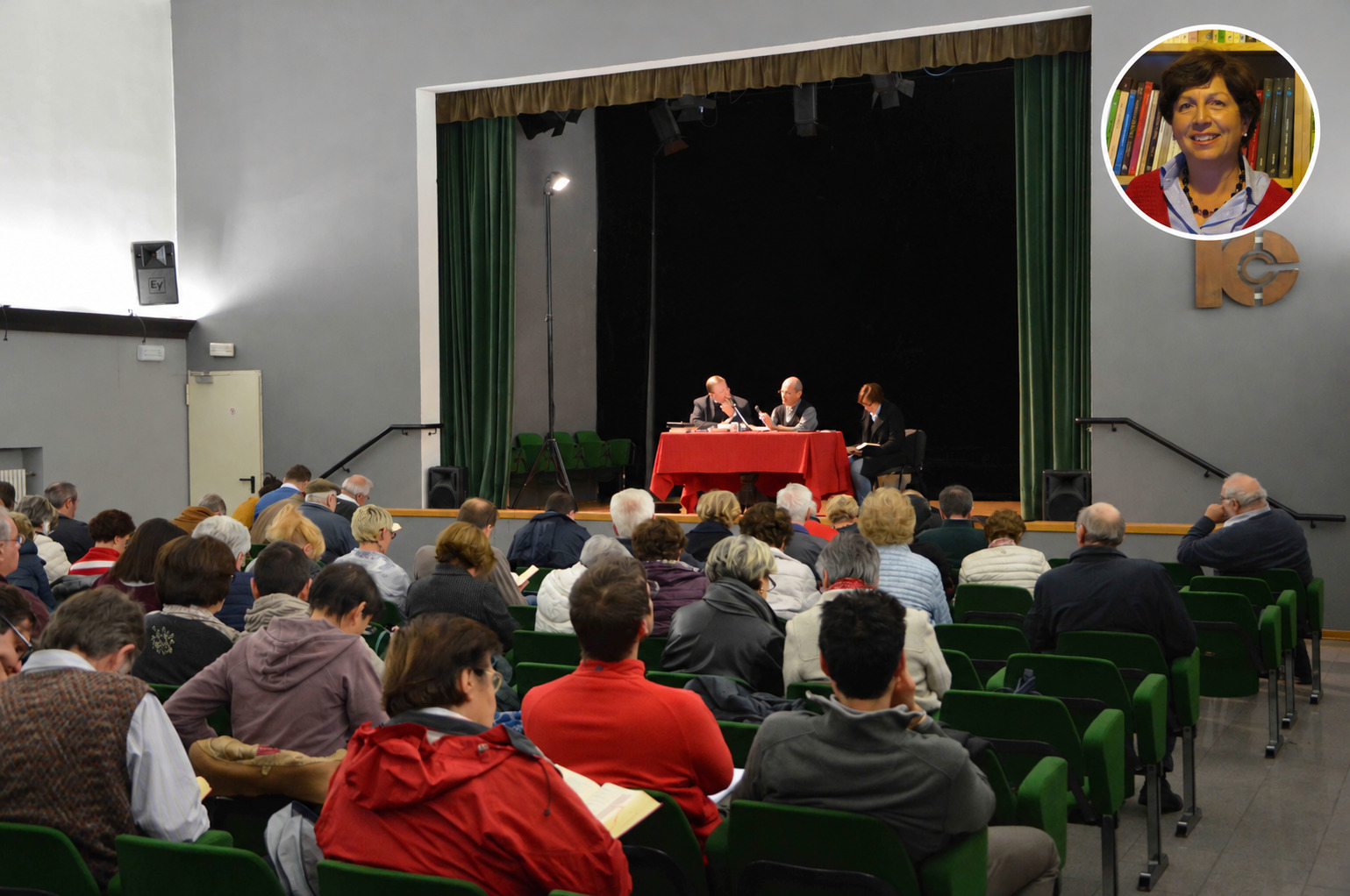
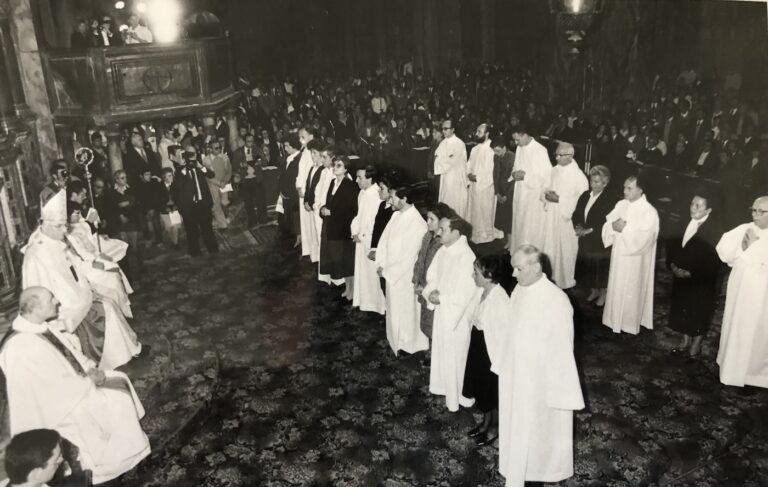
In an archive photo, a Bible school meeting in Mestre, at San Pietro Orseolo

Judith herself, in a book deeply marked by violence, is a symbol of liberation: “Here, too, we have a situation of violence, a threat directed at a portion of God’s people. Judith responds to this threat by taking action. No one asks her to do anything, but she decides to go and free her people by killing Holofernes, and I think we’re all familiar with the paintings in which she cuts off his head. Judith is a devout woman who nevertheless uses violence, and this will inevitably lead us to reflect on the matter.” Three women who take a stand, put themselves on the line, and even engage with the mechanisms of power in the era in which they live. “For them,” Scaiola continues, “we can speak of a strong assumption of responsibility, which is another way of expressing the positive aspect of power. Each of these women expresses this in relation to others—some in a more domestic setting and others in a broader, and, we might say, international context. And above all, no one asks anything of them (or almost nothing), yet all of them, in their own unique way, demonstrate the courage to make choices that go decidedly against the grain.”
Thus, themes emerge that resonate with the present day and highly topical issues. For example: “The first reaction toward a stranger is generally one of distrust, at best, or rejection of the other. But in the case of Ruth, rejecting the foreigner means closing the door on the possibility of encountering the Messiah, because Ruth will become the ancestor of King David. In the case of Esther, the foreigner becomes a sort of new Moses, capable of saving her people from oppression. Here, the foreigner transforms from a threat into a resource. With Judith, then, we enter a very important paradigm in the Old Testament: the figure of the weak who defeats the oppressor using the oppressor’s own weapons. Judith cuts off Holofernes’ head using Holofernes’ own sword, just as David kills Goliath by cutting off his head with Goliath’s sword, since David did not have one of his own. In short, evil backfires on those who commit it, and this is a theological principle that recurs constantly in Scripture. To quote the Psalms: the wicked dig a pit for the righteous and fall into the pit they have dug. It will therefore also help us reflect on themes such as violence, threats, and how to respond to the oppressor.”

Autore:

Iscriviti a CRUX e non perderti nessun aggiornamento, ti invieremo 1 volta a settimana i nuovi articoli!