

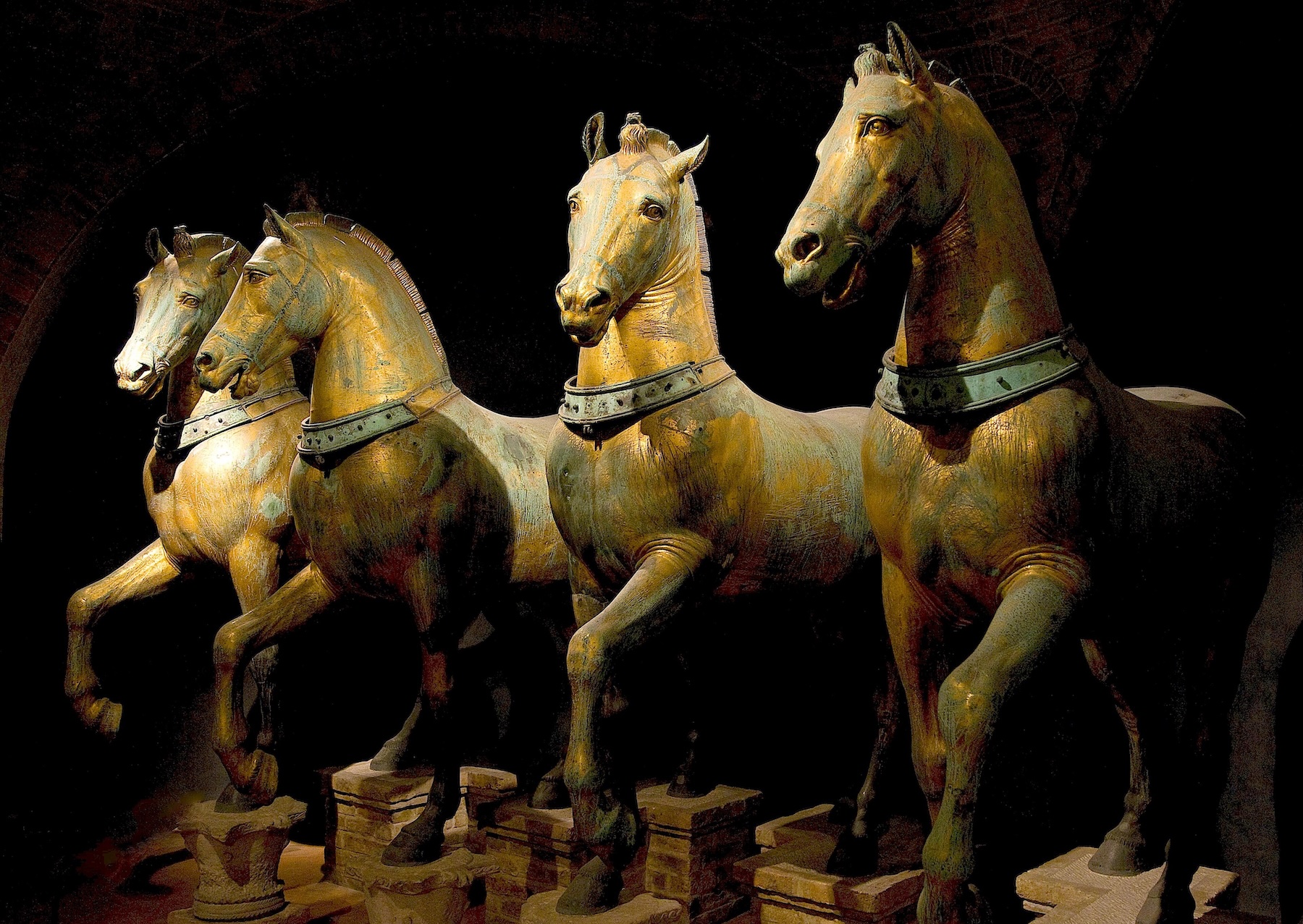
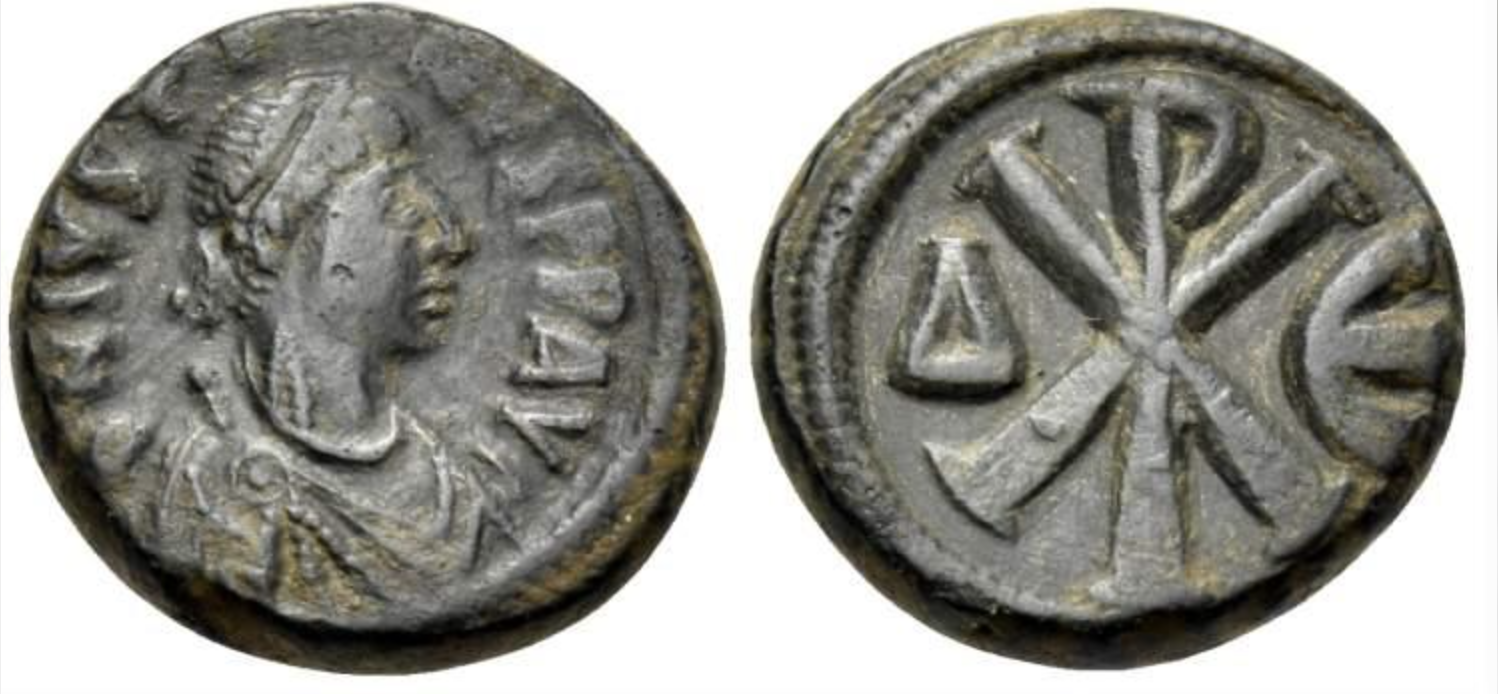
The dating of the bronze quadriga from St Mark’s has been debated for centuries, with a wide range of hypotheses put forward. A coin discovered in the 1980s is at the centre of new interdisciplinary studies that could lead to a more precise dating.
‘The story behind its rediscovery,’ explains Dr Sara Bini, an archaeologist, ‘is rather curious. The coin had in fact been found in February 1981, during restoration work on the horses, and had even been the subject of an initial numismatic identification. However, the news had never made its way into the scientific publications dedicated to the quadriga. In 2021, whilst I was carrying out some site visits to the National Archaeological Museum of Venice with a view to retrieving archaeological materials stored in the depots, I chanced upon this small coin, kept in the museum’s safe and accompanied by a few handwritten notes indicating its provenance’.
Realising the importance of the find, Bini immediately contacted Prof. Bruno Callegher, a specialist in numismatics, and Prof. Luigi Sperti, an expert in art history, to undertake a new study of the coin and its connection with the Marcian quadriga.
Although it is not yet possible to establish a definitive date with certainty, at least some of the previous hypotheses suggesting that the work was produced during the Classical Greek period have certainly been ruled out: the coin, in fact, is a pentanummo of Emperor Justin I, minted in Constantinople between 522 and 527 AD. ‘The coin,’ Bini points out, ‘constitutes an important chronological element, but a fundamental distinction must be made: it indicates that its insertion into the statue could not have taken place before the coin was minted, whilst it does not necessarily prove that the horse was created during the same period’. The study of the coin has been combined with stylistic comparisons and an analysis of the anatomical features and technical aspects of the quadriga’s construction. None of these elements constitutes conclusive evidence, but the hypothesis that it was crafted between the 6th and 7th centuries appears particularly likely, as numerous written sources document the production of monumental bronze statues in Constantinople during that historical period.
In this age of advanced technology, it is important to note, furthermore, that these new findings were not achieved through artificial intelligence or the use of specialised machinery, but solely through the combination of different areas of expertise amongst scholars and the ‘traditional’ analysis of archival records, art-historical studies, and ancient and Byzantine sources.
The study by the three experts has already been published in issue CXXVII of the *Rivista Italiana di Numismatica e Scienze Affini*, a long-established specialist scientific journal, and was presented in a more accessible manner to the public during the conference held at the Palazzo Ducale last Friday, 20 November. ‘Of course,’ comments Bini, ‘the research cannot be considered complete. There remain numerous unresolved questions, which we hope will stimulate further investigation. Here, for example, is an interesting question: why would anyone have placed a coin inside a statue? Byzantine sources document practices involving the insertion of objects into statues for symbolic or protective purposes. This is one possible interpretation of our find, though it remains merely a hypothesis.”
A symbol of power spanning the centuries and marking conquests: the four Horses of St Mark are the only equestrian sculpture group to have survived from antiquity. Cast in gilded bronze using the lost-wax method, they were originally part of a triumphal quadriga and are striking for their monumental proportions — over two and a half metres in length and weighing around nine quintals each — combined with a refined anatomical rendering.
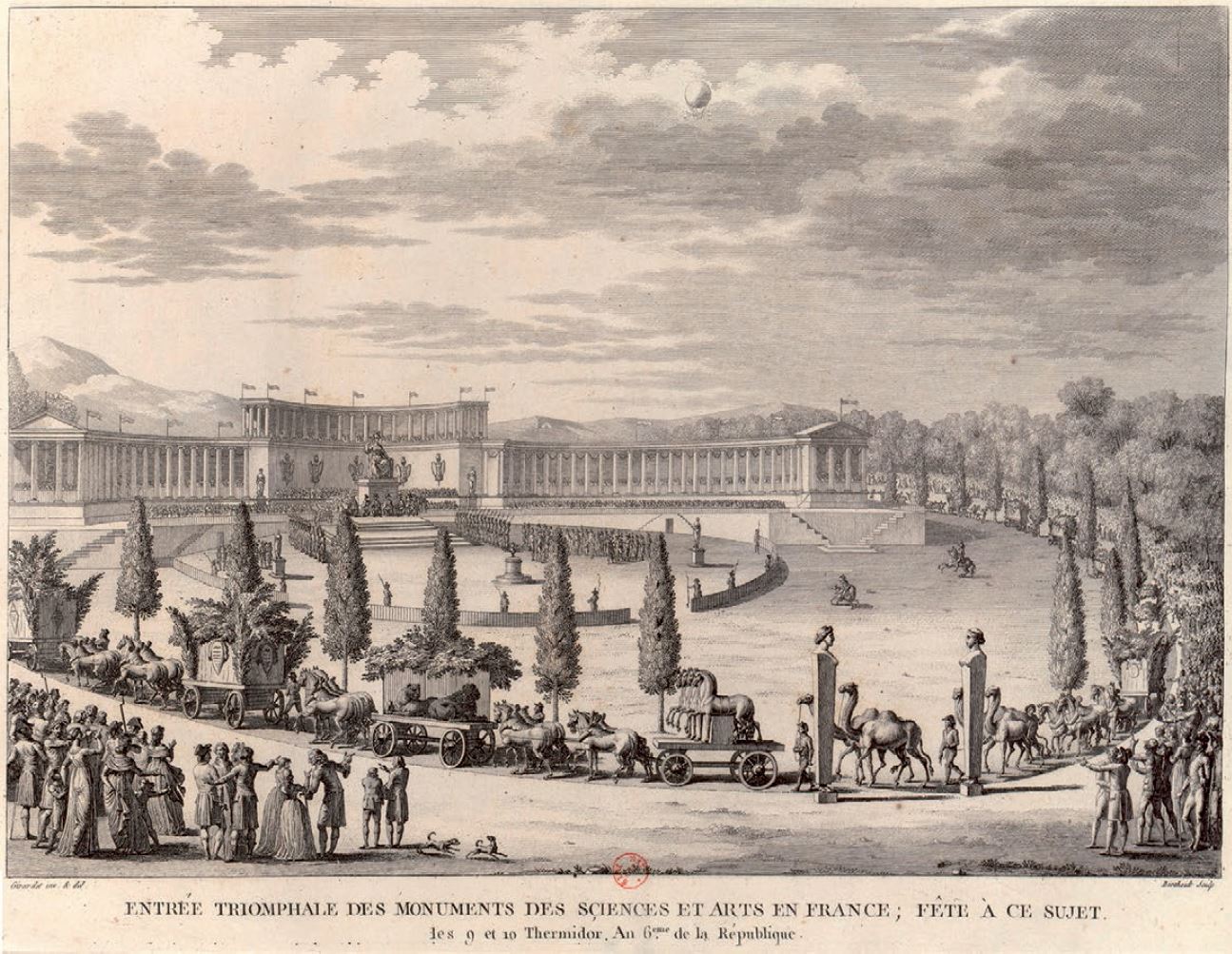
Documented with certainty at the hippodrome of Constantinople from the time of Theodosius II onwards, the horses became inextricably linked to Venice in 1204, when they were taken as spoils during the Fourth Crusade led by Doge Enrico Dandolo. Placed in 1254 on the terrace of the façade of St Mark’s Basilica, they became the very emblem of the Serenissima, only to be moved again to Paris in 1797 at the behest of Napoleon — who used them as a model for the Arc de Triomphe du Carrousel — before returning permanently to the lagoon in 1815, at the end of the Napoleonic era. Today, to protect them from the ravages of time and the elements, the originals are housed inside the Museum of St Mark’s, whilst faithful replicas stand proudly on the façade.