

The starting point is a bit of publishing trivia: in Venice, where the first official edition of *De honesta voluptate et valitudine* by Bartolomeo Sacchi, known as Il Platina – one of the first major printed works devoted to gastronomy – was published in 1475, the first genuinely Venetian recipe book did not appear until 1908. A full 433 years later.
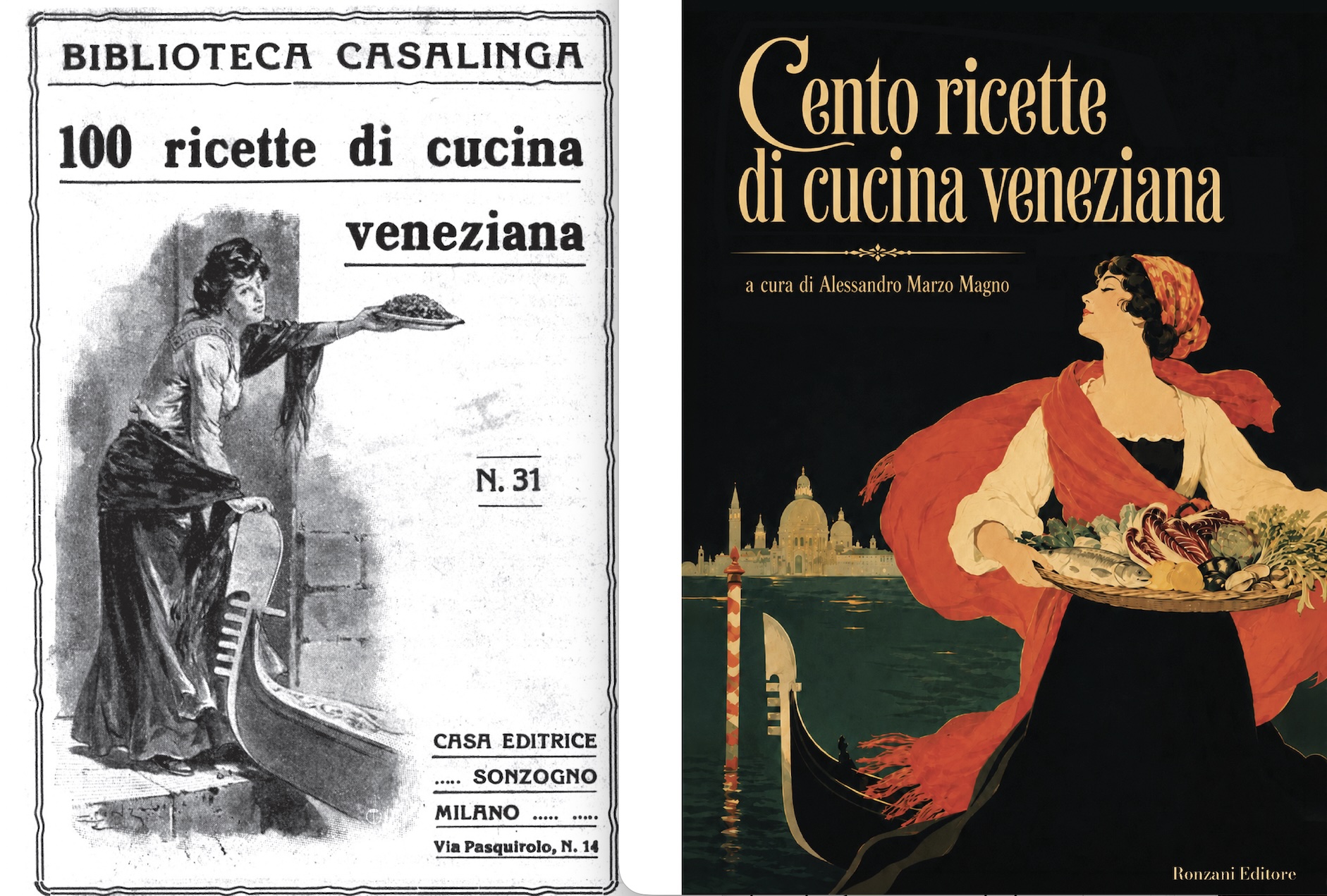
The author of that little volume, published by Sonzogno as part of the popular ‘Biblioteca casalinga’ series, remains unknown. He signed his work as ‘Sior Zamaria da le fritole’, perhaps taking his name from the nickname of a well-known fritter seller in nineteenth-century Venice. His manual, entitled 100 ricette di cucina veneziana, forms the core of the new book and is reprinted in a more legible typeface, preserving the original text as well as some of its linguistic peculiarities and inconsistencies.
Marzo Magno guides the reader through this publication with an introductory essay, *Half a Millennium of Venetian Cuisine*. The journey begins with medieval cookbooks, moves through the Renaissance and the seventeenth century, reaches the eighteenth century of Goldoni and Casanova, and continues into the nineteenth century and the birth of modern Italian cuisine.
It is a reconstruction that helps us understand just how ancient some eating habits are and, conversely, how relatively recent certain dishes considered traditional today actually are. As early as in the *Libro per cuoco*, a Venetian manuscript dating from the late 14th to the early 15th century, one finds two recipes for *pesce in saor* (fish in a sweet-and-sour sauce), a cereal-based dish that foreshadows risotto, and desserts closely resembling today’s *bussolai* and *frittelle*.
Another interesting point concerns the relationship between Venice and rice. In the Middle Ages, dishes were prepared in which the grain was first boiled and then finished off in a pan with fats and spices. Risotto, in the form we know today, would, however, develop later, during the nineteenth century. And not everything described as ‘alla veneziana’ in ancient cookbooks necessarily belongs to the Venetian tradition: sometimes the geographical reference was used primarily to lend prestige to a dish.
Among literary sources, particular attention is given to Goldoni, who frequently mentions food in his plays, and to Giacomo Casanova, whose autobiography contains numerous gastronomic references. It is precisely through these documents that customs and ingredients, some of which have now disappeared, come to light. We discover, for example, that oysters from the Arsenale were particularly prized and that Casanova even had them sent to him outside Venice.
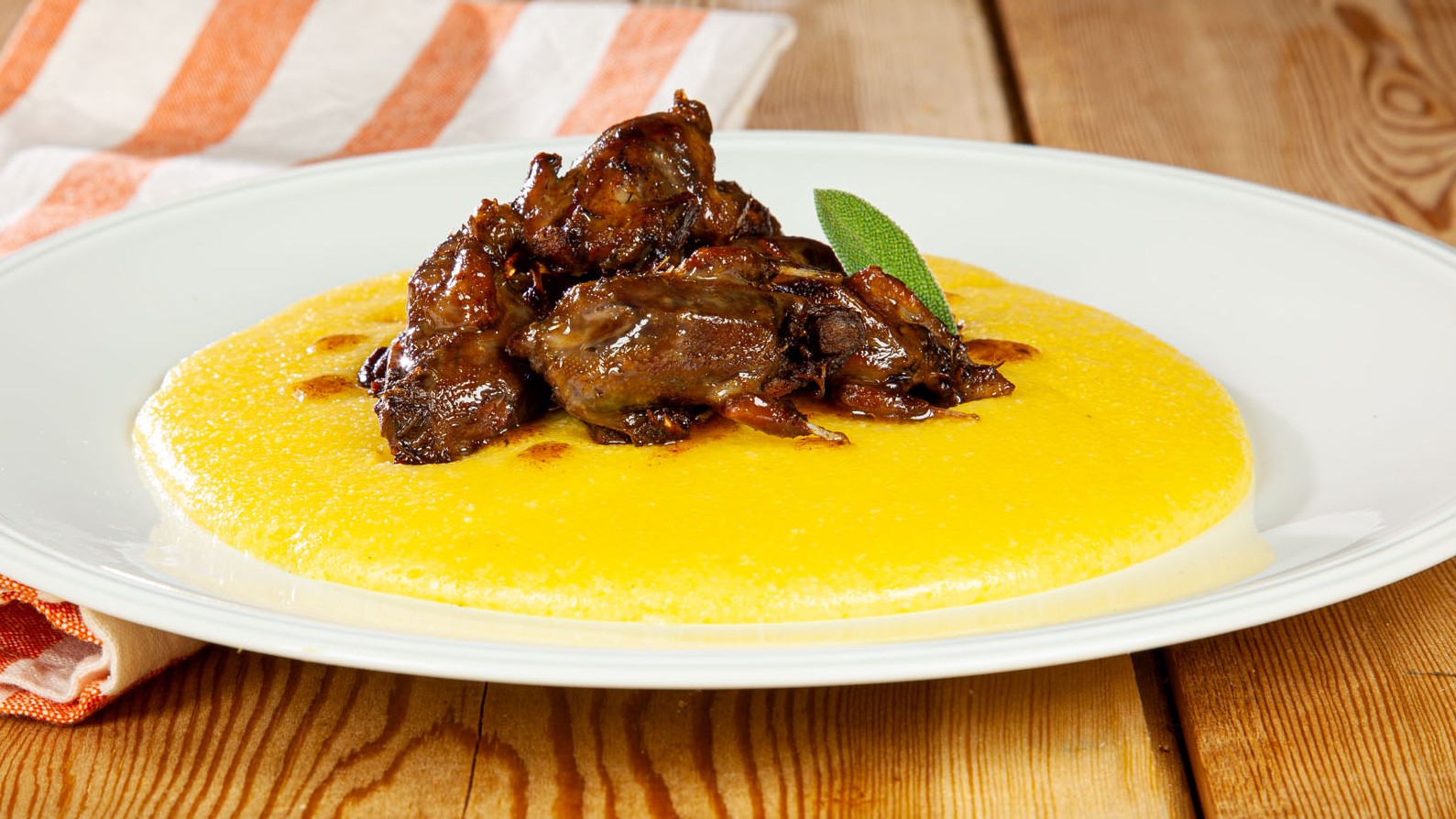
The essay then focuses on the first Venetian recipe book, published in 1908, examining its characteristics and interesting features. The hundred recipes include risottos, soups, fish and meat dishes, vegetables, desserts and traditional fare. It is striking that there are far more meat recipes than fish recipes: 36 compared to 26. This figure contradicts the widespread perception of Venetian cuisine as being essentially linked to the lagoon. At the time, in fact, meat was considered a more prestigious food, and dishes served on special occasions were often based on veal, pork or poultry.
Nor does the book shy away from the more curious and sometimes questionable aspects of the original recipes. Some contain ingredients that would seem out of place today, such as Parmesan on clams or candied citron in saor. Others contain inaccuracies in the naming of fish and shellfish. These are details that do not detract from the book’s documentary value, but illustrate how even culinary tradition is subject to change, fusion and reinterpretation.
The third part of the book, however, looks to the future. Chef Amedeo Sandri has selected ten particularly intriguing or little-known dishes and developed versions suitable for contemporary cooking. The historical recipes, which often lack precise quantities, cooking times and instructions, can thus be recreated in home kitchens without losing their original flavour combinations and character.
This is probably the most practical part of the book, but also the one that best illustrates its overall purpose: not to preserve Venetian cuisine as a static repertoire, but rather to bring back into circulation dishes that are in danger of being forgotten.
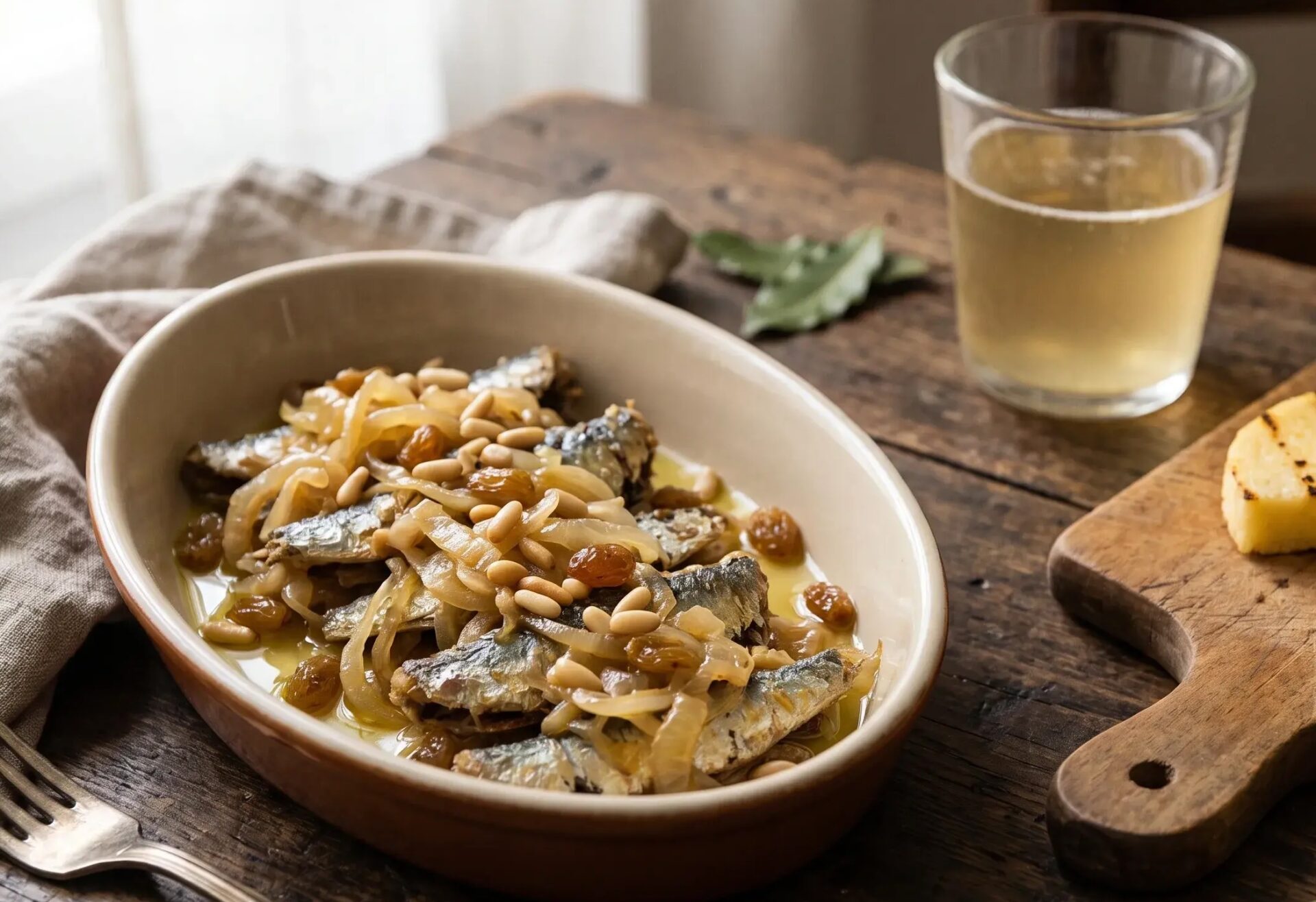
Among the recipes revived by Sandri, there are some that deserve special attention. Not so much for their complexity, but for their ability to showcase a cuisine that differs from the one we are used to associating with Venice. Three examples are lasagne cake, osei scampai and polenta a boconi.
The name might suggest a traditional casserole, perhaps with ragù and béchamel sauce. However, this dish contains neither meat nor cheese. It is a savoury dish in which lasagne sheets are layered with sultanas, pine nuts and candied citron, dressed with extra virgin olive oil flavoured with garlic. A combination of sweet and savoury flavours that demonstrates just how widespread the use of fruit in the preparation of first courses was in traditional cuisine.
Ingredients for 4 people
Method. Soak the raisins in lukewarm water for ten minutes and chop the candied citron into small pieces. Gently heat the oil with the crushed garlic, allowing the flavours to infuse for a few minutes before removing the garlic. Blanch the lasagne sheets in salted water, drain whilst still firm, and arrange them in an ovenproof dish greased with the flavoured oil. Alternate layers of pasta with raisins, pine nuts and candied citron, adding a little oil and cooking water each time. Cover and bake in the oven at 180 degrees for about 15 minutes, then uncover and continue baking for a further five minutes. The pasta should remain soft and lightly golden.
This is perhaps the most curious name in the entire recipe book. The ‘escaped birds’ are nothing more than slices of polenta served with a sauce made from salted sardines, butter, oil and sage. The explanation given in the 1908 text is very straightforward: for financial reasons, the common people used this sauce to season their polenta, foregoing meat. A sort of peasant dish, then, whose ironic name also reflects social differences at the table.
Ingredients for 4 people
Method. Rinse the salt off the sardines, remove the heads, bones and spines, and pat the fillets dry. Cut the polenta into slices and warm it in the oven at 140 degrees for about 15 minutes. Meanwhile, place the oil, butter and sage in a pan and allow the flavours to develop over a low heat. Add the chopped sardines and cook for four or five minutes, mashing them with a wooden spoon until they break down into the sauce. Serve the sauce whilst still hot alongside the polenta.
The third recipe is probably the most surprising for those who associate polenta exclusively with savoury dishes. Here it is served soft, by the spoonful, with alternating layers of melted butter, sugar and cinnamon. The 1908 recipe book specifies that the mixture of sugar and cinnamon must be in a ratio of three to one. It also adds that many preferred to replace this topping with Parmesan cheese, a sign that the dish could be prepared as either a sweet or savoury version.
Ingredients for 4 people
Method. Bring the salted water to the boil and gradually sprinkle in the cornmeal, stirring to prevent lumps from forming. Cook for about 45 minutes, stirring frequently, until the polenta is soft but firm. Mix the sugar and cinnamon together and melt the butter over a low heat. Spoon the polenta, whilst still hot, into a serving dish, forming several layers. Between each layer, spread the sugar and cinnamon mixture and the melted butter. Serve immediately, whilst the butter is still liquid.
The three recipes capture the essence of the book well: not a collection of dishes that must be replicated to the letter, but a journey through the material history of a city. Cooking becomes a means of understanding how the Venetians lived, what they could afford to buy, which ingredients arrived via trade, and how recipes adapted to the produce available in different seasons.
Another merit of this work is that it avoids a nostalgic and stereotypical view of tradition. Not everything that is old is necessarily better, nor does everything presented today as authentically Venetian have such distant origins. This is also demonstrated by Marzo Magno’s observations on the successive transformations of cookery books and on the differences between the recipes handed down and those that have actually survived to the present day.
The comparison with the three great classics of Venetian gastronomy – *A tola co i nostri veci* by Mariù Salvatori de Zuliani, *Il Veneto in cucina* by Ranieri da Mosto and *La cucina veneziana* by Giuseppe Maffioli – also places this volume within a tradition of scholarship and compilations that has helped to preserve the local culinary heritage.
Overall, *Cento ricette di cucina veneziana* successfully combines historical insight with practical utility. The introductory essay provides a context that goes far beyond a mere sequence of recipes; the reproduction of the 1908 text allows readers to consult a rare source; Sandri’s work ultimately brings these recipes to life, preventing them from remaining merely on paper.
It is an interesting book not only for those who love cooking, but also for those who wish to discover Venice from a less conventional perspective. For the history of a city is also told through its cuisine: from the dishes of the wealthiest families to those of the working classes, from ingredients imported from afar to those harvested in the lagoon’s vegetable gardens. And, sometimes, even from a plate of polenta with butter, sugar and cinnamon.
Alessandro Marzo Magno (ed.), One Hundred Venetian Recipes, Ronzani Editore, 2026. ISBN 979-12-5997-325-2. First edition, October 2026.