

The case illustrates how a diagnosis that had remained unresolved can be resolved years later, thanks to advances in sequencing technologies and the ability to integrate clinical observation, family history, and molecular analysis: “This discovery is part of the collaboration we recently established between our Audiology unit and the Genetics and Cytogenetics unit in Mestre,” explains Santarelli, noting that the work arose from a very concrete clinical need: to arrive at an accurate diagnosis of hearing loss. According to the specialist, in fact, at least 70% of childhood hearing loss has a genetic origin; “consequently, linking hearing loss to a specific mutation is essential for formulating a prognosis and guiding family counseling.” “Advances in genetics,” the professor explains, “have made it possible today to identify what twenty years ago would likely have been classified as ‘cases of unknown origin.’” “Here, patients—both children and adults—are systematically screened for genetic causes: this is standard practice, unless there is an identifiable and recognizable cause that allows us to immediately understand the situation.” The test, Santarelli explains, involves a blood draw, subject to informed consent. The sample is then sent to the laboratory in Mestre, along with all documentation pertaining to the patient. The results are expected within six months.
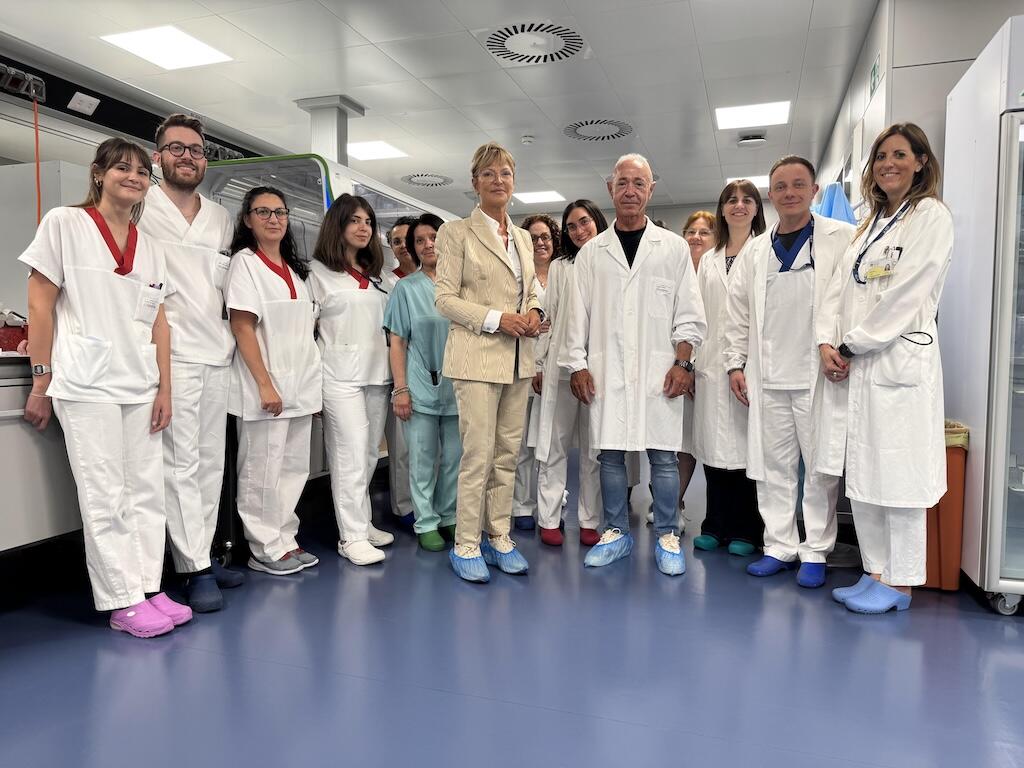
It was in the Genetics and Cytogenetics Laboratory at the Ospedale dell’Angelo that the team encountered a previously undescribed combination of variants, which revealed a new clinical picture. While prior to this discovery, pathogenic variants of this gene were exclusively associated with severe, progressive deafness, the Mestre laboratory discovered a new combination of variants of the same gene that instead accounts for stable, non-degenerative hearing loss: “Hearing function, in relation to the gene under study, is ensured by the synthesis of various functional proteins. Until now, the literature had described mutations in this gene that completely destroy the very proteins capable of ensuring normal hearing function,” explains Chief Physician Favarato. The genetic combination we examined, however, ensures the full functionality of one of the proteins synthesized by the gene: it does not completely eliminate the proteins responsible for hearing, but preserves one that is capable of ensuring the patient’s residual hearing ability. This provides us with a prognosis regarding the patient’s future condition, which, from a hearing perspective, should remain unchanged and not progress to profound deafness. This discovery will also allow the very young patient to implement primary prevention measures for his future children.” For doctors, the discovery therefore represents an additional tool for distinguishing clinical forms that appear similar but differ in their biological course and prognosis, with direct implications for the monitoring process as well.
This case is particularly significant because the hearing loss was not present at birth but developed during the school-age years. This is a point Santarelli emphasizes: “Newborn hearing screening, now in place nationwide and in Veneto for many years, allows for the early identification of children with congenital deafness and their referral to appropriate diagnostic centers.” However, there are cases of hearing loss that develop later: “In these cases, detection often depends on the vigilance of parents, pediatricians, and the school,” the chief physician emphasizes. “A child who turns up the volume on the television, frequently asks people to repeat themselves, or seems distracted in class may in fact be showing the first symptoms of hearing loss.” Many forms of childhood hearing loss are inherited in an autosomal recessive pattern, so parents may be healthy carriers and no other cases of hearing loss may appear in the family. For this reason, Santarelli reiterates, in cases of isolated childhood hearing loss, genetic testing becomes essential, even when the family history does not seem to suggest a hereditary component: “In my opinion, it would be useful to establish a surveillance network involving pediatricians, families, and schools to identify cases of hearing loss that are missed by neonatal hearing screening.” As for the adult population, Santarelli adds, the first healthcare professional to consult in cases of suspected hearing loss is the primary care physician.
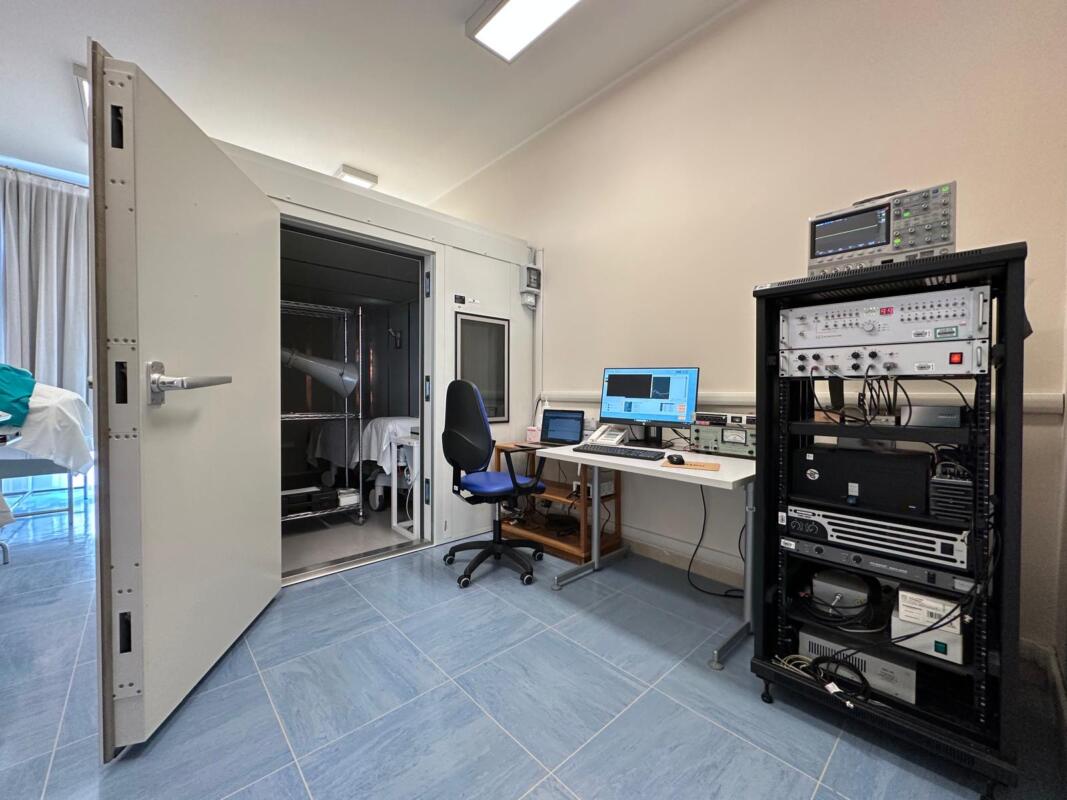
The study published in the *Journal of Applied Laboratory Medicine* is the first result of a collaboration that ULSS 3 Serenissima considers strategic. Recently, the Venetian audiology center has already referred more than 200 patients with hearing loss and their family members to the Mestre laboratory, most of whom come from outside the region—from northern, central, and southern Italy: a figure that confirms the appeal of these services and the importance of offering, alongside audiological diagnosis, the opportunity to identify a genetic cause. “We are the only ones in Italy to reliably perform electrocochleography using the transtympanic technique,” Santarelli emphasizes, “which involves the use of a thin needle-like electrode inserted through the eardrum to directly record the auditory nerve’s responses. And for this method, we’ve established a collaboration between the health authority and the University of Padua.” Chiara Bovo, head of the Health Department at ULSS 3 Serenissima, highlights the impact of the work carried out: “This is a study of which we are immensely proud, one that will have a significant impact on the patient’s future and on his family members; and, should the patient wish to have children, this discovery is also crucial for potential family planning, starting with genetic counseling. But the study that was conducted is also a first step toward the development of future gene therapies. And this young patient, who—along with his family—generously agreed to have his genetic material used as a case study, has recognized the great importance of the work that has been done, both for his clinical condition and for the international scientific community.”