Venice’s historic center has the lowest percentage of people born in the 21st century in Italy (and perhaps in the world).
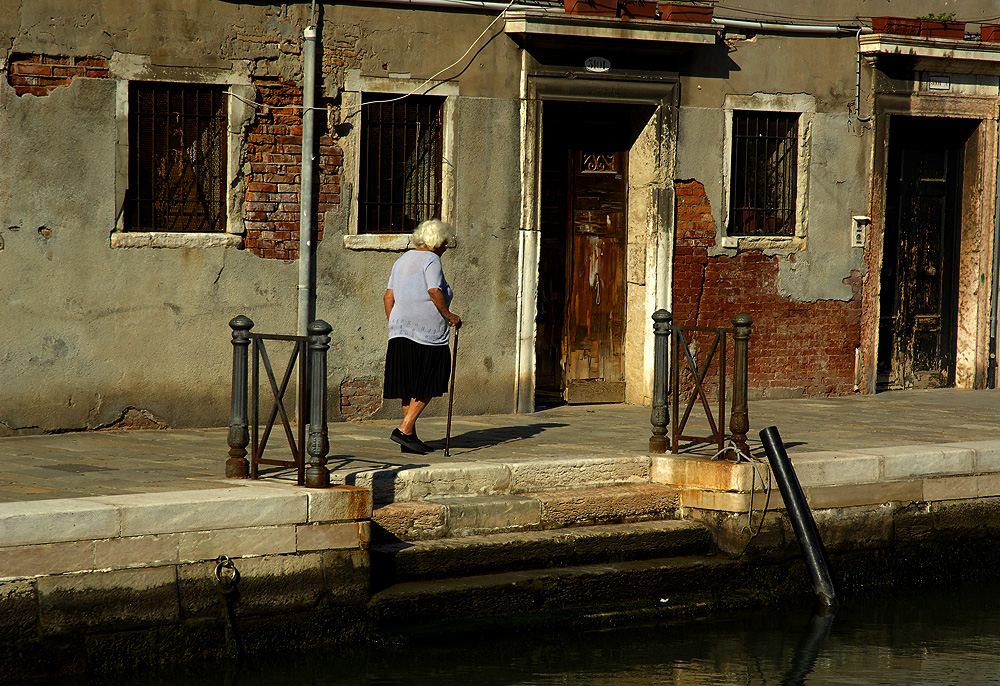
With just 14.5% of its residents under the age of 26, the island city ranks ahead of Savona and Genoa on the list of Italy’s oldest cities.
This is what the Istat data show, confirming the top ranking—albeit by stretching the interpretation a bit: the comparison is, in fact, with all other provincial capitals, whereas in our case we’re talking only about the historic center. But the core finding remains. Let’s take a broader view: while globally nearly 4 out of 10 people were born in the last 25 years, in Italy that percentage drops to 22.5%.
But it is as one ventures deeper into the canals of the Lagoon that this generational landscape comes up against a record-breaking statistic: if Venice’s historic center alone were a provincial capital in its own right, it would be the city with the lowest percentage of residents born in the 21st century in Italy—and, in all likelihood, on the entire planet.
The reason is well known: the effects of “touristification” and the high cost of living are driving families to the mainland, turning the heart of the Serenissima into a global demographic case study.
Currently, Savona holds the official top spot among Italy’s 109 provincial capitals (with about 16.5% of residents “born in 2000”), followed by Biella, Genoa, and Trieste. The City of Venice as a whole (251,000 residents) ranks around 30th, with a modest 19.2% of residents born from 2001 to the present.
However, the municipal data masks a clear divide: the mainland (Mestre, Marghera, Favaro, Chirignago-Zelarino) maintains a demographic profile in line with Northern Italy, where the presence of Italian and foreign-born families with children brings the proportion of young people under 26 to 21–22%. But in the historic center and on the islands, the proportion of people born in the 21st century plummets to a striking 14.5%–15%.
If only the island’s core population were counted, it would surpass Savona by a full two percentage points, climbing to the top of the Italian demographic ranking for “ageing populations.”