
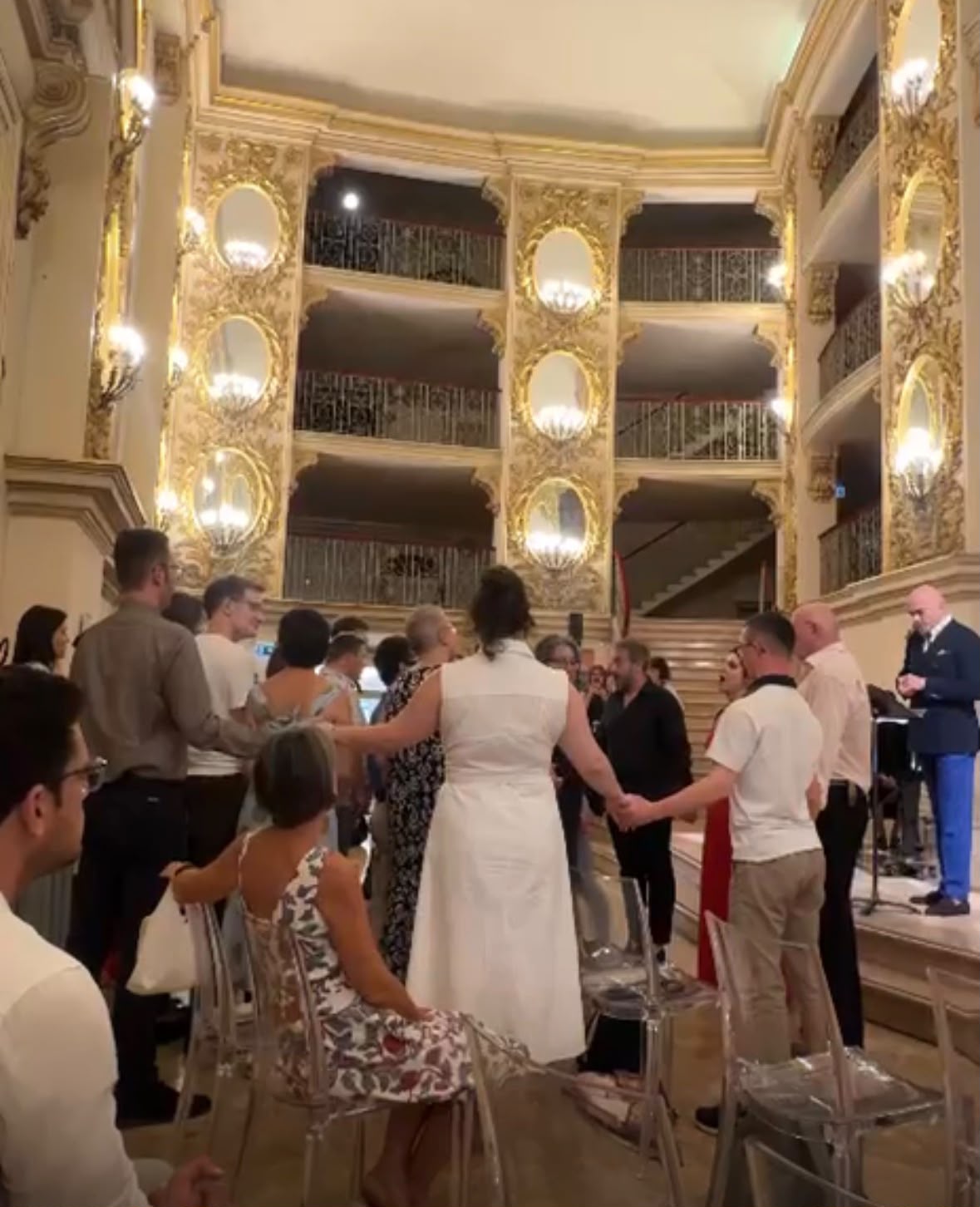
The underlying idea, therefore, is that of a more open Venice—not only to tourism, its main source of income, but also to culture and community participation, making room for new artistic initiatives capable of reaching and engaging the most diverse audiences. “They have a different approach to singing and music than we do. First of all, they pay attention to our breathing. Then we use our voices to help them understand the differences between singing and speaking,” says Zagni, recounting the moving experience he had in the foyer of the Arena di Verona, working closely with several groups of people with disabilities who took part in the project designed specifically for them.
“In those moments, the distance disappears—unlike what happens when you watch a performance in the Arena: we walk right among them, inviting them to touch our diaphragms, throats, shoulders, and chests. There have also been some funny moments,” he continues with a smile, noting that he shared the experience with other colleagues from the supporting artistic staff, “like when a guide dog, happy to have me nearby, started licking me affectionately. It’s interesting to see how a certain type of artistic performance is experienced differently than usual—in a much deeper way. Another wonderful aspect is the level of concentration and attentiveness these people demonstrate: regardless of their disability, each person is moved in a different way by the vibrations and the sound. They are moved not so much by what they’re hearing, but by what they’re receiving on an energetic level.”
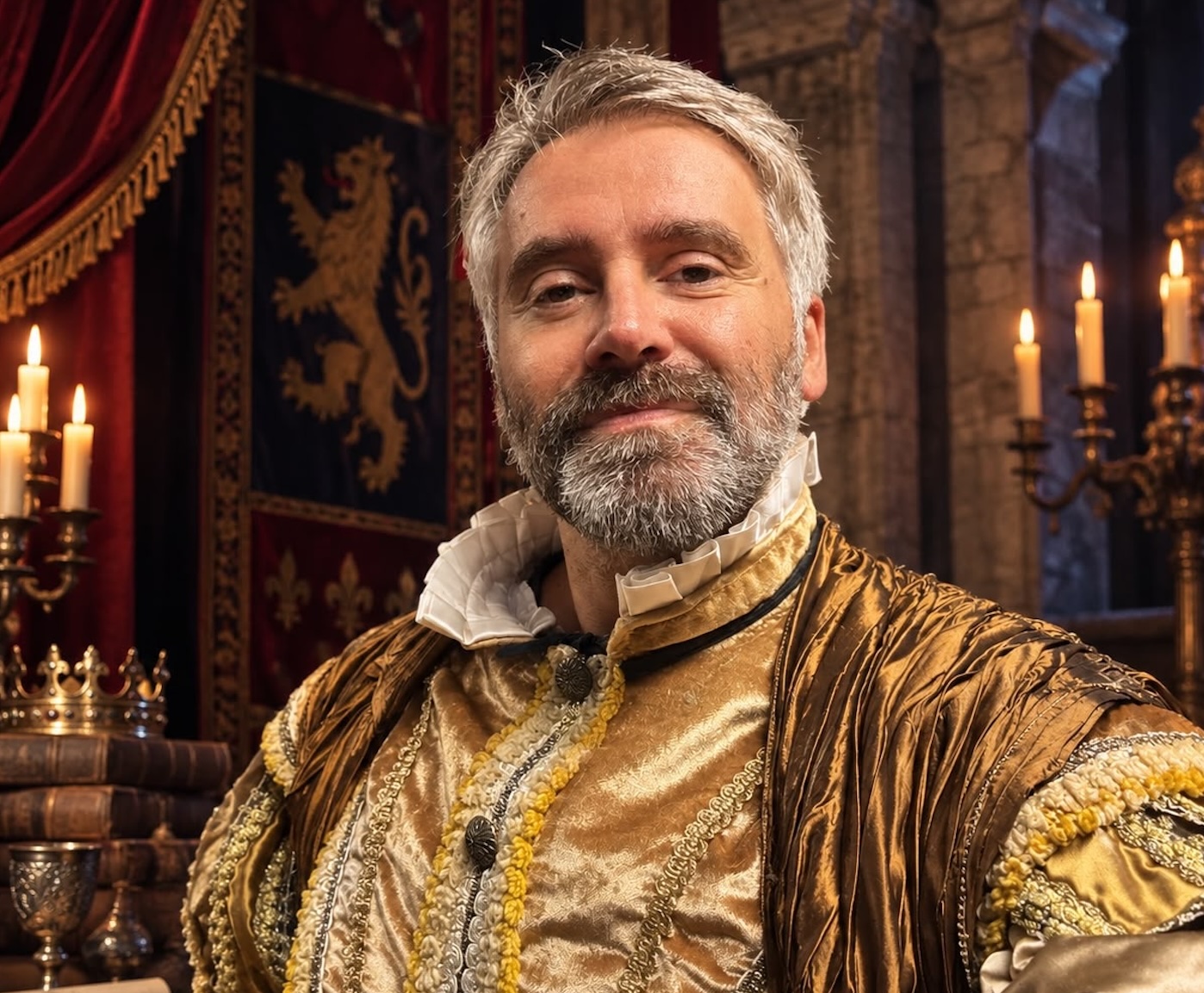
For Zagni, this isn’t a performance, but a demonstration. “Which is exactly what our work should be—not the performance itself, but the emotion we convey to the audience. It was invaluable for me to have the opportunity, for once, to stand before an audience that was there, right around me, not to judge, but to absorb the energy we released, almost like a ‘sponge.’ This confirms that disability is by no means something that disrupts emotion.” A tenor and stage actor in both Italian and English, Zagni has performed throughout Italy and Europe. He studied with Maestro Luciano Pavarotti and has also collaborated with the Teatro la Fenice: he was a soloist in the chorus for many years before choosing to devote himself to dance and concert performances at the Accademia Nazionale di Santa Cecilia, the Arena, and elsewhere.
«I decided to live in Venice more or less by chance. I had just returned to Italy (I studied in England), and I had two options : To go work as a soloist on a part-time contract in Reggio Calabria or to come to the “City of Water” with a one-year contract in the La Fenice chorus. Since my parents are elderly, I ultimately chose the second option because of its proximity to Modena, my hometown. In Venice, I fit right in and… I learned the dialect! Since I’m also passionate about theater, as soon as I arrived here I noticed that some amateur theater groups were looking for actors who knew English. I thought to myself: “Why not make a few phone calls and build a network of contacts to help me fit into my new surroundings?”
Zagni’s hope is to make the city more accessible not only for people with disabilities, but also for those who aren’t used to going to the theater. This is partly due to the cost of tickets, which aren’t always affordable for everyone, and partly due to the actual length of the opera performed on stage, which is often demanding—especially for young people—and even more so in a world where speed has become the priority in everything. “I’ve been part of many theater companies, especially foreign ones. In 2015, I was one of the lead actors in *The Merchant of Venice*, set in the Jewish Ghetto,” he says, emphasizing that his art form need not necessarily find expression solely within the walls of a theater.
“The city, which has enormous potential, should be promoted in this way, bringing art out into the streets and fields—all the more so at a time when temperatures tend to remain warmer for longer periods. By doing so, it would be much easier even for a person with a disability to reach a field than to climb the stairs of a theater. Venice has so much to offer and shouldn’t focus solely on this ‘hit-and-run’ tourism that we continue to see. Here, the concepts of a small village and a metropolis blend together simultaneously. And I now feel like an integral part of all this.”
Marta Gasparon