Barrier-Free St. Mark’s: Accessibility Tests for Everyone

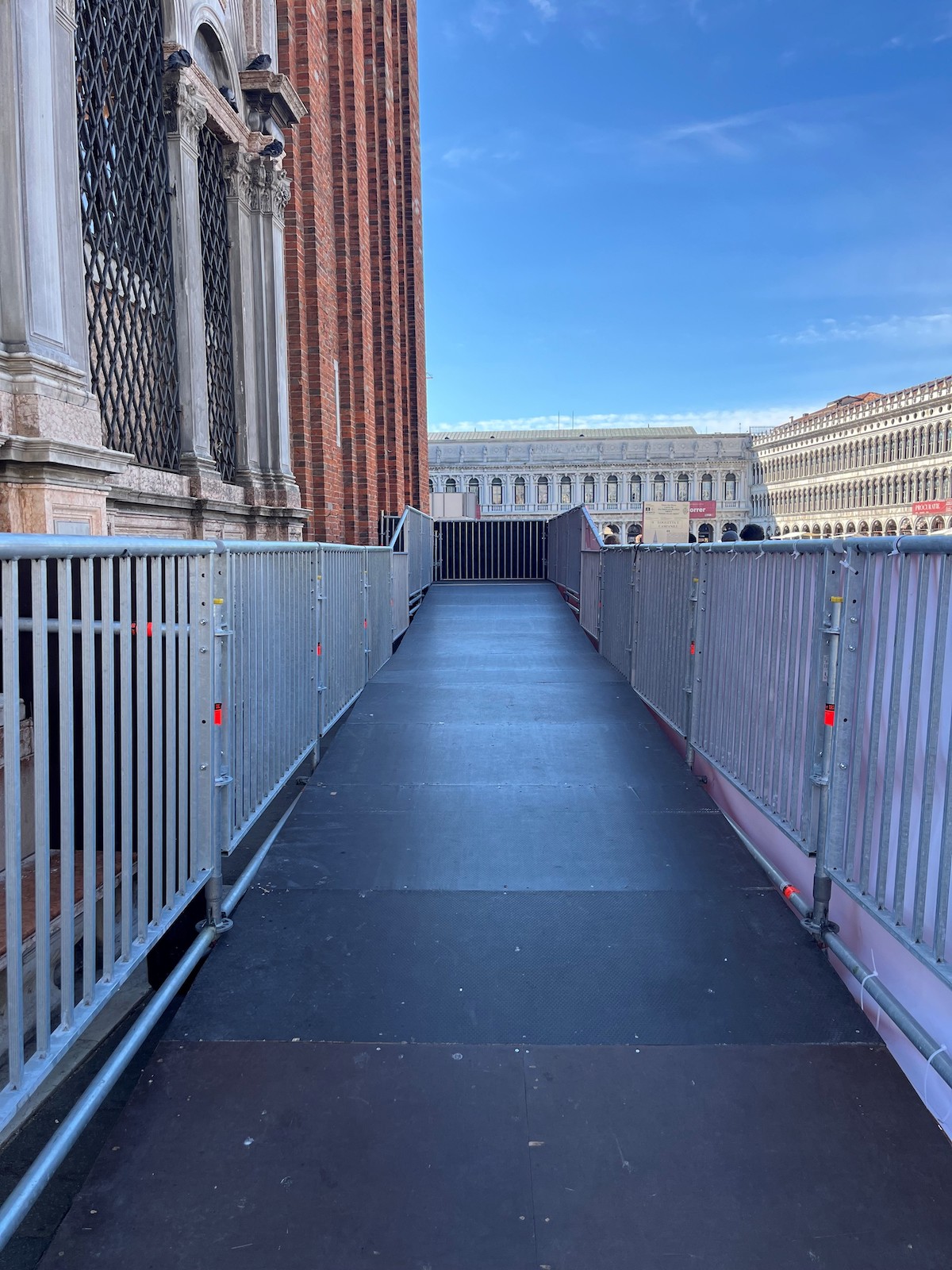
A portable ramp will allow wheelchair users to independently reach the bell tower elevator throughout the week: this is the first test of a larger project that also involves the Basilica. The initiative by the Procuratoria will provide free access to the “paron de casa” for people with disabilities through Sunday.

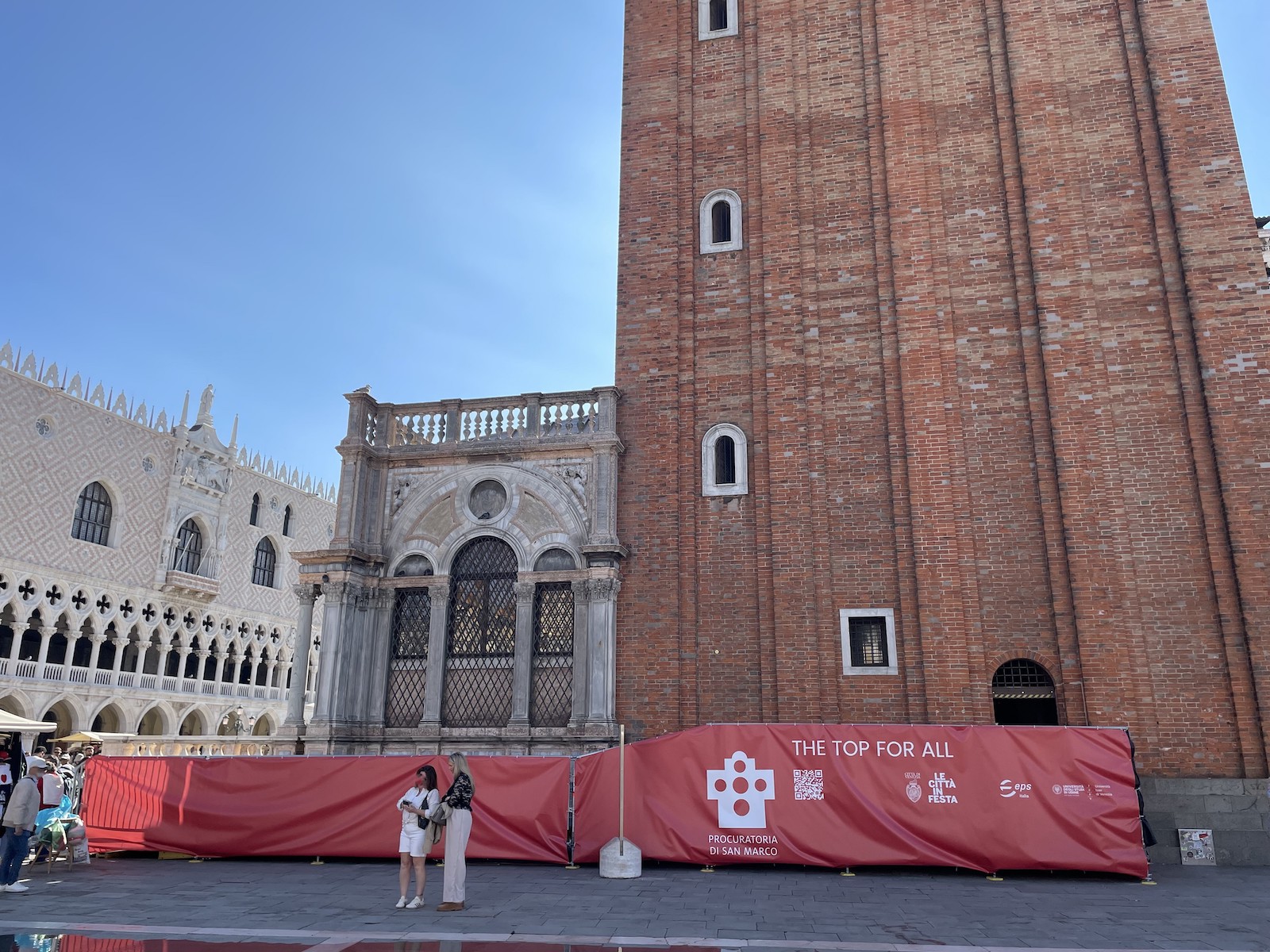
Making beauty accessible to everyone, while respecting the history and identity of the monuments. This is the goal of “Venezia accogliente,” the two-year strategic project promoted by the Council of the Procuratoria of St. Mark’s to improve accessibility to the Basilica and the Bell Tower for people with motor and sensory disabilities. A significant milestone in this effort will be “The Top for All,” an initiative running from October 10 to 18 that will allow people with limited mobility and those using manual or electric wheelchairs to independently reach the access level for the “Paron de Casa” elevator, which can accommodate two people at a time. To overcome the elevation difference, a special mobile ramp has been temporarily installed on the right side of the loggetta, next to the regular entrance, and will remain in place for the entire current week. Access will be available during regular opening hours— from 9:30 a.m. to 8:00 p.m.—without the need for a reservation, and will be free of charge for both people with disabilities and one accompanying person. The ramp was made possible thanks to a contribution from the company Eps, as part of an initiative in which the Patriarchate also collaborated (information available at: www.basilicasanmarco.it/the-top-for-all/). The topic of accessibility will also take center stage on Saturday, the 17th, with a new edition of “Venezia a 4 ruote by night, ” an event dedicated to children and young people with spinal muscular atrophy, a rare genetic disorder that requires the use of a wheelchair. Sponsored by the IRCCS Cà Granda Ospedale Maggiore Policlinico Foundation in Milan, the initiative involves—among others—the Italian Navy, the City of Venice, the Procuratoria, ACTV, and Civil Protection, along with various associations. At 5:30 p.m. in St. Mark’s Square, Patriarch Francesco Moraglia, Mayor Simone Venturini, and the Chief Procurator, Attorney Bruno Barel, will welcome the participants. This event is designed to offer young people the opportunity to explore the “City of Water,” reaffirming everyone’s right to learn about and deepen their understanding of the rich cultural and artistic heritage that shapes its history.

“Overcoming Physical Barriers Even Inside the Basilica”

The temporary ramp set up to provide easier access to the elevator in St. Mark's Bell Tower

“The Procuratoria,” Barel points out, “has approved a strategic plan aimed at eliminating architectural barriers as much as possible. This project is being carried out in collaboration with the IUAV in Venice and the University of Udine, with the goal of identifying the best technical solutions to achieve this objective.” The first step consisted of an initiative dedicated to blind and visually impaired people. In 2025, a tactile three-dimensional model of the Venetian cathedral was installed in the first room of the Basilica Museum, allowing visitors to explore the building’s forms and architectural layout through touch. Scientifically coordinated by Mario Piana of the San Marco Prototype, the project involved Fablab Venezia, Prossimi Impresa Sociale Ets, Weerg, the Polytechnic University of Milan—UNESCO Research Lab at the Mantua Regional Center, and Museyoum. The entire project was supported—on the occasion of its centennial—by the Rotary Club of Venice and various foundations and private entities, under the patronage of the Italian Union of the Blind and Visually Impaired of the Province of Venice. “The second proposal,” Barel continues, “is specifically for a platform to facilitate access to the Bell Tower, for which a temporary permit is required.” In this regard, the chief prosecutor explains that, together with the Superintendency, the Procuratoria will evaluate the possibility of keeping it in place in the future as well. “What’s currently underway is, for now, an initial test. In anticipation ofthe Year of St. Mark (from October 2027 to February 2029, ed.),” he adds, “we’d like to wrap up the ‘Welcoming Venice’ initiative with some concrete ideas regarding the Basilica as well.” The goal is to identify potential technological solutions that would overcome physical barriers at the entrance to and inside the basilica. To this end, an additional agreement has been signed with the University of Udine and IUAV to study and test effective measures that are compatible with the monument’s historical and artistic value. In the meantime, some professors from these universities have already submitted a map to the Procuratoria showing how to reach St. Mark’s without barriers, including via vaporetto. “In this regard,” Barel concludes, “they have conducted a preliminary study.”

Autore:

Iscriviti a VE-NICE e non perderti nessun aggiornamento, ti invieremo 1 volta a settimana i nuovi articoli!