

During the preliminary investigations, which initially involved monitoring over a period of several months, it was found that the main problem affecting the chapel was linked to rising damp which, carrying corrosive salts with it, had caused cracks and spalling in the marble cladding of the lower sections up to a height of two metres, as well as in the inlaid polychrome marble flooring. Further moisture deposits caused by condensation were also identified on the higher sections, whilst the right-hand wall of the altar, in particular, was most severely affected by deterioration due to water seepage from above.
‘We assessed the environment and tried to let the chapel “breathe”. For this reason, it was also necessary to clear the area behind the altar and the corridor behind it – which had a wall of plasterboard and bricks – to allow the masonry of the altar itself to breathe,’ said Valeria Saccarola, an official from the Superintendency who oversaw the works.
Specifically, the altar underwent a complex restoration: “It was dismantled and cleared of a build-up of debris beneath the altar table and the steps. It was then reassembled, leaving openings to allow air to circulate and ensure better drying of any moisture.”
The inlaid floor, featuring polychrome marble, has also been cleaned and had any detached or missing pieces replaced, making its patterns much easier to make out.
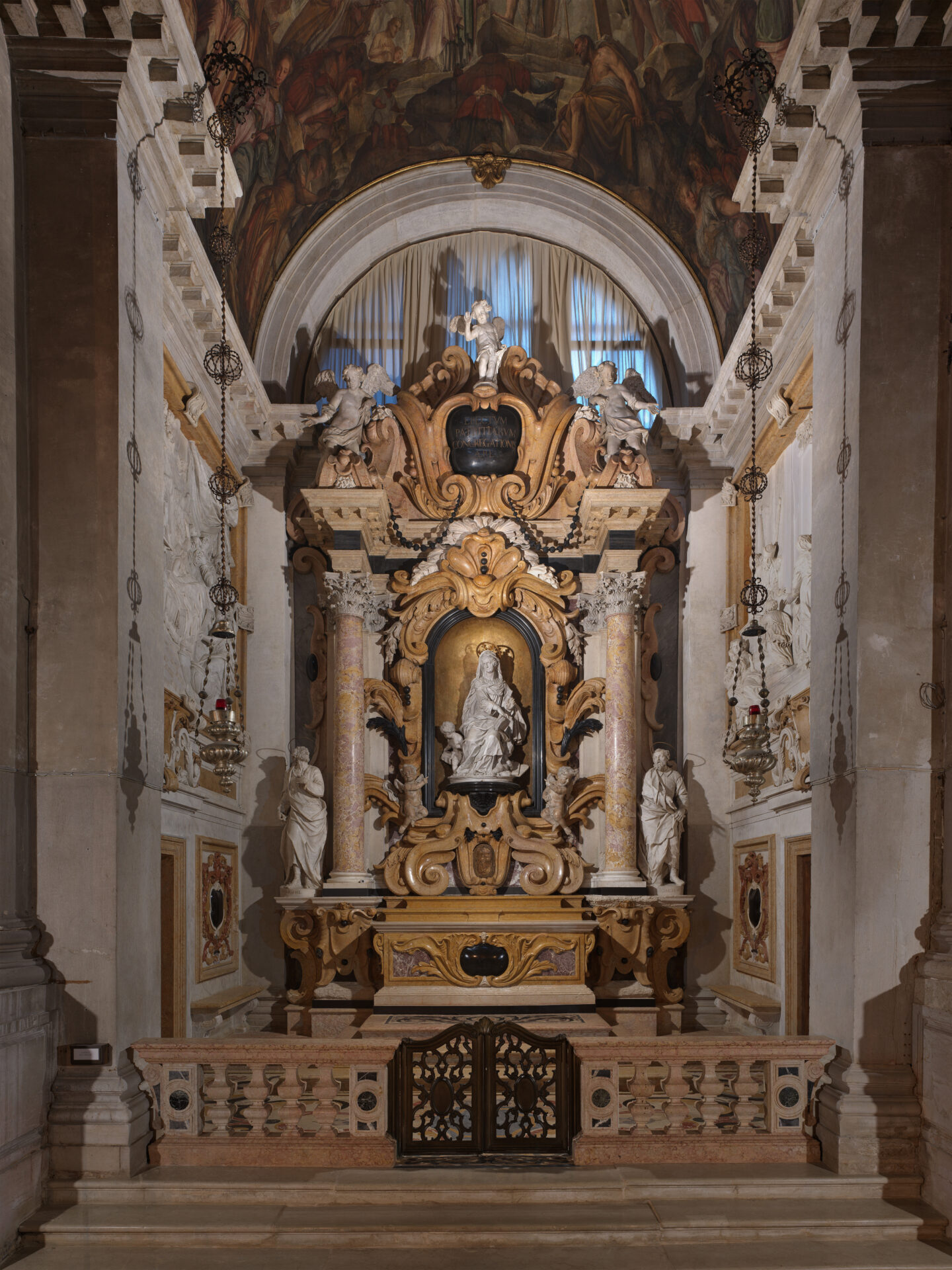
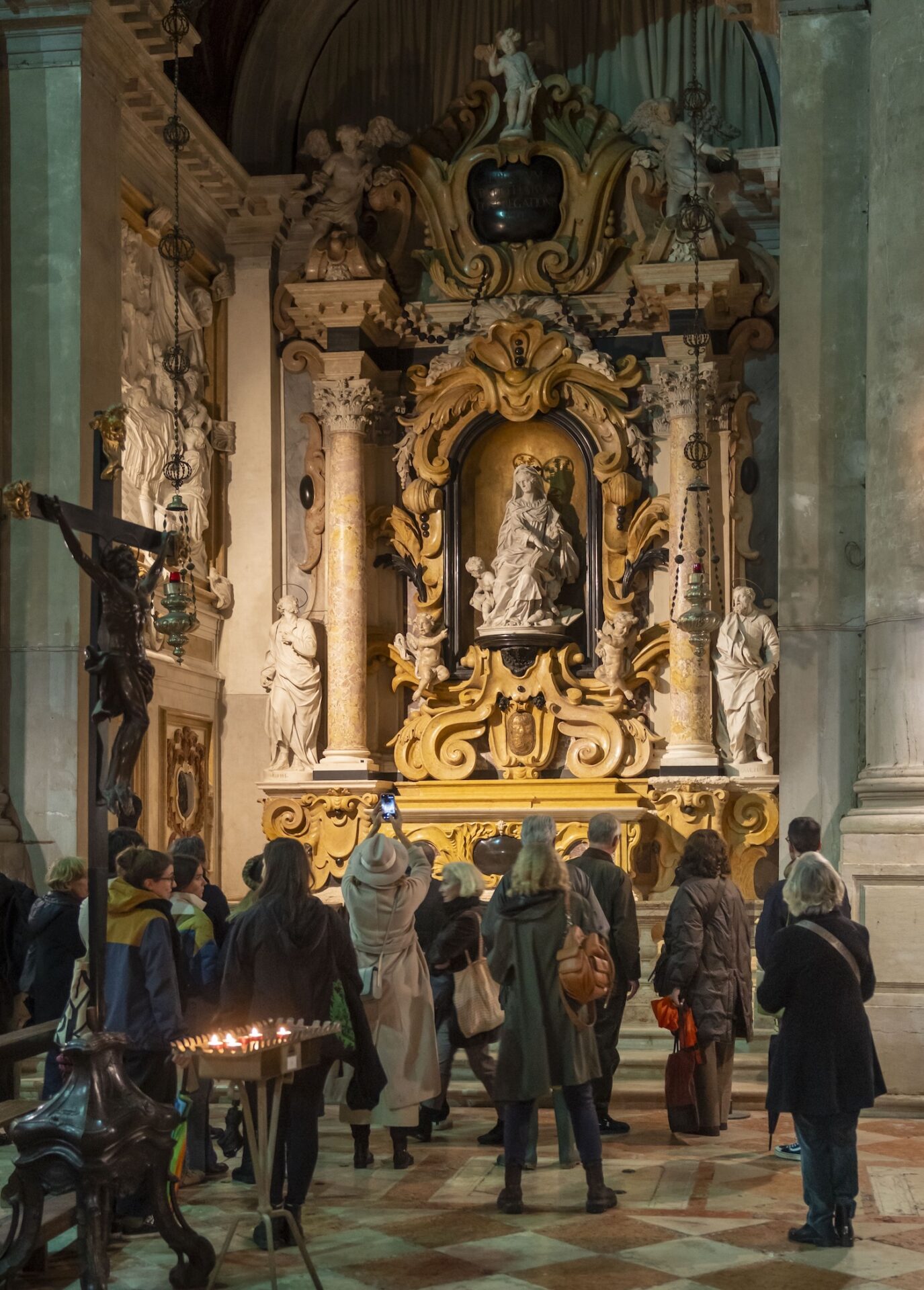
The restorers then turned their attention to the sculptural group depicting Saint Anne, who acts as a bridge between the New and Old Testaments, highlighting the role of women in the history of salvation; she is surrounded by cherubs and flanked by Saint Joseph (on the left) and Saint Joachim (on the right). Although the sculpture was in good condition, it was necessary to remove the build-up of dust and dirt, which had obscured the marbles’ polychromatic colours, and to restore some detached parts, such as fragments of fingers or wings.
‘In the high reliefs on the right-hand wall, however, there were some colour changes – brownish stains caused by natural alterations in the marble and layers of wax and other solutions applied over time. ’ explained Saccarola. ‘As we were unable to remove them entirely during the cleaning process, rather than persisting, we opted to “tone them down” slightly with paint to minimise visual distraction. As for the niche, this featured very fragile original gilding with layers of repainting applied over time: ‘It wasn’t easy to distinguish it from the original, but we achieved a good balance between restoration and chromatic and aesthetic integration.’
Although not covered by the funding, during the works the restorers also carried out some restoration work on Fumiani’s canvases depicting the ‘Genealogy of Saint Anne’, which, echoing the colour scheme of the large ceiling he painted in the church, decorate the chapel’s vault. These were in a poor state of preservation: ‘The wooden panels on which the canvases are mounted were highly susceptible to damp, and this had caused warping, problems with the lining and cracks, resulting from structural stress, which have now been stabilised. The legibility of the work had deteriorated to such an extent that in the past it was thought to be a fresco. Furthermore, over time, due to the oxidation of the protective varnish and the build-up of surface dirt, much of the pictorial detail of the scene had become obscured and degraded: ‘We hope to be able to proceed with more decisive restoration work soon,’ Saccarola concluded, adding, however, that the canvases have now been partially saved and secured.