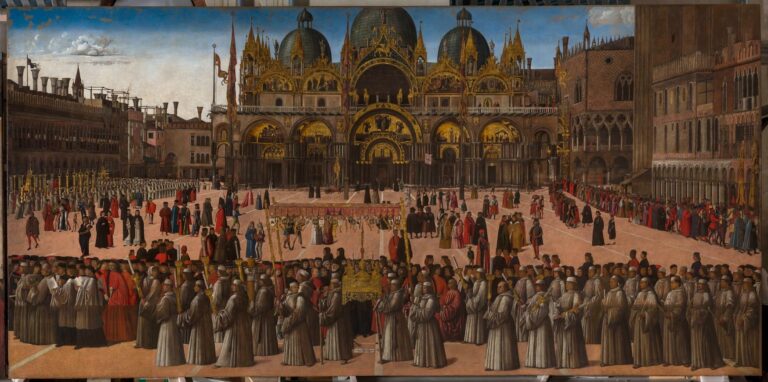


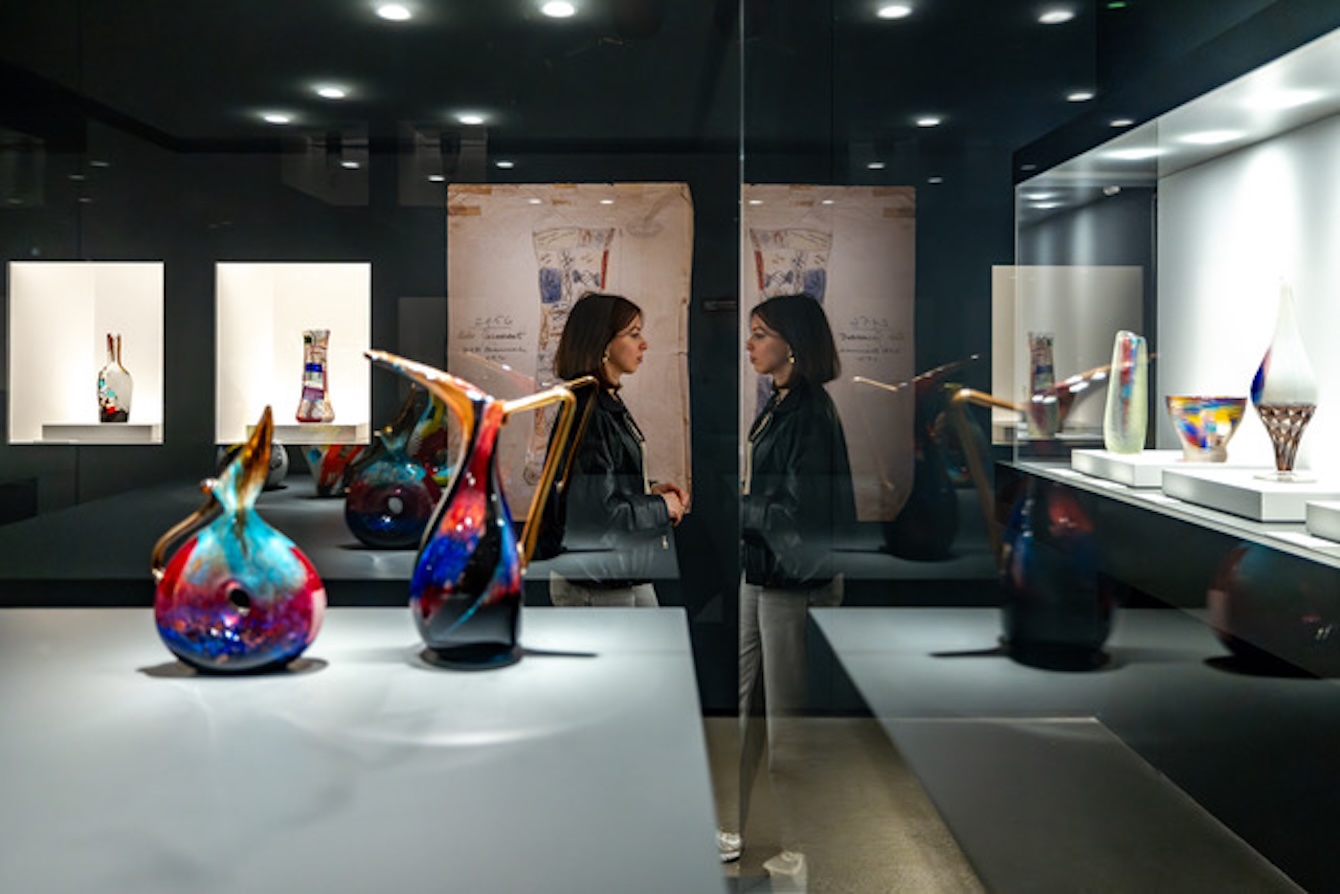
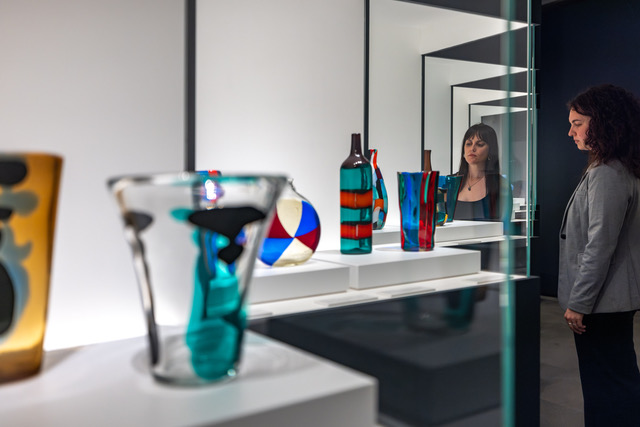
On display alongside this gem are over 160 works that bear witness to a crucial decade for the rebirth of glass art within the context of the Venice Biennale, characterised by great freedom, inventiveness and enthusiasm. From 1948 – the year in which activities resumed following the Second World War – right through to the late 1950s, Murano glass featured in the 24th to 29th editions of the Biennale. A unique decade, in which the fire of Murano’s furnaces not only forged and brought to life objects of fine craftsmanship, but also shaped innovative elements that became design pieces and true works of art, as can also be seen in the catalogue, edited by Marino Barovier and Carla Sonego. This presents an in-depth scientific study, documented in the Biennale’s Historical Archive of Contemporary Arts (ASAC) and in public and private archives, which illustrates, through period photographs, drawings and documentary material, what was exhibited at the Biennale during that period. The history of every vase on display in the exhibition is reconstructed, including unique pieces that have not been seen for some time. It was precisely from 1948 onwards that the Venice Pavilion’s decorative arts exhibitions revived their significant focus on glass, to which the Pavilion has always devoted ample space and which, in 1952, was entirely dedicated to hosting the major exhibition of Murano glass. These exhibitions showcased the renewed vitality of Murano, which, in the 1950s, experienced an exceptionally fruitful period in tune with the fervour following the post-war reconstruction and the subsequent economic boom, as well as with the emergence of design culture in an Italy that was undergoing change.
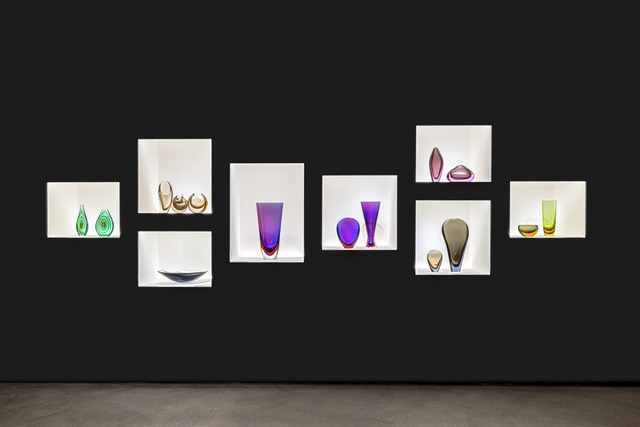
It was precisely during that decade that unprecedented interpretations of ancient techniques, new manufacturing processes and experimentation with materials coexisted, with particular attention paid to the object’s colour rendering. Glass pieces were often created that displayed an expressive dichotomy: from heavy pieces known as ‘sommersi’ to ‘soffiati’, which are light and transparent; and from rich, intense colours characterised by rigorous forms inspired by Nordic design to soft, irregular lines more typical of the Italian aesthetic. Other pieces, crafted from solid glass, stand out instead for their sculptural appearance and remarkable plasticity. The stars of this period were the ‘historic’ glassworks that made the Murano style internationally renowned, such as Venini, with works by Fulvio Bianconi and Paolo Venini: ‘Venini is the master of colour and the informal style, which are highly appealing,’ explains Marino Barovier. Next comes Barovier & Toso, with glassworks by Ercole Barovier; Seguso Vetri d’arte, with Flavio Poli; and Aureliano Toso, featuring the experimental work of Dino Martens, who introduced glass grinding techniques. The exhibition continues with Fratelli Toso, featuring Ermanno Toso, and AVEM, showcasing the experimental work of Giulio Radi, Giorgio Ferro and Anzolo Fuga, including the engraving firm S.A.L.I.R. ‘During this period, people were often free to produce whatever they had in mind, resulting in glassware that differed from the Venetian tradition of the time,’ continues Brovier. ‘Vases, for example, increasingly lost their functional purpose to become objects of design and art.’
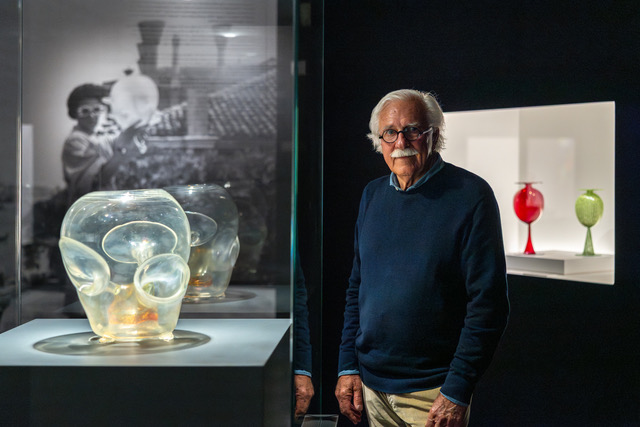
The Venice pavilion also featured more recently established glassworks, such as Gino Cenedese, and those founded by skilled master glassmakers such as Alfredo Barbini and Archimede Seguso: ‘Whilst Barbini, a pupil of Martinuzzi, learnt to work glass in a sculptural manner, as demonstrated by his creation of a hand, Seguso, on the other hand, was a highly accomplished artist of the time who had a great love for filigree, which he, however, reworked and reinterpreted by twisting the filaments to create distinctive objects with a rippling effect,’ explains the curator. At the same time, a number of artists, including Ezio Rizzetto, Anzolo Fuga, but above all the ‘spatialist’ Vinicio Vianello, mentioned earlier, developed a particular interest in glass as a material, using it as a means of expression. A golden age that bears witness to a dialogue with the Biennale and glass that has, unfortunately, long since been interrupted: ‘We have repeatedly attempted to engage with the institutions and sought to have glass readmitted to the Biennale. Cicutto was interested, but then, with the change of presidency, nothing more was done,” said the creator of the ‘Le Stanze del Vetro’ project, the collector David Landau, who had initially proposed his glass collection for the Glass Museum in Venice. ‘I realise that design objects such as cups and vases may perhaps be of little interest today, but artists have now discovered that glass can be anything, and glassworks – as the exhibition demonstrates – have long since begun working with artists to create works of art that would be at home in any room at the Biennale. Let us hope that glass will soon once again form part of the great International Art Exhibition.’