

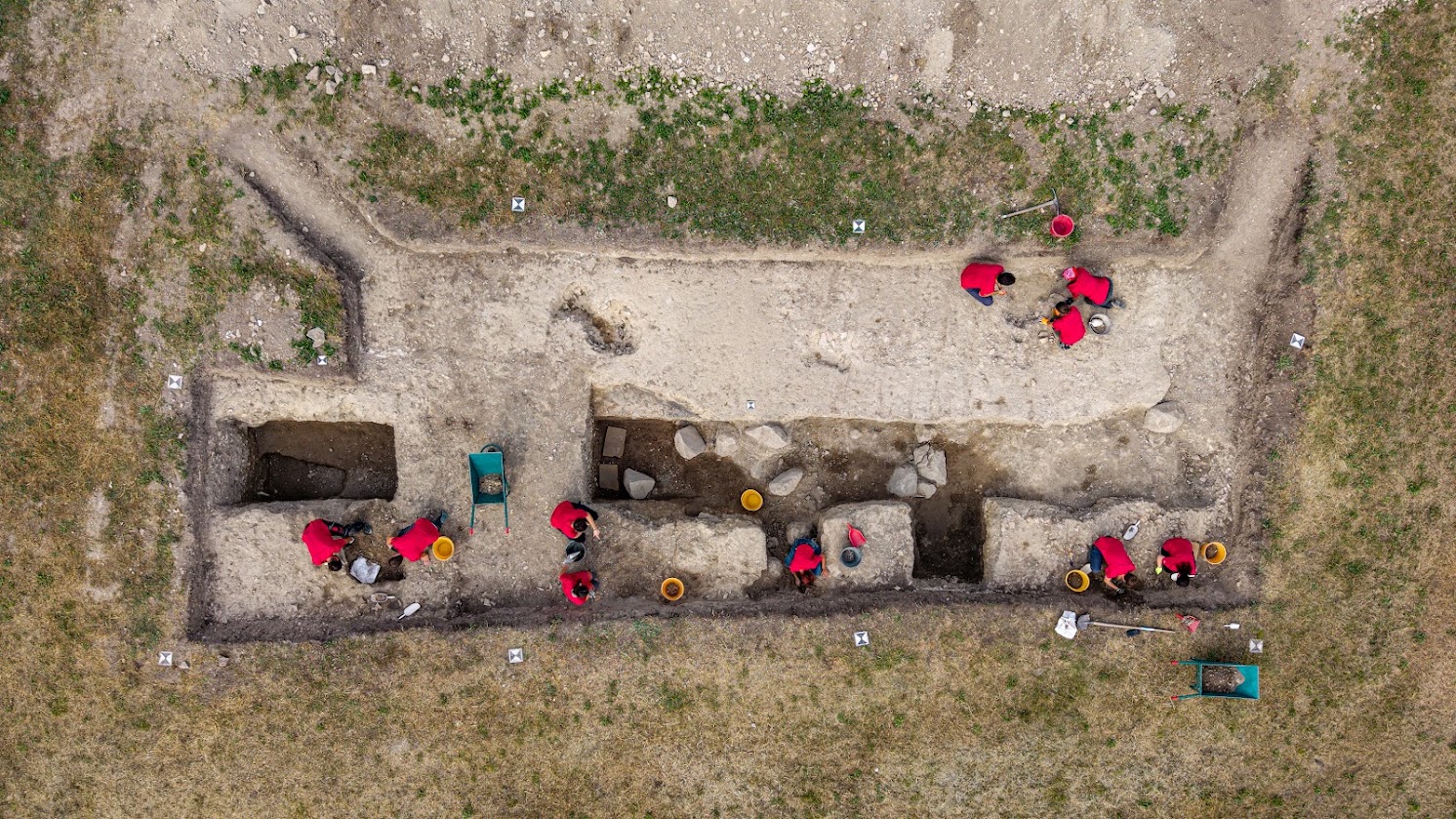
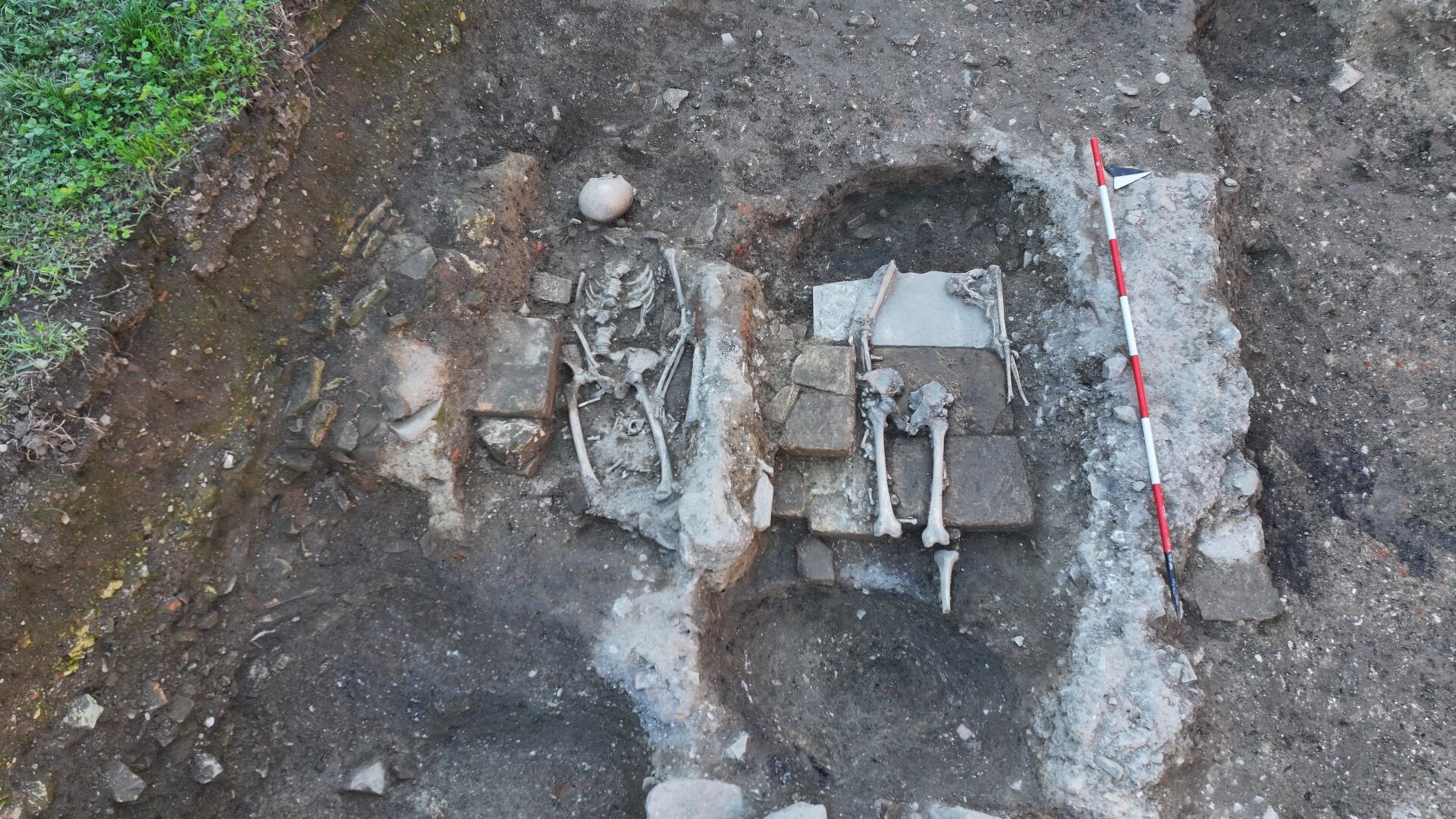
The archaeologists therefore focused their work primarily on the so-called ‘spoliation pits’ – the trenches left by the removal of masonry – analysing the traces in the ground through stratigraphic analysis. A significant finding concerns the foundations of the church and the neighbouring building, constructed largely from trachyte paving stones taken from Roman roads and reused upside down. According to the researchers, the reuse of these public infrastructure elements bears witness to the role played by the bishop in the governance of the city as well. In front of the church, between the 6th and 7th centuries, a portico and a cemetery were established. The tombs, like the masonry, were subsequently stripped of their materials. The study of human remains and radiocarbon dating, already planned, will help clarify the phases of use and abandonment of the complex. The discovery also helps to shed new light on the transition from the Roman city to lagoon-based Venice. Research indicates that the transfer of the bishop’s seat to Torcello in the 7th century was not necessarily a sudden flight in the face of invasions, but a decision linked above all to demographic and environmental changes. The church at Altino was gradually dismantled, probably by the first half of the 7th century, and the town became a source of building materials for new settlements. The excavation, directed by Diego Calaon and co-directed by Elisa Possenti of the University of Trento, will continue with the study of the artefacts and anthropological remains. Geophysical surveys are also planned for the parts of the site that have not yet been explored, in order to locate the baptistery and complete the reconstruction of the episcopal complex. Some nummi – that is, coins from the fourth or fifth century, very small and of little value – are now quite corroded and almost illegible. These are among the objects found during the recent excavation campaign at Altino. Jacopo Paiano, a PhD student at the University of Trento and one of the researchers involved in the excavations, adds: ‘We have also found objects associated with the grave goods of some tombs that no longer exist. For example, bone combs, which were common between the sixth and seventh centuries, and a beautifully decorated belt buckle depicting a man apparently dressed as a warrior in the act of spearing an as yet unidentified animal with a spear. A very well-preserved object, a fine piece of jewellery that suggests the owner was a person of some means.”
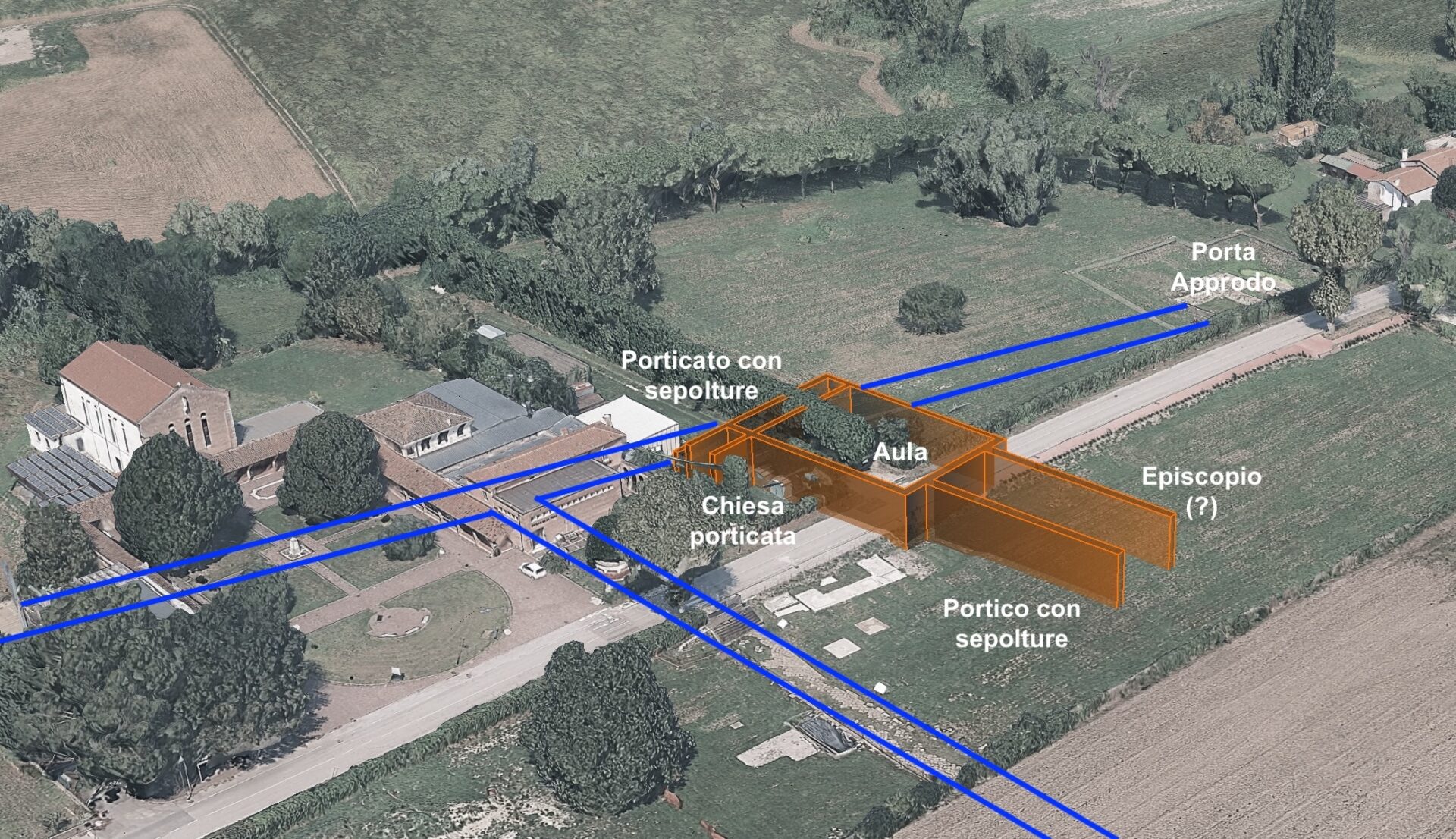
A large church, built between the end of the 4th century and the first half of the 5th century, bears witness to the presence of an already well-established Christian community in Altino at a time when Christianity was beginning to spread throughout the region. The recent discovery of the episcopal church and what is thought to be the bishop’s palace, in the Altino Archaeological Park, provides new evidence for reconstructing the origins of Christianity in the Venetian area and the subsequent transfer of the bishop’s see to Torcello. ‘It is one of the oldest settlements in the Upper Adriatic region,’ explains Paiano. The exact dating of the building, he points out, has not yet been definitively established, but it is in any case a very ancient structure. In terms of size, the church is comparable to the earliest places of worship in Aquileia. Written sources also help to confirm the importance of the Altino community. In a letter dated 396 AD, Saint Jerome addresses Heliodorus, the first bishop of Altino, and describes the work of the presbyter Nepoziano in the care of the church. The text refers to a building already organised as a place of worship, not simply a dwelling adapted for religious services. The early spread of Christianity in the Upper Adriatic may also be linked to the location of centres such as Altino, which were equipped with ports and integrated into trade networks. ‘Trends arrived earlier here, including religious ones,’ observes Paiano. Further evidence may come from a gem discovered in Altino some time ago, dated to between the late 3rd and early 4th centuries, on which the presence of a Christian figure has been hypothesised. The discovery also opens up new perspectives on Altino’s transformation between late antiquity and the early Middle Ages. If the building identified is indeed the episcopal church, it provides a starting point for understanding the transfer of the bishop’s see to Torcello in the 7th century. ‘It is a key element in clarifying the dynamics of Torcello, which we have so far studied mainly from the island’s perspective,’ emphasises Paiano. The presence of a religious complex of this size also indicates that Altino maintained a thriving community at least until well into the 7th century, an aspect that has been poorly documented to date due to the scarcity of preserved archaeological remains. The excavations will continue with the study of the artefacts and burials identified in the area. Analysis of the human remains may provide information on the living conditions of the inhabitants, whilst new geophysical surveys could help to locate the baptistery and reconstruct the extent of the episcopal complex.