

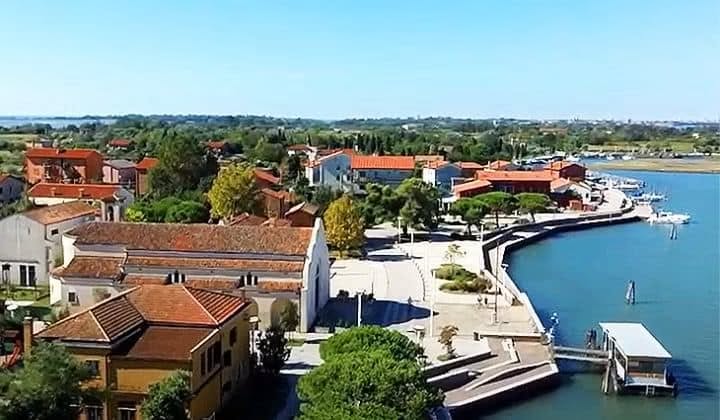
Sant’Erasmo has always been an important island in the Venetian Lagoon, thanks above all to its agricultural produce, which has been prized since the days of the Most Serene Republic. Yet, for a long time, it lacked a truly independent identity: the land was largely in the hands of a few large landowners and, from a religious point of view, it depended on the parish of San Donato di Murano.
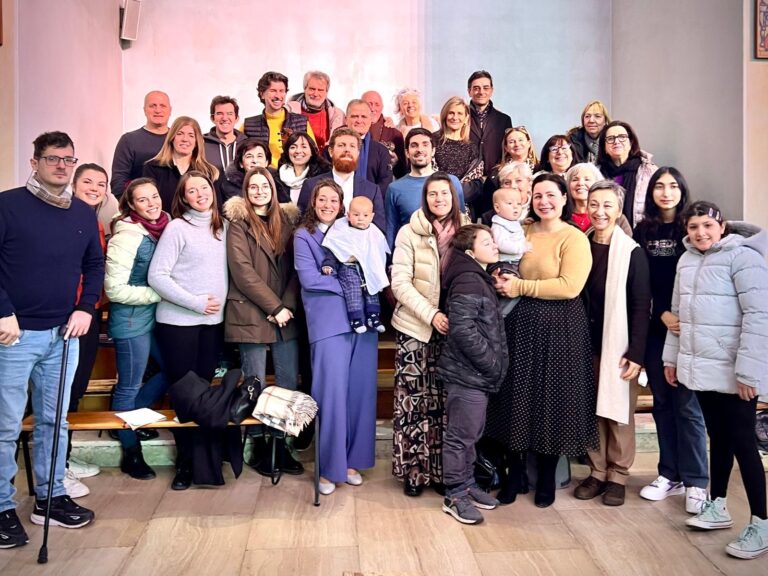
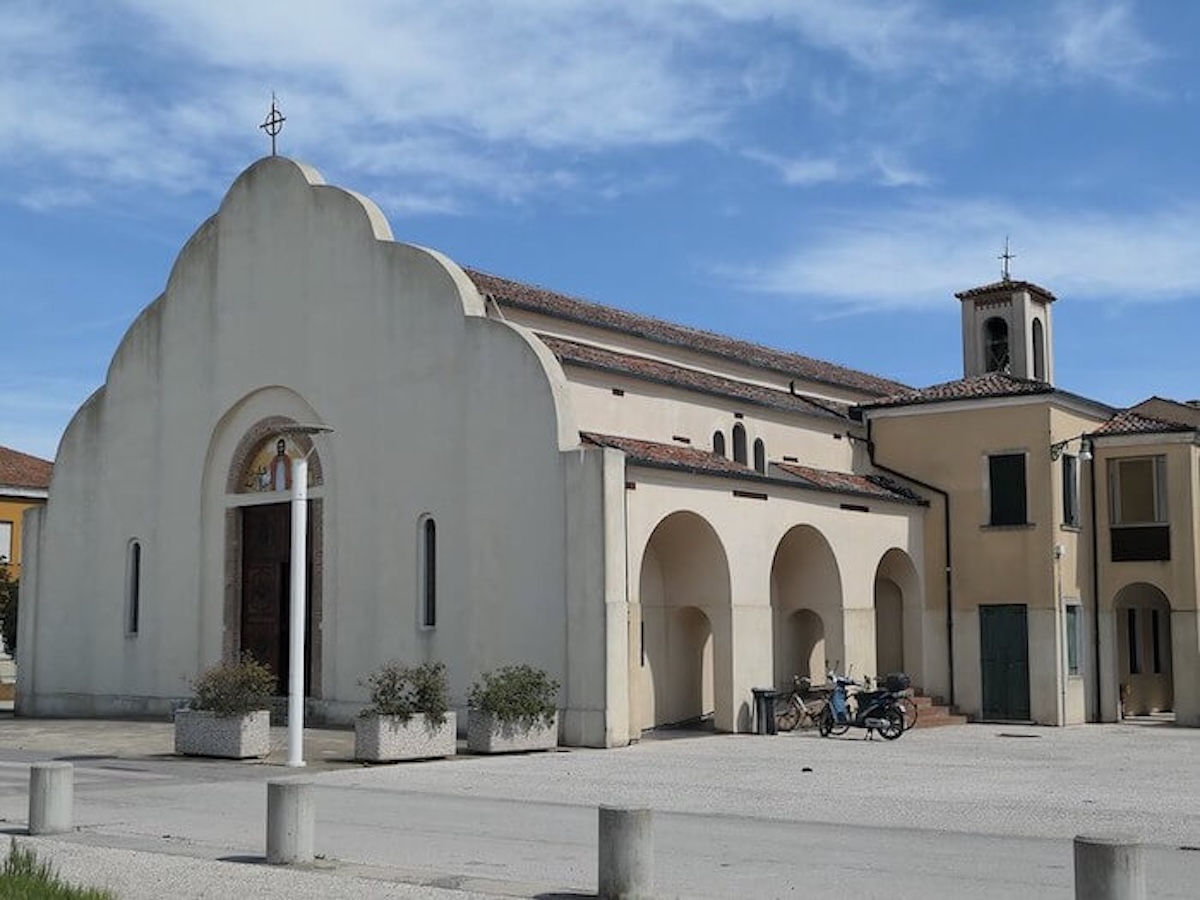
The turning point came in 1926, when the Patriarchate of Venice established the parish of Sant’Erasmo. This marked the beginning of a new chapter in the history of the island and its inhabitants. One hundred years on, on Sunday 22 November at 10.30 am, the community will celebrate this anniversary with a Mass presided over by Patriarch Francesco Moraglia. It is an opportunity to remember their roots, but above all to look ahead, as the parish priest, Don Mario Sgorlon, emphasises.
Don Mario, what did the establishment of the parish on Sant’Erasmo represent, a hundred years ago?
It laid the foundation for giving the island its own distinct identity. In 1926 we did not have a parish: we were part of the parish of San Donato di Murano, so friars would come here to celebrate Mass, or someone from Murano would come for the more important services. The fact that, for the first time, the Patriarchate decided to establish a parish here marked a fundamental turning point. The church was then rebuilt and consecrated in 1929. From then on, especially after the end of the Second World War, many people who had come to work on Sant’Erasmo, particularly from Treporti, began to buy up various plots of land and become their owners. Our surnames – Nardin, Smerghetto and Zanella – largely trace their origins to the Cavallino-Treporti coastline.
A new community that developed partly thanks to the character of the first parish priest.
Our parish is also founded on the figure of the first parish priest, a priest from Vittorio Veneto whom the Patriarch at the time, Pietro La Fontaine, had brought here to Venice. Don Vian was a very energetic, very active figure, somewhat unusual in character, but very enterprising. On his initiative, not only was the church refurbished, but the idea of building the nursery school, the sacristan’s house and the vicarage also came about. Subsequently, the first cemetery was also established, around the years 1930–1933. These are all projects that gave rise to a community that had not existed before.
The parish, therefore, was not merely a religious centre but also the starting point for building a community.
Within a few years, and particularly in the post-war period, various initiatives sprang up: the Festivities Committee, the brass band, and all those occasions that provided moments of celebration and social gathering, helping to bring the inhabitants together and give the island its own identity. Over time, these organisations have become firmly established. The sports club, the bocce tournaments and the football team were set up. And there are still various events held throughout the year that continue to bring the whole island together: the Must Festival in June and the Carnival. Then there are years when plays are staged again at the parish hall. It began as a cinema in the early post-war years and later developed into an independent organisation. Even today, although it is not always of a religious nature, it remains a focal point for the civic and social initiatives with which the island identifies.
Today, however, Sant’Erasmo is facing a gradual decline in population. How much does this situation affect the life of the parish and its pastoral activities?
We have a population of around 550, whereas there used to be 800 or 1,000. Over time, this has led to an exodus of young people, who have gone on to start families off the island, a falling birth rate and a loss of activities aimed at children. There are fewer and fewer young people. For example, even in recent years we have organised the Grest summer games, but by bringing together young people who also came from Treporti or Murano. We have thus managed to form a small group of around 25 young people. The island itself, however, does not have such a large number of young people, and school attendance is falling steadily.
One of the main concerns is precisely whether we will be able to maintain educational services, starting with the nursery school.
We do not know whether the primary school will be able to survive in the coming years. The nursery school has been closed for two years. Enrolment had fallen so low – just three children – that it was not possible to obtain the Ministry’s approval to run school activities. We therefore had to close it, albeit reluctantly. Parents are forced to take their children to Murano or even to Venice. This is a major difficulty, because it takes more than half an hour by vaporetto to get here from Murano to Venice. It’s not easy. If the children come to the island for special occasions or for a few days’ gathering, the idea of them attending school here – particularly for children coming from outside the island – is more problematic. If only there were a chance to reopen, perhaps with the support of the institutions and local authorities. If the numbers were to increase in the future, we would certainly be willing to revisit the matter. But this year we have only one birth; last year there were two. These figures do not allow us to think on a large scale or to envisage that initiatives involving children and young people can be sustained.
This situation also risks undermining the community’s ability to pass on its identity to the younger generations.
Certainly, the decline in the number of children and young people also means a loss of opportunities for people to meet and socialise. It is a situation affecting the whole island and one that cannot fail to have consequences for the life of the parish as well. This is why it is important to keep opportunities for people to meet alive and to continue organising initiatives that involve the local residents.
In this context, what significance does Patriarch Francesco’s visit for the centenary hold? What message would he like to convey to the community?
The presence of the faith on the island, though diminished, continues to this day. In some way, it is still present, and this presence should also be encouraged by the Patriarch’s visit. We have aimed to enliven the celebration with songs and the choir, preparing the venues well and also organising refreshments at the end, to create a day of fellowship that will remain in people’s memories. We would like it to be an important and meaningful occasion for the island’s inhabitants, including those who might only come along on this particular occasion, out of curiosity or interest. It is an occasion I have organised primarily for those who believe, but I would like to speak to the whole island, including those who hold more secular views.
The centenary, therefore, is not merely an anniversary to commemorate the past, but also a sign for the future.
Yes, that is precisely the point. We are here, even if there are only a few of us. It is not merely a testimony to the island’s faith, but is also intended as a sign for the future.
Stefano Nava
In Sant’Erasmo, there are places that are worth more than their practical purpose. Stefano Nardin’s supermarket is one of them. Aged sixty-two, born and bred on the island, married and the father of two daughters, Nardin has, for the past sixteen years, together with his wife and a few staff members, been the owner of the island’s only grocery shop. But to reduce his role to that of a shopkeeper would be an understatement. An organist, actively involved in parish life and attentive to the needs of the residents, he is one of those figures around whom a community is recognised. In his shop, people buy groceries, but they also get information, ask for small favours, collect books and find a helping hand when needed. It is a daily hub that says a great deal about what it means to live on an island.
It is no coincidence that the centenary of the founding of the parish of Sant’Erasmo, celebrated on Sunday 22 November with Mass presided over by Patriarch Francesco Moraglia, represents for Nardin an occasion that goes far beyond a mere religious anniversary. ‘The establishment of the parish also gave impetus to a greater awareness of the island’s identity. There has been a whole evolution that has transformed Sant’Erasmo into a true community’.
A community which, for several decades, has experienced significant growth. Its most prosperous period lasted from the late 1970s to the mid-1980s. “We had over a thousand inhabitants. I was born in 1964 and I remember that in 1970, when I started primary school, there were more than 120 children. There were five classes, with about 25 pupils in each. We had a nursery school and a primary school, both on the island.’ Today, the contrast is stark: ‘There are barely five children at the primary school. This figure, more than any other, illustrates just how much the situation has changed.’
According to Nardin, the population decline was not an inevitable process, but also the result of decisions that failed to keep pace with the changes in society. Starting with the difficulty for the younger generations to find a home on the island. ‘From the early 1990s, young people began to need housing – to be able to extend or build a home to start a family. But this was not possible. The City of Venice maintained a very restrictive town planning policy, without providing for any real housing development. Some people, out of necessity, even built illegally; then the amnesties came. But the need to offer prospects to those born and raised here was not recognised. So people began to leave.’
An exodus that fed on itself: when one family left, others often followed, even among those who might otherwise have stayed. Another key factor was the need to seek opportunities for study and work elsewhere. Sant’Erasmo has retained its agricultural character, but not everyone was able or willing to carry on their parents’ work. ‘Those who did not stay to work the land began commuting to Murano, Venice or the mainland. Today there is also a connection to Cavallino-Treporti, which offers opportunities particularly in the tourism sector.’
However, the island’s agricultural character – which has protected Sant’Erasmo from the most invasive changes and from mass tourism – has not been accompanied by a strategy capable of realising its full potential. “The island has never been geared towards mass tourism and would never have needed to build hotels or large-scale facilities. But this does not mean it could not have developed. A gradual expansion could have been planned, including through agritourism and activities linked to local produce. Instead, the focus has always been solely on maintaining the status quo. But if there are no longer any people, even maintenance becomes impossible.’
The result is a silent transformation. Long-established families are dwindling, young people are leaving, and some homes are being bought by people from the city – often pensioners seeking peace and quiet. These are welcome additions, but they cannot replace an active community. ‘These are important developments, but they are not young families capable of driving development, the exchange of ideas and cultural growth. By now, almost all of us are over fifty and there are very few young people. Moreover, those who go away to study rarely manage to return: if they graduate and find a job elsewhere, it’s hard to imagine rebuilding their lives here.”
How can this trend be reversed? For Nardin, there is no simple solution and, above all, Sant’Erasmo cannot be viewed in isolation. ‘We’ve also discussed this with the local councils, both the current one and previous ones. We can describe what we’re experiencing, but the solutions must come from the political sphere, with a comprehensive vision for the city and the Lagoon. Sant’Erasmo, on its own, lacks the economic and social strength to reverse this trend.’
The essential requirement is to create new job opportunities, not merely to provide housing. “If you think people might come to live here only to have to commute, it’s very difficult. We need to create economic activities that provide a local source of income. If a person can work where they live, they might even put up with a few inconveniences – such as not having a cinema, a chemist’s or all the services available on the mainland – because in return they find a more peaceful environment and a different quality of life.”
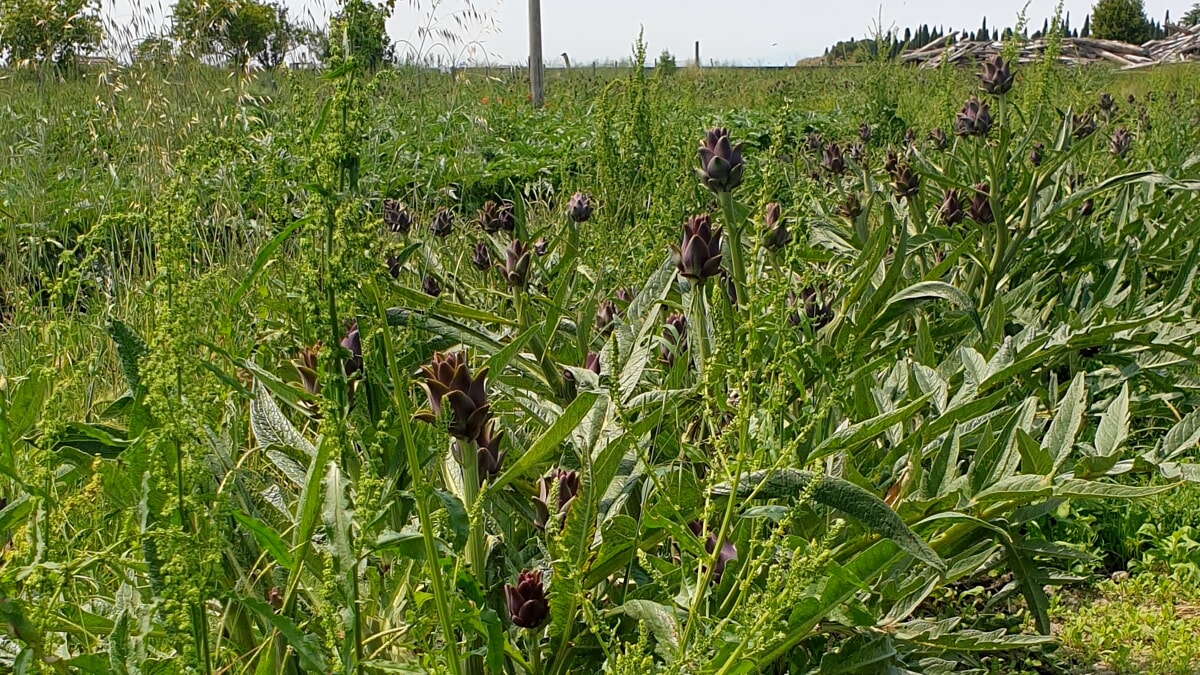
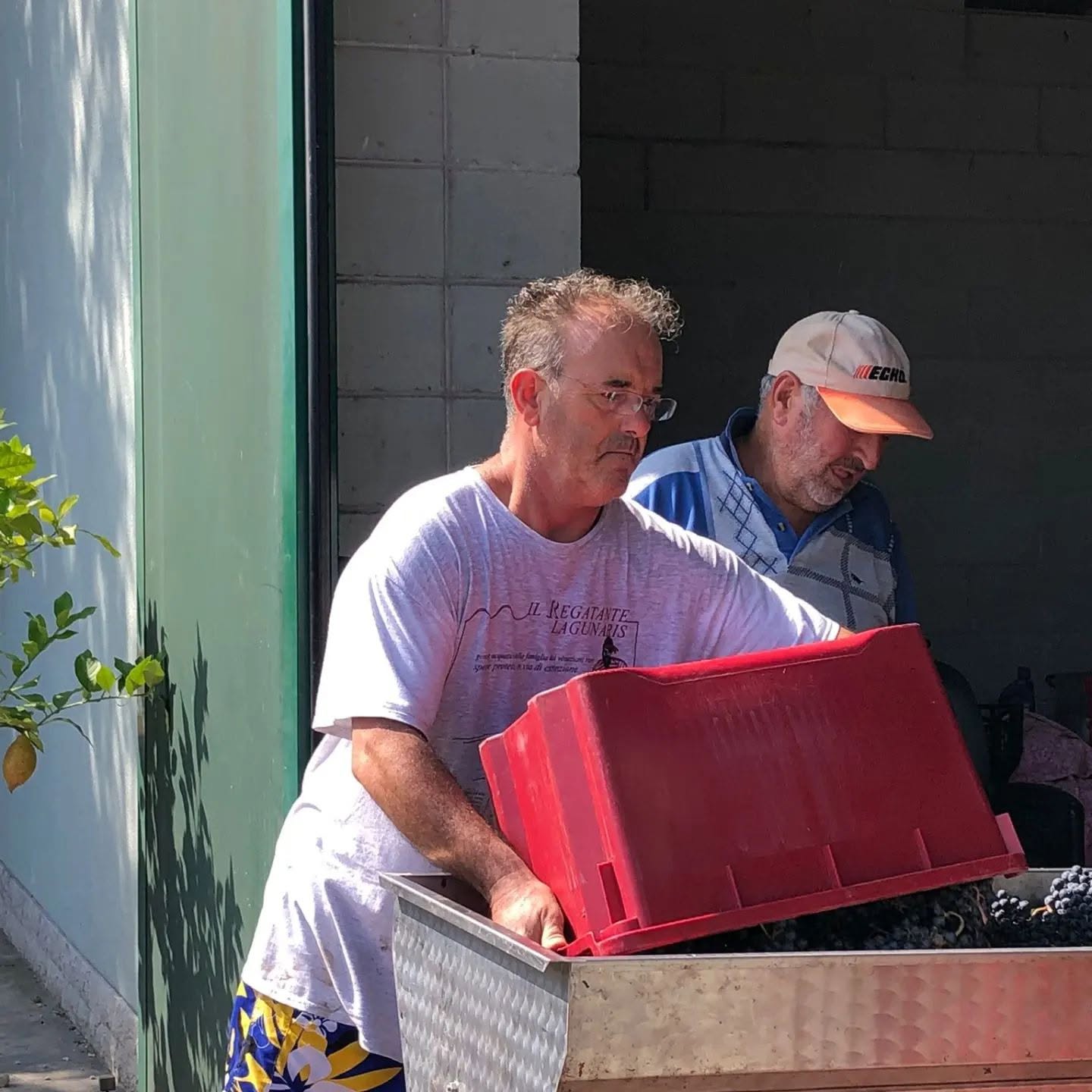
There are, in fact, already some signs of this. Nardin cites the arrival of new agricultural entrepreneurs, the example of the Orto di Venezia winery, founded by the Frenchman Michel Thoulouse, and that of Vigna del Mar, which produces Prosecco on the island. Also of interest is the ‘Osti in Orto’ project, in which Venetian catering professionals have pooled their expertise and begun cultivating land on Sant’Erasmo, also involving people who have chosen to move here to work.
‘Things are starting to happen, but these initiatives need support. Sant’Erasmo could become a hub for food and wine and the traditional produce of the Northern Lagoon, by bringing together farms, restaurants and other local businesses. I’m thinking of examples such as those in South Tyrol or Friuli, where different sectors have learnt to collaborate. What’s needed is a comprehensive project, a concrete plan that enables investment, job creation and the development of a cohesive system.” Among the possibilities are a modern form of agritourism and the development of remote working, provided these are supported by adequate digital infrastructure and town-planning measures that allow buildings to be adapted, accommodation facilities to be expanded and services to be developed.
Whilst many issues remain unresolved on the economic and demographic fronts, public transport, on the other hand, does not currently pose a particular problem. ‘Given the number of residents we have, we cannot complain. The ACTV services to Venice and Cavallino-Treporti run almost exactly to schedule, with services every forty minutes during peak times in the morning and evening. There is also the night service on the Laguna Nord line, with one service per hour. Compared to the 1990s, the situation has improved considerably.’ Nardin recalls how, when returning from work in 1988–89, he would miss the 6.25 pm vaporetto and have to wait until 8 pm in Venice. Today, alongside transport, residents are guaranteed a GP twice a week, a postal service and school transport. The local health authority (ULSS) service is also important, carrying out blood tests on the island every fortnight, including home visits for those who have difficulty getting about.
It is precisely in the services and everyday life that the value of Nardin’s supermarket really shines through. When the previous owners, the Vignotto brothers, retired in 2010, he and his wife decided to take over the business, leaving their respective jobs. ‘We’ve been running this business for sixteen years. It’s been a wonderful journey, because we’ve grown and become a point of reference, not just for shopping. For example, many elderly people have blood tests, but then don’t know how to download the results because they don’t have internet access or a computer. So they come here and we help them.’
Among the initiatives he is most proud of is a small space dedicated to books, set up in collaboration with the Querini Stampalia Foundation. “We’ve set aside a shelf for books. People who are members of the library can come into the shop, borrow them, read them and return them, just like in a library. Every three weeks, a member of staff from Querini Stampalia comes to restock the books, and you can also reserve books online. It’s a service that was missing on the island, and we’re delighted to have helped make it happen.”
The shop has also become a go-to place for those visiting the Northern Lagoon by boat or bicycle, for those seeking information, and for anyone who finds themselves in difficulty and needs help. “Once, during a storm, we helped some Swiss visitors. The following year they came back and brought us some chocolates to thank us. These are small moments, but they’re lovely. Opening up to the world allows you to meet people, share experiences and forge bonds.”