

The main area for improvement concerns the quality of waste sorting. According to Veritas, paper recycling is one of the recycling categories to which citizens pay the most attention. One reason for this is its long history: it is likely the oldest form of recycling practiced in the area and has now become part of people’s daily routines.
“It has now become part of people’s customs and culture. We’ve internalized it. And by now, we’ve also internalized the connection to the tree: recycled paper for everyone means one tree saved.” According to Favaretto, this message is particularly effective with children, who are often able to engage and encourage even adults to sort their waste properly.
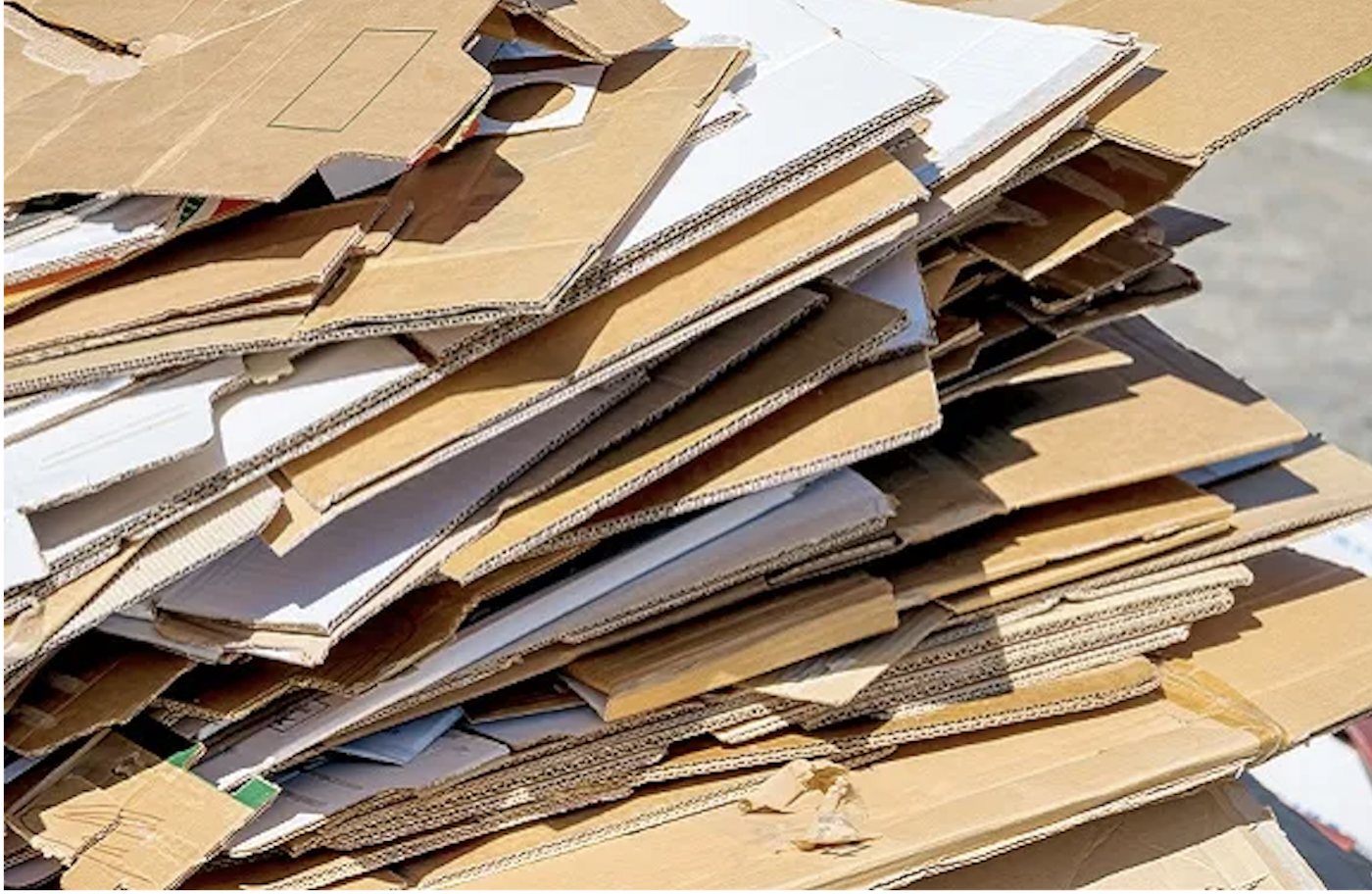
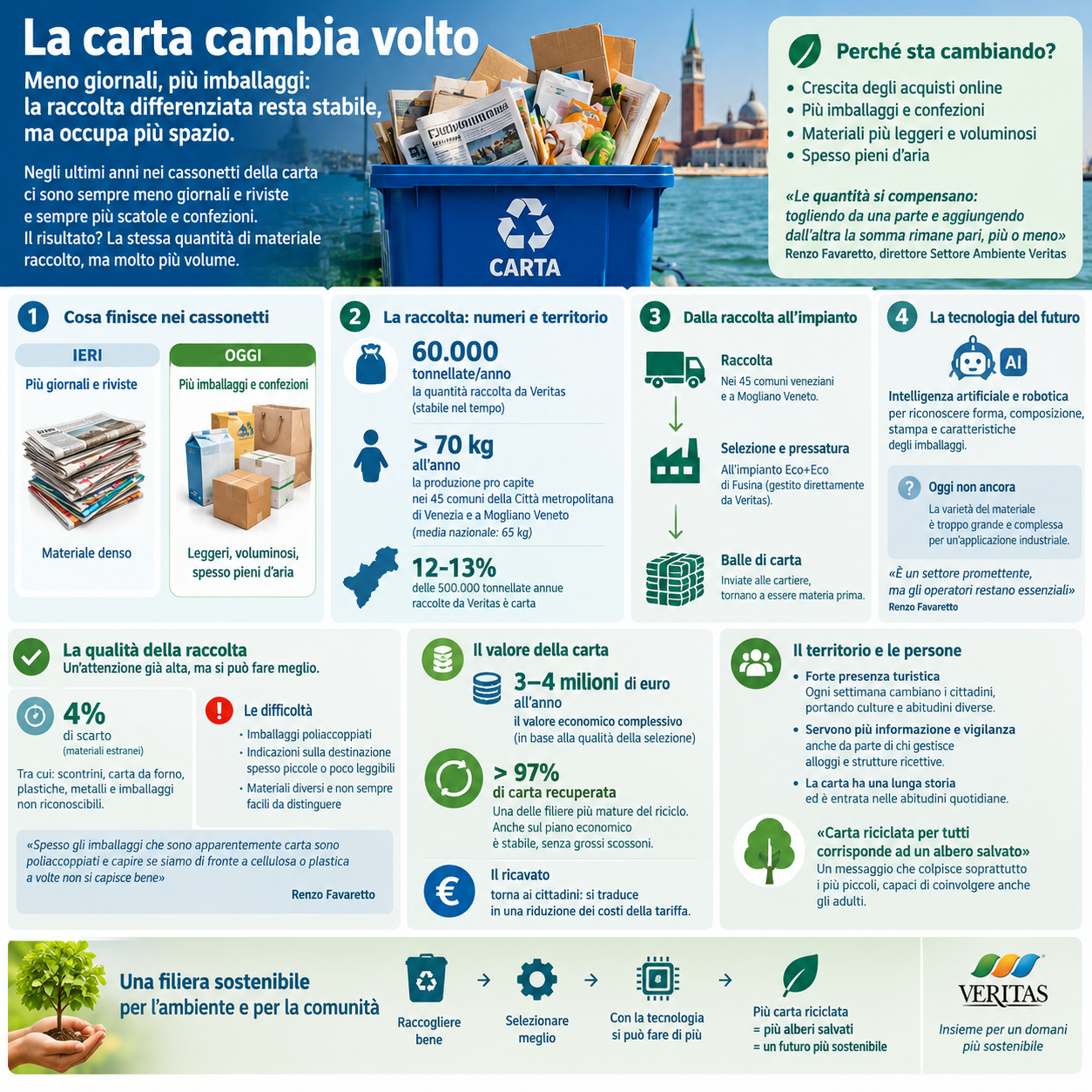
However, a certain amount of foreign material remains. The reject rate for paper collected by Veritas is around 4% and includes thermal paper from receipts, parchment paper, as well as plastics and metals. The problem becomes more complex with packaging, which is not always easily recognizable as paper.
“Often, packaging that appears to be paper is actually made of laminated materials, and it’s not always easy to tell whether it’s made of cellulose or plastic.” The packaging includes instructions on proper disposal, but they aren’t always easy to read: “Often, this text is very small and hard to spot.”
The quality of waste collection is also affected by the unique demographic makeup of the population and the high number of tourists in the Venice area. “A portion of the population changes every week because these are people coming from all over the world, bringing with them their country’s culture—or lack thereof—regarding recycling.” According to Favaretto, even those who manage accommodations and facilities that host visitors can do more to provide information and enforce compliance.
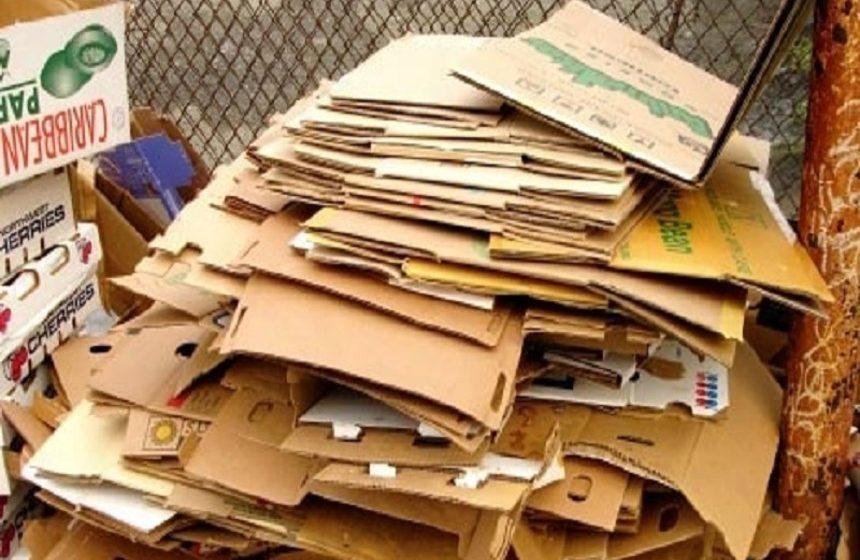
Once collected, the paper is sent to the Eco+Eco facility in the Fusina eco-district. Starting this year, Veritas has also been directly managing the sorting and baling process, whereas previously it relied on partnerships with other companies. The facility is capable of processing the entire annual volume, approximately 60,000 metric tons.
“The advantage,” says Renzo Favaretto, who heads Veritas’s Environment Division, “is being able to independently manage the waste produced in the area, preventing it from being shipped off to who knows where in search of a proper disposal site.” Paper accounts for about 12–13% of the 500,000 metric tons collected annually by Veritas.
Sorting is still largely carried out by workers, although artificial intelligence applied to computer vision and robotics could change the process. Systems capable of recognizing the shape, composition, printing, and characteristics of packaging could, in the future, automatically identify materials and direct them to the correct bin.
“It’s a promising sector, but we haven’t yet reached the point of industrial-scale applications.” The challenge, Favaretto explains, lies primarily in the wide variety of input material: “The raw material we collect varies enormously in color, composition, and shape, making it difficult for any technology to distinguish between them.”
Automation, however, could make it possible to replace—at least in part—the most strenuous and repetitive tasks. “It is to be hoped that this will happen soon, because these are jobs with little creative input, which should be handled by machines. For now, however, workers remain essential.”
After sorting and baling, the paper is sent to paper mills, where it is reprocessed into raw material. Today, more than 97% of the paper collected by Veritas is actually recycled. It is one of the most established recycling sectors and also maintains a certain degree of stability from an economic standpoint.
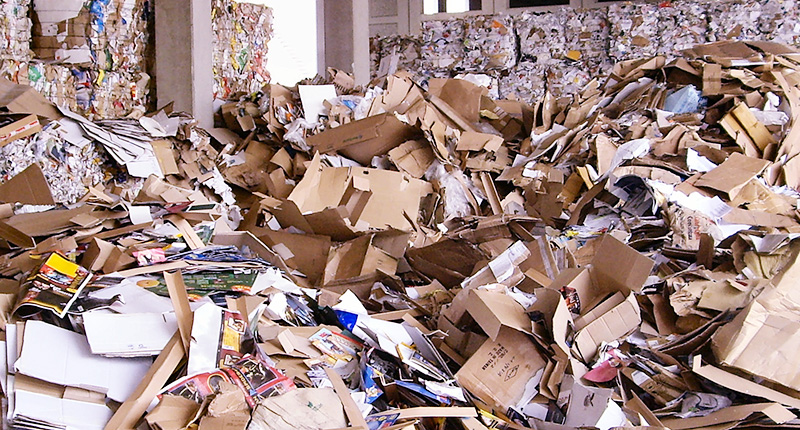
The approximately 60,000 metric tons per year, depending on the quality of the sorting, can be monetized for a total of about 3 to 4 million euros. “Compared to recycled plastic, which is currently facing difficulties, the economic value of recycled paper is stable. And it has never experienced any major fluctuations.”
The proceeds from the sale of the sorted paper ultimately benefit citizens in the form of lower costs. “The proceeds are then used to reduce the fee.”
The challenge, therefore, is not just to collect more paper, but above all to improve the quality of the paper that enters the supply chain. And the next breakthrough could very well come from technology. “Improving quality. And who knows—maybe artificial intelligence and robots will help us.”