
The Son I’d Like to Have and the One I Have: A Father’s Story

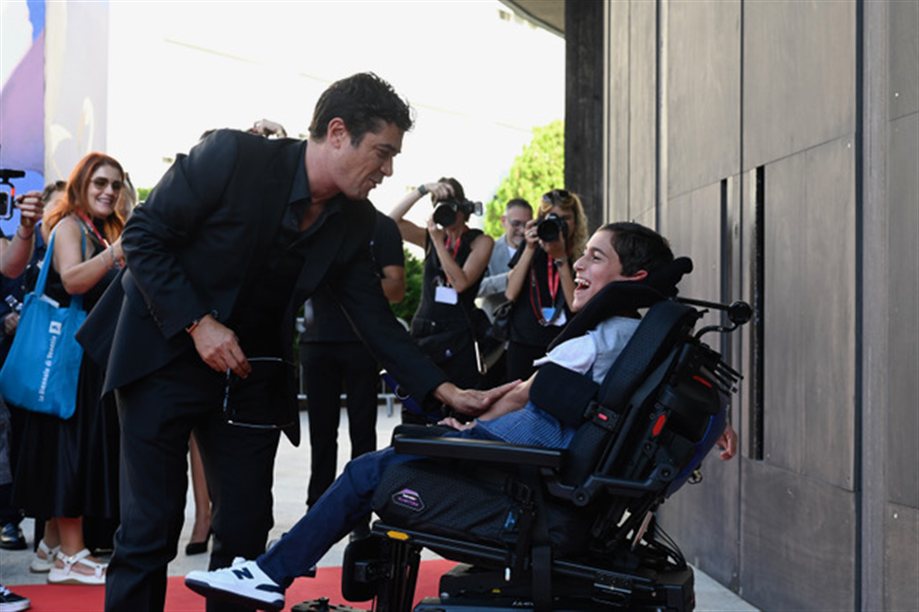
Film Festival: A disabled son, a desirable grandson: the existential questions faced by Dad Dario (Riccardo Scamarcio) in the film “I figli della scimmia,” the debut feature by director Tommaso Landucci

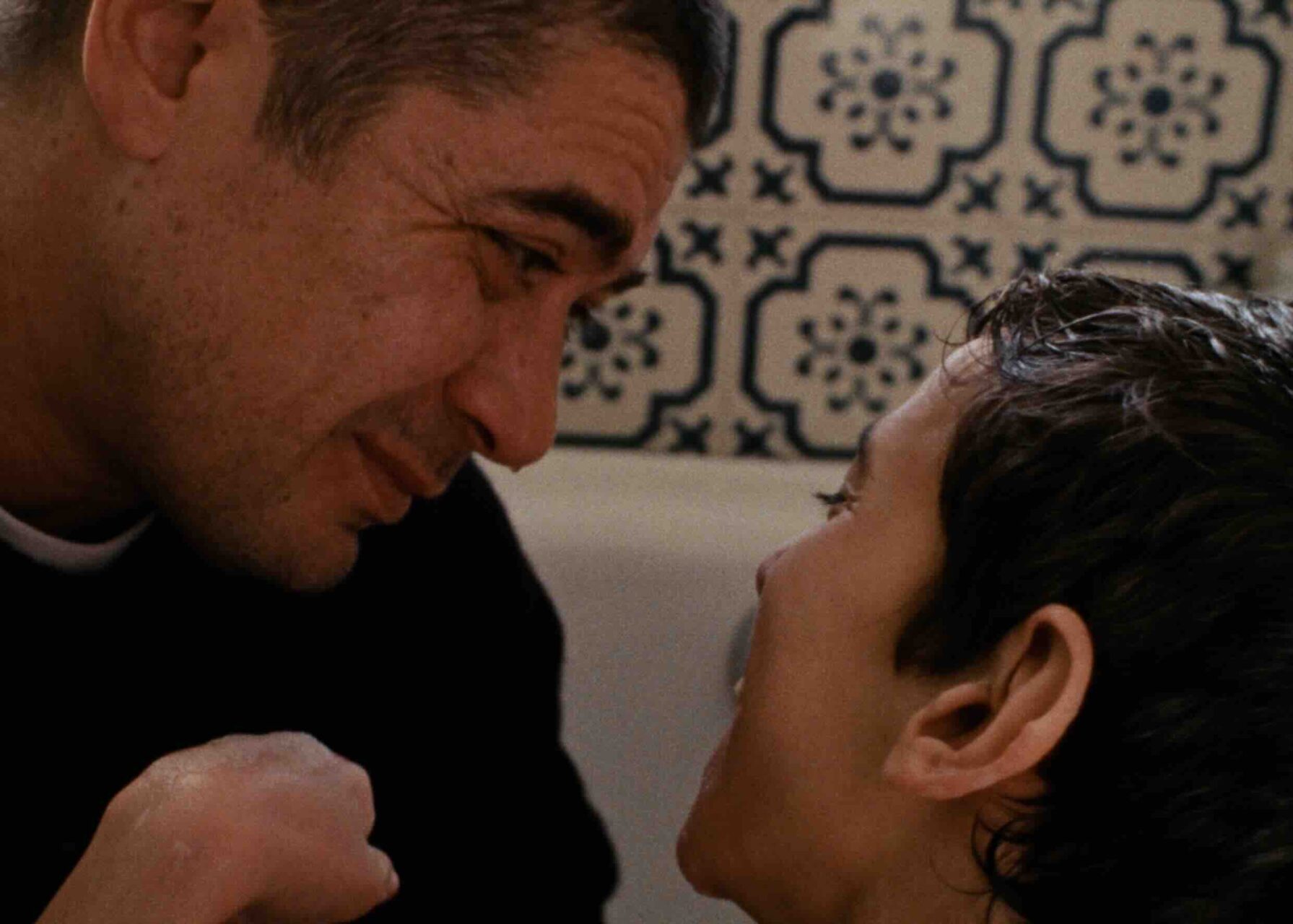
It all begins in the most intimate way; the first scene is set in the bathroom: Dario (Riccardo Scamarcio) is bathing his son Enrico (Andrea Aggio), who has a severe disability, in the tub, while his wife sits on the toilet to pee.

It takes just a few seconds to draw the viewer into that room, into that difficult, everyday family story.

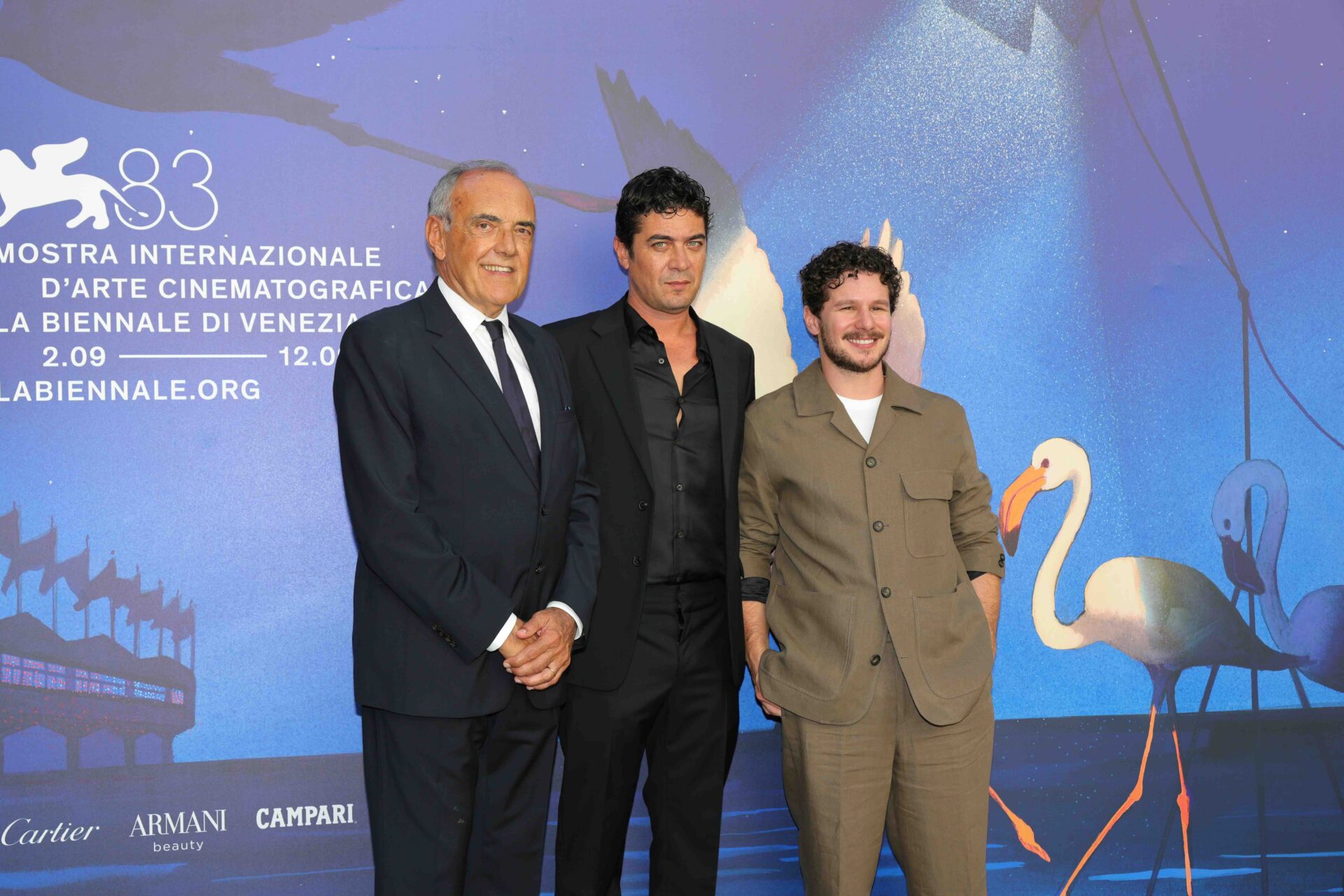
It is with this intimate and powerful image that the Italian film “I figli della scimmia” opens—the debut feature by promising director Tommaso Landucci, who also co-wrote the screenplay with Damiano Femfert. The film was presented in competition in the “Orizzonti” section at the 83rd Venice International Film Festival, where it received prolonged applause and a standing ovation at its premiere. The film unfolds slowly, accompanying the protagonists through their days, in which no extraordinary events occur but rather the raw, unvarnished everyday life of a family is portrayed—so much so that it feels as though we are right there with them, thanks to the film’s highly realistic depiction, day after day, of the taboos and struggles each character carries with them.

You can feel the full weight of the burden that Dario and his wife bear. The film, in fact, takes a deep look at disability—a situation everyone would like to avoid in life—showing what it entails for those who must deal with it every day, learning to interpret their son’s cries, and facing the

As Aesop told the story: A monkey had two babies...

Although the film centers on the theme of disability—featuring a real person with a disability in the lead role—it is primarily about parenthood. Dario devotes a great deal of attention to his son, but he also has a wonderful relationship with his teenage grandson Giacomo (Tancredi Naldini), who has entered a rebellious phase—a necessary step in forging his own identity. In a web of projections and unspoken desires, Dario finds in his nephew the son he always wanted and takes on the role of the father he could have been, ultimately upsetting not only his own equilibrium but also that of the entire family. The film’s title draws inspiration from an Aesop’s fable: the story of a monkey who had two young but loved and nurtured only her favorite, neglecting the other. Unlike the fable, however, the film focuses on the story of a parent torn between two “children”—the real one and the ideal one: “It is the story of an intimate, inevitable conflict that constantly challenges the fragile balance between generosity and selfishness, love and desire, acceptance and regret,” —said the director—There is a taboo, something ‘unspeakable,’ that fascinated me because it concerns the deepest and most intimate experience of parenthood: no father and no mother wants to have a child with a disability. This does not call into question the love that parents of people with disabilities feel for their children, but even though a child turns one’s life upside down regardless,

Imagining Another Life

Reflecting on this, Landucci wondered what would happen to a father if he suddenly found himself face to face with the son he had always longed to have. In the film, Dario’s life unfolds amid monotonous days, while that of his brother Roberto (Fausto Russo Alesi) seems thrown into turmoil by the possibility that his son might fail a grade—a boy who doesn’t apply himself in school and no longer even wants to play the instrument he’s been studying for years. Here the dichotomy emerges: Dario, who—burdened with problems—would have every right to complain, endures in silence, while his brother, who could be living a peaceful life, sees problems around every corner. Soon, like his uncle, his nephew develops a passion for trial motorcycles, and they begin to go on rides together—experiences Dario had always wanted to share with Enrico, who is instead confined to a wheelchair and with whom he cannot communicate. In fact, when Dario takes Giacomo to a race and introduces him to his friends, he leads them to believe that Giacomo is his son.

Between Desire and Shame

Here lies the flaw, the wound that slowly comes to light—that of someone who lacks the courage to shout that he would have wanted a different life, but who silently carries on each day, accepting what fate has in store for him. Scamarcio, who also produced the film, brings out the great dignity that defines the character in his performance.

Juggling his time between his grandson and his son—whom he helps bathe and feeds by hand, promising him that when he turns 18 he’ll let him drink beer—Dario is soon accused by his brother of being a superficial man who laughs at everything: but what if it’s precisely his quick wit that saves him from the abyss? A down-to-earth man, portrayed with tenderness and indulgence, Dario is the first to realize that the hardest part of fatherhood lies in accepting that children aren’t what you imagine them to be. And the moment he realizes he’s tried to live another life—one that, for a moment, seemed lighter and more normal—he breaks down, filled with regret and shame.

The screenplay has already won the Grand Prize at the Sam Spiegel International Film Lab, the 2021 Franco Solinas Award for Best Screenplay, and the Grand Prize at the 2025 Jerusalem Sam Spiegel Film Lab. The film, one of the most acclaimed in the Orizzonti section and set to be released in theaters on September 17, has left its mark for its sensitivity—free of sentimentality—and for the dose of reality it has managed to portray in a world now permeated by the idea of perfection.
Argomenti correlati: , , , ,
Author:

Iscriviti a GREEN&SALUS e non perderti nessun aggiornamento, ti invieremo 1 volta a settimana i nuovi articoli!