
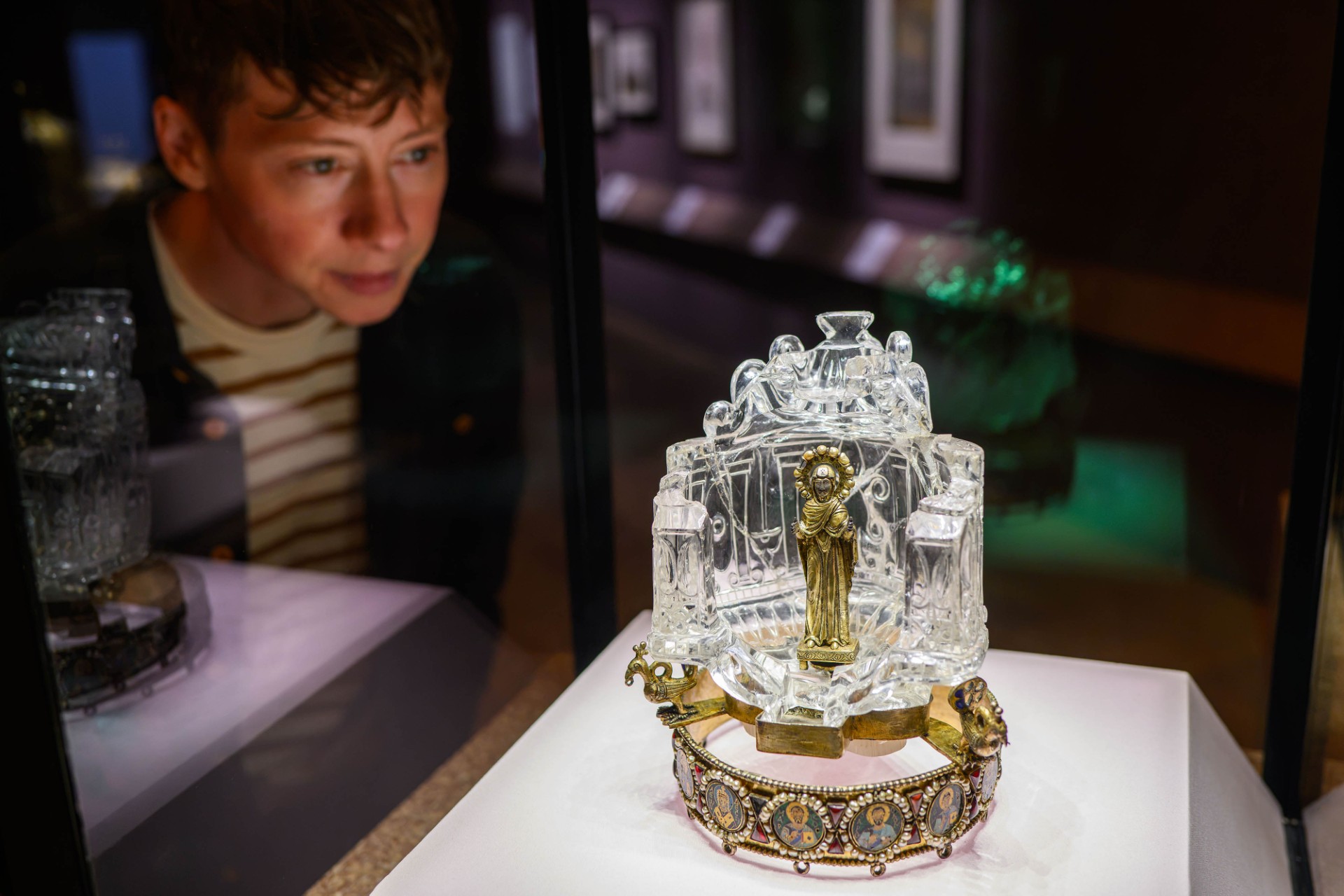
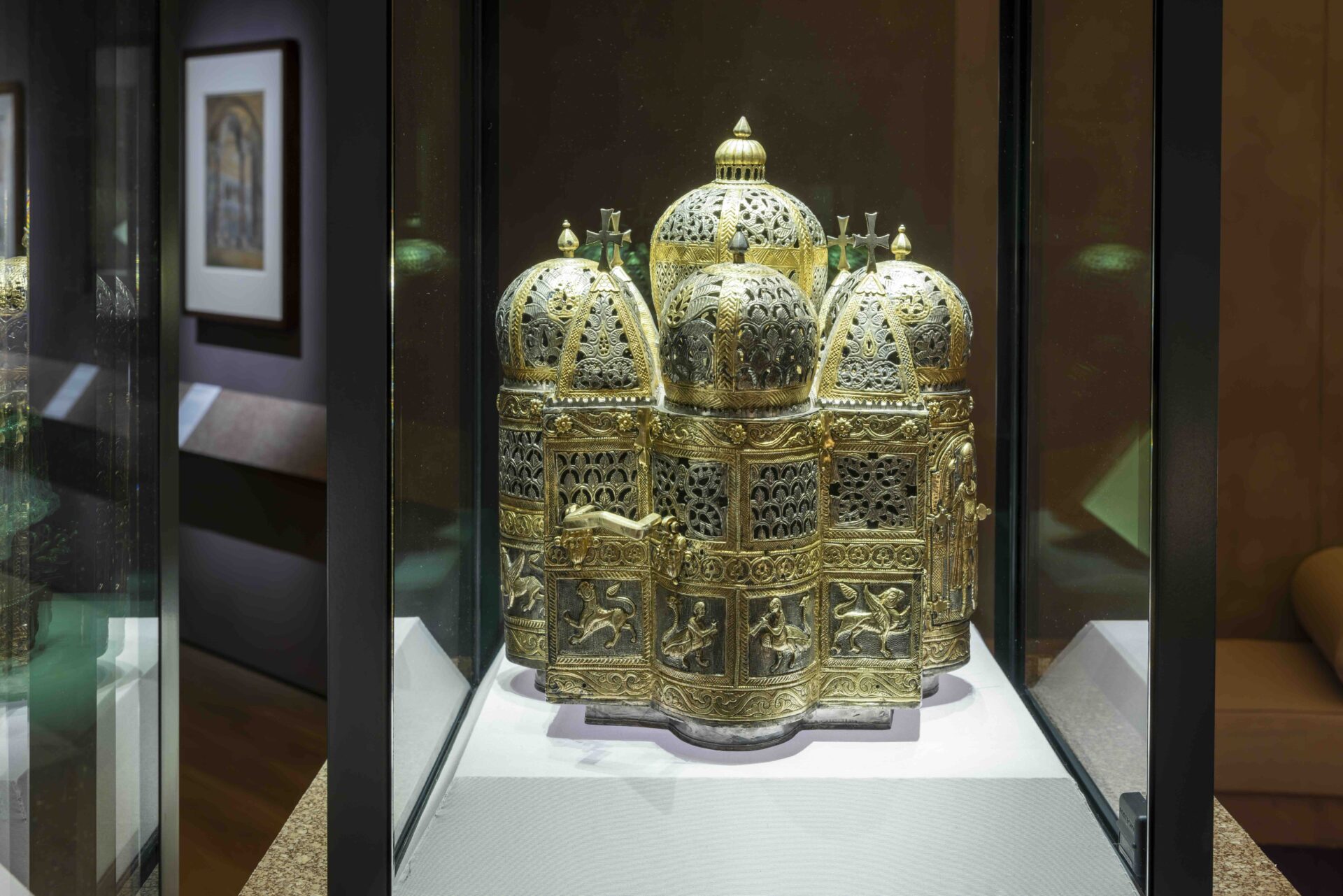
The Grotta della Vergine is a composite work, the result of the combination of artefacts created in different periods between the 4th and 13th centuries. It comprises a carved rock crystal aedicule, dating from the 4th–5th centuries; a hanging crown in gilded silver, polychrome enamels and garnets, from the 9th–10th centuries; and a statuette of the praying Virgin Mary in gilded silver, dating from the 13th century. The three parts may have been assembled as early as the 14th century: an inventory of the Treasury from 1325 suggests this possibility. The composition is, however, documented with certainty in an inventory from 1571, which describes it as a whole. The second object is a portable incense burner of Byzantine origin, from southern Italy and dating from the late 12th century. It is shaped like a square-plan building, with four apses, four small towers and five domes surmounted by pyramidal elements. On one of the apses there are two doors decorated with figures representing Wisdom and Courage. Inside, a small circular platform was intended to house the Reliquary of the Most Precious Blood, as attested by the Treasury’s inventory of 1283. Treasures that encapsulate the essence of a culture are reunited. The piece is crafted from silver, partially gilded, featuring repoussé, openwork and niello techniques. These two artefacts bear witness to the richness and variety of the artistic treasures preserved in the Treviso Treasury and, for a few months, will be displayed alongside works from major international collections.