

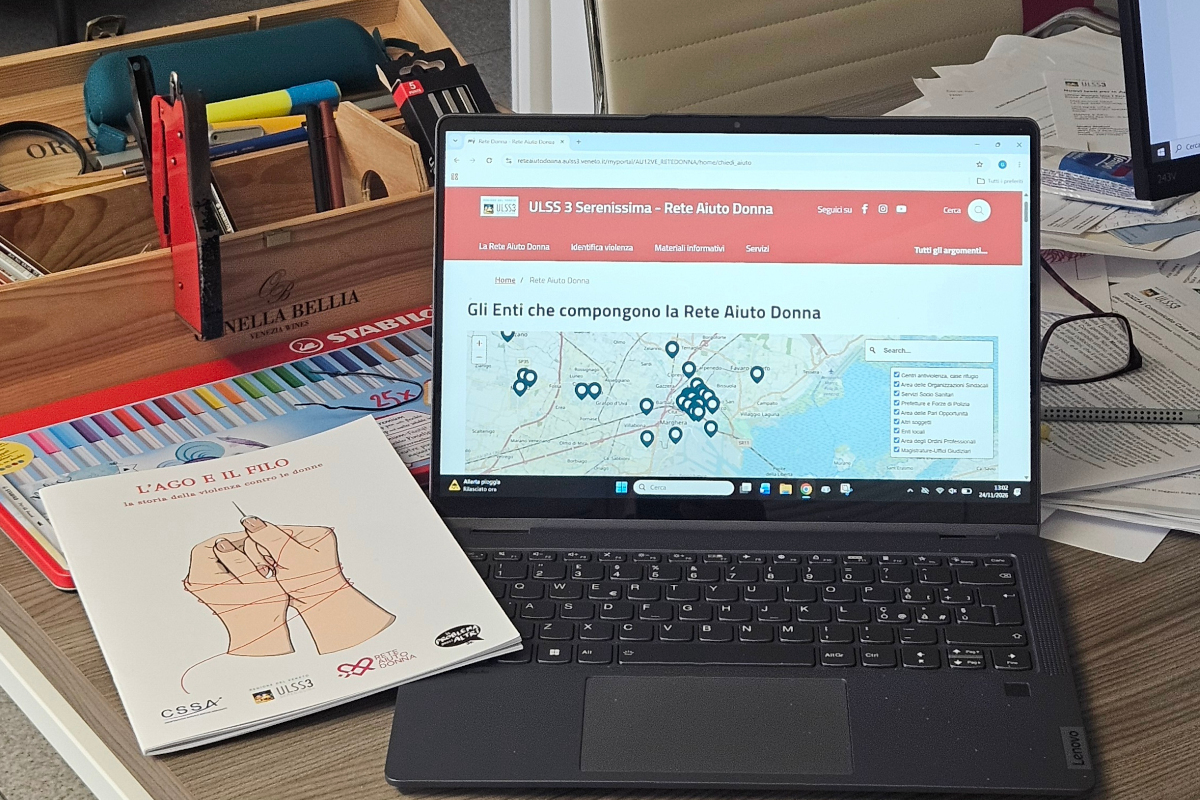
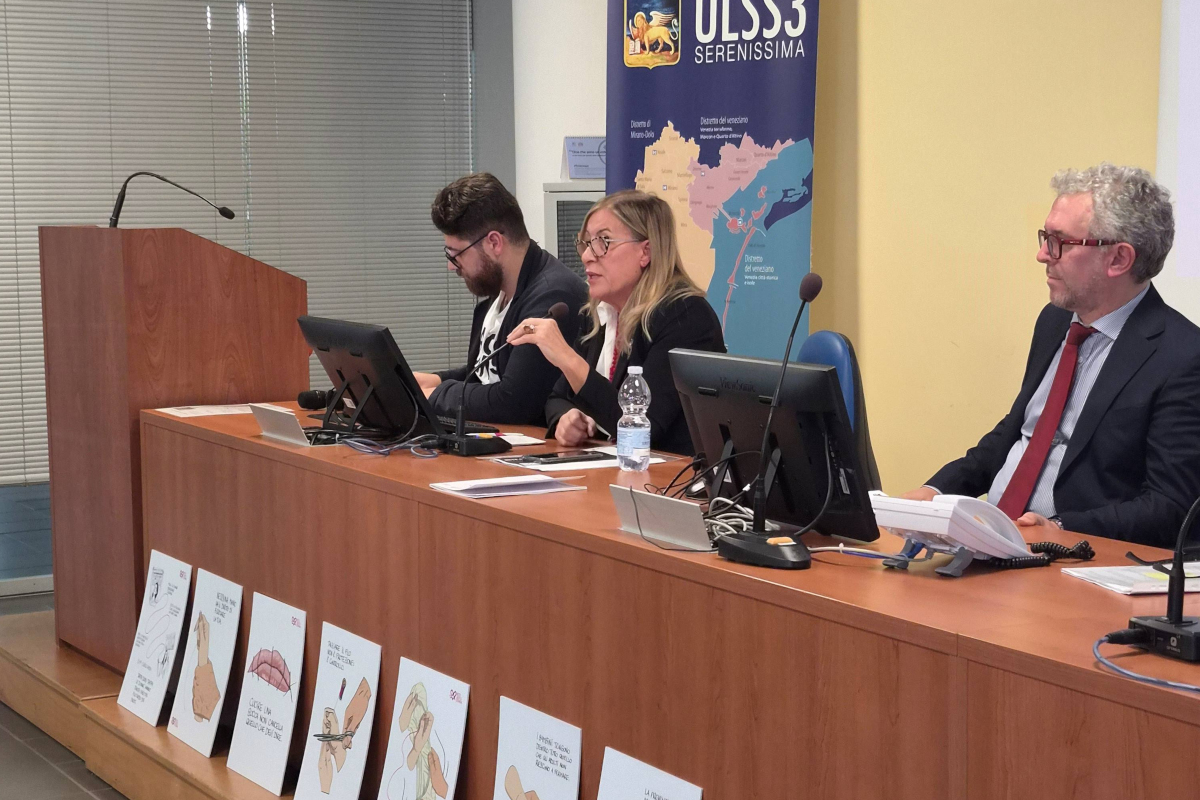
“The portal was set up a few years ago at the instigation of the steering group, with funding from Vega Carburanti and in collaboration with the Region – explains Anna Fiore, who coordinates the steering committee of the ULSS3 Network alongside Michela Perale – it now provides information not only on services but also on the signs and types of violence, ranging from physical and sexual violence to more subtle forms such as psychological and economic abuse, right through to stalking.” Given that the health authority is also responsible for communicating information on the Network Protocol, a partnership has been established with the CSSA co-operative to produce information materials, such as short videos on the measures put in place and on combating violence, aimed at the community.
The materials, including a leaflet designed by Giorgio Romagnoni, will be published on the website and printed and distributed at various points across the Network, including A&E departments. Indeed, these very locations provide a prime vantage point for identifying warning signs: ‘Our on-duty staff receive specific and ongoing training – adds Fiore – as required, moreover, by the Network Protocol; furthermore, an SOS system is operational 24 hours a day, linking A&E departments with anti-violence centres and the police to ensure a prompt response across the four districts in which ULSS3 operates, namely Venice, Mestre, Dolo-Mirano and Chioggia-Cavarzere’.
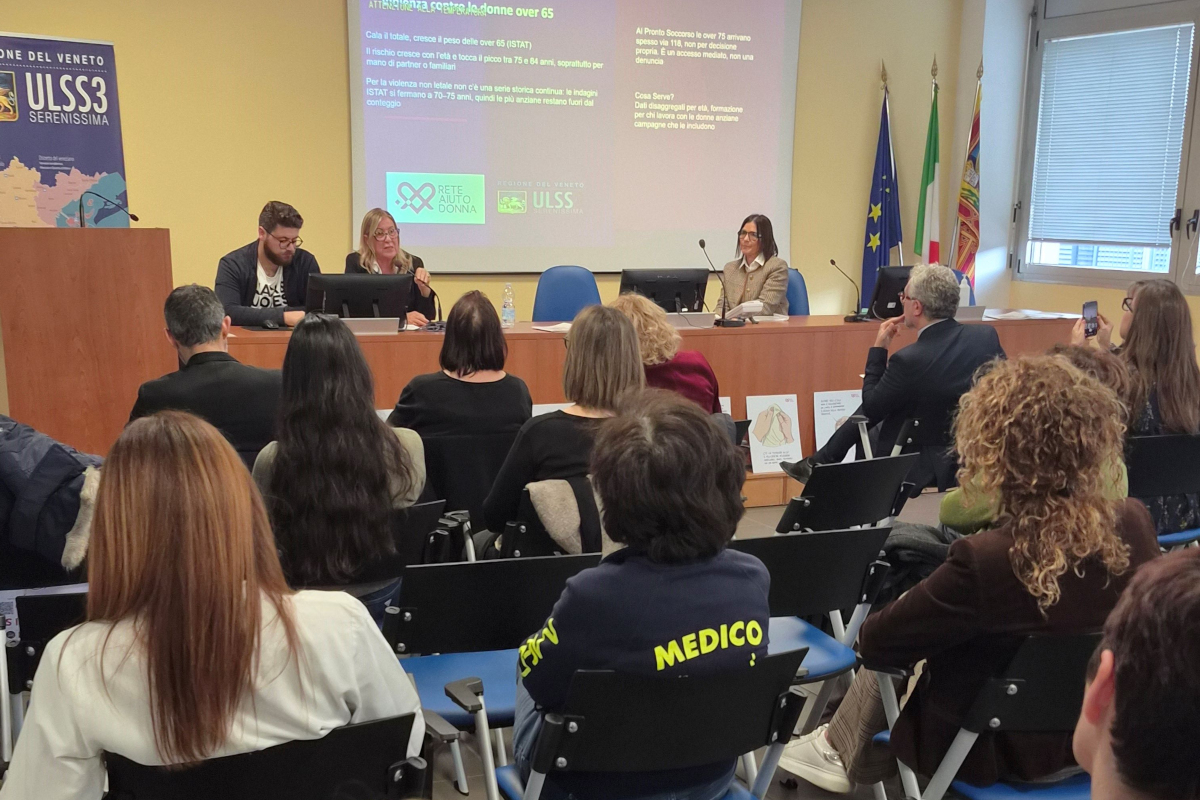
“Even for women’s refuges, there has been a gradual increase in the number of people seeking help; this figure needs to be interpreted carefully, because one factor to bear in mind is that women are reporting incidents and seeking help far more often than they used to,” explains the coordinator, “but on the one hand, what was once a hidden phenomenon has now become a social and structural issue”. The increase is nationwide, and within the ULSS3 Serenissima catchment area alone – comparing the first six months of 2025 with those of 2026 in Venice alone – the number of women passing through anti-violence centres has risen from 152 to 245; and overall, at the helpdesks run by the Iside cooperative in Venice, Mestre, Mira, Mirano and Noale have risen from 133 to 231, whilst in Chioggia, in the first half of this year, there have already been 65 requests.
Whilst femicides have fallen nationally – from 118 in 2024 to 97 in 2025, and to 67 from January to September 2026 – the proportion of victims aged over 65 is rising. ‘The typical profile of the women our network helps,’ says Fiore, ‘is Italian, with an average age of 38; the majority of those arriving from A&E agree to an interview in dedicated rooms, following which the protection procedure is initiated. Many feel fear and shame, and of those who have children, 30 per cent are minors, so we also take action to safeguard their interests and manage the trauma resulting from witnessing domestic violence.”
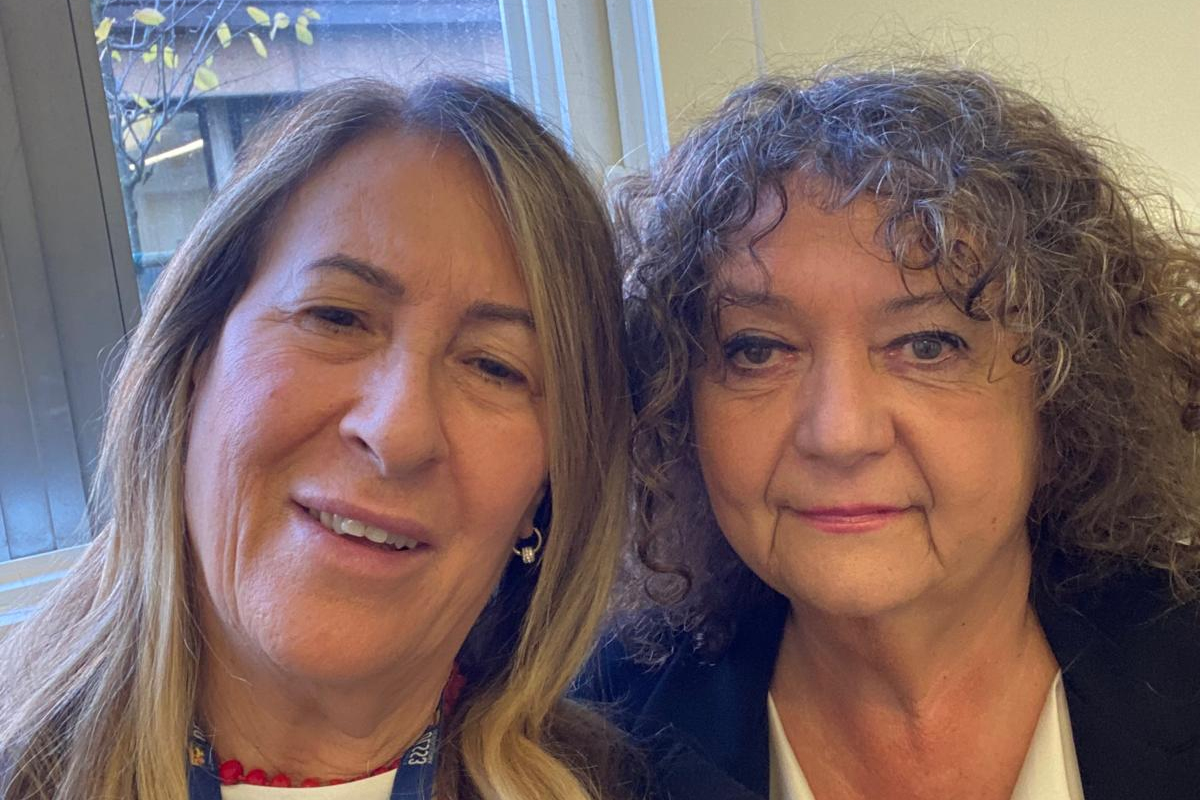
“The more we talk about it, the better,” explains the expert. “We need to raise awareness amongst all citizens because everyone can play their part in preventing violence; it is a public and social issue, where even a simple gesture can prevent the death of a woman.” The awareness-raising campaign launched by the Network begins in schools and universities, focusing on the themes of healthy relationships and respect. “The hope is that there will be a cultural shift; we live in a context where many things need to evolve.” In this regard, a great deal of work needs to be done with regard to foreign nationals to overcome language barriers; information materials will be translated into the main languages, and the website will also be adapted in this way for its most important sections.
Dr Fiore appeals to all women who are victims of violence: “Talk to someone about what is happening to you; only by doing so can you hope for a better life and carry on living. Ask for help – the services that can help you break free from the cycle of abuse are there. You are not alone; there is no need to be afraid or ashamed, but for your own sake and that of your children, if you have any, tell someone what is happening to you.’ Raising awareness amongst children is also important so that they do not repeat the behaviour they see at home, regarding it as ‘normal’. Furthermore, ULSS3 has set up the ‘GRU – Men’s Responsibility Group’, which helps abusive men to undertake rehabilitation programmes.