
“Scherzetto,” a confrontation between two people at opposite ends of life
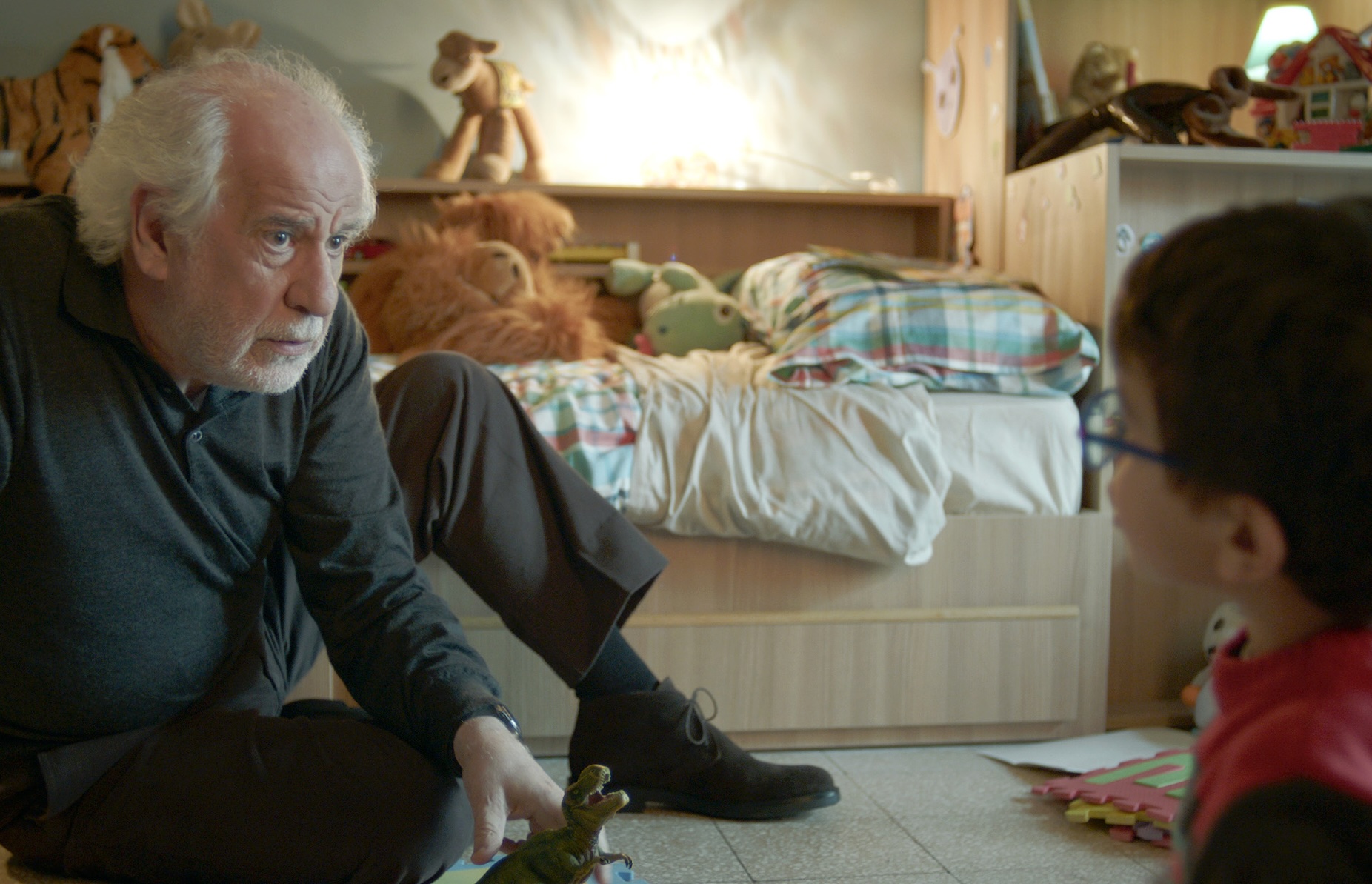
Two characters “at opposite ends of life” who know very little about each other: a 70-year-old grandfather and a 5-year-old grandson, brought together in a family home in Naples that becomes the setting for a tense clash between two generations—a duel filled with challenges, ghosts, and plenty of comedic moments.
This is how director Mario Martone describes the protagonists—played by Toni Servillo and young Lorenzo Perrotta, respectively—in “Scherzetto,” the film adaptation of Domenico Starnone’s novel of the same name, published by Einaudi, which premiered out of competition at the Venice Film Festival and will soon be released in theaters by 01 Distribution.
The protagonist is 70-year-old Daniele Mallarico, a well-known illustrator—now a widower—who lives in Milan. Having recently been discharged from the hospital, he returns to his old family home in Naples, where his daughter Betta, played by Serena Rossi, now lives, to look after his nephew—or rather, the “volcano” Mario—while his parents, both mathematicians, are away at a conference. With his spontaneous and irreverent remarks, Mario immediately manages to shake Daniele’s convictions. One remark stands out above all others: “Grandpa, your drawings are dark!”
Within the four walls of the house and on a balcony—a metaphor for emptiness—the past thus makes itself felt once more, particularly Daniele’s suffering in the face of a violent, patriarchal culture from which he had managed to free himself, becoming a revered master and moving in the circles of the Milanese bourgeoisie.
Oral Health and Stroke Risk: A Complex Relationship

Stroke is one of the leading causes of morbidity and mortality worldwide. In recent years, although the causal relationship has not yet been fully clarified, a growing body of evidence suggests a potential link between oral health—particularly periodontal infections—and an increased risk of stroke.
A stroke, caused by an interruption in blood flow to the brain, can lead to severe disabilities and even death. Traditional risk factors include high blood pressure, diabetes, hyperlipidemia, smoking, and atrial fibrillation. However, research continues to identify new ones, including chronic infections such as periodontitis.
Periodontal disease refers to a chronic inflammation that affects the tissues supporting the teeth, leading to the destruction of the alveolar bone and, ultimately, to tooth loss. The main cause is pathogenic bacteria that form the biofilm known as dental plaque. In fact, this disease is prevalent among the adult population, and its chronic nature often means it is asymptomatic; it thus becomes a significant public health problem.
“God Laughs,” Veronesi’s film that invites viewers to examine their own faith
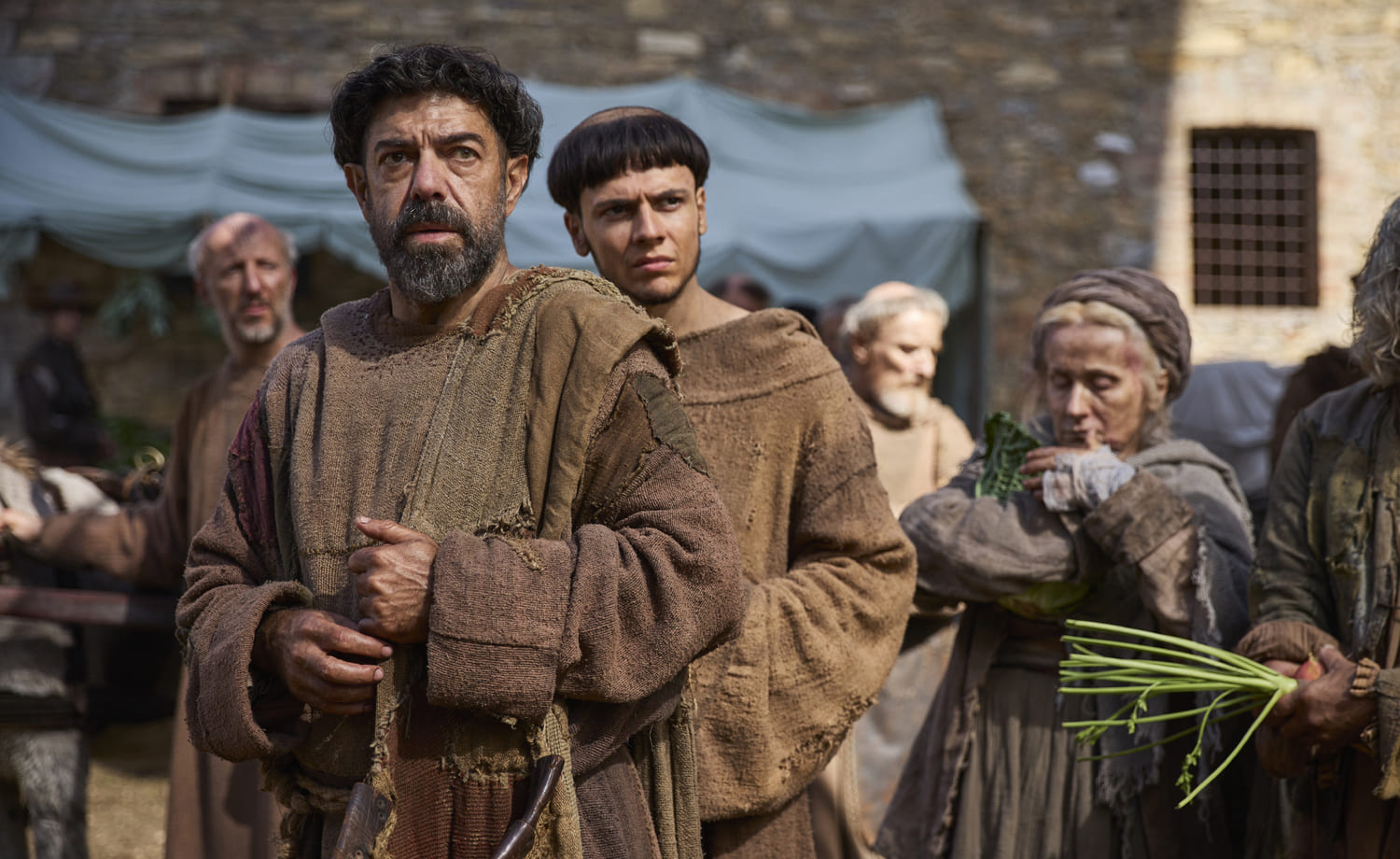
How strong is my faith? That’s the question every viewer asks themselves after watching the movie “God Laughs” by Giovanni Veronesi, presented in its world premiere on Saturday, the 12th, as the closing film out of competition at the 83rd Venice Film Festival.
The protagonist is Leopoldo di Casamacchia, played by the excellent Pierfrancesco Favino, who succeeds in giving voice—but above all, body and soul—to the faith of a humble friar from the mid-17th century.
The purity of a man who speaks of God as no one had done before him. While the Church still preaches in Latin, Brother Leopoldo shares the Gospel with infectious joy, bringing comfort and hope to those who listen. He tells the Gospel story with humor, yet infuses it with great depth. With a humble charisma, sometimes mistaken for stubborn irreverence, It speaks of a God who is close to humankind, capable even of laughing along with them. The simplest people—poor souls who have nothing in life except, now, the chance to smile—begin to follow him in droves. The village church gradually empties, and people walk as far as three hours to reach the cave where Brother Leopoldo takes refuge, so they can hear his stories about Jesus.
La Basilica apre le porte ai giovani: visite gratuite per gli studenti veneti
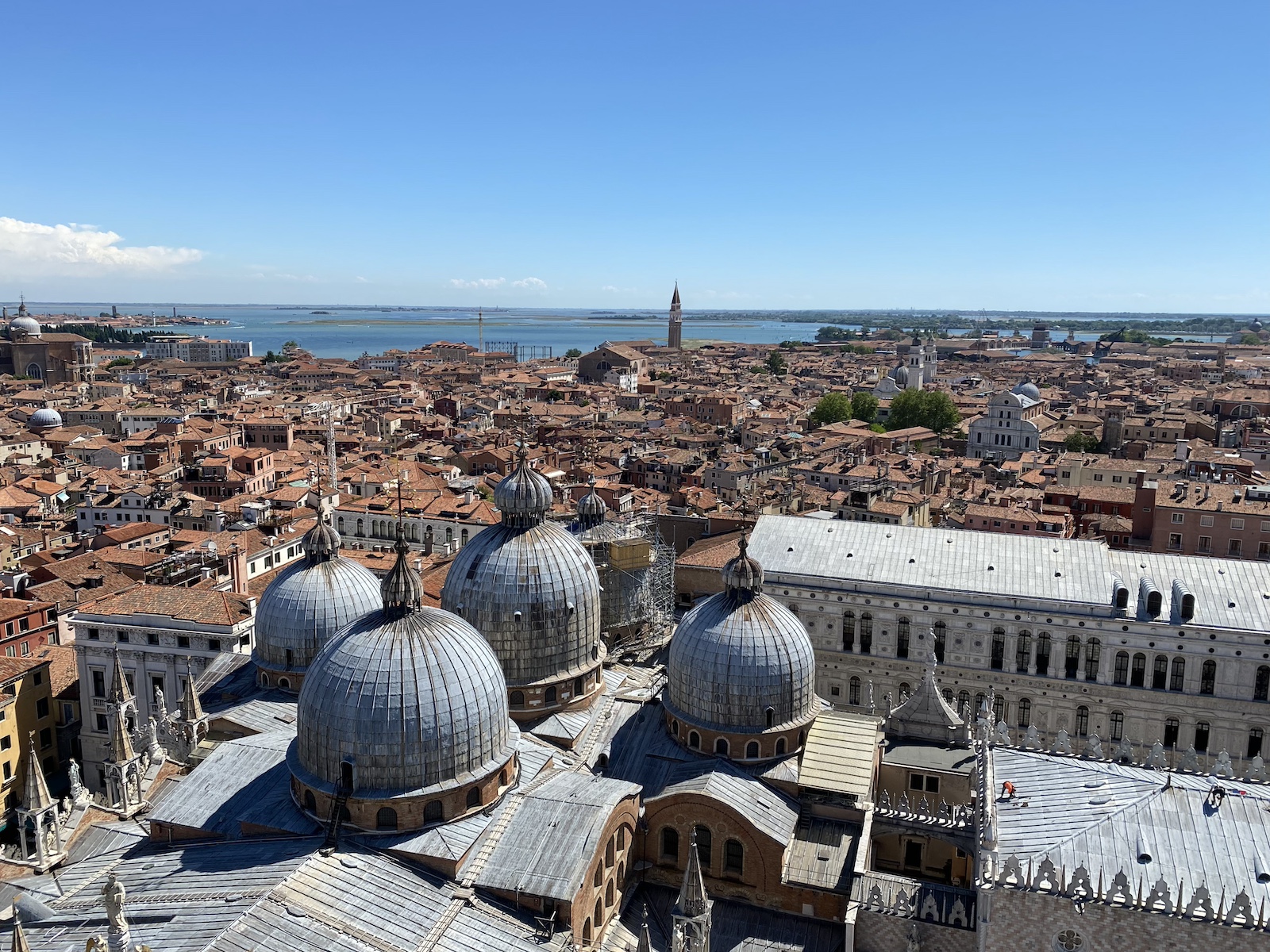
To take the students on a tour of St. Mark’s Basilica, to introduce them to one of Venice’s most famous landmarks and to guide them in discovering the city’s history and artistic heritage. This is the goal of “I viaggi della bellezza” (Journeys of Beauty), the new educational project promoted by the Procuratoria di San Marco and aimed at 150 high school students in the Veneto region. The initiative, which kicks off this school year and already looks ahead to 2028—when Venice will celebrate the 1,200th anniversary of the transfer of the remains of the evangelist Mark—aims to transform the visit into an experience capable of leaving a lasting cultural and emotional impact. The project was presented last Monday at Sant’Apollonia in the presence of representatives from the numerous organizations that have joined the initiative by opening the doors of their facilities so that students, following their experience at the Venetian cathedral, will have the opportunity to explore some of the institutions that are part of the city’s fabric. Bruno Barel, chief procurator of St. Mark’s, outlined the project’s goals, emphasizing in particular the need to reconnect younger generations with a place that, despite its international fame, many young people have never had the opportunity to visit for a wide variety of reasons, often financial.“A great many young people have never set foot inside the Basilica,” Barel pointed out. “There is an ethical dimension that serves as the guiding thread of the entire initiative: we want to amaze the young people. The Procuratoria lit a ‘candle,’ which then grew into a bonfire, in the sense that the entire city joined in. This is yet another bridge between Venice and the Veneto region.”
Riccardo Cadamura, a native of Mestre living in Shanghai: “Music brings people together”

His latest song—“Waterfall”—surpassed 50,000 views in China within a few weeks. And many musicians, both Chinese and from other countries, are recording covers of it. His name is Riccardo Cadamuro, known by his stage name 高沐然 Kadomura. He left Venice seven years ago for Shanghai, where he was opening a branch of the Lizard Music Academy, a major educational institution in Italy with various locations around the world. “I was supposed to stay for six months, but then COVID came along and changed my plans,” he tells GV.
Cadamuro, a musician, guitarist, composer, and researcher, was born in Mestre 37 years ago. He now lives permanently in Shanghai, where, in addition to directing the Chinese division of the Lizard Academy, he is pursuing a Ph.D. in traditional Asian and Chinese music at the Conservatory. On the production front, he is pursuing a musical project that bridges the two worlds—the Western and the Eastern. And this is precisely what comes across when listening to *Waterfall*, where Cadamuro’s electric guitar (he also works as a demonstrator for the Fender and Roland brands), bass, drums, and synthesizers blend with traditional Chinese and Japanese instruments such as the guzheng (古筝), erhu (二胡), Chinese drum (鼓), and koto (箏). It’s a particularly successful fusion that is captivating audiences across the globe.
But let’s go back to 2020, which marked a turning point in my career and my life. What happened?
I left for China in 2019 at the invitation of Lizard, with whom I was already collaborating after graduating from Ca’ Foscari with a degree in musicology. When the COVID-19 pandemic hit, I stayed there without returning to Italy for three years. I think about it sometimes; I’d say it was fate for me. The period of restrictions here in China was brief, while I could see that in Italy the situation was dragging on and that—especially for certain professions, like mine—it was very difficult. So I decided to stay, partly because returning to China from Italy would have been very complicated. And so, one thing leading to another, three years have gone by without me returning home.
What were you doing during that time?
I taught myself: I learned Chinese and then began a doctoral program at the Conservatory on traditional Asian and Chinese music. In fact, I wanted to incorporate these traditions into my own musical work.
“Waterfall” truly embodies the best of both worlds and is gaining popularity among a wider audience…
This song was born precisely from the fusion of Western music—in my case, the electric guitar—and traditional Asian instruments. It didn’t come about solely through study, but through direct contact and collaboration with Chinese and Japanese musicians I’ve worked with. Working with these people has allowed me to develop a musical language capable of bridging different cultures. There are Western musicians—Italians, French, and Americans—who are playing this piece, as well as musicians from Korea, Japan, and Hong Kong…

So is it a kind of bridge between cultures?
Absolutely. It’s true that I’m Italian and have an Italian background, but the fact that I speak Chinese, that I studied there, and that I’ve fully immersed myself in these harmonies, inflections, and instruments means that, on the one hand, they sense that I have a deep understanding of their culture, and on the other, they also perceive a Western element. For me, it’s been a major achievement. I see that it’s not something that works only in Asia or only here: it’s a musical language that has taken a leap forward.
But you’d already been very successful on TikTok before that…
Yes, I have tracks that have racked up millions of views on Chinese TikTok. This has allowed me to build my own music brand and land contracts. But we’re on different levels because, for example, TikTok isn’t used the same way in Italy. It’s also worth noting that it’s a niche product because I produce only instrumental tracks. We’re not talking about pop music. However, there’s a very loyal segment of the audience, with their own channels, forming a sort of community.
So, is your professional life now in China?
My work is there. This year I’ve also done some things in Italy, but I mainly go back for about two months a year, mostly to see my family. My professional life is now in China. However, I’ve also launched social media accounts for an Italian audience—on Instagram and Facebook—and with this song, I’ve seen that it’s resonating here as well. Having the opportunity to bring this style to Europe is a great source of satisfaction for me.
Serena Spinazzi Lucchesi
Art as Therapy for Alzheimer’s at Rotary Mestre
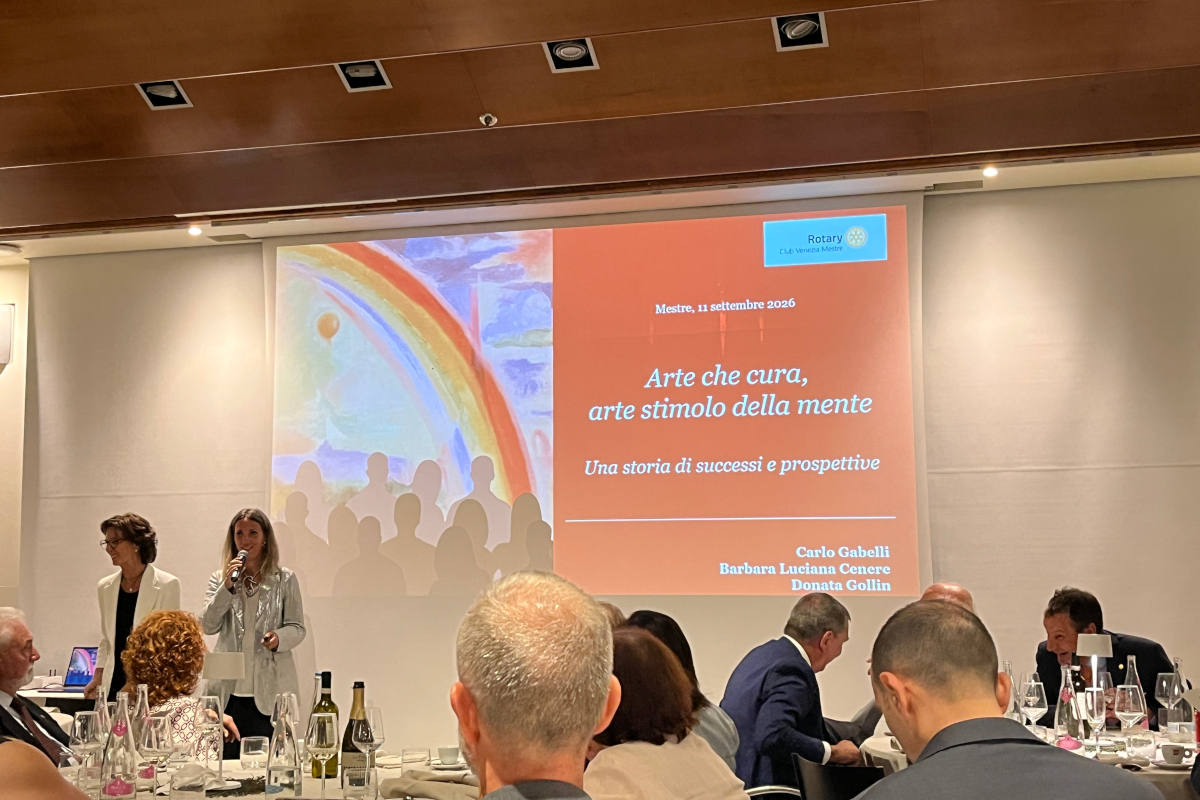
Canart serve as a form of therapy to limit the impact of cognitive decline by stimulating the mind? According to a particular experience in Veneto, it would seem so. The topic was addressed during the evening event “Art That Heals, Art That Stimulates the Mind,” held on Friday, September 11, at a Rotary Club Venezia Mestre social gathering.
The event—the first of Andrea Burlini’s presidency—featured presentations by the multidisciplinary team behindthe “StArt” project, which brings together art historians and healthcare professionals from the Regional Center for the Study and Treatment of Brain Aging (CRIC) in Padua. Launched in 2019, the project has developed a method described in the book“A Gym for the Mind at the Museum.”
Fabrics, Stitching, and Hope: A Fashion Show to Break Down Prison Walls
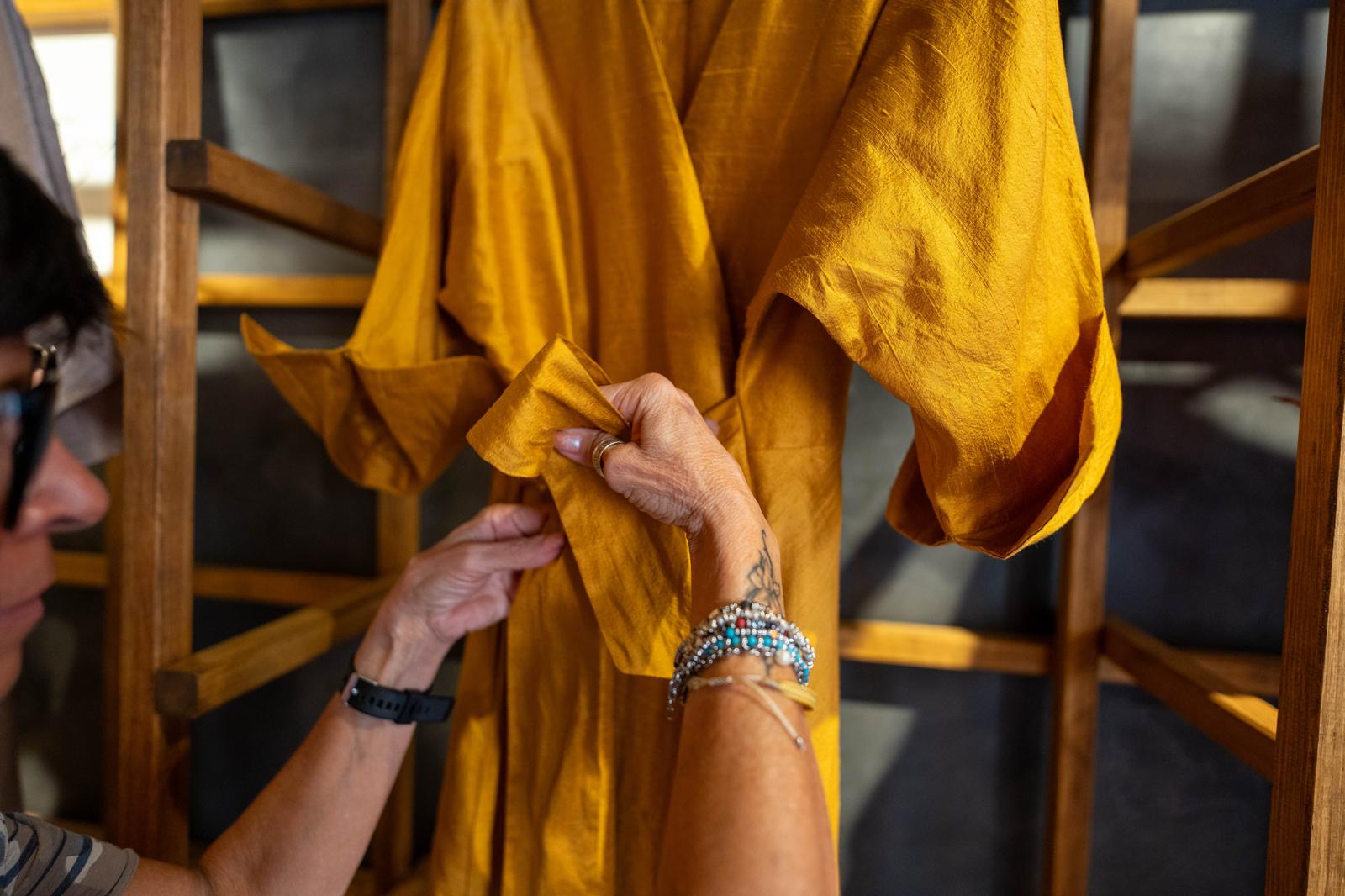
An unusual fashion show, far from the spotlight of the major fashion houses but capable of telling stories of redemption, work, and inclusion. It took place last week at the Giudecca Women’s Prison, where Banco Lotto N.10 organized a fashion show titled “The Ghost Suitcase, ” dedicated to garments created by the inmates themselves, under the artistic direction of Margherita Uliana, within the Venetian prison’s tailoring workshop coordinated by the social cooperative “Il cerchio.” Amid fine fabrics, vibrant colors, and hand-tailored garments, the event transformed the prison’s cloister into a place of gathering and creativity for a few hours: about twenty inmates walked down the long red carpet, becoming style icons for a day. The runway showcased not only clothing but, above all, the result of a professional journey built through work —for which they are regularly paid—and training. For years, Banco Lotto N.10 has used tailoring as a tool for social reintegration, offering women at the correctional facility the opportunity to acquire practical skills and professional responsibility so they can look to the future with a renewed outlook.
Venice: Drones to Monitor Water Quality in the Lagoon
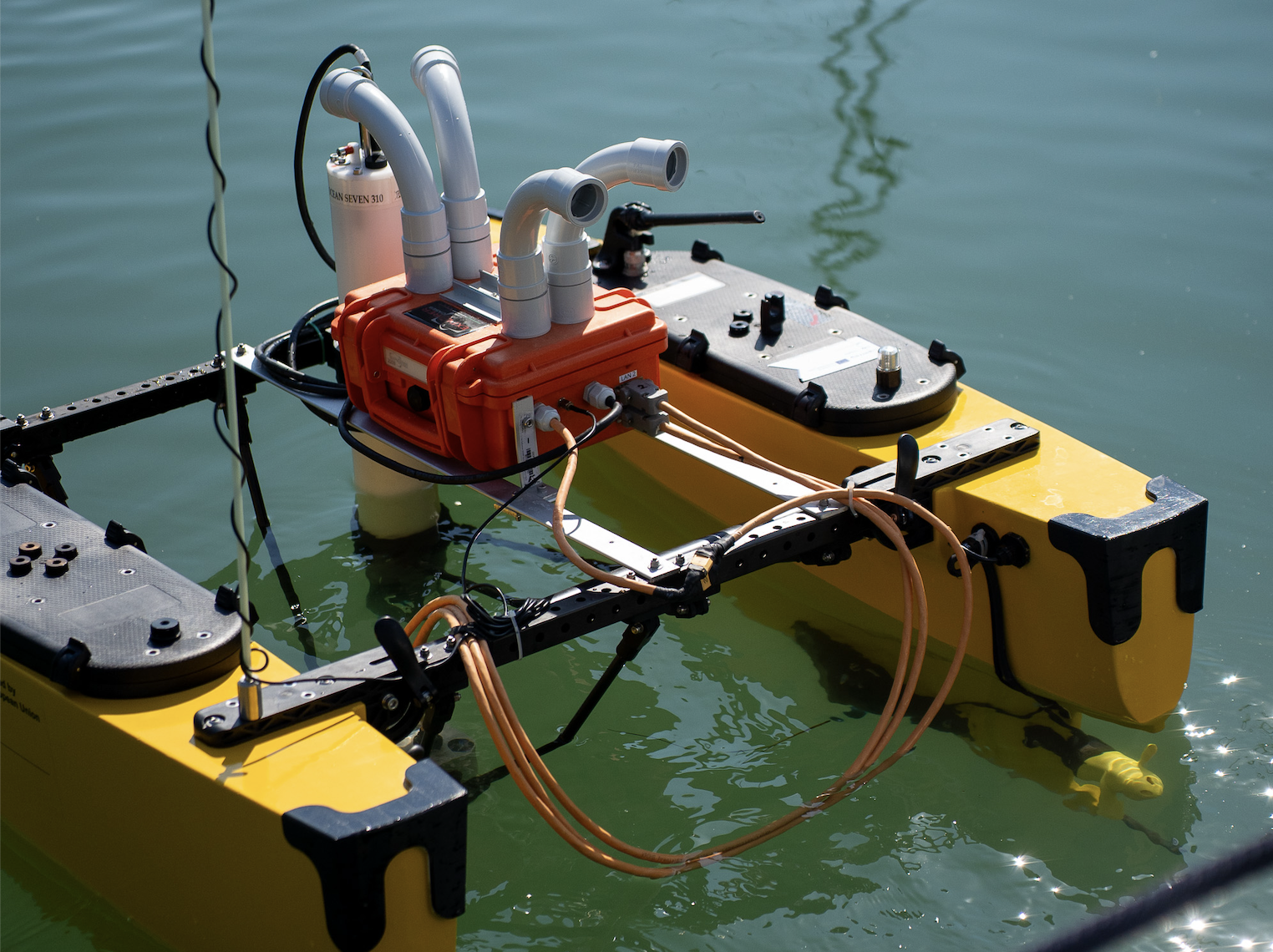
Autonomous marine drones to monitor water quality and promptly detect signs of environmental degradation. This is the result of the BRIGANTINE project , a two-and-a-half-year Interreg Italy-Croatia initiative that concluded on September 15 with an event on Certosa Island. The project developed a platform of autonomous surface vehicles (ASVs), created by the University of Udine—the lead partner—together with the Polytechnic University of the Marche, the University of Zagreb, the Ruđer Bošković Institute, and CORILA (Consortium for the Coordination of Research on the Venice Lagoon System).
These compact, modular drones measure temperature, salinity, dissolved oxygen, and other water quality parameters in real time and capture multispectral images of seagrass beds. The combination of sensors and imagery also makes it possible to detect early signs of degradation, such as the presence of potentially invasive alien species and the accumulation of plastic. The technology is now available to institutions interested in using it for their monitoring activities.
Beyond the Wall: The History of Albania and Its Connection to Mary
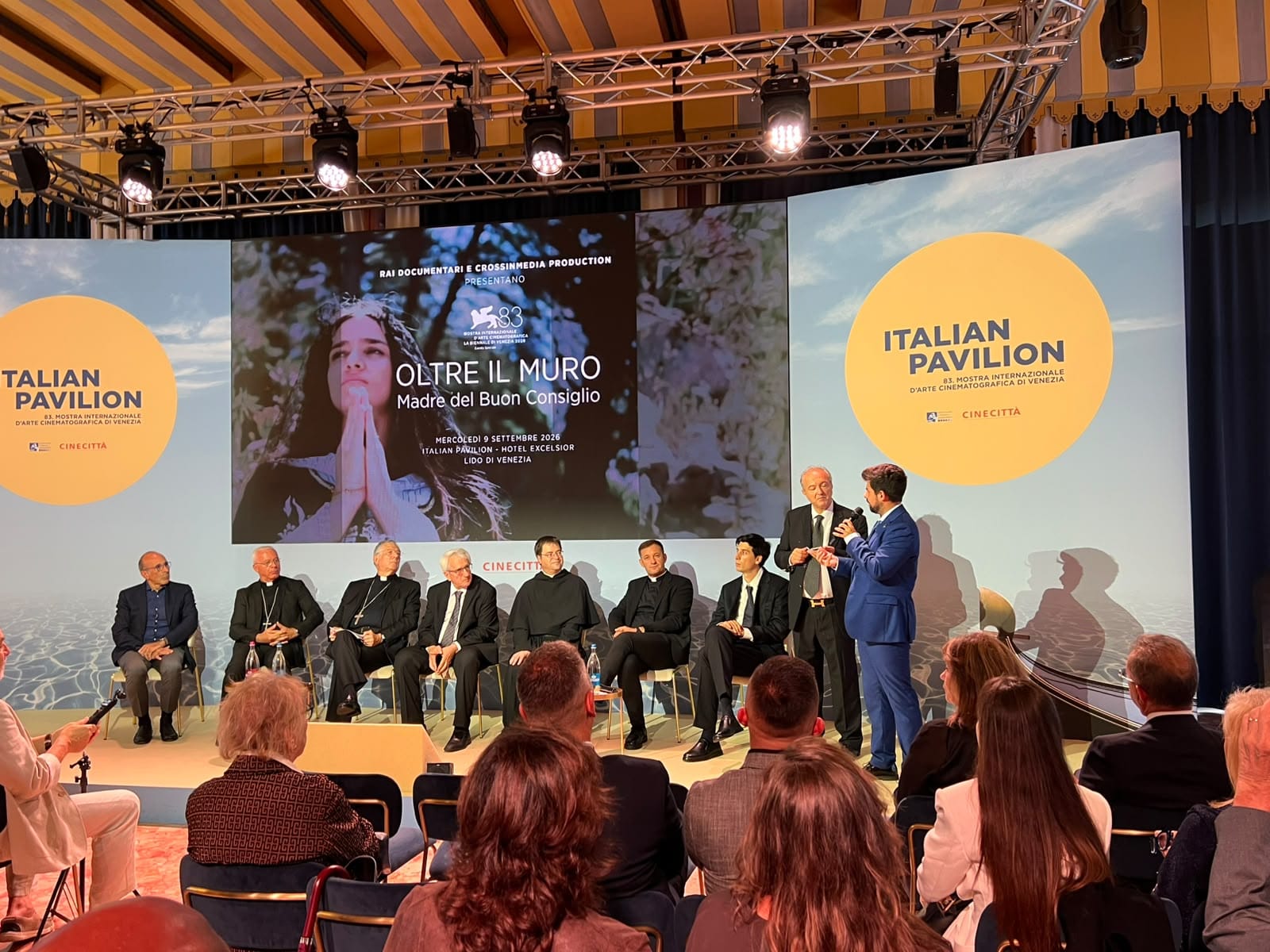
“We live in a society today that seems capable of building only walls, starting with the wall of war. The title ‘Beyond the Wall,’ however, aptly conveys the idea of something that humanity cannot give itself, but which it manages to find when it is capable of looking beyond itself and, in doing so, rediscovering its own vocation and identity. This is reflected in the very simple, beautiful, and familiar image of a mother embracing her child. She is the Virgin Mary, Mother of Good Counsel. In this documentary—a remarkable work—we trace the history of the Albanian people, who have shared this deep relationship and bond with Mary since the fifteenth century, a bond that continues to this day. The documentary goes on to recount the tragedies of the twentieth century.” With these words, the Patriarch of Venice, Monsignor Francesco Moraglia, spoke atthe 83rd Venice International Film Festival during the presentation of the documentary “Beyond the Wall: Mother of Good Counsel,” directed by Gjon Kolndrekaj and written by Pal Kolndrekaj. During the event at the Italian Pavilion of the Hotel Excelsior, the director was also awarded the “A Life in Cinema” prize, conceived by sculptor Giorgio Bortoli, who created a work of art specifically for the occasion.

