

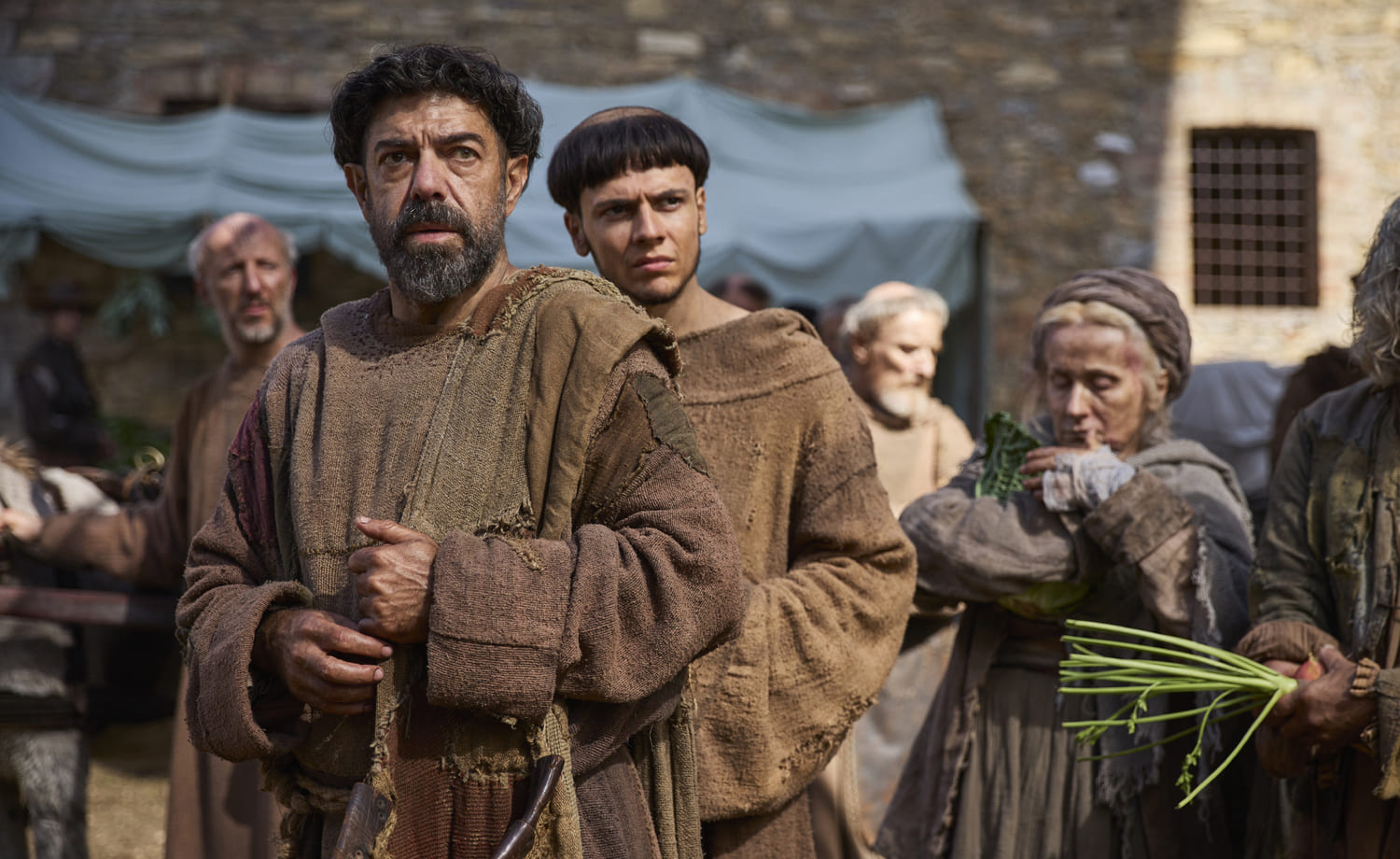
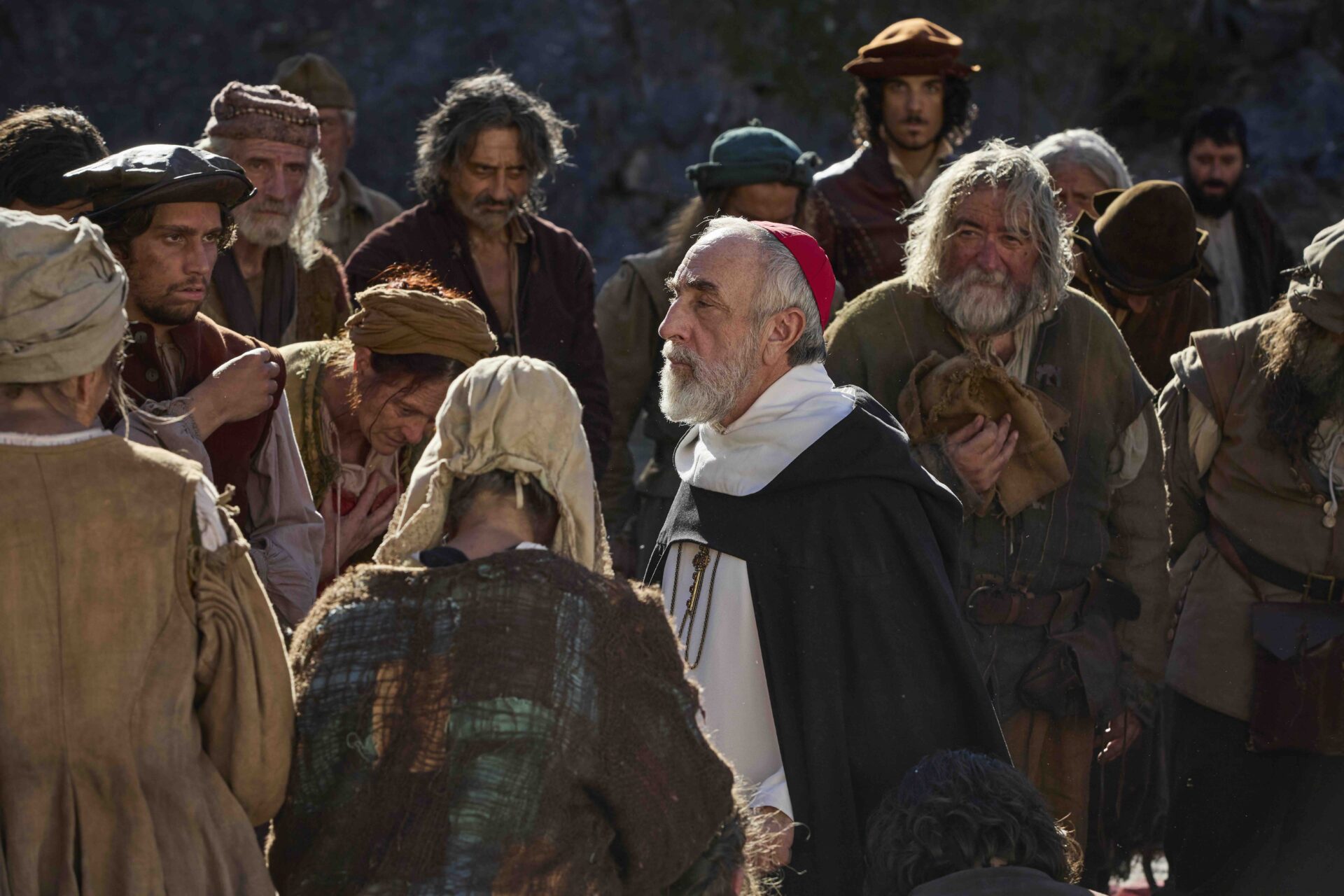
During a difficult period for the Church, news of the uproar soon reached Rome, and the echo of that voice sounded dangerous to those who were now ruling through fear. To investigate the accusations of heresy leveled against Friar Leopoldo, the Pope decided to entrust the case to the Cardinal Vincenzo Maculani, played by Silvio Orlando, the most influential inquisitor of his time.
The accusation was unequivocal: “You can’t make fun of God”, as the cardinal—who had personally traveled to the Tuscan countryside to look into the matter—would say. But Brother Leopoldo would immediately retort with quiet firmness: "I don't laugh at God; I laugh with God."
The cardinal, not believing him to be a madman or a heretic, offers him the chance to sign a confession of guilt to settle the matter as painlessly as possible, in an effort to spare him the most horrific tortures. But Brother Leopoldo, who is a man of pure faith, refuses the opportunity offered to him.
For him, in fact, faith is something concrete; it is part of who he is, and to deny God would mean to deny himself. In fact, the film highlights how only by having faith in ourselves can we have faith in others and in something greater. And having faith in ourselves means allowing ourselves to be honest, true to ourselves, and above all, free.
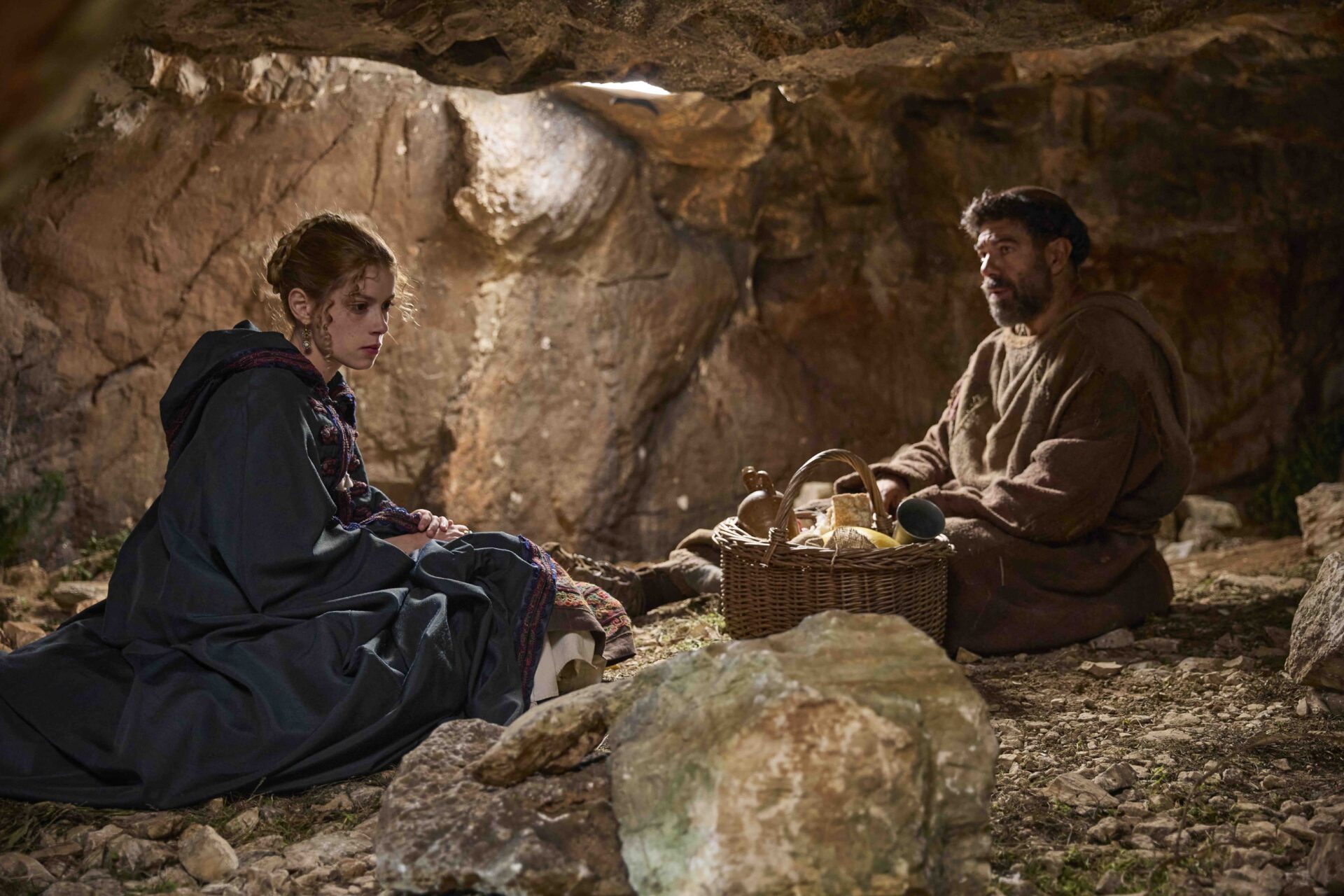
Brother Leopoldo often pauses to reflect on just how great his faith really is.
The scene in the movie set by the lake is central and moving in which he tells his followers about the time Jesus told the humble fisherman Peter to walk on water. “Only one had succeeded ,” he says, referring to the Son of God, “ Even Moses had to part the waters,” he continues, eliciting smiles from the crowd listening to him—which included several children—to whom he offered a new perspective on the relationship between God and humankind.
And he goes on to tell the story of when Peter, taking his first steps in the water, didn't sink, but then fell and sank into the water. It was then that Jesus said to Peter: "As long as you had faith in me, you stayed afloat.". And Brother Leopoldo comments: “Poor Pietro.” It doesn't take much—you turn around for a second, and where's your wedding ring?” he reflects, saying that faith is as powerful as an avalanche and as delicate as the snowflake that creates it. And he confesses: “I rack my brain every day. I wonder how much faith I have inside me. It seems like a lot to me, but how much does it take to walk on water?” Then he pauses, hesitates for a moment, and jumps into the lake. She resurfaces and laughs, in a gesture worth a thousand words.
"I'm very happy to have had the opportunity to play Brother Leopoldo; I think he's one of the most wonderful characters I’ve ever had the chance to play.”. - made his debut Pierfrancesco Favino - Brother Leopoldo has confidence in who he has chosen to be and refuses to act in a way that is not true to himself. Accustomed to listening to his emotions, he is guided more by what he feels than by what he thinks. - and he continues - I really appreciate this character's consistency. "It would be misleading to think that he does it simply for the sake of simplicity." He then reflected on the present: "When we express ourselves, we live in an era of censorship and preventive self-censorship because we are afraid of others' judgment," Favino continued. "Nothing comes from fear, whereas Laughter is a mystery whose reasons we still wonder about. "In fact, if we start explaining a joke or a funny line, it's no longer funny," he said. "We don't need to laugh at others, but with others."
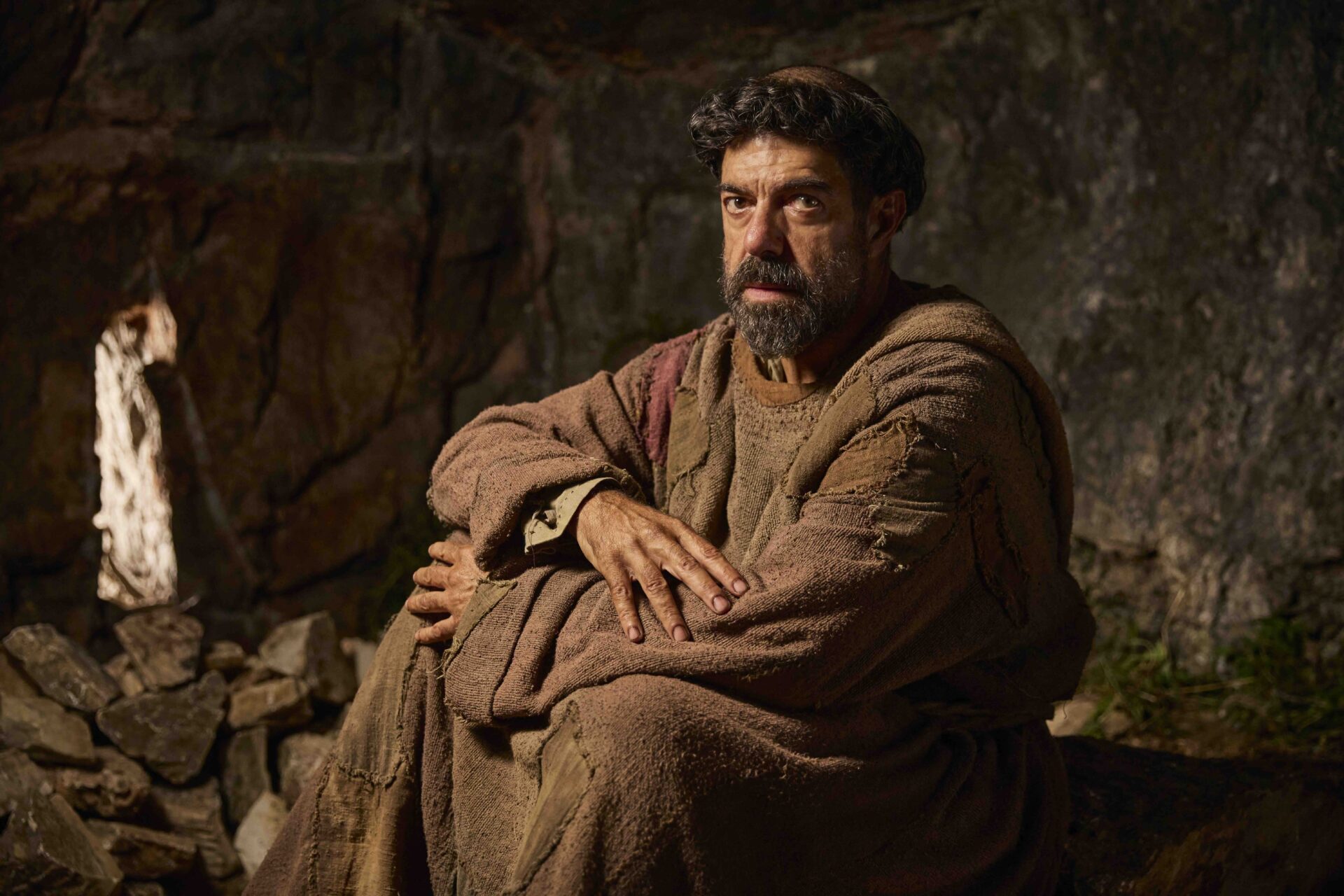
While filming in the rain and mud, Favino worked extensively with the screenwriters on the dialogue and historical accuracy: “I tried to give the street performer a presence and a voice. We also tried to create an overall sense of harmony: the film is set in a period for which there are no tangible records, so we worked extensively with the screenwriters on the century. Fortunately, I have a sister who is a history professor specializing in the 17th century; I’d call her every now and then, and she gave me some insights.” The settings are significant, accompanied by music by Paolo Buonvino, featuring little-known landscapes of Tuscany: “I focused on trying to reveal the sacred in nature. The journey of Leopoldo must have been guided by nature", which had to be majestic and opulent to convey that someone was guiding him," said Veronesi. In the 17th century, Tuscany was a difficult place to live: "I wanted to portray the poorest side of Tuscany." The film needed to convey the poverty of the people.”
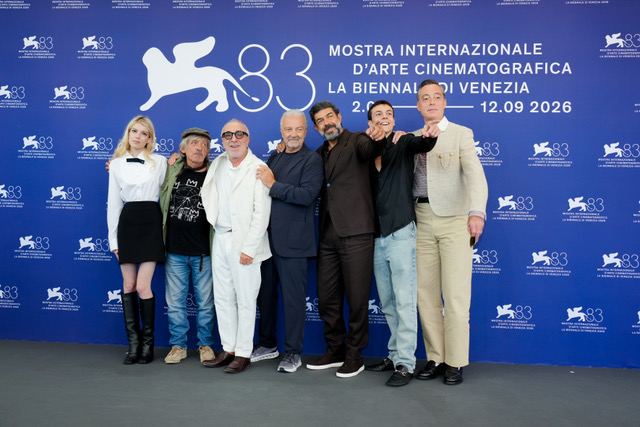
For Brother Leopoldo, a time of unspeakable torture lay ahead, culminating in his final trial in Rome—just before his martyrdom—during which he declared before the cardinals that if their faith consisted in treating human beings as cannon fodder, then yes, he was guilty, because his faith was very different from theirs. In fact, the cardinal will try several times to save Brother Leopoldo, trying to get him to take a step back, but—unlike him, who lives a life of power that doesn’t allow him to be himself—he knows that Leopoldo, on the other hand, has the courage to express what he feels, and above all to to remain true to oneself. “My character, who actually existed, is a multifaceted intellectual and a man who is a great listener—not an inquisitor. He knew philosophers and other figures of his time, such as Galileo Galilei, and when he finds himself face to face with Friar Leopoldo, he thinks he can resolve the matter in a single afternoon, but He finds himself faced with a true example of the purest faith, which he lost. This triggers a series of contradictions in him” explained Orlando, who is now quite at ease in the role of the cardinal, having played several such parts. Described as “almost half a Pope,” the cardinal ultimately—no longer recognizing himself—decides he does not want to lead a church that, because of its weakness, had become brutal. The film makes you smile and moves you because it touches on hidden themes and p began to ask herself those questions that seem outdated today. A film you wouldn't expect from Giovanni Veronesi and one that, compared to his previous films, has shown a change of pace. “God Laughs” is a powerful project, designed for an audience that needs to be taken by surprise today.