

Martin, let’s start from the beginning. Where did your passion for shorthand come from?
I learnt it at school when it was still part of the curriculum. I’ve always been fascinated by the fact that just a few strokes of the pen can graphically represent entire sequences of words. After finishing university, about twenty years ago, I picked up my old textbook again (I studied the Meschini system, in particular) and gradually built up a network of contacts amongst enthusiasts of the subject.
Do you ever use shorthand in everyday life?
Of course: I use it at work, to take notes, especially for meeting minutes. The fascinating and ingenious thing about this is that for centuries, before the advent of technology, shorthand was the only means of recording speech. Now shorthand has lost that primary function, but it can still prove useful in day-to-day practice. Not least because it always works; it doesn’t need electricity – all you need is pen and paper… And then there’s the cultural interest in different systems across many languages, with people from all over the world taking an interest in them. There are exchanges of materials, books and information amongst them.
Was it from this network that the project to transcribe the Matteotti trial arose?
Exactly. In the summer of 2025, I was contacted by the Meschini Institute in Rome, which is what remains today of the shorthand school founded by the inventor of the system I use, Erminio Meschini. His granddaughter, Marta Meschini, had in turn been contacted by the Giacomo Matteotti Foundation, which had learnt of the existence of a file of documents relating to the trial: this material is held at the State Archives in Chieti, where the trial was held in 1926 and which marks its centenary this year.
What does it consist of?
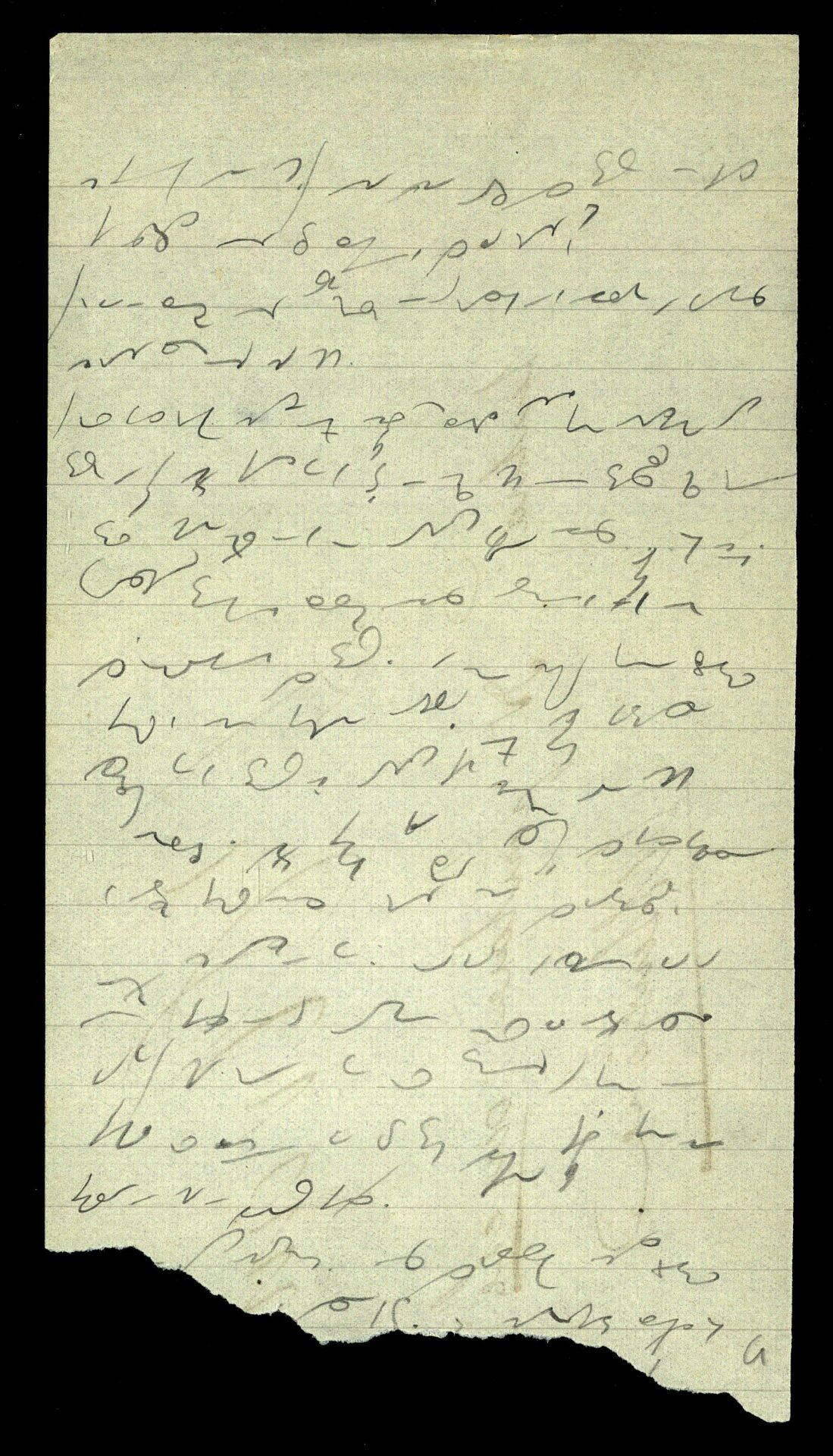
There are 253 shorthand transcripts organised into several different systems: 178 of them were written in Meschini shorthand — and I am primarily working on those — but the others are written in other systems. There is also Gabelsberger-Noe, a system of German origin that was later adapted to Italian in the nineteenth century, and around forty or fifty strips written in a system that we have not yet identified.
Why is there this mix of systems?
The presence of different systems may be due to the fact that several stenographers were working on the case. In a trial where a great deal of writing and transcription was required, in fact, it was not usually just one person working, but a team of four, five or six stenographers who took turns. Some would write, others would transcribe, and they would take turns.
How did the transcription proceed? Did you encounter any difficulties?
Firstly, it should be noted that these files are numbered, but we are not certain that this reflects the order in which they were written. Furthermore, at first glance – even whilst focusing solely on the Meschini material – we were unable to decipher it.
Why was that?
In shorthand, but also in normal handwriting, the hand tends to distort the characters, especially when writing at high speed. The proportions between the characters are not always maintained, and the so-called ‘emphasis’ of the characters (when they should be more or less pronounced) is not rendered accurately. This is also because, when writing in pencil, the tip wears down and it becomes impossible to vary the thickness of the strokes. Furthermore, as is always the case, shorthand writers develop a series of personal abbreviations. I have seen dotted letters, for example, dotted consonants: one is an M (my first thought is that it stands for Matteotti), another is a V (we have Volpi and Violi, who were two of the Fascist squadristi responsible for the murder). But the difficulty is not limited to these variables alone.
What else was there?
Given the difficulties, we began consulting our libraries and came across a text entitled *The Evolution of National Shorthand*, which tells the story of Erminio Meschini and his work, comprising 23 editions of the system, each very different from the others. We consulted the various editions now held at the Senate Library, directed by Giampiero Buonomo, and realised that the court stenographers used the tenth edition of Meschini’s system.
Is that how the transcription began?
Yes, although it wasn’t easy, because after having practised the system from the latest edition for years, I had to accustom my eye to these symbols, which had different meanings, and to the distortions we were discussing earlier. To help us, the director of the Senate Archives provided us with the *Chronicon del delitto e del processo*: a reconstruction of everything from the debate in Parliament, to Mussolini’s reaction, to the newspaper articles… A few years ago, the book collection of a historic shorthand academy in Florence, the Accademia Aliprandi-Rodriguez, was added to the archive, and we were able to consult the various editions of the Meschini system. All this material proved useful in some cases for cross-referencing, including some proper names, which are among the most difficult things to decipher. I had the manual on one side, the sheets on the other, and a blank sheet of paper in front of me. I began making attempts to identify the correspondences. Then certain forms and words began to recur, and it gradually became easier to recognise them. We completed the transcription of nearly fifteen shorthand strips and returned them to the president of the Matteotti Foundation, Alberto Aghemo.
And what has emerged?
We haven’t found any shocking revelations, because essentially what was said during the trials is already in the public domain. There are passages where the language is at times somewhat rhetorical, somewhat lauding valour and courage, typical of the era. But there are also some rather peculiar details, for example: ‘Last night, so-and-so set off for Rome’. Things that do not seem to have anything to do with the course of the trial, but appear to be administrative notes.
What might this mean?
Let’s say that these passages raise another question: who were these court reporters working for? Since we know that Mussolini wanted this case to be concluded as quickly as possible and without causing too much of a stir – which is why he had moved the trial to Chieti – it is possible that he had also sent someone to gather information on his behalf, which was then forwarded to Rome on the very same day. In fact, the Archive contains not only the shorthand notes, but also telegrams in which some of this information was reported. But who wrote them? Perhaps these stenographers were, so to speak, ‘spies’ who passed information on to Rome?
Why is it important to see the originals in person?
Shorthand also has a third dimension: the pressure of the stylus on the paper. Sometimes seeing the document in person can help resolve a doubt. In the meantime, we have requested high-resolution scans. It is important to be able to zoom in without losing quality, as there are marks that have been partially erased and then rewritten. In some cases, it is unclear where an erasure ends and the actual mark begins; in others, the strokes overlap.
This is not, however, the transcription of just any text. How did you feel when viewing and transcribing these documents? For a start, it’s quite something to set eyes on these writings, knowing they were produced a century ago by someone who, like you, was studying this type of script: you’re, in a sense, joining in with the work begun back then to give it full meaning – hopefully – today. The incredible thing is that no one has ever done this before. These papers draw you into the story of an event that is truly significant for our country. Matteotti was just 39 years old and had the courage to take the floor in Parliament and say what he said, knowing full well that he would meet a grim end. Serena Spinazzi Lucchesi