
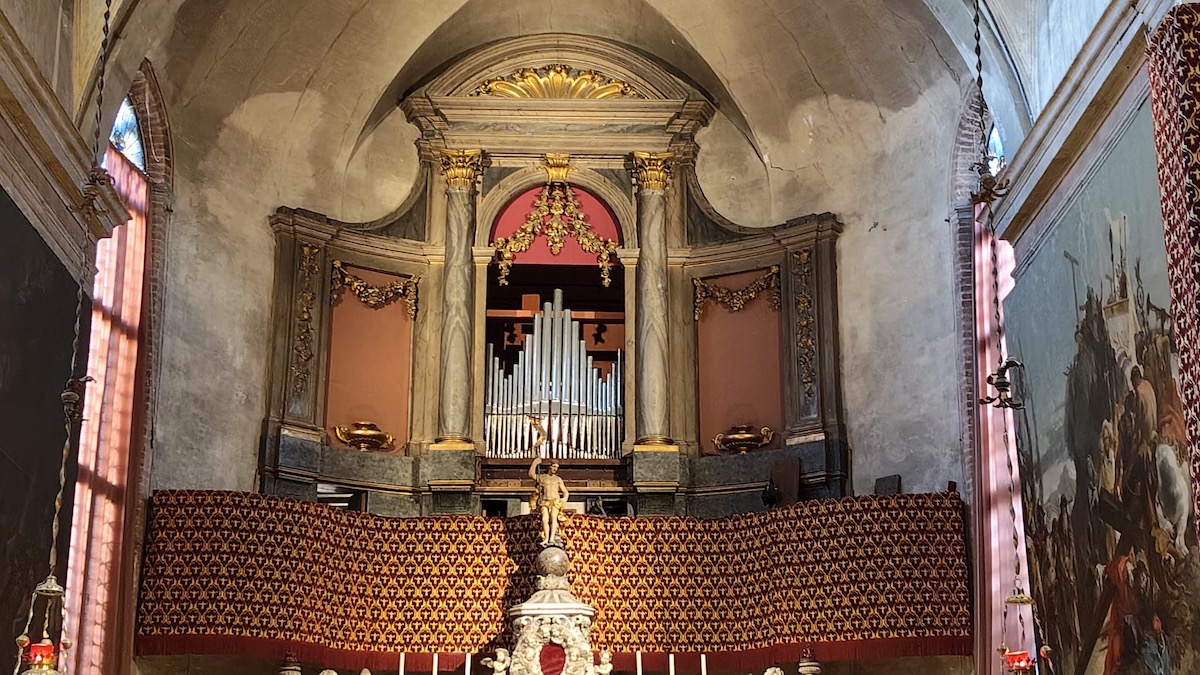
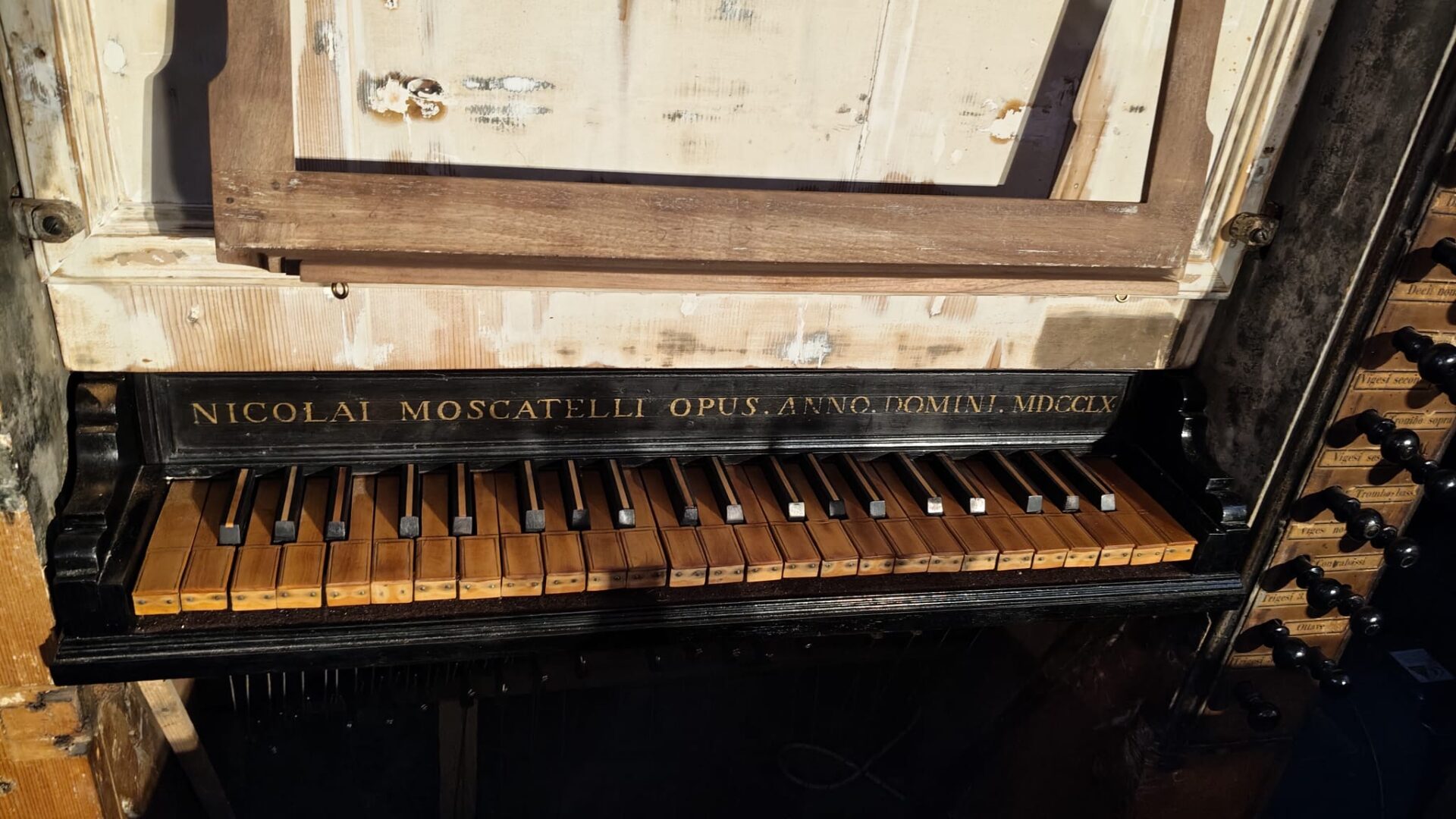
Venice and Japan united through music, in a dialogue that bridges geographical and cultural distances to come together in the universality of sound. It is through this encounter that the historic organ of the Church of Sant’Alvise has come back to life, entrusting its voice to Kinue Aota, principal organist of the Catholic Cathedral of Tokyo. A bridge between East and West, between a centuries-old musical tradition and new ways of listening, aimed at accompanying the rebirth of an instrument that is precious to Venice’s artistic heritage. After many long years of silence, the organ of Sant’Alvise, in Cannaregio, has begun to play once more. The inauguration took place on Wednesday, October 14, with a concert performed by Kinue Aota, a winner of numerous competitions who, throughout her career, has performed with orchestras, ensembles, and choirs. She maintains a busy concert schedule both in her home country and abroad and has served as a jury member in international organ competitions. Built in 1760 by Nicolò Moscatelli, the organ in this Venetian church underwent ameticulous restoration that allowed for the recovery of its mechanical components, pipes, and tonal characteristics, thereby returning to the community an important piece of the city’s artistic and musical heritage. The restoration, carried out by the Francesco Zanin firm of Codroipo, represents a significant step forward in the preservation of Venice’s historic organs. Venice, in fact, is home to one of the most important collections of antique instruments in Europe, bearing witness to an organ-building tradition that reached particularly notable heights in the 18th century. Moscatelli trained in the workshop of Pietro Nacchini, one of the leading figures in the field during the 18th century, under whom he studied from 1738 to 1754. Other important figures emerged from the same school, including Gaetano Callido, who was destined to leave a profound mark on the city’s musical history. The connection between the builder of the Sant’Alvise organ and the church itself is further strengthened by their geographical proximity: Moscatelli’s workshop was, in fact, located nearby, in Campo dei Mori. An old document indicates that, between 1754 and 1760, he himself built as many as nine organs “in many parts of Terra Ferma, and also in Venice.”

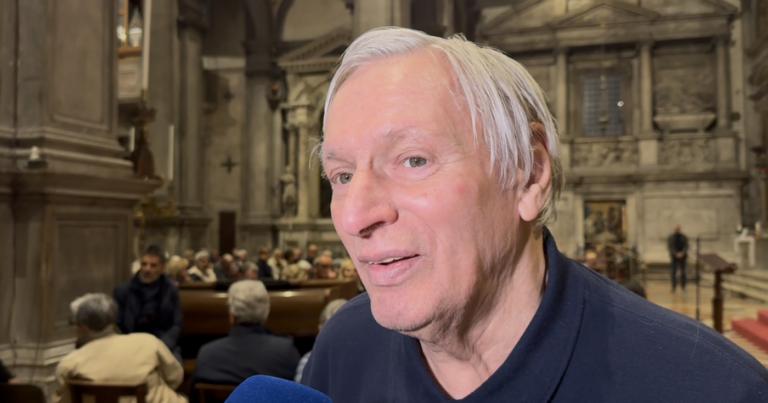
Before the restoration, the organ at Sant’Alvise had long been in such poor condition that it could no longer be used, to the point that the former pastor, Stefano Costantini, had begun the process five years ago to carry out the necessary work to make it usable again. This effort was later taken up by Father Luciano Barbaro, the current parish priest, who hopes the organ can once again be played regularly during Sunday Mass. “I asked the Diocesan School of Sacred Music for the Liturgy to provide a young musician who could come to Sant’Alvise weekly, ”reports Father Barbaro, who also hopes to eventually organize several concerts open to the public throughout the year. Among the causes of deterioration were water leaks into the rear of the case, which had compromised the instrument’s condition. To proceed with the restoration, the entire organ was disassembled and transferred to the Zanin workshop, where it remained for several months. The work involved various components—from the pipes to the mechanical parts to the leather components— and included cleaning, restoration, and maintenance. At the same time, work was carried out on the internal restoration of the case. One of the most delicate phases involved the pipes of the façade, which were seriously damaged by so-called “tin cancer,” a phenomenon that alters the structure of the metal, compromising its preservation. The restoration required meticulous work to repair and integrate the deteriorated parts, using metal compatible with the original material. Once the workshop phase was complete, the organ was reassembled at Sant’Alvise. This was followed by weeks of work dedicated to voicing and tuning—essential steps to restore the instrument’s tone to one as faithful as possible to its original sound characteristics. The total cost of the project was approximately 100,000 euros. “The work,” explains the parish priest, “was made possible thanks to the commitment of the parish and the Patriarchate, along with funding from the Italian Episcopal Conference (CEI) earmarked for the restoration of historic pipe organs.” Before the concert began, Father Barbaro greeted those present alongside Father Costantini, while the restorer outlined some details of the completed restoration project.
Iscriviti a CRUX e non perderti nessun aggiornamento, ti invieremo 1 volta a settimana i nuovi articoli!