
Nuclear power in Italy? Experts say it won’t happen for at least 20 years. And the issue of nuclear waste remains unresolved.
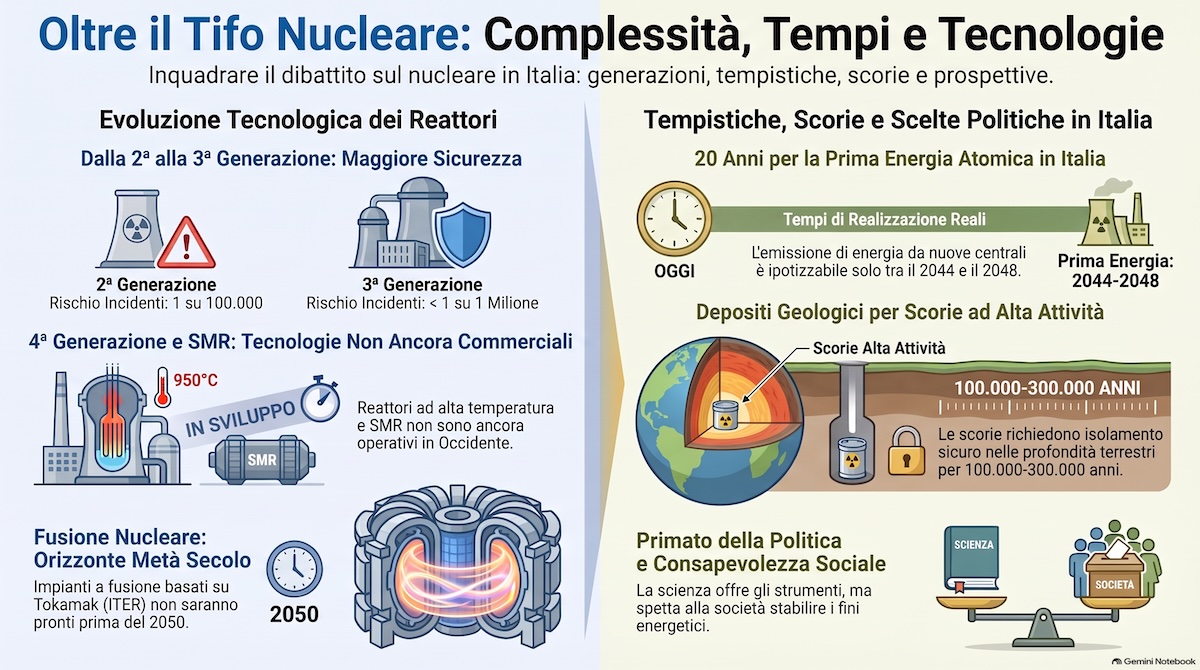
It’s normal to take sides on many issues—whether it’s your favorite team, a penalty kick, a leader, or a political party. But when it comes to nuclear power, that’s not the case; the time for “cheering” is over. “We’ve had some poor-quality conversations so far, but that doesn’t mean we can’t have better ones from now on. I don’t know what the European energy system will look like in 2050, nor do I know if nuclear power will be part of Italy’s energy mix. I have my own opinions; I’ve questioned them and refined them. I couldn’t ask for more.” This reflection comes from environmental journalist Ferdinando Cotugno, who wrote the foreword to *Avete rotto l’atomo* (People Edizioni), a book for eager non-experts on nuclear energy, written by two young engineers—Matteo De Piccoli from Friuli and Giovanni Montagnani from Lombardy— with a specific intention: to break down the partisan divide between pro- and anti-nuclear camps—stirred up for decades by referendum debates—and to spark a substantive discussion that takes into account the inescapable complexity of the issue. This approach was also employed in Mestre during the initiative “Beyond the ‘Yes’ and ‘No’ to Nuclear Power,” organized by Legambiente Venezia on October 2 at the S. Maria delle Grazie Cultural Center.
The Draft Enabling Act—and then what? Is there really such a thing as “sustainable nuclear power”? Could it be part of a future energy mix combined with renewables? And how long will it take for Italy to adopt it, starting with the approval of the latest Authorizing Bill—which is currently little more than a statement of intent, passed by Parliament last September and awaiting implementing decrees in the coming months? “The nuclear industry is extremely complex. As we know, nuclear power originated because a definitive weapon was needed. In the postwar period, attempts were made to harness this incredible energy for civilian purposes. A reactor works because there is fuel inside; a neutron arrives and splits the atom; and there is a moderator—usually water—and a heat transfer fluid—also usually water—which serves to carry away the heat to be used as an energy source. In fact, we’re talking about large pressure vessels for producing hot water, inside which a nuclear chain fission reaction takes place. Essentially, there are choices to be made regarding these components, and this is where the full range of options comes into play when we talk about nuclear power.” This is explained by Matteo De Piccoli, a nuclear engineer trained at the Polytechnic University of Turin and a science communicator.
“We have first- and second-generation reactors, and today we’ve reached the third generation—and are even envisioning a fourth—and every country —Canada, France, the United States—has developed different types over time. A light-water nuclear power plant has lower efficiency than a gas-fired plant, due to constraints imposed by the type of coolant. The second generation of reactors—to put it simply—is the type found at Chernobyl and Fukushima. Third-generation reactors use similar technologies but offer greater safety: a second-generation reactor has a one-in-100,000 annual probability of causing a serious accident, while the probability for third-generation reactors is lower (less than one in a million), although it can never reach zero. When we hear about fourth-generation reactors, however, we know we’re talking about technologies that have not yet reached a commercial level—that is, they are not yet capable of being used to produce energy in an economically competitive manner. We’re moving from today’s water-cooled reactors—which operate at about 300–325 degrees Celsius with an efficiency of around 33 percent—to high-temperature reactors that reach 950 degrees, though these technologies have not yet reached a sufficient level of development.” And then there are fast reactors: it is said that their fuel can be recycled and that they will be able to utilize almost all of it—a prospect that, for now in the West, has more to do with theory than with cold, hard reality.
The Venetian Jewish Museum Reopens: Memory as an Antidote to Prejudice
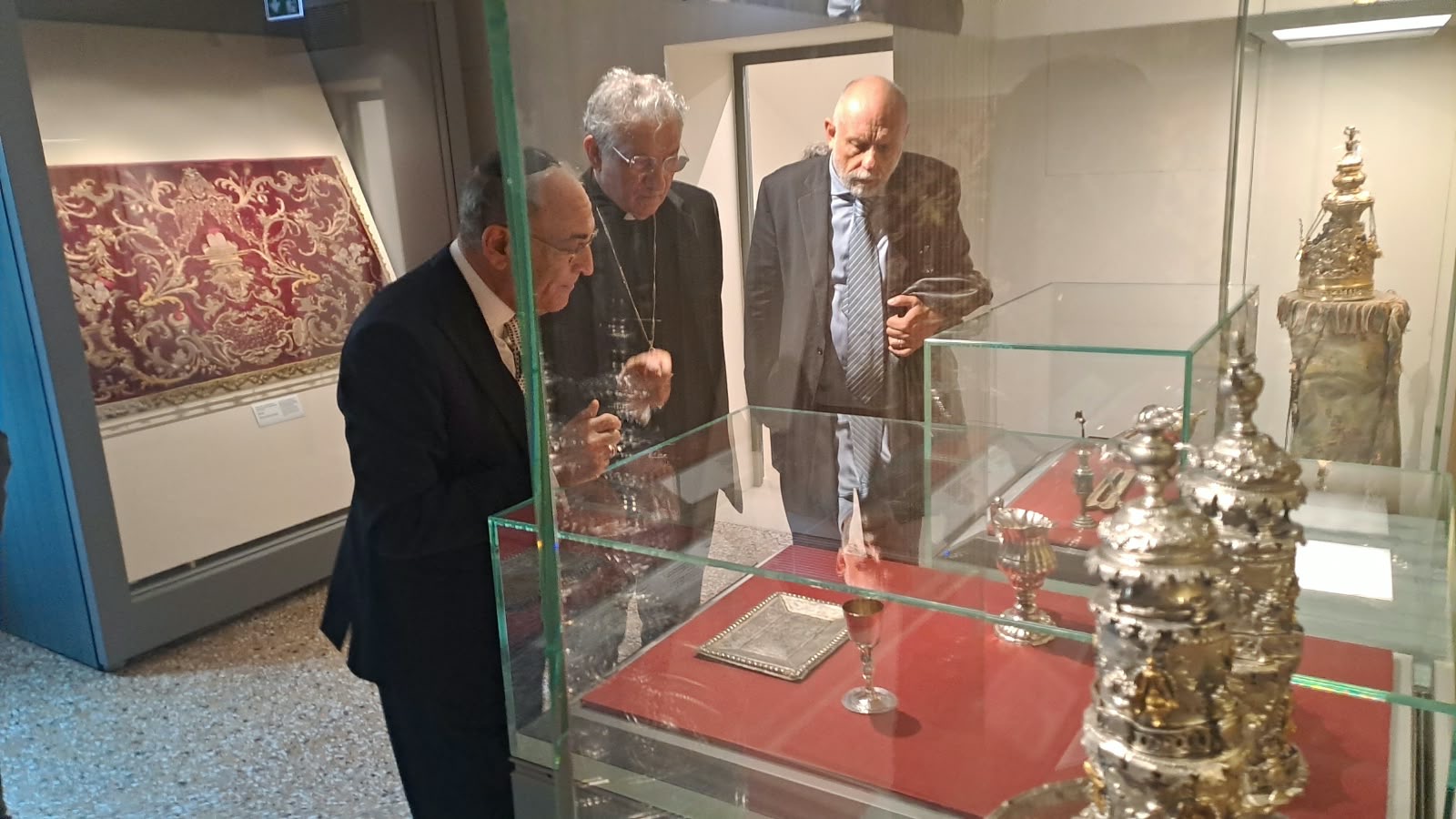
After seven years of closure, the Jewish Museum of Venice—located in the heart of the world’s oldest ghetto, established in Cannaregio in 1516—is reopening its doors to the public. The spaces have been renovated and expanded; architectural barriers have been removed to ensure access for people with mobility challenges (starting with the installation of two new elevators and the addition of ramps and retractable stairlifts); and the historic synagogues—the German Synagogue (1528), the Canton Synagogue (1532), and the Italian Synagogue (1575)—have been restored. Last Monday, the work was presented as part of an ambitious project with a total cost of 12 million euros, funded—and in this regard, the role played by David Landau, art historian and member of the Venetian Jewish Community, was fundamental—thanks to a series of private donations from Save Venice, the World Monuments Fund, the Venice in Peril Fund, Venetian Heritage, Ronald Lauder, the Rothschild family, and the Jerome Levy Foundation. Alongside them, the Ministry of Culture also contributed to the project’s realization. On Tuesday, the inauguration took place in the presence of, among others, Chief Rabbi Alberto Sermoneta, Patriarch Francesco Moraglia, and the imam of the Italian Coreis, Mansur Abd al-Hayy Baudo. “This museum is a labyrinth,” began Director Marcella Ansaldi, “and the architectural restoration it has undergone has made it more orderly, so that visitors feel at ease. If a person enters here full of prejudices and leaves with even one less, that would already be a victory for us.” Founded in 1954, the museum houses ritual objects, gold and silver works, sacred textiles, ancient books, and manuscripts, chronicling centuries of religious, cultural, and social life. Its floor space has expanded from just over 1,200 square meters to more than 1,700, thanks to the addition of spaces acquired from the Jewish community itself. The entrance, where a metal detector has been installed for security reasons, has been renovated; there are also spaces dedicated to a bookstore and a café, new permanent and temporary exhibition halls, a library, and an archive available to scholars and researchers, as well as areas designated for educational programs and school groups.
The First Permanent Deacons Reflect on Forty Years of Ministry
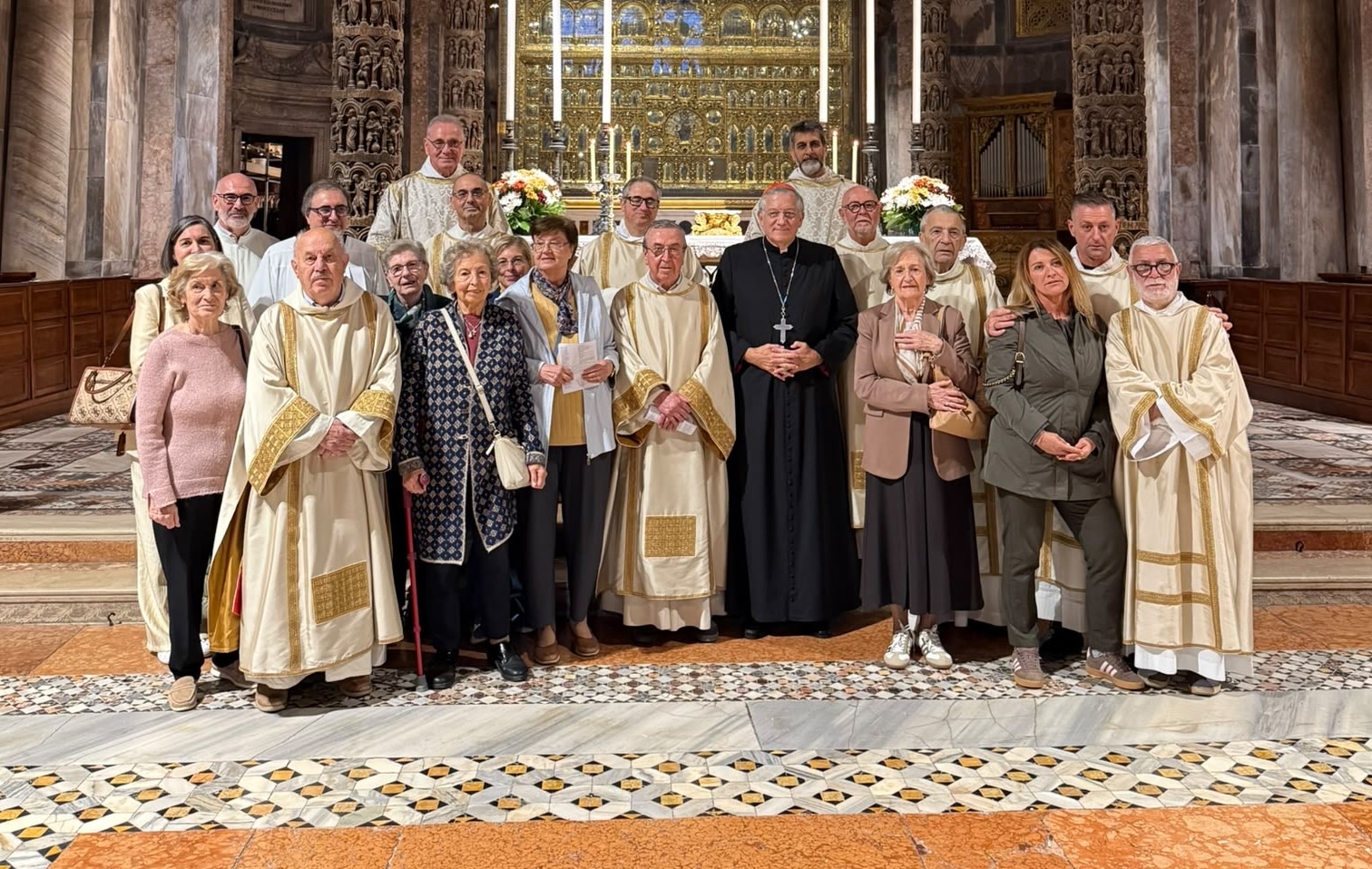
It has been 40 years since that Saturday afternoon, October 18, 1986—the feast of St. Luke—when Patriarch Marco Cé ordained the first twelve deacons in St. Mark’s Basilica, thereby implementing one of the innovations of the Second Vatican Council in our diocese as well: the restoration of the diaconate as a stable and permanent ministry in the Church—no longer merely a stepping stone to the priesthood—and, furthermore, the possibility of conferring it on married men.
Among others, the Vicar General, Monsignor Giuseppe Visentin, and the theologian Father Nini Barbato—who are responsible for the formation of deacons—also participated in the concelebration. Of the first twelve deacons, six are celebrating this anniversary in heaven: Antonio Maschietto, Ilario Albertini, Arturo Pedrazzi, Antonio Dariol, Giuseppe Pistolato, and Gianni Ferraresi, who, as a member of the Diocesan Pastoral Council immediately following Patriarch Marco Cè’s arrival in Venice, actively collaborated in the restoration of the permanent diaconate in our diocese. Here are the other six deacons: Antonio Sinatora, Benito Colecchia, Matteo Bognolo, Gino Cintolo, Sergio Sabbadin, and Tiziano Scatto.
Il diacono Giuseppe Pistolato, known to everyone as Bepi—who was already a widower with three children at the time of his ordination—would have turned 100 on November 17, but he passed away in recent days. A witness to the faith and an example of humanity, he served as a deacon in his parish in Zelarino and in a prison in Venice until a few years ago. Bepi recalled the five years of formation and preparation for the diaconate, which were a “time of falling in love with the Word and with Charity. Patriarch Marco Cè’s invitation, conveyed by Father Piero Lucchetta, asked me to accept this invitation to attend this course on a trial basis. I responded with my ‘yes,’ which I then repeated on the day of my ordination.”
Il diacono Tiziano Scatto, secretary of the Diaconal Community, is the only unmarried man among the twelve ordained 40 years ago, and this is how he recalls that ecclesial event. “Forty years have passed since that October 18, 1986, when, in a packed St. Mark’s Basilica, Cardinal Patriarch Marco, with tears in his eyes, ordained the first 12 deacons to the permanent diaconate. The formation and discernment process lasted five years; at the start, there were as many as 54 couples, but as time went on, the process of discernment took its course, and in the end, 12 of us remained: ten married men, one widower, and one unmarried man. Some had a college degree, some a high school diploma, and others a middle school diploma; all had jobs and professions, as well as young children to raise. We were all aware that we were embarking on something new for the Venetian Church, for our parishes, and for the presbyterate—which had not always been open to this ministry: the issue of married deacons posed a bit of a problem. I remember it as if it were yesterday, when, after the ordination, Patriarch Marco handed me the missio canonica (which every deacon receives in accordance with Canon Law) and which consists of the mission that the bishop entrusts to every ordained cleric. He told me: “You’ll have to break down doors, tear down walls; it will be exhausting and you’ll get hurt, because the diaconate is a beautiful innovation, willed by the Spirit and by the Council, but not everyone understands or wants it. Yet we must obey the Spirit.”
“Who is the deacon?” Scatto asks. “What does he have to say to the whole Church?” “The deacon does not do something; rather, he is: he is, in the Church and in the world, the sign of Jesus the Servant, and he shows the whole Church that everyone’s task is to serve according to the example of Jesus, who is among us as the one who serves. The deacon embodies the face of a Church that is born and reborn through the Gospel that is proclaimed, incarnated in relationships of love, and witnessed to through actions and relationships of authentic humanity and humanization for all. The ministry of deacons is not expressed in presiding over the gathered community, but in the active promotion of a Church of service, a Samaritan Church, which in this history cares for everyone and which demands and walks the paths of justice. To be a Church of the washing of the feet, in imitation of Jesus, Lord and Master, who subverts worldly logic and actively opens up a new style of relationships.”
Il diacono Sergio Sabbadin He recalls how “with great trepidation, in 1986, I was ordained a deacon for the Church in Venice. Forty years ago, I wasn’t fully aware of what it meant to be a deacon, since I had no role model to follow. I put my trust in the Holy Trinity. I was 36 years old and already had two children: Gilberto, who was 8 (and later became Father Gilberto), and Giovanna, who was just 2. My wife, Ivana, played a decisive role in my journey of formation for the diaconate. I worked as a nurse. Patriarch Marco commissioned me to serve in the parish where I lived, S.M. Ausiliatrice della Gazzera. Subsequently, Patriarch Angelo Scola conferred a new mandate upon me: for the past fifteen years, I have served as a religious assistant at the Ospedale dell’Angelo in Mestre and am part of the small chaplaincy community, which strives to fulfill the valuable service of visiting hospitalized patients and their relatives. I have been reappointed to this role of religious assistance by Patriarch Francesco.”
Recalling the homily—with its prophetic tone—delivered by Patriarch Cè on the occasion of the ordination of the first 12 permanent deacons in our diocese, Sabbadin emphasizes “the exhortation not to be afraid, and furthermore: ‘Remember that the Spirit has no limits and no boundaries, and that your diaconal ordination will always accompany you and must make you a sign of God’s love and of a Church that is “sent and serving” the Gospel for the salvation of humanity.’” “With all my limitations and shortcomings, I have tried to keep this exhortation in mind, knowing that I am not alone, but under the powerful guidance of the Holy Spirit and His Holy Church.”
Il diacono Antonio Sinatora Reflecting on the forty years that have passed since the permanent diaconate was introduced in the Diocese of Venice, he recalls “the lovable figure of Patriarch Marco, who was truly a father to the first twelve men called to the ministry, supporting them throughout their formation with his constant presence, particularly during the spiritual exercises.” The six years of preparation were a precious time, not only for studying the disciplines related to the ministry, but also for the beautiful fellowship that developed among the families of the future deacons. I also recall it, however, as a time of spiritual struggle marked by the emergence of doubts, certainties, and uncertainties—a time to learn to fly with the unfailing help of our various teachers and the Patriarch, through that guiding hand ever ready to correct and encourage. The ordination ceremony was truly beautiful; it adorned St. Mark’s Basilica in festive attire, as it filled with the faithful from various communities—a celebration felt particularly deeply by those who believed in the diaconate as the completion of the ordained ministries. After the ordination, I was confirmed in my service to the community of St. Lawrence the Martyr for the areas of catechesis, liturgy, and charity—responsibilities I had already been carrying out for years, with the help of my wife in regard to catechesis for children and young people. Forty years—a long period rich in human and spiritual joys, as well as times of hardship and sacrifice that involved the entire family, yet one marked by great serenity.”
Il diacono Matteo Bognolo He has always served in the Lido di Venezia, first at the parish of St. Anthony and later at that of St. Elizabeth. In an interview a few years ago, as he recalled his ordination, what immediately came to mind was that “Patriarch Marco had warned us that the first ordination would be a bold undertaking and that no one could know how it would turn out… An enlightened formator used to tell the deacons in formation: ‘Spend more time at the church door and less in the sacristy.’ I am glad to have carried the cross over the past years, and as far as the diaconate is concerned, I see a bright future, because Patriarch Francesco has reopened the path.”
Il diacono Gino Cintolo, after his ordination, he was assigned to continue his catechetical ministry at the Parish of the Resurrection in the Cita neighborhood of Marghera, where he has lived since 1971. He recalls that, due to the expected birth of his second child in early December 1986, it was not possible to schedule his ordination for the Feast of the Immaculate Conception, as had initially been planned: “The simultaneous arrival of the diaconate and our second child in our family forced Paola and me to find a new balance, which was not always easy.” And here a passage from Patriarch Marco’s homily at the ordination of these first 12 deacons comes to mind: “For those whom the Lord has called through the Sacrament of Matrimony, their wives have also expressed their support for their husbands’ choice, thus affirming—in accordance with the Church’s teaching—the conviction that, with the help of the Lord and the sacraments, the gift of the diaconate will not contradict but rather confirm the grace of their marriage.”
Andrea De Bernardin: The Retreat of the Marmolada Glacier
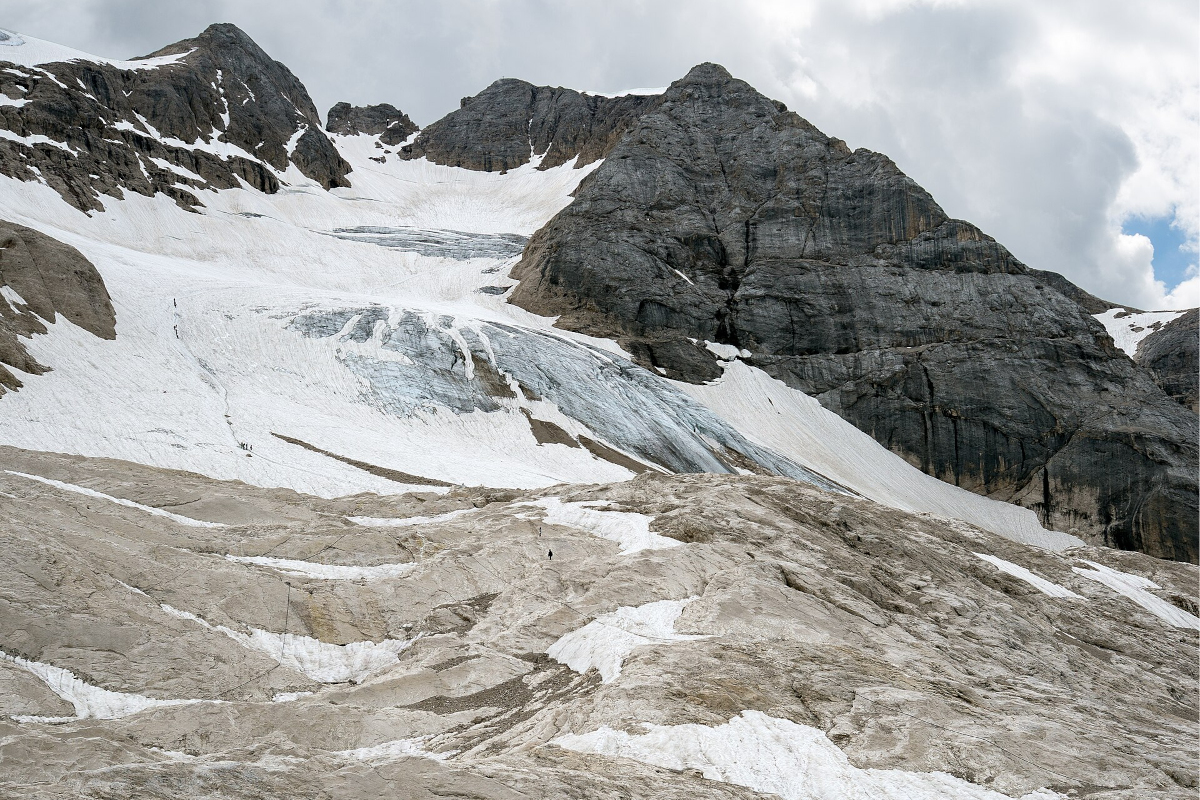
«I had written about the retreat of the Marmolada Glacier in a book published in 2006—20 years ago already. I wasn’t a prophet, but it was a phenomenon that anyone familiar with the mountains could see with their own eyes, and I ’d heard the older generation talk about it even as a child in the 1970s. Now that the change is evident—especially in the summer—we can understand the role it plays as a “barometer” of the climate. ”. This is how Andrea De Bernardin began his talk as a guest at an event organized by the University of Leisure in Dolo last Thursday, October 22, at 3:30 p.m. in the Auditorium of the Lazzari Institute. Starting with World War I, the former mayor of Rocca Pietore and essayist traced the path of profound change affecting the most important glacier in the Veneto region.
A Tradition Reborn: Marco Gemmani’s “Veni Creator”
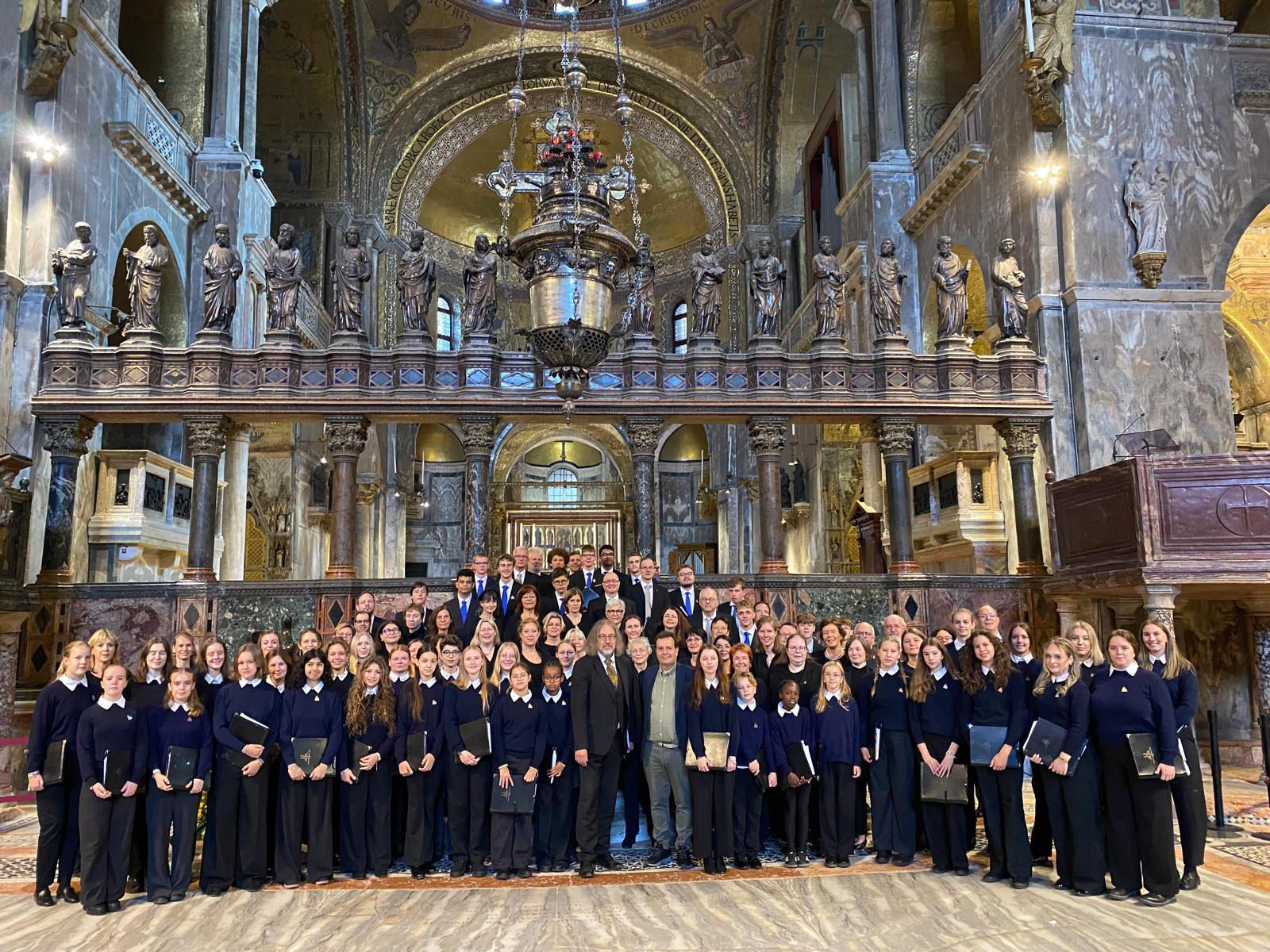
The new hymn “Veni Creator,” with lyrics by the Carolingian scholar Rabanus Maurus (780–856) and composed by Marco Gemmani, choirmaster at St. Mark’s Basilica, was very well received. The work was commissioned from the maestro by the choir of Fulda Cathedral (Germany). The city is a bishopric, the custodian of the remains of St. Boniface (Germany’s first evangelizer), and for this reason a symbolic location where the German Bishops’ Conference convenes; Furthermore, Rabanus Maurus, author of the well-known text of the liturgical hymn to the Holy Spirit, was born in Fulda. “It is an honor for me,” says Gemmani, “because it is not often that a German choir commissions a piece of music from an Italian composer. Furthermore, it gave me great satisfaction to learn that the music, performed by the Fulda choir on September 28 during the opening Mass of the Bishops’ Conference, was very well received.” As a token of gratitude to the composer, the choir performed the liturgical hymn again in various cities throughout the Veneto region in the days that followed. Special permission was also granted for a performance in St. Mark’s Basilica in Venice. “It was a wonderful experience,” says Gemmani, “to be able to hear my composition in the splendid basilica where I work. I admit that on this occasion it felt strange to receive such warm applause because usually in the basilica—since the Marciana Chapel is located high up in the choir loft and hidden from the audience’s view—no one applauds the musicians and singers during or at the end of the liturgy.”
The Human Safety Net House is the “third place” for Venetians
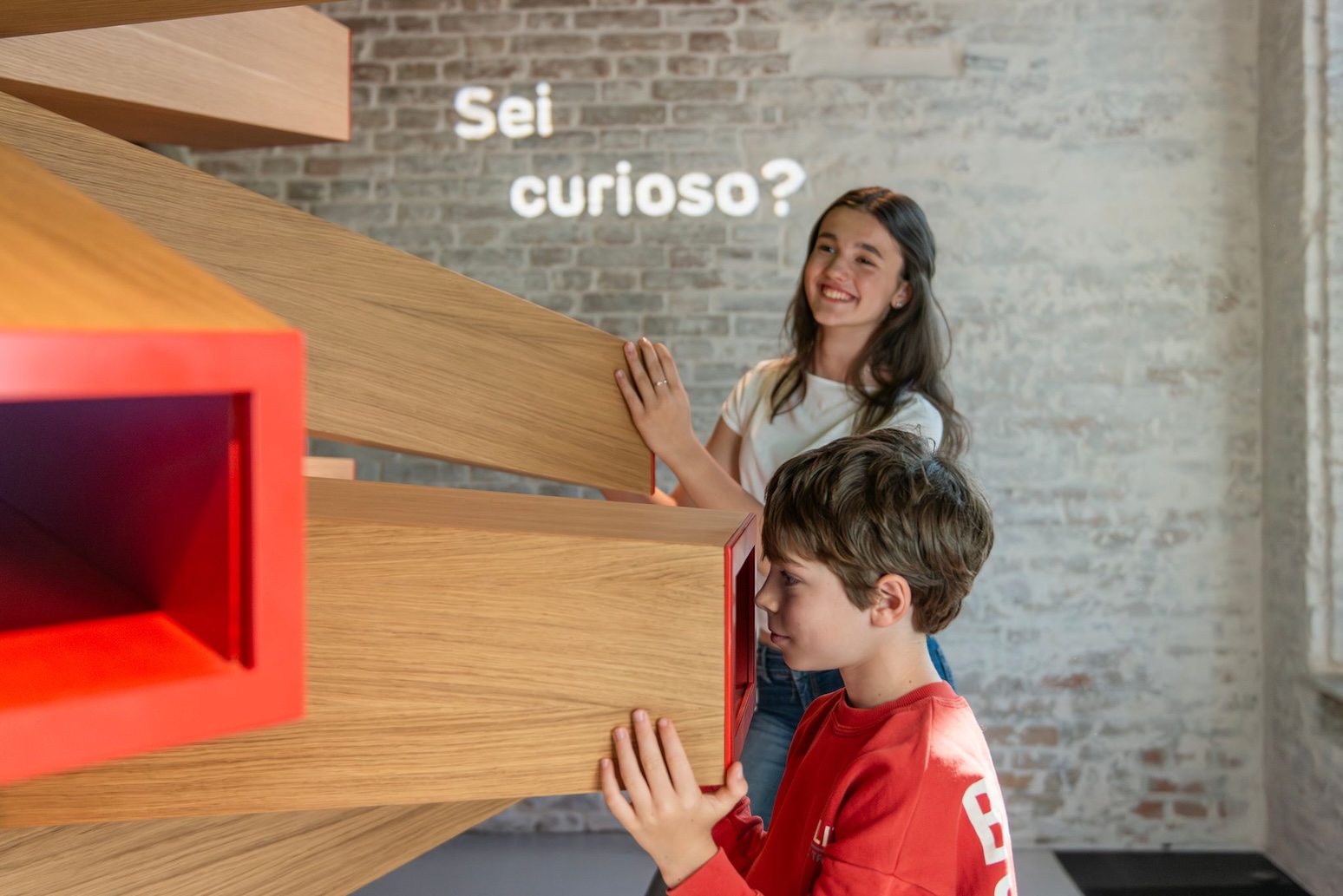
What was once a place inaccessible to the public is now home to the Venetians. Right in the heart of Venice, in the Procuratie Vecchie on St. Mark’s Square, the Home of The Human Safety Net, founded to expand the mission of the Generali Foundation, which operates in 25 countries around the world with programs for families and refugees, five years after opening to the public, is finally a gathering place for the community, becoming what the American sociologist Ray Oldenburg defines as “third place””. In fact, more and more Venetians are visiting the Procuratie, along with visitors from across Italy.
«“It took some time to build a community around the Procuratie and earn people’s trust. Now we aim to further strengthen this bond and raise our profile internationally,” he said Alexia Boro, Director of The Human Safety Net House, explaining that The space is always freely accessible, except on Tuesdays, when it is closed. Having long served as the headquarters of Assicurazioni Generali, the spaces of the Procuratie Vecchie have remained a mystery: “Now, open to the public following the restoration of David Chipperfield, We are increasingly trying to make it clear that The Procuratie are not an exclusive place, but an inclusive one. – “And,” Boro continues, “La Casa, in fact, increasingly aspires to be a place where people of different ages, backgrounds, and experiences can meet—even if just for a cup of coffee or to work together.”
From Venice to Tokyo: A Musical Bridge Set to the Melodies of the Church of Sant’Alvise
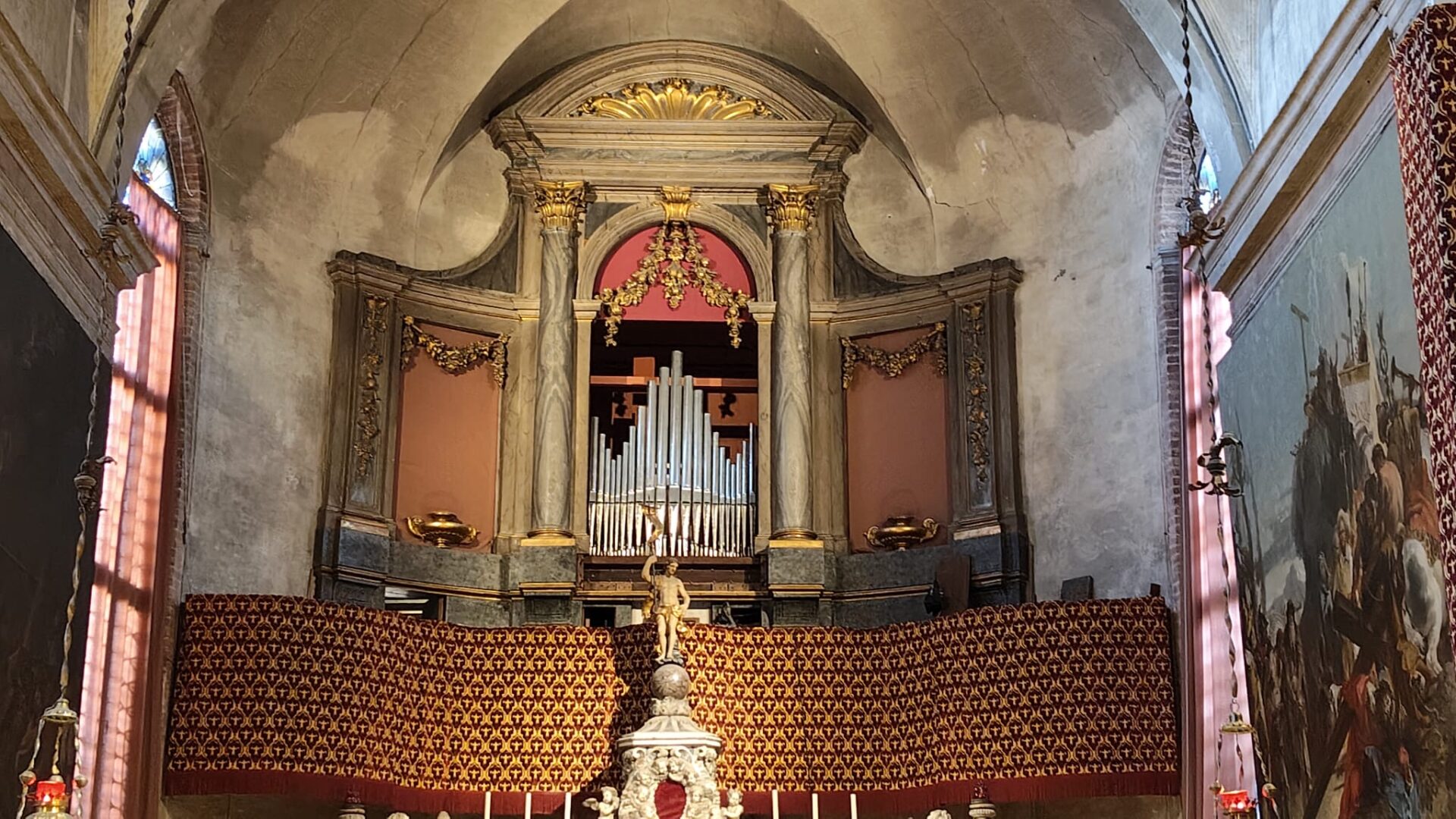
Venice and Japan united through music, in a dialogue that bridges geographical and cultural distances to come together in the universality of sound. It is through this encounter that the historic organ of the Church of Sant’Alvise has come back to life, entrusting its voice to Kinue Aota, principal organist of the Catholic Cathedral of Tokyo. A bridge between East and West, between a centuries-old musical tradition and new ways of listening, aimed at accompanying the rebirth of an instrument that is precious to Venice’s artistic heritage. After many long years of silence, the organ of Sant’Alvise, in Cannaregio, has begun to play once more. The inauguration took place on Wednesday, October 14, with a concert performed by Kinue Aota, a winner of numerous competitions who, throughout her career, has performed with orchestras, ensembles, and choirs. She maintains a busy concert schedule both in her home country and abroad and has served as a jury member in international organ competitions. Built in 1760 by Nicolò Moscatelli, the organ in this Venetian church underwent ameticulous restoration that allowed for the recovery of its mechanical components, pipes, and tonal characteristics, thereby returning to the community an important piece of the city’s artistic and musical heritage. The restoration, carried out by the Francesco Zanin firm of Codroipo, represents a significant step forward in the preservation of Venice’s historic organs. Venice, in fact, is home to one of the most important collections of antique instruments in Europe, bearing witness to an organ-building tradition that reached particularly notable heights in the 18th century. Moscatelli trained in the workshop of Pietro Nacchini, one of the leading figures in the field during the 18th century, under whom he studied from 1738 to 1754. Other important figures emerged from the same school, including Gaetano Callido, who was destined to leave a profound mark on the city’s musical history. The connection between the builder of the Sant’Alvise organ and the church itself is further strengthened by their geographical proximity: Moscatelli’s workshop was, in fact, located nearby, in Campo dei Mori. An old document indicates that, between 1754 and 1760, he himself built as many as nine organs “in many parts of Terra Ferma, and also in Venice.”
Mammography: The Only Test That Reduces Mortality
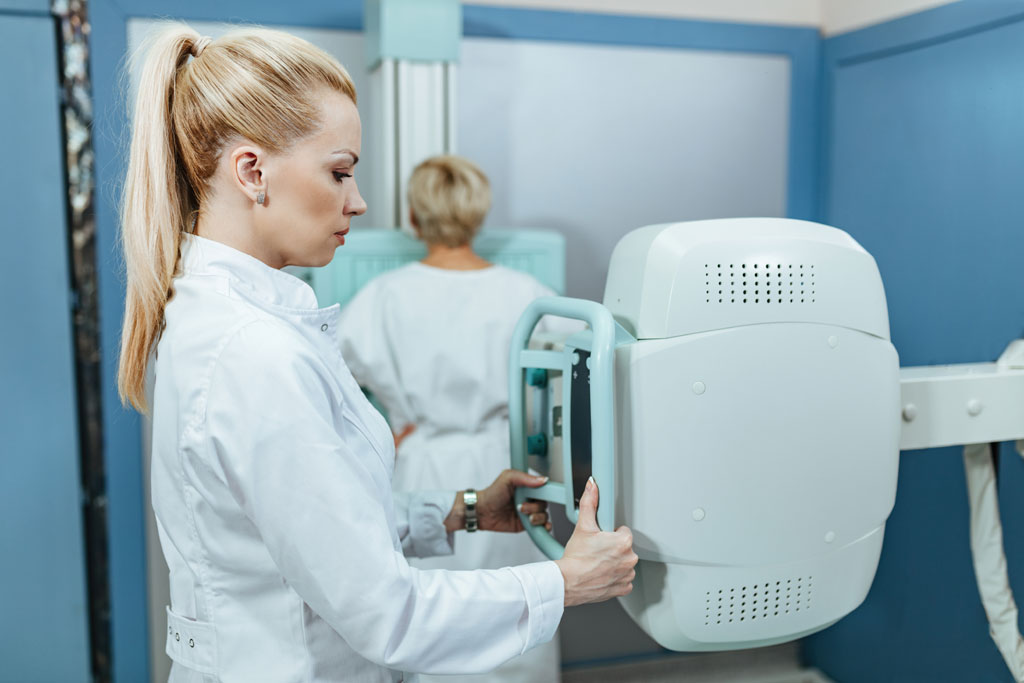
Disease prevention and screening programs are based on scientific evidence, target large populations, and draw on new research findings, international experience, and scientific progress—which is constantly evolving in the field of medicine. They are the best tool for protecting people from disease through organizations that strive to provide care without leaving anyone behind.
Joking about these issues can lead to life-threatening dangers. “Fake news”—a term that, depending on the context, can be translated into our language in various ways, such as hoaxes, bogus or false news, disinformation…—has no place in these areas. The widespread use of social media has transformed people and society, but those who generate fake news have a different motive than the average user: they do so to seek the notoriety they lack and to make a profit, counting on the fact that bad news attracts a larger audience than good news.
With Davide Iodice, the stories and memories of the elderly become a legacy to be preserved
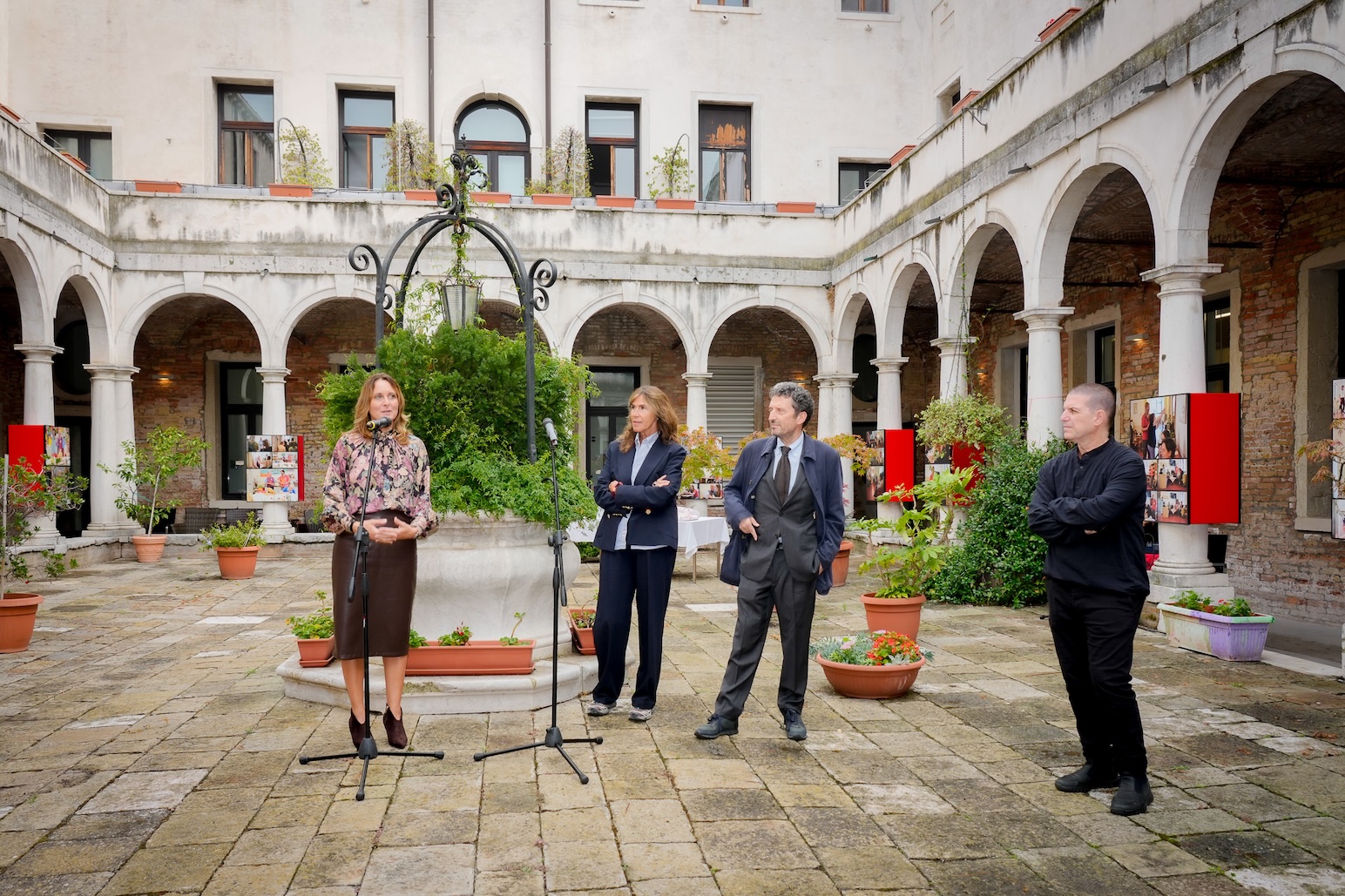
To take the vast and rich human heritage—composed of the experiences, stories, and hopes of the elderly—and transform it into a work of art and a testimony. For the past few days in the Cloister of the San Giobbe Service Center The following was inaugurated in Venice: “Promemoria” Exhibition with images taken from the a special project combining research, pedagogy, and creative work, conceived and directed by the renowned director and playwright Davide Iodice. The initiative, Born out of a long process of engagement and collaboration with the residents of the S. Giobbe Nursing Home, this project was made possible thanks to our partnership with I.P.A.V. (Venetian Public Care Institutions) and to those who support, assist, and care for the elderly every day.
A project that was initially conceived for the 54th International Theater Festival of the Venice Biennale, directed by Willem Dafoe, which concluded with a performance held right there at the nursing home, featuring both residents and staff. The initiative is now, behind the scenes, thanks to at the Historical Archives of the Venice Biennale – International Center for Research on Contemporary Arts It has become a photography exhibition, featuring 75 photo by Andrea Avezzu and a series of Images by Carlotta Vinanti, cthat will be visible to the public through November 6, Monday through Friday, from 10 a.m. to 12 p.m.
A choral narrative, designed to look at humanity with empathy which, through photographic testimonies, speaks of relationships and care.

