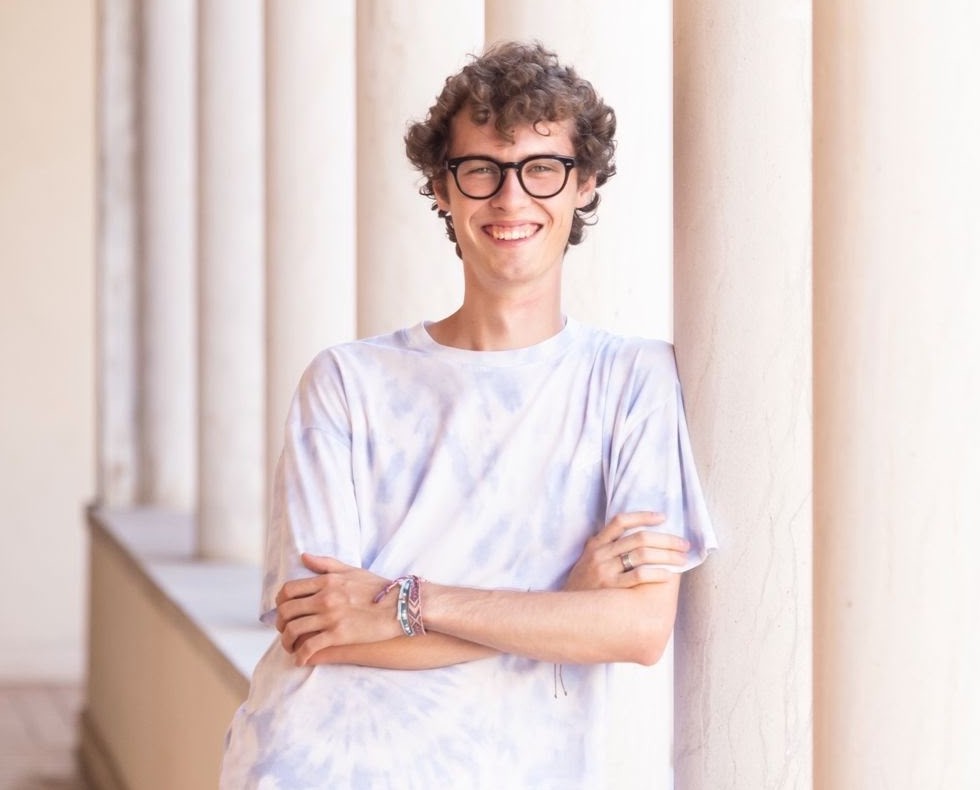
Nicola Camporiondo, who will turn 21 in December, has chosen to bring the Gospel to the place where young people spend most of their time these days: on social media. Born in the province of Vicenza (in Lonigo) and a theology student in Padua, he has been a digital missionary since 2022. He is convinced that even through a screen, it is possible to spark questions, open up new paths and bring people closer to the faith. But his mission is not confined to the virtual world. The content he shares aims, in fact, to help people rediscover the value of meeting others, listening and feeling part of a community. It was he who shared his testimony on Sunday 22 November in Venice with the young people of the diocese who took part in the pilgrimage to the Madonna della Salute, inviting them to bear witness, through their own lives, to their personal encounter with God. Nicola evangelises through social media – with nearly 15,000 followers on Instagram and around 160,000 on TikTok – by creating videos that very often prompt questions and a desire for discussion amongst his followers. He comes from a practising Catholic family who, from a very young age, helped him to experience life within his local parish, where he received the sacraments. But the real spiritual turning point came with the pandemic, when everything came to a standstill and the young man felt the need to be embraced – perhaps truly for the first time, or at least in a more conscious way – by his faith. Hence the question, from which the videos posted on social media were born: how can we get people talking about God? During his teenage years, Nicola gradually drifted away from the faith he had grown up with at home, only to find himself facing two particularly difficult periods: a serious illness in the family and his final year of secondary school. It was precisely from these difficulties, as the young man himself testifies, that the crisis arose, and from the crisis came a question that led him to embrace the faith anew.
Nicola, who is a digital missionary?
It is someone who, through the new means of communication at our disposal, shares the Gospel and their experience of faith and the Church in its various forms: a priest through his vocation, a layperson through their relationship with God – which is, in fact, what I personally try to do.
What are the needs of young people today?
They need to be listened to and they need healthy role models (of which there are currently very few). They need people who are well-prepared and aware, ready to make themselves available to them and to listen to their needs.
What advantage do social media have, in conveying a certain type of message, compared to more traditional methods?
The Church is currently facing a great deal of prejudice from the younger generations, even though their search for meaning has never ceased – it is part of being human. Compared to the past, it is more difficult to turn to a priest: when in need, a young person is unlikely to knock on the rectory door. As a result, there are issues – specifically those related to faith – that often remain unaddressed by them: they no longer have figures with whom to engage. This is where social media can prove to be a valuable tool, although we must not forget that the relationship formed behind a screen can never be compared to one in person. In short, social media offers the chance to connect with a section of the population who would otherwise not set foot in a church to find answers to their questions. All of this, however, is intended to serve as a catalyst for a subsequent, face-to-face meeting.
You mention prejudices; which ones do you encounter most frequently?
The Church’s institutional role tends to be criticised. People fail to distinguish between this and its spiritual role. Another prejudice stems from the idea that faith is something of the ‘past’, belonging to older generations, and that life can be lived without it. Those who say they believe because they are afraid of hell are clearly practising a rather frivolous form of faith. I’m also thinking of those who argue that it isn’t necessary to believe in Heaven to do good deeds. Of course that’s true, but faith nonetheless adds extra value to what we do. Often it’s also a matter of religious ignorance – which affects adults too – that is profound and widespread.
Does the world today make you feel uneasy?
A little, yes. I don’t think anyone can feel completely at ease when faced with certain situations. I’m thinking, for example, of artificial intelligence: if not properly understood, in the years to come it could genuinely pose a risk, both on a global scale and for individuals. Young people today often grow up in disastrous family situations; they are increasingly put to the test. I remain hopeful, however; all is not lost. If everyone, in their own small way, tends their own little patch, together with others we can create a large garden. Let’s hope that each of us, deep down, is aware of this: from grandparents and parents right up to the highest echelons of our society.
We experience the risks associated with social media first-hand every day. How can we avoid crossing the line?
The balance is, in fact, a very fine one, in the sense that we need to understand why a person looks at and uses social media. In my case, I do so guided by a set of values aimed at sharing something positive and, at the same time, I am aware that my life does not end within a screen. The risk is being born with a mobile phone practically glued to your hand and growing up convinced that the outside world is merely an afterthought, when in fact the opposite is true. It is the moment we lose this certainty that our existence begins to waver and falter.
In the absence of concrete points of reference, there are those who rely on AI to find answers to their existential questions.
That’s true. Yes, it can provide good answers too, but we must bear in mind that AI lacks human experience, so it has its own limitations. It may say the right things, but the response from a person with ‘real-life experience’ can never be the same or have the same depth as that of an algorithm.
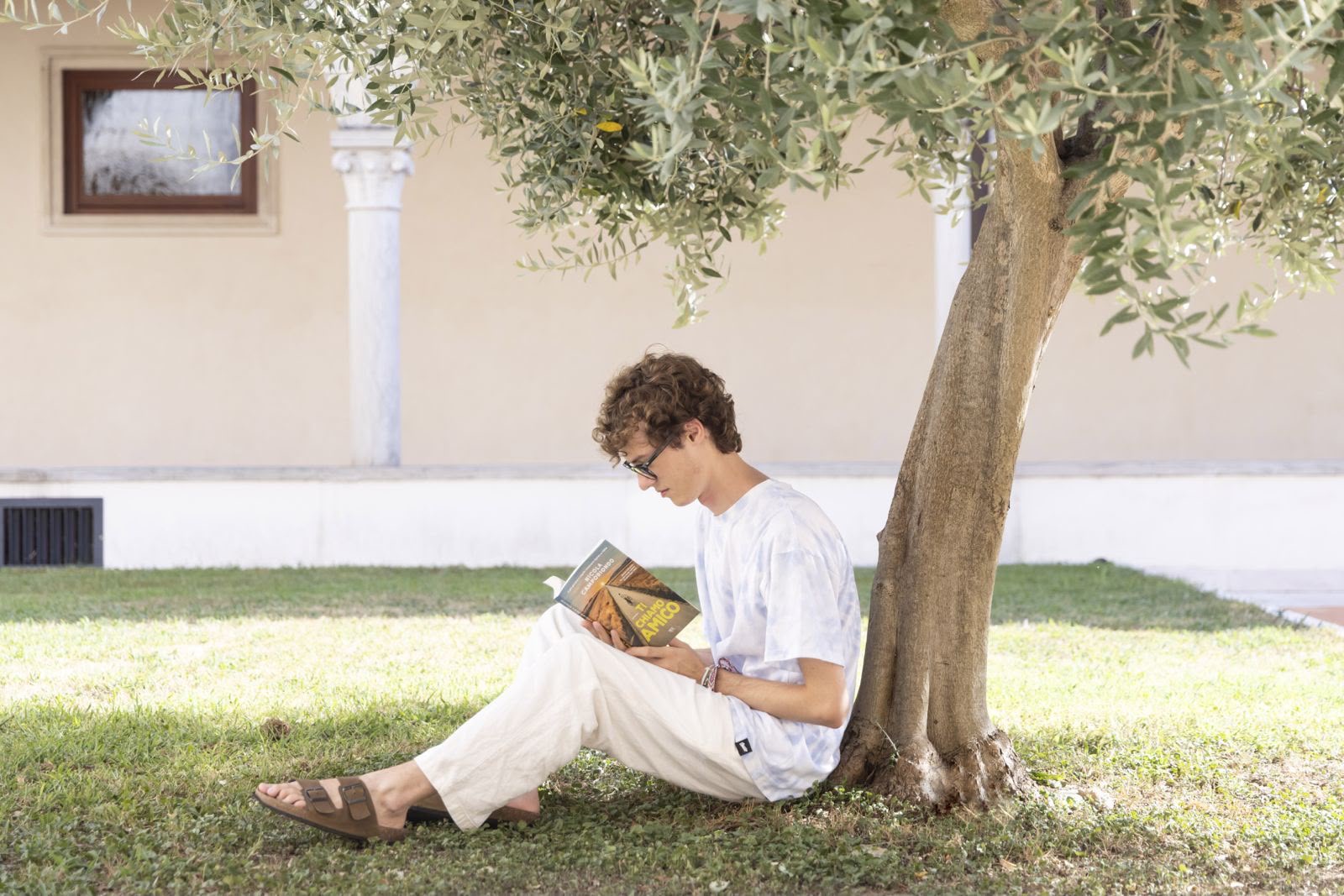
Social media on the one hand, print media on the other: I’m referring to the book you’ve written, *Ti chiamo amico* (Rizzoli, 2026). Why did you make this choice, which seems to go in the opposite direction to the path you’ve followed so far?
At first I was sceptical, but then I gave it some thought. Through my content, I try to convey a very important and profound message – namely, faith – via a video lasting about thirty seconds (the shorter they are, the more people are drawn in). I asked myself, why not convey this whole system of values through the pages of a book as well? In written form, what I try to communicate in 30 seconds allows me to engage the reader in a more dynamic and profound way.
Any other projects in mind?
At the moment, my main focus is on graduating (laughs, ed.). My next publication? My degree thesis. I won’t be writing anything else before that. Juggling my studies with writing my first book and the social media content I share has been quite a challenge. Once I’ve graduated, we’ll see.