
Fewer newspapers, more packaging: In Venice, paper is taking on a new form

There are fewer and fewer newspapers and magazines in the paper recycling bins, and more and more packaging. As a result, Veritas’s recycling volume remains essentially stable, at around 60,000 metric tons per year, but it takes up much more space: newspaper and magazine paper is a dense material, while boxes and packaging are light, bulky, and often full of air. This is one of the most noticeable changes in the paper supply chain, linked in part to the growth of online shopping, which has increased the amount of packaging entering the recycling system.
“The quantities balance each other out: when you take away from one side and add to the other, the total remains roughly the same,” explains Renzo Favaretto, director of Veritas’s Environment Division. The overall figure, therefore, reflects stability, but this masks a profound change in the composition of the collected paper.
In the 45 municipalities of the Metropolitan City of Venice and in the municipality of Mogliano Veneto, per capita production is just over 70 kilograms per year, compared to a national average of around 65. “We’re already doing well, but perhaps we can do even better. In short, we could do better,” notes Favaretto.
Mammograms: Stop the Fake News—It’s a Safe Test

Disease prevention and screening programs are based on scientific evidence, target large populations, and draw on new research findings, international experience, and scientific progress—which is constantly evolving in the field of medicine. They are the best tool for protecting people from disease through organizations that strive to provide care without leaving anyone behind.
Joking about these issues can lead to life-threatening dangers. “Fake news”—a term that, depending on the context, can be translated into our language in various ways, such as hoaxes, bogus or false news, disinformation…—has no place in these areas. The widespread use of social media has transformed people and society, but those who generate fake news have a different motive than the average user: they do so to seek the notoriety they lack and to make a profit, counting on the fact that bad news attracts a larger audience than good news.
In Venice, Lorenzi (The Sun) takes on the age of AI: “Today, the real prison takes the form of a screen”
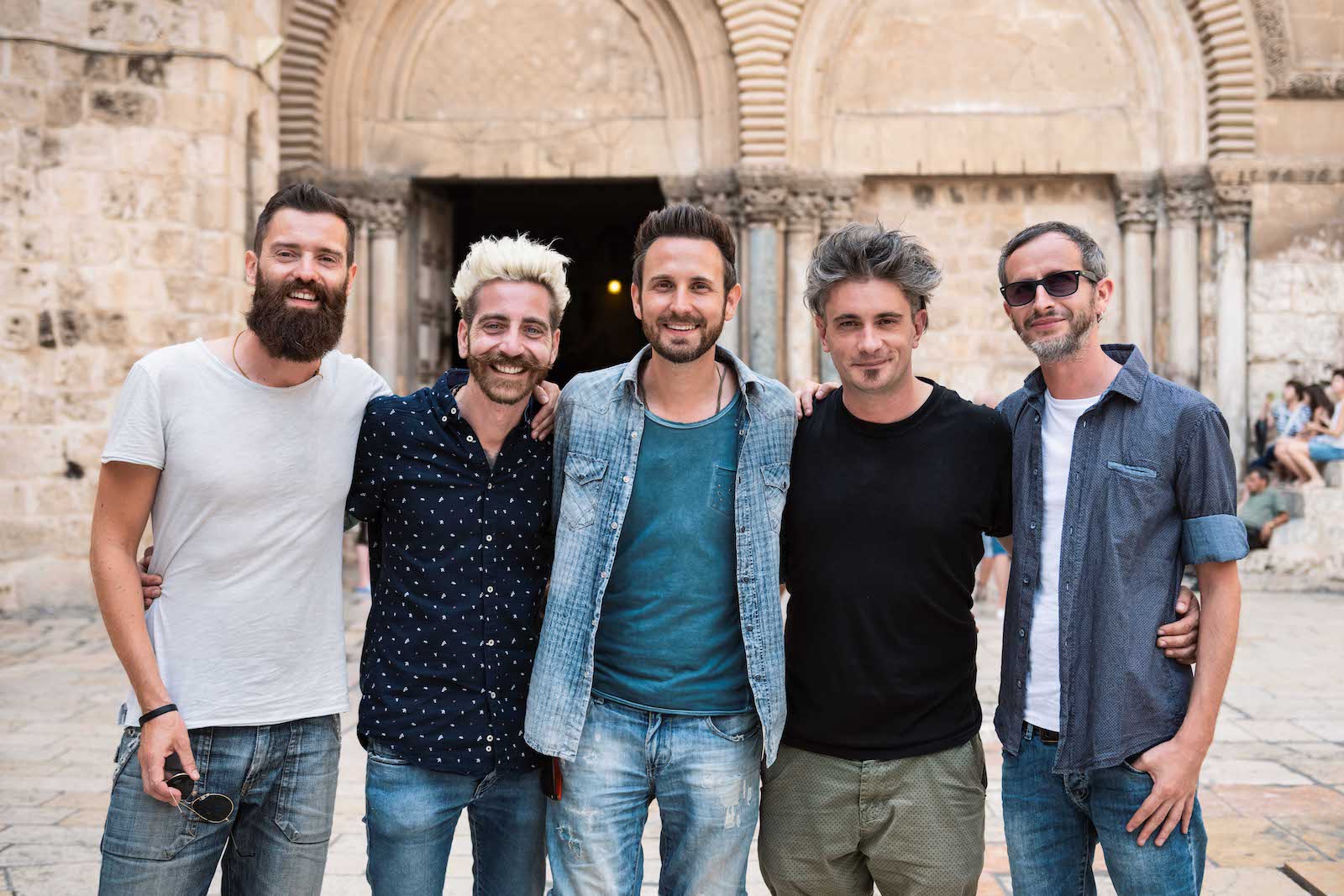
Awe and wonder: the essential ingredients for living a true, fulfilling life. These are the key words of Francesco Lorenzi, frontman of The Sun, a Christian rock band that won three awards at the Catholic Music Awards in 2025. That same year, the band met Pope Leo on two separate occasions: the Jubilee of Families and the Jubilee of Youth. As the band’s songwriter, singer, and guitarist, Lorenzi was among the guests at a recent event organized by Avvenire and Iusve, held in Venice at The Human Safety Net’s headquarters. The theme of his talk was “Remaining Human: Words, Relationships, and Choices in the Age of Algorithms.” Born in 1982 in Vicenza, years ago he was able to transform a period of inner turmoil—experienced after a long tour with Sun Eats Hours—into a journey of faith and personal growth by dedicating himself to music, together with the other members of his former band, in a new format centered on sharing their Christian witness. “To remain human,” Lorenzi observes, “it is essential to preserve a sense of wonder. And this is achieved through a life built on relationships and encounters, as well as hard work,” which accompanies the daily life of those who truly want to live, without shortcuts or suggestions derived from artificial intelligence. “We’ve now reached the point where we delegate the summarization of just about everything to machines.” There’s no doubt that, in certain cases, AI can be helpful. Abusing it is the real danger. These issues, along with the misuse of social media, inspired one of the songs— “Prigione tra le dita” —included on the latest album “Fuoco dentro,” produced by La Gioia. Lorenzi began writing the lyrics after seeing a video of a young girl on Instagram—with over 4 million followers—showing how much money she’d managed to make by mimicking sexual positions on luxury cars.
Tenor Zagni’s challenge: “Let’s bring music to the fields of Venice, where everyone can enjoy it”
An hour of music to bridge the gaps, connect through sound, and discover that disability is not a barrier to experiencing art, but can become a different way of engaging with it.
This is the experience that tenor and stage actor Enrico Zagni, 48, born in Modena but a Venetian by adoption, had this year while taking part in “Arena per tutti,” the Arena di Verona’s project dedicated to people with various forms of disability. These range from visual and hearing impairments to autism spectrum disorder. An experience that, as Zagni himself explains, allowed him to rediscover the truest meaning of making music—beyond the performance that audiences typically judge at the end of a show. Breathing, vibration, voice, and physical contact thus become tools for bringing artists and audience members closer together, creating a sort of “sound bubble” in which the distance between the performer and the listener is eliminated.
It is precisely from this experience that a reflection has emerged focused on Venice, the city where the tenor has now lived for fifteen years: an extraordinary place, yet one that remains difficult for many people with disabilities to navigate and experience fully due to its natural topography—and where even access to culture can sometimes encounter barriers. Thus, for Zagni, Venice could become a testing ground for new forms of “accessible entertainment,” bringing music and theater outside of the more traditional venues—into the squares and small courtyards.
Michele Casarin: Venice Must Return to Producing Culture
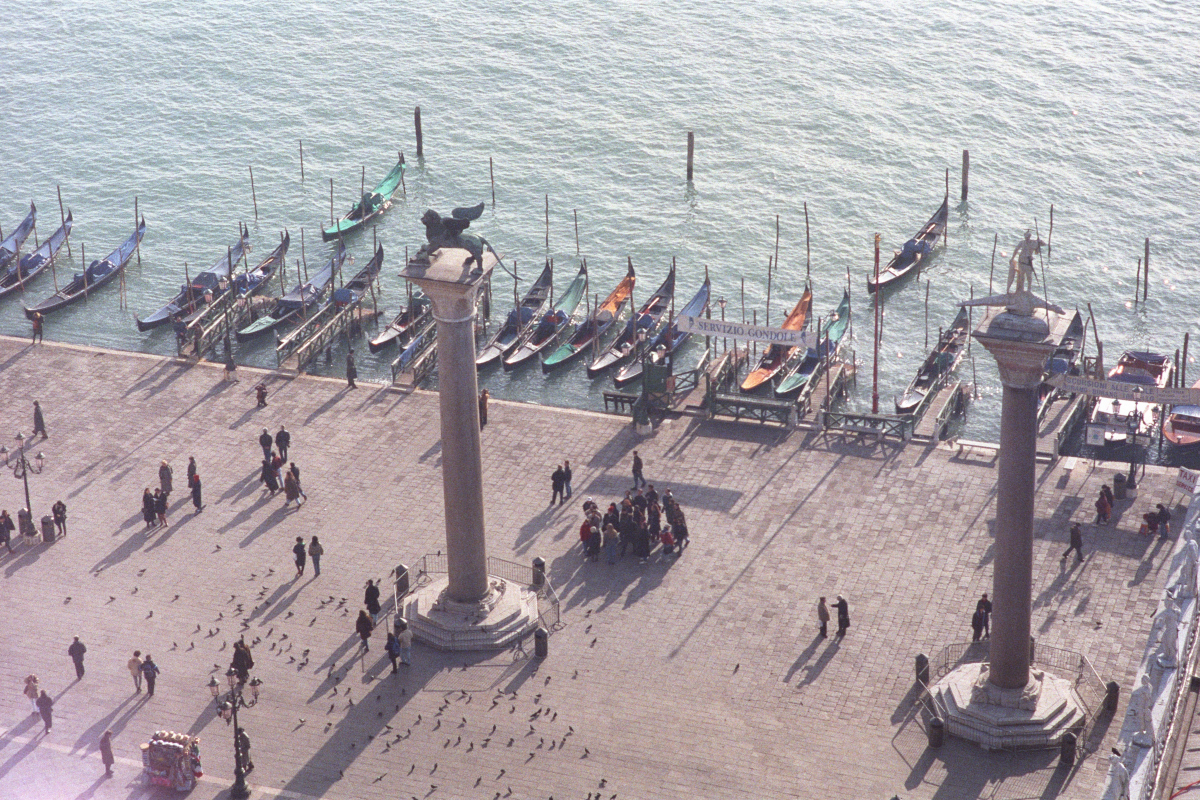
Venice is an open-air museum—not only because of its beauty, but also because it is the product of a plan that, since the early 1900s, thanks to the vision of Count Giuseppe Volpi, envisioned it as a cultural center, while Marghera was to host large-scale industry and Mestre was to become the residential hub par excellence. Thus, the cityis “in fact a cultural capital, even if it lacks official recognition; yet this distinction is not enough to keep pace with the world’s great capitals. Alongside consumption— which is often fleeting and ephemeral— we need to return to production, creating art, cinema, and the performing arts right here.” This reflection comes from someone who works closely with and coordinates cultural institutions: Michele Casarin, President of the Academy of Fine Arts and Director of the municipality’s culture department, who spoke on this topic as a guest of the Rotary Club Venezia Mestre—led by President Andrea Burlini—on October 1 at Forte Marghera.
Music in Support of Research: “Venezia Sounds” Returns with Elisa at the Arsenale
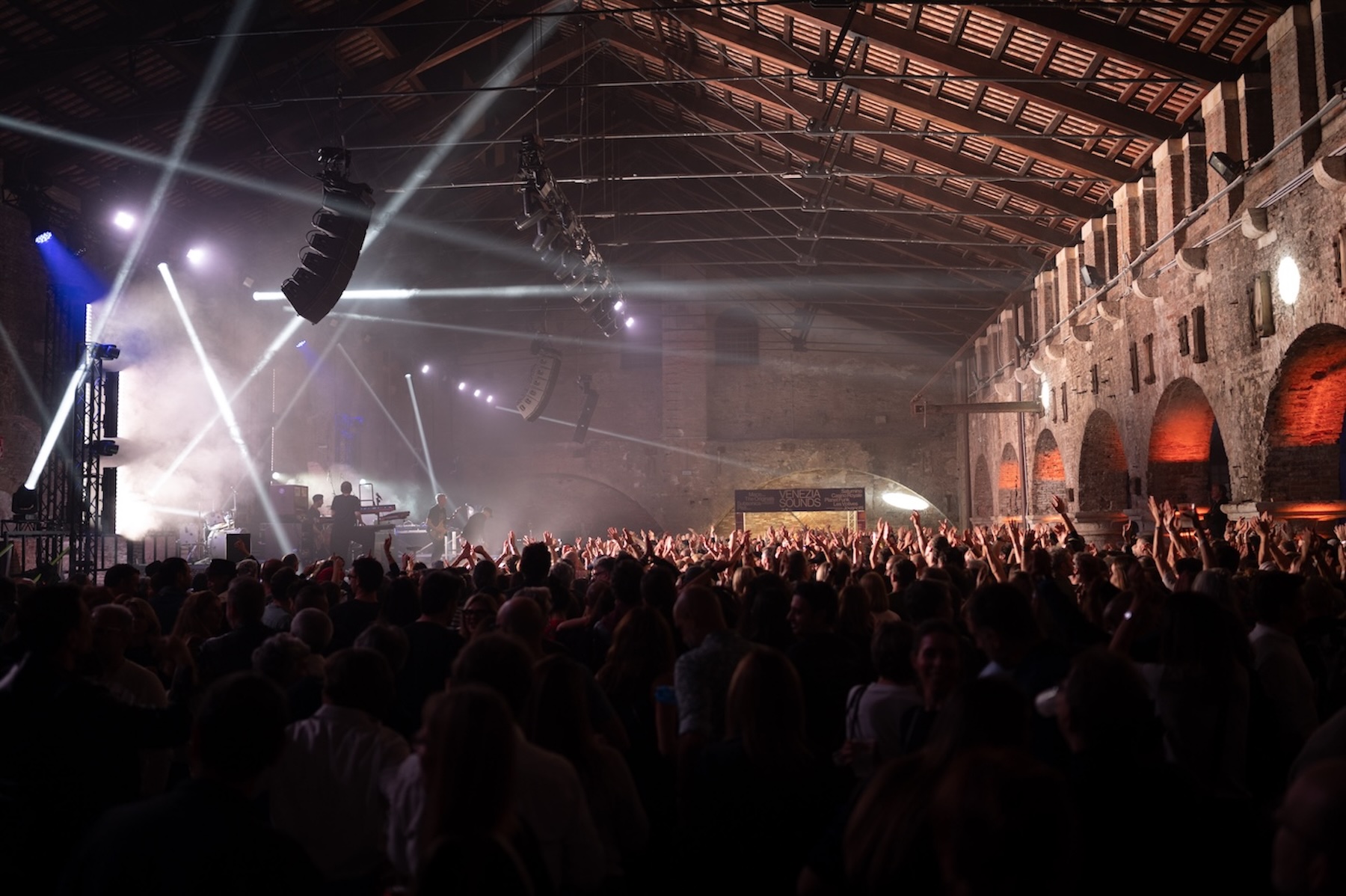
Six singers will perform on a single stage for over eight hours to support medical and scientific research on cancer.
On October 24 at the Tese delle Nappe in the Arsenale, in the heart of Venice, “Venezia Sounds” returns—the major charity concert created in memory of the Venetian Tomaso Cavanna, a music and cultural manager who passed away prematurely at just 45 years old. The event, aimed at supporting research into cancer treatments, will feature special guest Elisa, the acclaimed singer-songwriter, multi-instrumentalist, and music producer with a thirty-year career behind her, who will be one of the most eagerly anticipated stars of the evening. The event, made possible by the Giancarlo Ligabue Foundation,the Medicine Rocks Association, and some fifty supporters and sixty volunteers, is supported by the City of Venice and Vela spa.
There are two main goals: to bring pop and rock music back to the heart of Venice and to advance research in the fight against cancer. Specifically, the proceeds from the event will go toward continuing the studies led by Prof. Antonio Sica, head of the Molecular Immunology Laboratory at the IRCCS Istituto Clinico Humanitas in Milan, and toward molecular research in the field of neurodegenerative diseases conducted by Dr. Cecilia Laterza of VIMM —the Veneto Institute of Molecular Medicine (VIMM) in Padua.
The Largest and Most International Event in Support of Research
Venezia Sounds will not only bring together some of the biggest names in the Italian rock and pop scene, as in past editions, but also several internationally renowned artists. This is thanks to the artistic direction of Samuel Romano, frontman of Subsonica and a close friend of Tomaso’s, who has set his sights ever higher: “We’ve aimed to go beyond the confines of our circle of friends and national borders, looking abroad as well. We want to keep growing bigger and bigger, and not just stick to musicians and singers who are friends of Tomaso,” said Romano. In fact, during the evening hosted by Marco Maccarini and Federico Russo, Elisa will be joined on stage by Morcheeba, the legendary British band with over 10 million records sold, Motta, who has shaken up the Italian singer-songwriter scene; Emma Nolde, who is rewriting the history of pop-rock music; as well as the wild and independent The Zen Circus and the chameleon-like Róisín Murphy. “For the first time, we’re thrilled to have international artists,” Romano continued. “The best part is that everyone will be giving it their all for a good cause and interacting together on stage, creating something truly unique.”
The event will begin at 6:30 p.m. with live music and numerous food and wine stands, with proceeds from purchases going toward research. The concert, on the other hand, will officially begin at 7:30 p.m. and continue late into the night. There are 2,500 tickets available, which can be purchased on Vivaticket (https://www.vivaticket.com/it/ticket/venezia-sounds-2026/307643). Given the large number of people expected, the vaporetto service for the return trip from the Arsenale will also be expanded.
Venice-Ethiopia with the Elena Trevisanato Foundation: 30,000 euros raised �
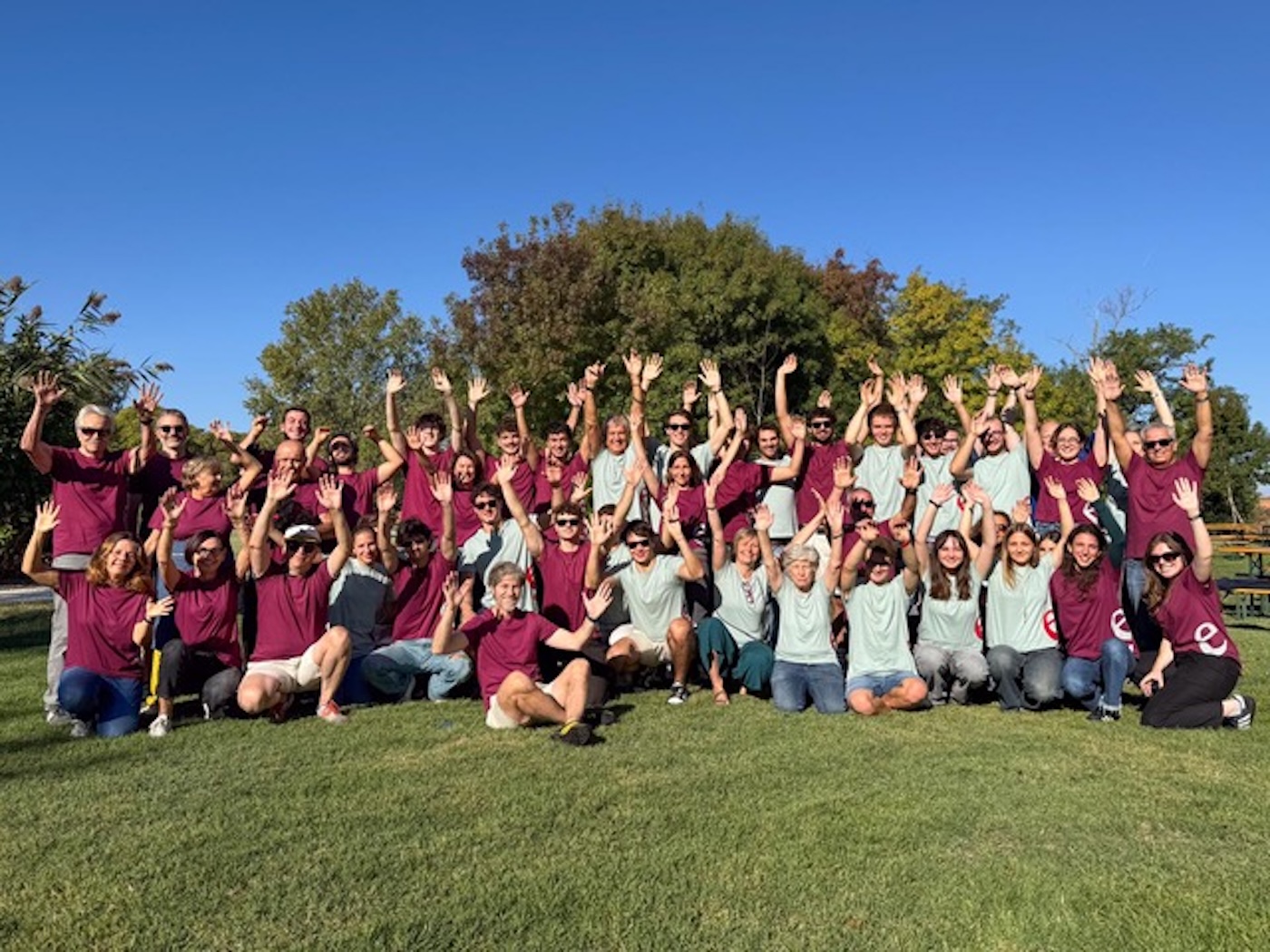
The Elena Trevisanato Foundation continues its efforts , bringing aid from Venice to Gode for more than 3,800 beneficiaries. New projects are also getting underway in Hosana. Donations totaling over 30,000 euros were collected thanks to the 700 participants at the event on the island of Certosa, titled “The Road to School,” organized by the Elena Trevisanato Foundation, a nonprofit organization operating in Ethiopia and founded in memory of Elena, a young woman from Venice who passed away prematurely.
By participating in the festival—organized thanks to some 80 volunteers, half of whom were young people— the participants contributed to the project “Empowering Women and Youth Through Sustainable Waste Management and Education,” aimed at supporting initiatives currently underway in Gode, in Ethiopia’s Somali Region. The project involves building restrooms, water tanks, and waste collection points, as well as arranging for the distribution of menstrual health kits and the creation of school clubs dedicated to hygiene and environmental protection.
The Patriarch: The Sun of Assisi and the Light of Poverty
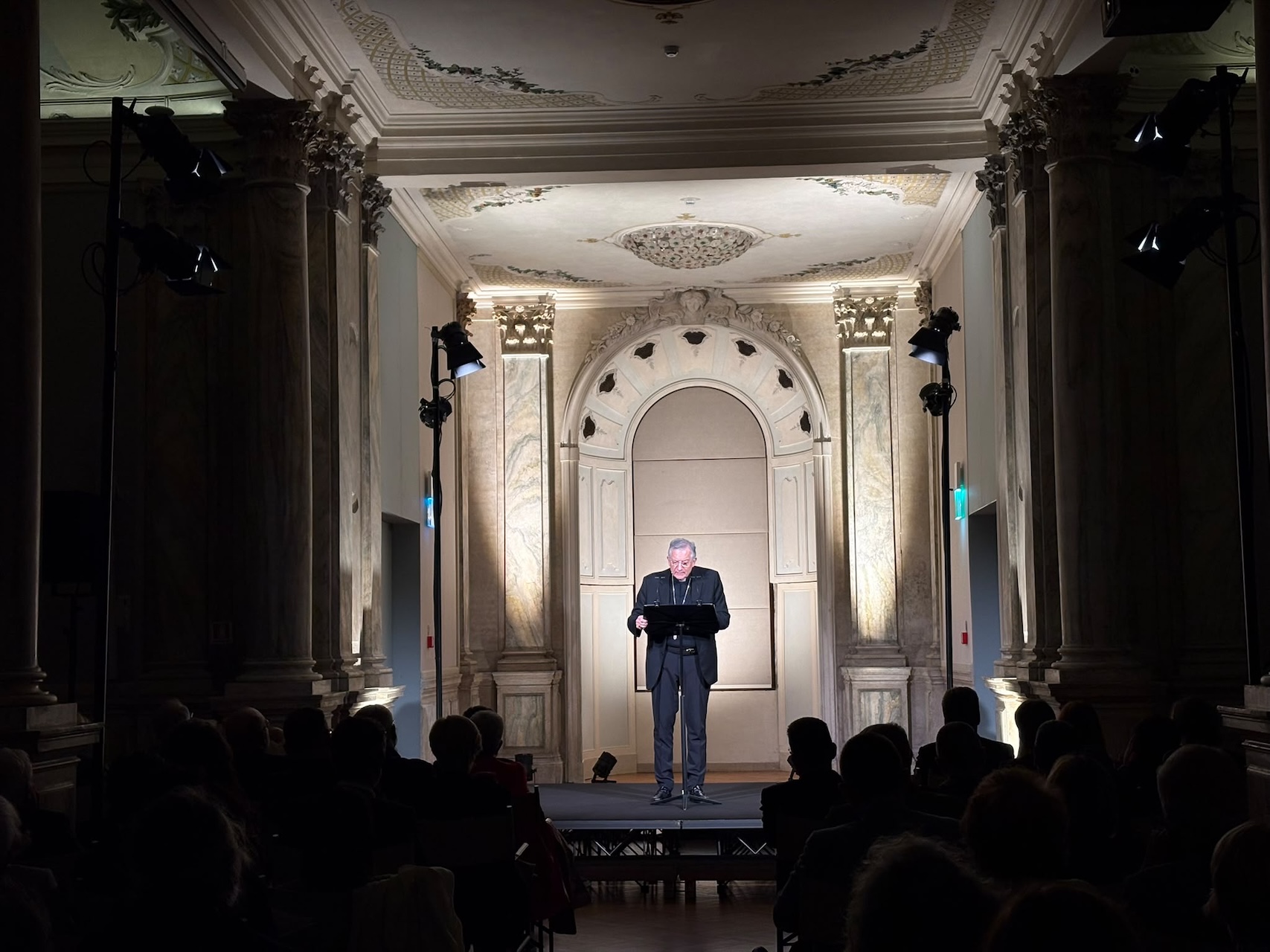
How does a historical and spiritual figure become a turning point for culture, society, and the Church in every age? And how does Dante’s poetry manage to capture the essence of a revolution based on the total stripping away of the self? The Patriarch of Venice, Monsignor Francesco Moraglia, sought to answer these questions during his address on Tuesday, October 6, in the Sala delle Colonne at Ca’ Giustinian, as part of the “Biennale della parola.”
The event, titled “On the High Seas for a Clear Sign: Dante’s Canticle for Francis,” began with a lecture on Canto XI of Dante’s *Paradiso* to offer a comprehensive and profound reflection on the theme “Francis: Poverty Made Life.” The Patriarch led the audience to the heart of the Divine Comedy, where theology becomes dramatic narrative and the Gospel teaching is transformed into concrete action, highlighting the revolutionary and untamed spirit of the Poverello of Assisi.
Monsignor Moraglia’s analysis began with the structural placement of the canto within the Third Canticle. We find ourselves in the Heaven of the Sun, the abode of the wise spirits, where the poet is welcomed by a wreath of dancing lights. At the center of this circle stands St. Thomas Aquinas, a pillar of the Dominican Order, who takes the floor to deliver a solemn eulogy for St. Francis.
The Patriarch emphasized the pedagogical and symbolic value of this poetic structure: Dante forges a “fraternal exchange” between the two great mendicant orders of the 13th century. In Canto XI, it is the Dominican Thomas who sings the praises of the founder of the Franciscans; in Canto XII, the exact opposite occurs, with the Franciscan Saint Bonaventure of Bagnoregio called upon to celebrate the greatness of Saint Dominic.
As mentioned in the speech, Dante transposes to the heavenly realm a custom deeply rooted in the Florence of that era: On October 4, for the feast of St. Francis, a Dominican friar would deliver a eulogy for the “Poverello” in the Basilica of Santa Croce, while on August 5, it was the turn of a Franciscan to celebrate St. Dominic at Santa Maria Novella. Far from any fruitless rivalry, the two orders and their respective founders are presented as “two princes” whom Providence has given to the Church to heal it from within: Dominic through the rigorous clarity of doctrine and the defense of the faith, Francis through radical imitation and the lived witness of the Gospel.
Before delving into the story of Francis, Dante’s canto opens with a scathing invective against the wretchedness of human concerns. Men, Thomas observes, toil and squander their energy in pursuit of fleeting goals: financial gain, ecclesiastical or civil careers, military service, political power, and sensual pleasures.
Bishop Moraglia highlights the specific dramatic function of this introduction: it is not merely a moralistic interlude, but a powerful element of contrast. While society and the entire world are caught up in the frenzy of accumulation, possession, and individual self-assertion, Francis bursts onto the scene by deliberately choosing non-possession, humility, and self-emptying.
It is here that Dante’s geography becomes prophecy. The poet describes the location of Assisi, nestled on the slope of Mount Subasio between the Tupino River and the waters flowing down from the hill of Saint Ubaldo. There, where the earth first receives the morning rays, a new and brighter star rises for Christendom. For this reason, Dante notes, that place should not be called simply Assisi (or “Ascesi”), but rather “Oriente.” Francis is the new sun rising to warm a Church and a society threatened by institutional rigidity and spiritual coldness.
Venice in the Footsteps of Francis
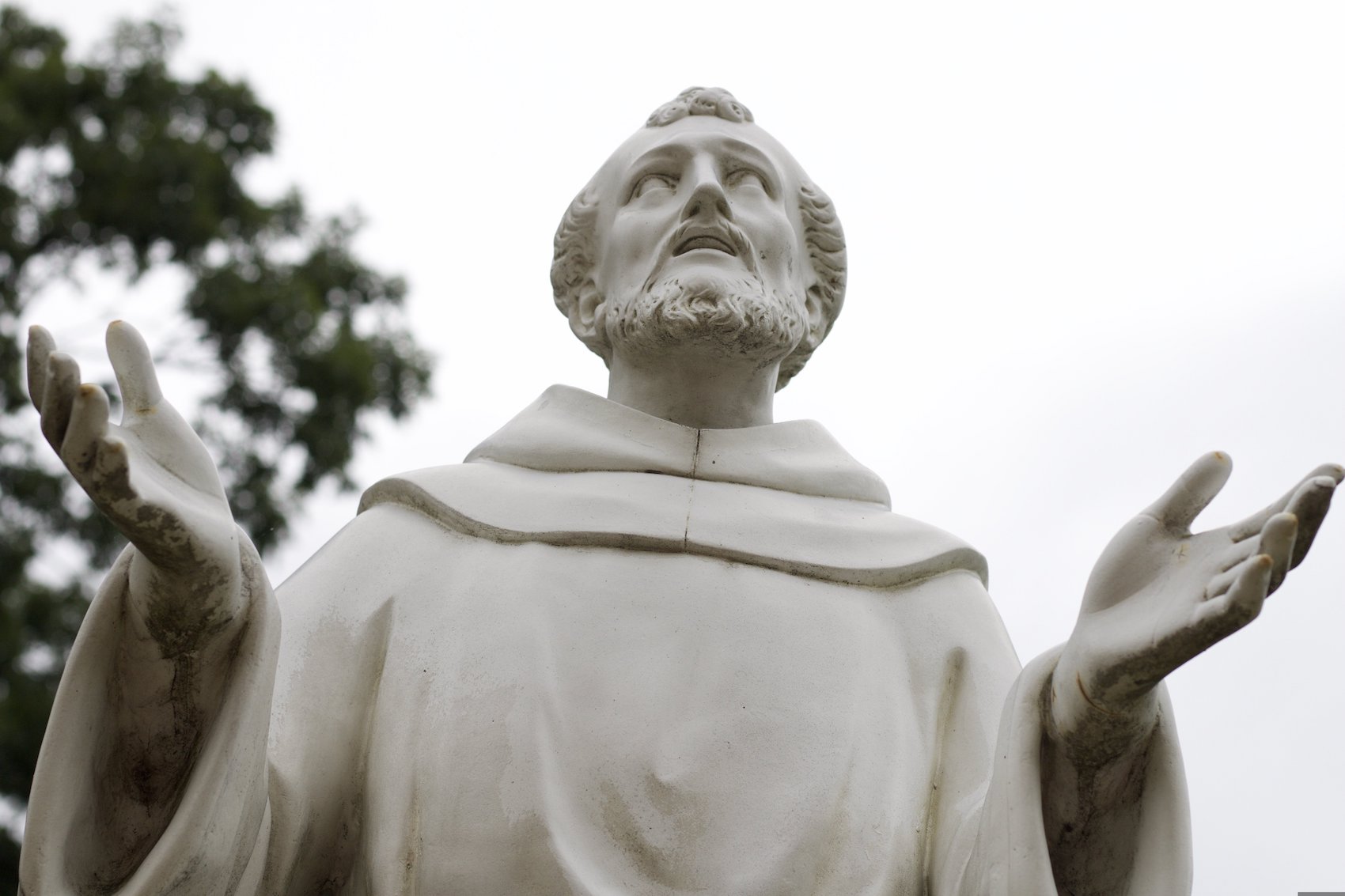
“This year, October 4 was not just a date on the calendar, but the culmination of a journey of spiritual and civic renewal.” In Venice, the 800th anniversary of St. Francis’s death was not merely a “museum-style” commemoration, but “a veritable explosion of vitality”. This is attested to by the guardian of the Capuchin monastery at the Church of the Most Holy Redeemer in Venice, Brother Francesco Daniel, who states: “The response from the public and the participants surprised us with its enthusiasm and diversity. Our goal was not to seek media success, but rather to promote a ‘collective listening experience.’”But how did the Franciscan initiatives of recent months come about? The first thing Father Daniel emphasizes is the inclusive nature of the organization: “To coordinate this buzz of activity, the ‘Venetian 800 St. Francis Committee’ was formed, bringing together all the Franciscan orders in the city, with the support of some laypeople and the Patriarchate of Venice. Initially, this Committee was formed in February 2025 from a WhatsApp chat among friars and laypeople; over time, this initiative has managed to mobilize the city’s community.” Turning to the proposals, Father Daniel states: “The guiding principles we’ve followed are broad and integrated: spirituality, culture, and art, extending to the urban and social dimensions.” Among this year’s most significant initiatives is the publication of Linda Manzelle’s book titled “In Venice with Francis. Historical, Artistic, and Spiritual Itineraries Among the Franciscan Sites in the Lagoon,” co-edited by Ester Brunet and Friar Daniel himself. The exhibition “Nudi sulla nuda terra” (“Nudes on the Bare Earth”) by artist Marcello Chiarenza, held at the Church of the Redeemer, also made a significant impact, the friar continues.

