

Prior to restoration, the works exhibited signs of deteriorated varnish, retouching, overpainting, glue residues and abrasions, which made it difficult to discern the original painting.
Preliminary non-invasive diagnostic tests guided a tailored cleaning process for the canvases and a meticulous yet respectful restoration of the paintwork, with the aim of preserving the historical alterations resulting from the trimmings made to the canvases to accommodate the opening of ancient doors in the original hall.
The paintings did not suffer from any serious damage but only a chromatic imbalance caused by the now-altered varnishes: ‘The most important thing was to remove the old varnishes that were altering the colours and which, having dried out, were pulling on the paint film, which instead needs to be protected’ said Melissa Conn, director of the Venetian branch of Save Venice, explaining that the removal of the varnishes, which had yellowed with age, also eliminated that flattening effect, restoring the works’ true spatial depth and perspective.
It was also necessary to remove old retouching. Among the most recent interventions carried out on the works were those by Mauro Pellicioli between 1958 and 1960, as part of the restoration of the entire cycle, and the one carried out in 1990 by Ottorino Nonfarmale. Once the cleaning and consolidation of the works had been completed, the conservators proceeded to even out the stucco, fill in small gaps and carry out pictorial integration, so as to restore the relationship between the figures and the architecture to a state where it is once again clearly discernible in the three canvases.
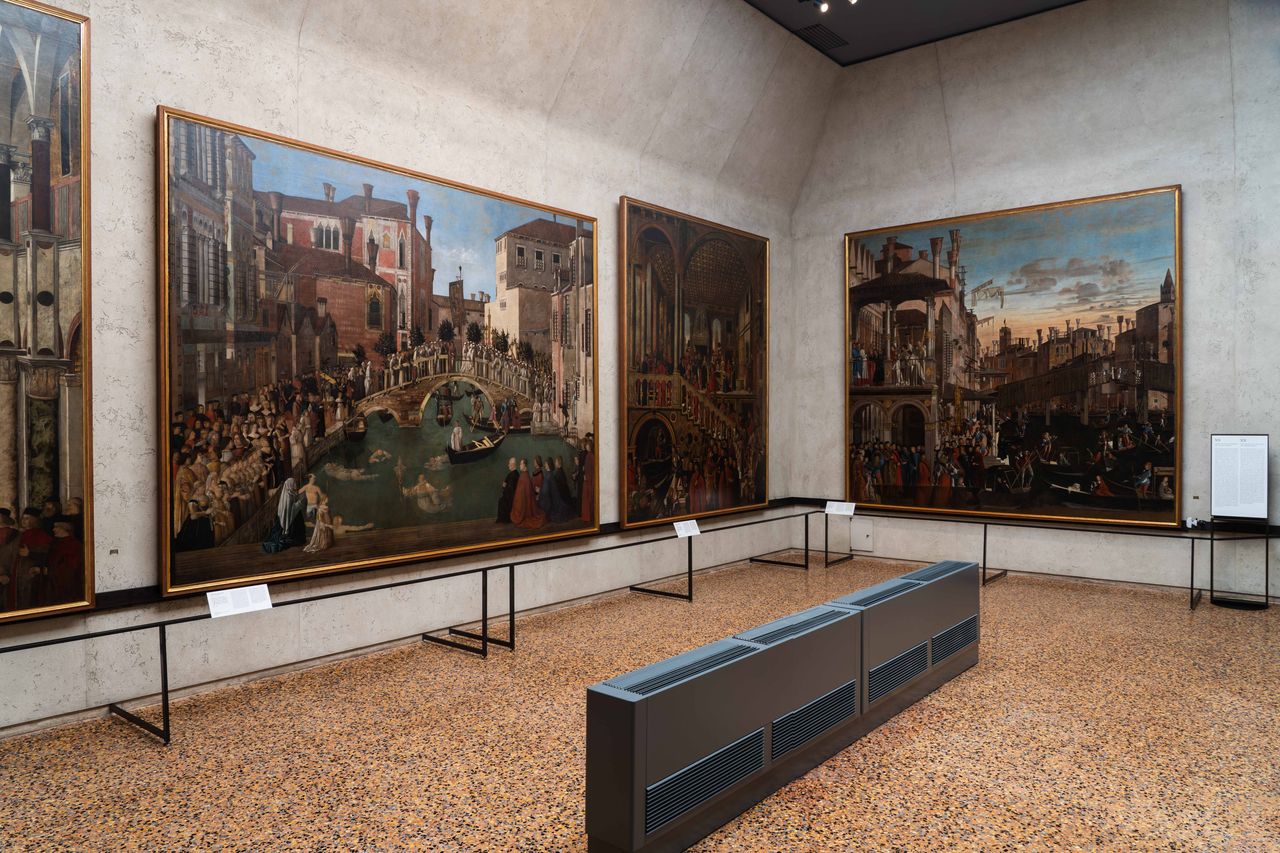
The works offer a snapshot of the city, capturing the architecture, faces and daily life of the Serenissima between the 15th and 16th centuries, which are once again revealed in all their authenticity.
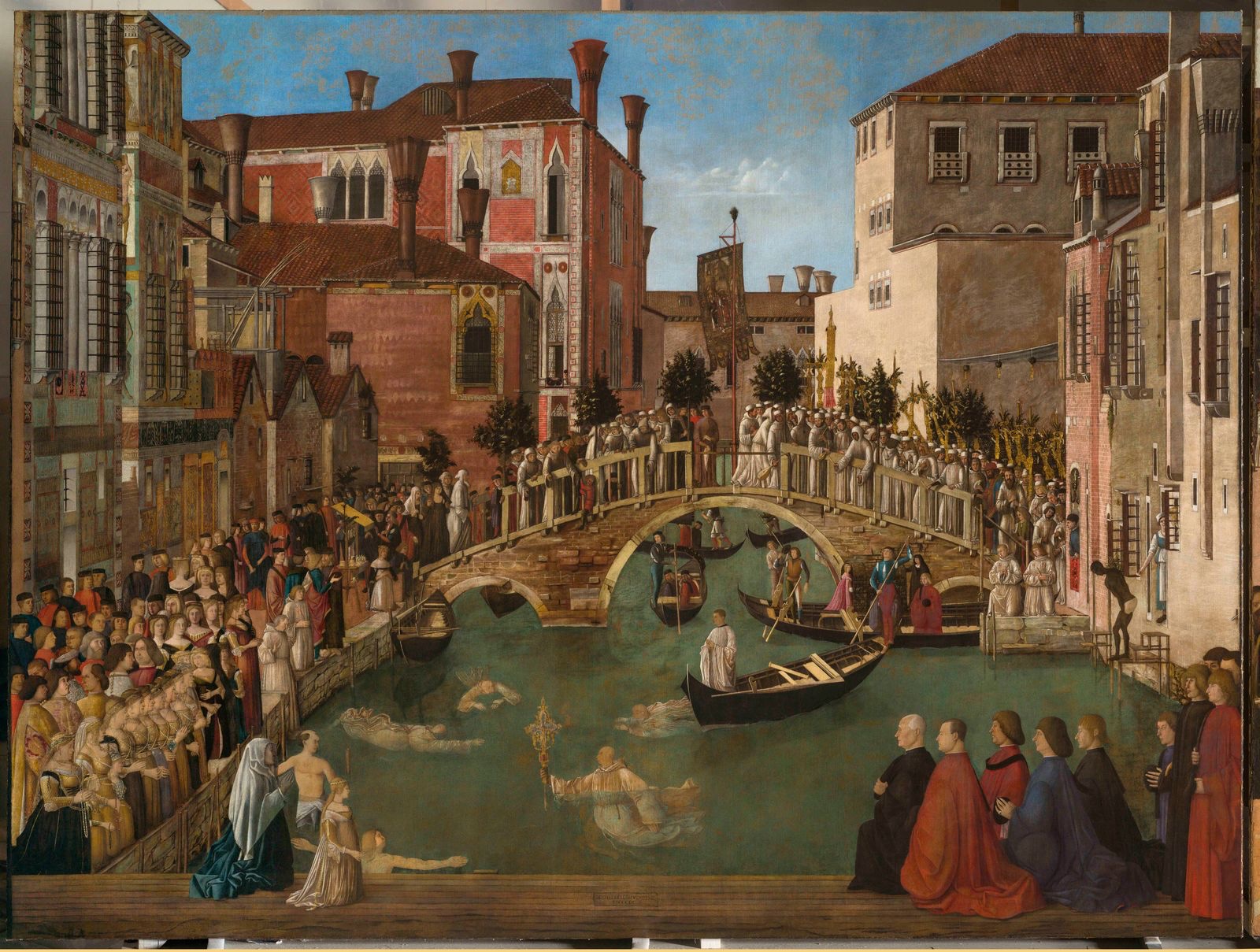
Details and fragments of the city’s history that had been lost over time have also re-emerged from the paint layers, such as the sequence of palaces entirely covered in frescoes along the canals, visible in the painting of the Ponte di San Lorenzo. ‘The project took the form of a critical and investigative process designed to understand the various stages in the life of the paintings, supporting the restorers and the project management team in their operational decisions,’ said Giulio Manieri Elia, director of the Gallerie dell’Accademia.
Investigations carried out using infrared reflectography have revealed, beneath the painted surface, the preparatory drawing for the three compositions, executed in charcoal.
One of the most interesting aspects of the investigations into Gentile Bellini’s works concerns the in-depth analysis of his painting technique.
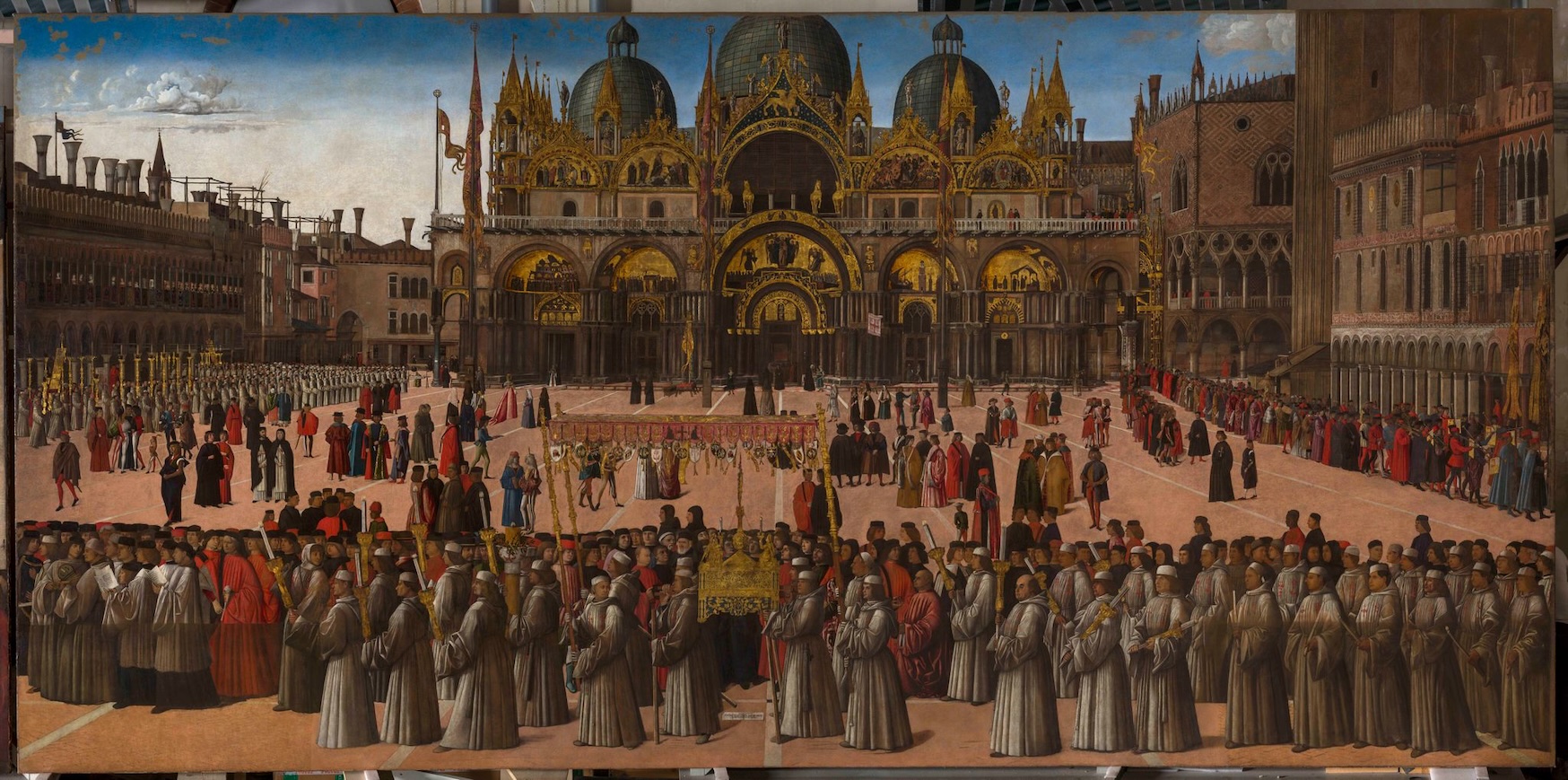
The investigations have in fact revealed a particularly meticulous drawing, which reveals a highly complex process of compositional construction, developed progressively during the course of the painting’s creation, particularly in the design of the architecture, the urban space and the numerous figures that bring the scene to life. Furthermore, observation of the preparatory drawing has also revealed pentimenti and alterations to the composition of certain figures, particularly in the area of the procession in the painting ‘Procession in St Mark’s Square’: ‘These are minor revisions made to the figures and their faces, changes perhaps conceived from a perspective point of view or made to better represent the members of the schools depicted,’ explained Melissa Conn.
Bellini’s ‘Procession’ canvas, in particular, is now much clearer: “Thanks to the cleaning, details can now be seen that were previously hidden and blurred due to the old varnish,” says Conn, explaining that the work, given its imposing dimensions of 373 × 745 cm, was also the one that caused the most problems during transport. In the work ‘The Miracle of the Relic of the Cross at the Bridge of San Lorenzo’, on the other hand, in order to ensure the canvas was properly stretched, it was necessary to reinforce the existing lining, which had tears and gaps, particularly around the edges.
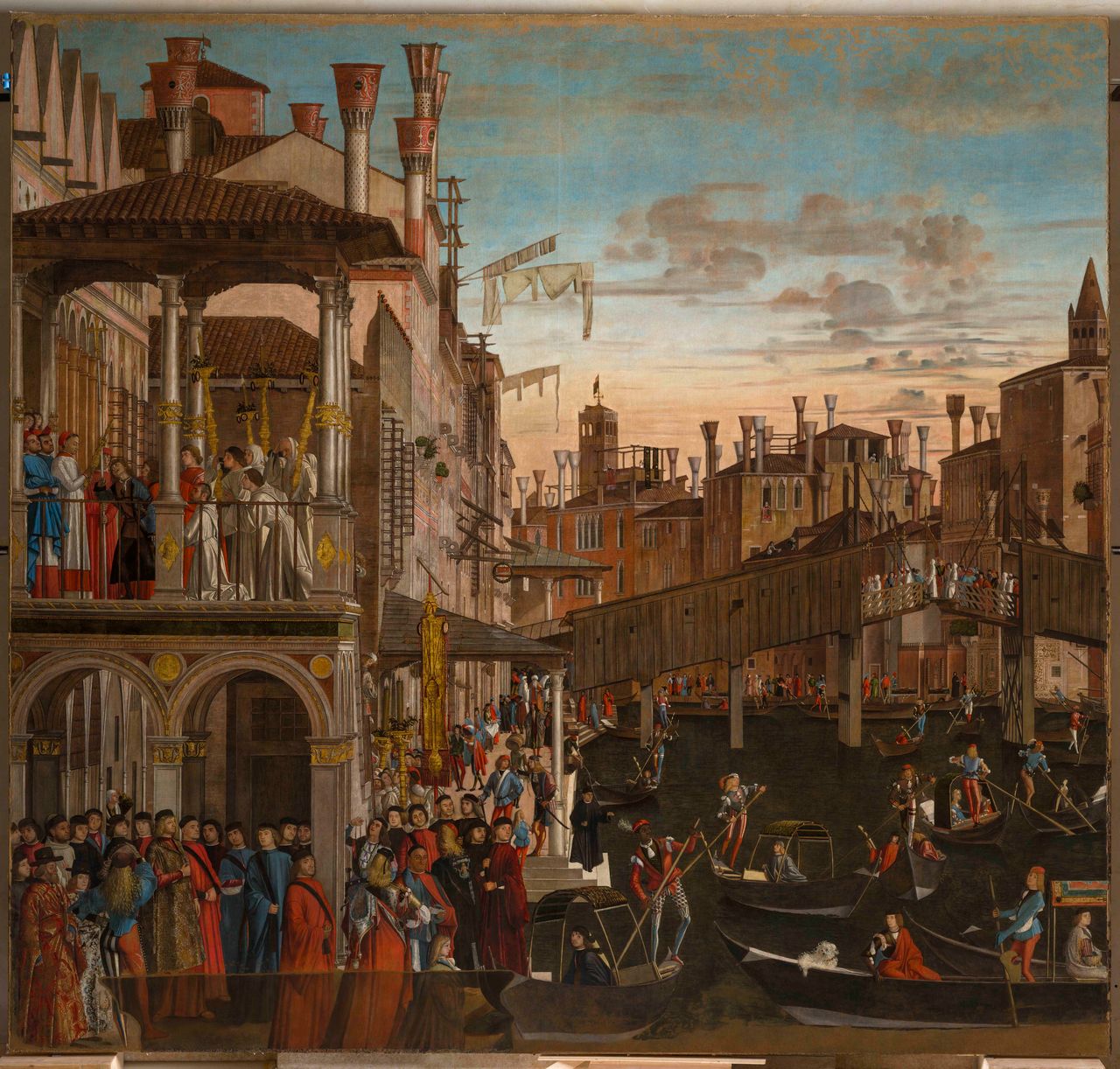
As for Carpaccio’s canvas, the paint layer was severely damaged, with abrasions, losses and numerous areas of repainting carried out during previous restorations.
Infrared reflectography revealed a preparatory drawing that appears particularly precise and detailed. Figures, boats and architectural elements were already established during the preparatory phase. However, some figures were modified during the design phase, whilst other figures present in the preparatory drawing were not subsequently painted. Conversely, it was discovered that a small dog, in the foreground on the gondola on the right, was executed directly with brushes on the canvas, as there was no preparatory drawing beneath the paint. Furthermore, in constructing the architectural elements, Carpaccio also made use of tools such as a set square and a compass; and to clearly mark the vanishing point where the main architectural lines converge, he made a small hole in the surface of the canvas, which was identified through X-rays.
Bellini’s painting of the Procession and Carpaccio’s The Miracle at Rialto both had holes in the lower part of the canvases, corresponding to the doors of the room in which they were originally exhibited. ““When they arrived at the Accademia in the 19th century, the holes were filled and repaired with the addition of painted canvas inserts,” explains Conn. “During the restoration work, it was decided to leave the repairs carried out by the conservators slightly visible against the original painting, so as to preserve a trace of the work’s history.”
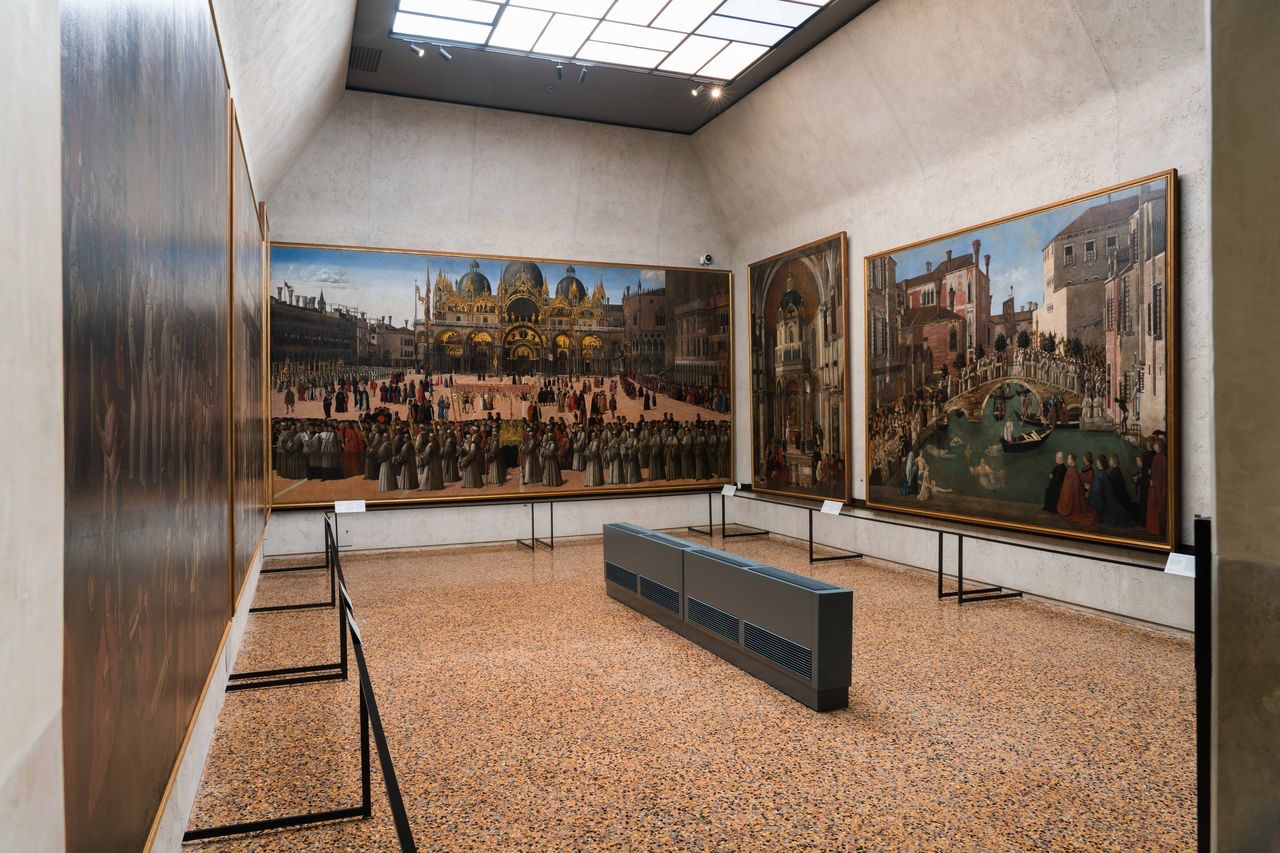
Restoration work on the five remaining canvases will continue this summer, with the worksite open to the public: ‘This time we won’t be taking the paintings away. The work will be carried out directly in Room XX where they are on display, just as we did for the Saint Ursula Cycle, with the only difference being that it will take place as an open-site restoration to allow the public to view the works.”
But the restoration work at the Gallerie dell’Accademia, supported by Save Venice, is also continuing in the run-up to the 500th anniversary of Veronese’s birth, to be held in 2028: ‘The restoration of the Crucifixion is due to begin shortly, as is that of the four “Angels” by his son Carlo Caliari,’ reveals Conn. ‘We are also carrying out surveys on the Convitto in the Levi House with a view to a possible future restoration.’
Furthermore, to mark the 450th anniversary of Titian’s death, restoration work on the 19 small panels by Titian from the ceiling of the Church of St John the Evangelist is due to be completed by the end of the year; these panels, which have been in storage, will be displayed in the exhibition area near Vasari’s ceiling.
‘A wonderful discovery. It had always been assumed that the cycle was the work of the workshop, but it has now been established that it is by Titian himself.’