
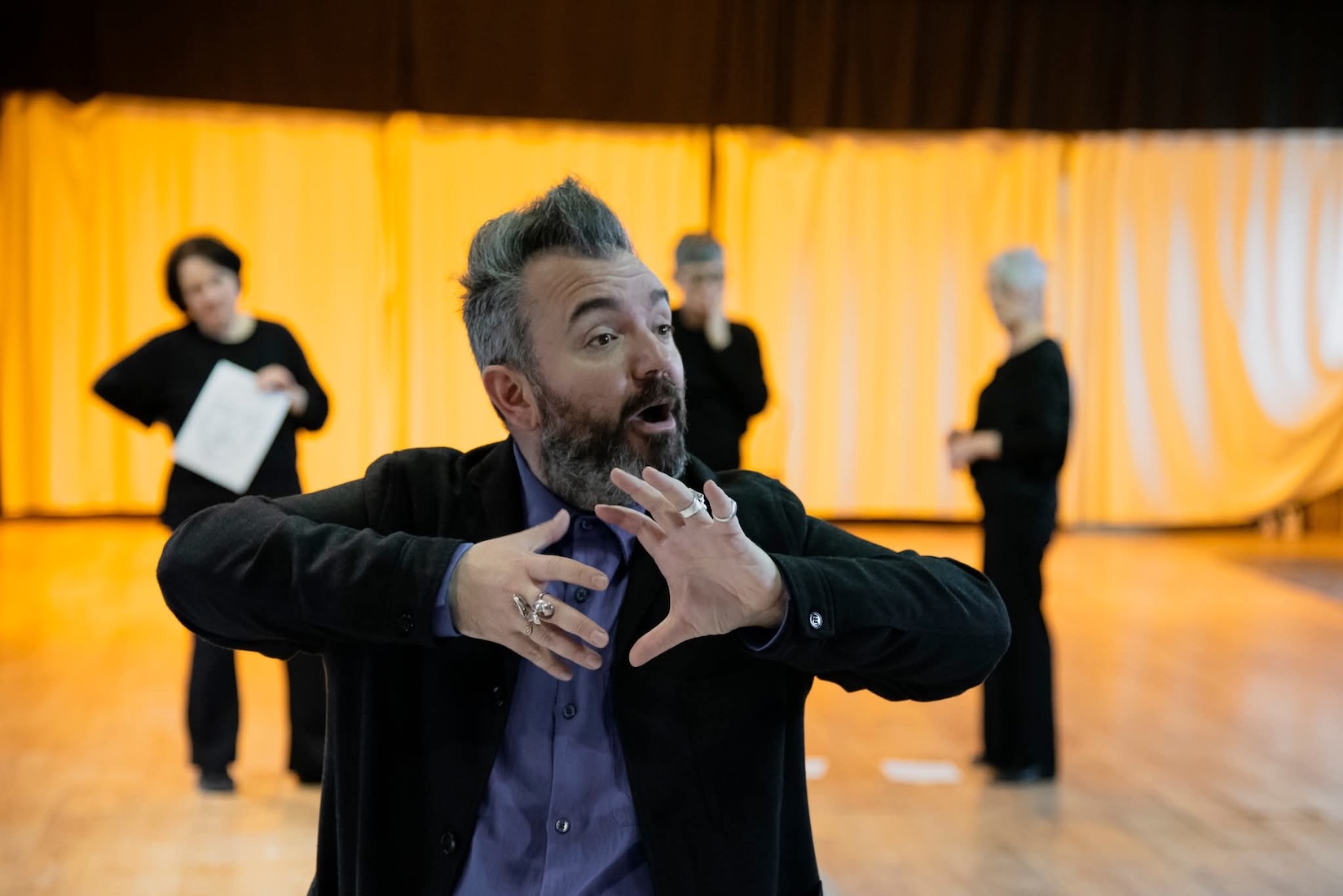
Mattia Berto has been involved in theatre since he was 10 years old. A theatrical, chatty, curious child with a passion for life – just as he is today – he loved art, particularly Giulio Romano’s frescoes at Palazzo Te in Mantua and the Canova Plaster Cast Gallery in Possagno, and, being passionate about theatre, he was already performing his first improvisations at home.
His mother, who was related to the family of the painter Guido Cadorin, and his father, a restaurateur and hotelier for generations, always gave him the freedom to experiment.
One of the first performances his mother took him to see – and which left a lasting impression on him – was *Mistero Buffo* starring Dario Fo and Franca Rame at the Teatro di Camponogara: ‘They always involved the audience; I was sitting on stage right next to them. I still have the little programme from that evening, in which Fo wrote a dedication to me,’ says Berto, recalling that it was at the Teatro Dario Fo in Camponogara that he went on to direct the children’s theatre season for several years.
“When I was 10, my father enrolled me in a course in diction and acting with Marcella Duse, who boasted of being related to the great Eleonora.” From then on, he’s always been involved in theatre and was part of a theatre company until he was 20: “At the age of 10, I was already acting in *Spoon River Anthology*, where I played the dead child.” – he continues – “I was always working with people older than me; it was very stimulating to interact with people of different ages. The Teatro di Cittadinanza project came about partly thanks to my sociable nature.’ Then his mother advised him to look around, so during his university years he set up the theatre company ‘La corte dei miracoli’ with his friends. After graduating from Ca’ Foscari with a degree in Performing Arts Techniques under Carmelo Alberti, he also attended the International Institute of Commedia dell’Arte at the Teatro Stabile del Veneto, directed by Gianni de Luigi: “It was an interesting training ground; the work was all-encompassing and immersive, from morning till night. That’s where my body, my breathing and my way of doing things changed.”
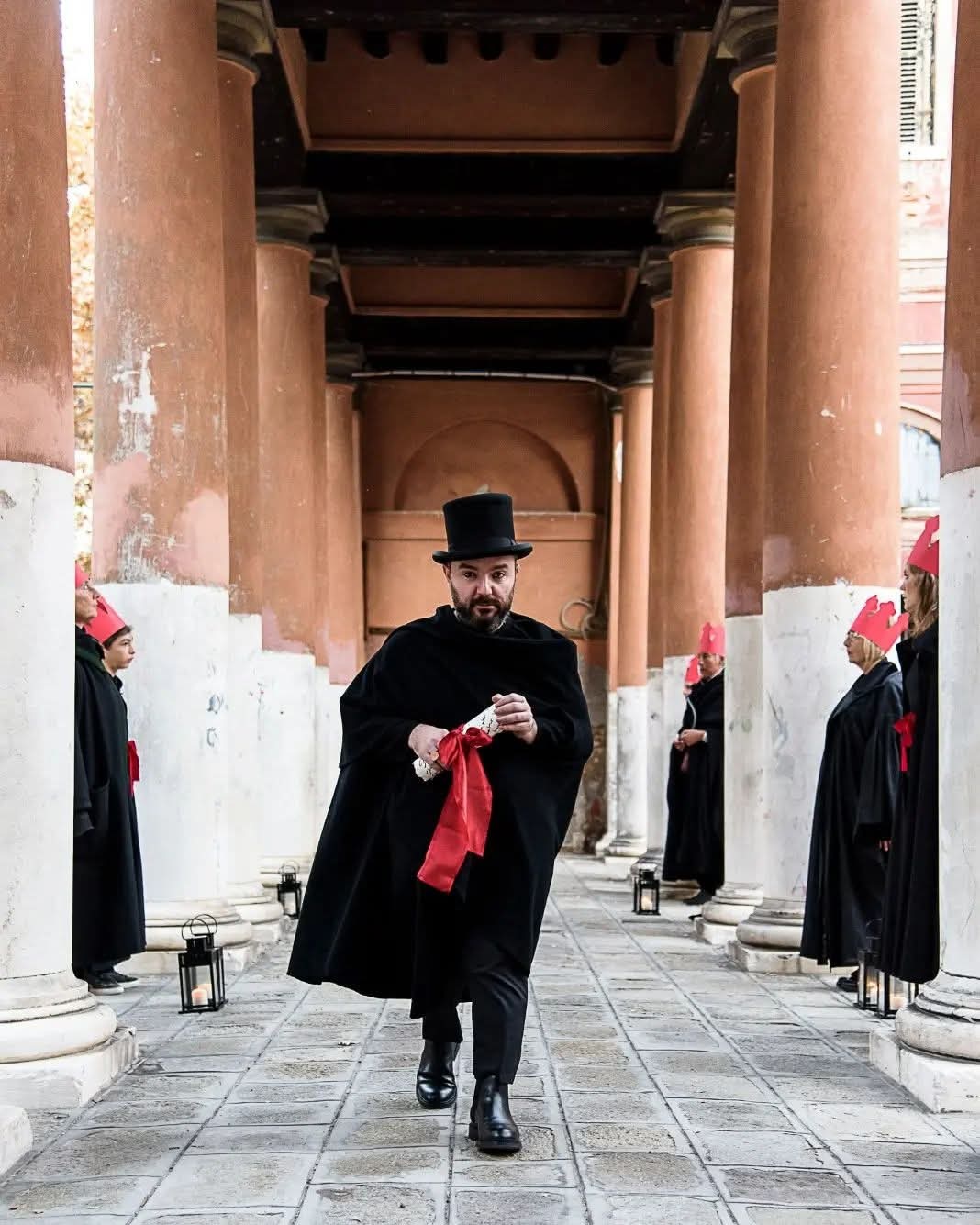
Among his most memorable encounters, he recalls the one with Maurizio Scaparro, who took him on as a young actor for the Biennale Teatro: ‘It was one of the most electrifying encounters; he became my mentor. He was a bridge-builder between worlds, a man of connections capable of bringing together disparate realities; this is what he taught me and passed on to me.”
Other ‘powerful’ personal encounters included that with Anna Ponti, with whom he carried out the regeneration project for the Teatrino Groggia – of which Berto was director for 10 years – as well as those with actress friends such as Ottavia Piccolo and Serra Yılmaz, who often works with Özpetek, and the dancer Aida Vainieri. The most significant role he ever played, however, was that of the servant Ariel in Shakespeare’s *The Tempest* when he was a young man: “I was no longer a child and gained a different kind of awareness. I realised that my talent lay in bringing people together, and I decided to put it at the service of the community and develop a unique entrepreneurial vision that would set me apart from my colleagues in the industry.”
Then, during a screening in the Sala Grande at the Venice Film Festival, when the charismatic Dario Fo himself came out to invite those standing outside to take their seats and fill the empty spaces, Berto realised that ‘theatre of assault’—which breaks down the fourth wall—was his calling.
With his ‘Teatro di Cittadinanza’ project, in fact, he dismantles the traditional academic notion of the actor and works with the aim of using theatre as a tool for the community that engages in dialogue with the audience. Of course, over time, the performers of Teatro di Cittadinanza have acquired the tools of the actor; they are aware of what it means to be on stage and of dramatic timing, thanks to the workshops led by Berto, who each time creates a dramaturgical structure based on the autobiographical framework that emerges. Yet for him, theatre remains a training ground for the community: ‘An idea that may perhaps seem bold, but I use the language of theatre as a key tool for working on cultural regeneration and the revitalisation of communities. If practised well, the idea is to use theatre as a unifying force to break down walls, tell stories and bring about revolutions, both small and large.’
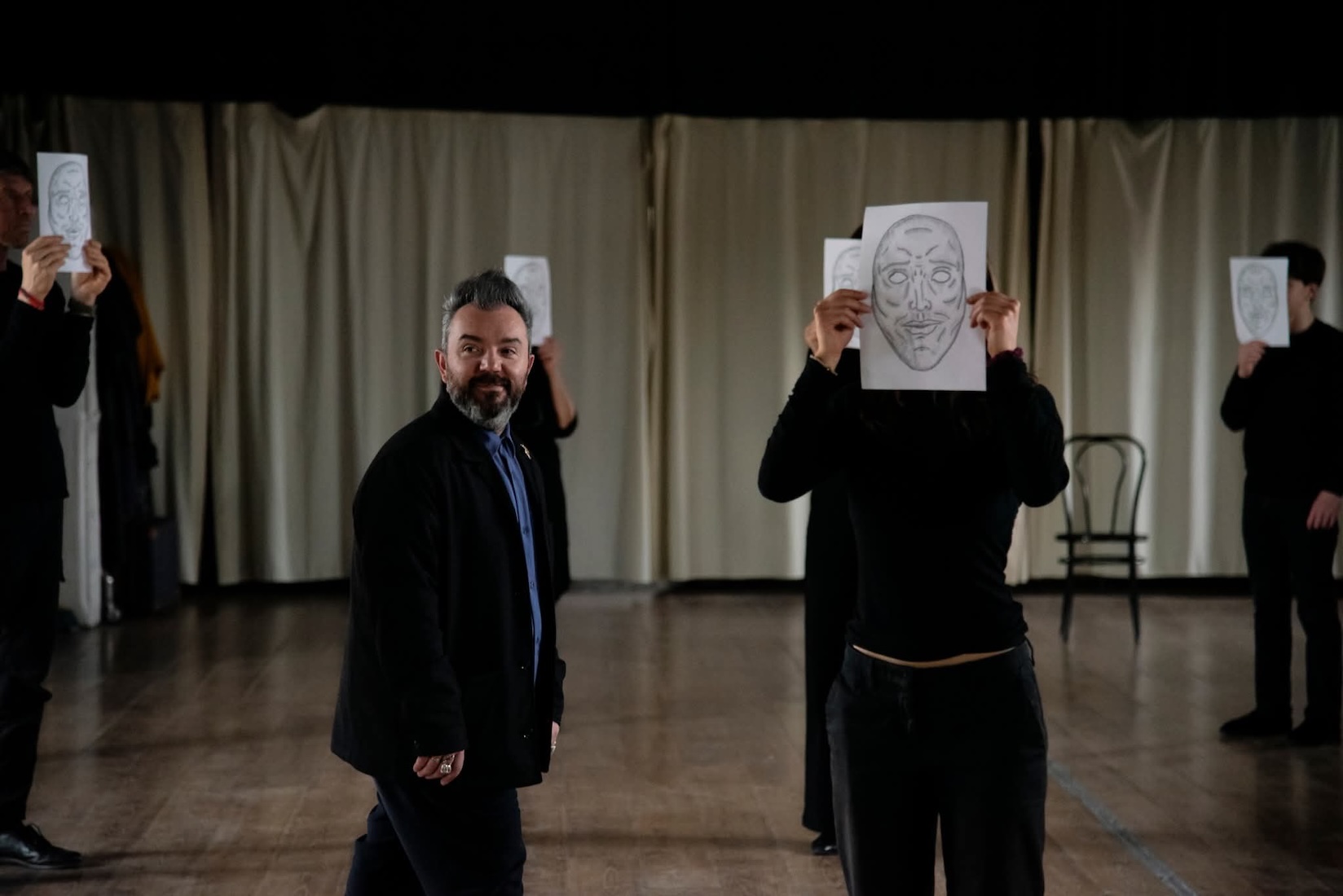
Now, at the Teatro Goldoni, part of the Teatro Stabile del Veneto – where the Teatro di Cittadinanza has been a guest for many years, running ongoing workshops – the ‘In transito’ project has recently got underway. Every Thursday until April, it brings together 33 members of the public for rehearsals above the auditorium. ‘We will be working on the theme of transit and movement within the city – a political and poetic exploration of what changes, what we leave behind, what we pass through and what we encounter.’ At the end of the workshop in the spring, there will be two performances in the city, set within contexts of urban movement that may involve the vaporetti or the airport.
Over the years, Berto has often staged performances in everyday urban spaces: from private homes to hotels, from artisan workshops to the courtroom.
Meetings organised by the Fondazione Musei Civici at Casa Goldoni have also recently begun, taking place every Wednesday. The workshop, for which 20 citizens have signed up, is entitled ‘Principio attivo’: ‘It is a continuation of a workshop held before the summer called “Casa comune”, in which we began to reflect on how cultural venues should open up to citizens and become shared spaces,’ explains Berto. ‘Now we will continue to explore the future of the city and the community. The provocative idea – which becomes a metaphor – is that we are seeking the remedy to make the community thrive.’ Both workshops filled up immediately and have a very long waiting list: “Having so many people wanting to take part, at a time when theatre is in crisis and it is difficult to engage the younger generations, is a very strong sign. The Teatro di Cittadinanza is a community of citizens reflecting on the city and the places they live in.”
The collaboration with the Granello di Senape association is also continuing: ‘We’re returning to the prison with a read-aloud workshop on *The Little Prince* for 20 young people. - says Berto - This is a continuation of the ‘Empty the Shop Window’ project that we ran in Venice a few months ago. With two performers, in collaboration with the textile company Rubelli, we managed to ‘empty’ the window display of La Toletta bookshop and bring all the books into the prison to encourage reading. - he continues - It will also be an opportunity for discussion and assessment to understand how people are faring in this overcrowded prison. - he concludes - We need to put initiatives of this kind into practice to serve people. Two of them have already told me that when they are released from prison, they want to continue practising ‘Teatro di Cittadinanza’.”.
To date, around a hundred people are ready to answer the city’s call. In recent years, the project has also carried out various initiatives in schools and has been collaborating for years with the Cavanis and San Francesco di Sales schools. “We’ve even staged performances with as many as 150 citizens. The idea behind the project is to involve as many people as possible, partly to show that Venice, despite its transformations and fragility, is a city that is still alive, and that people want to reaffirm their point of view as citizens.”