
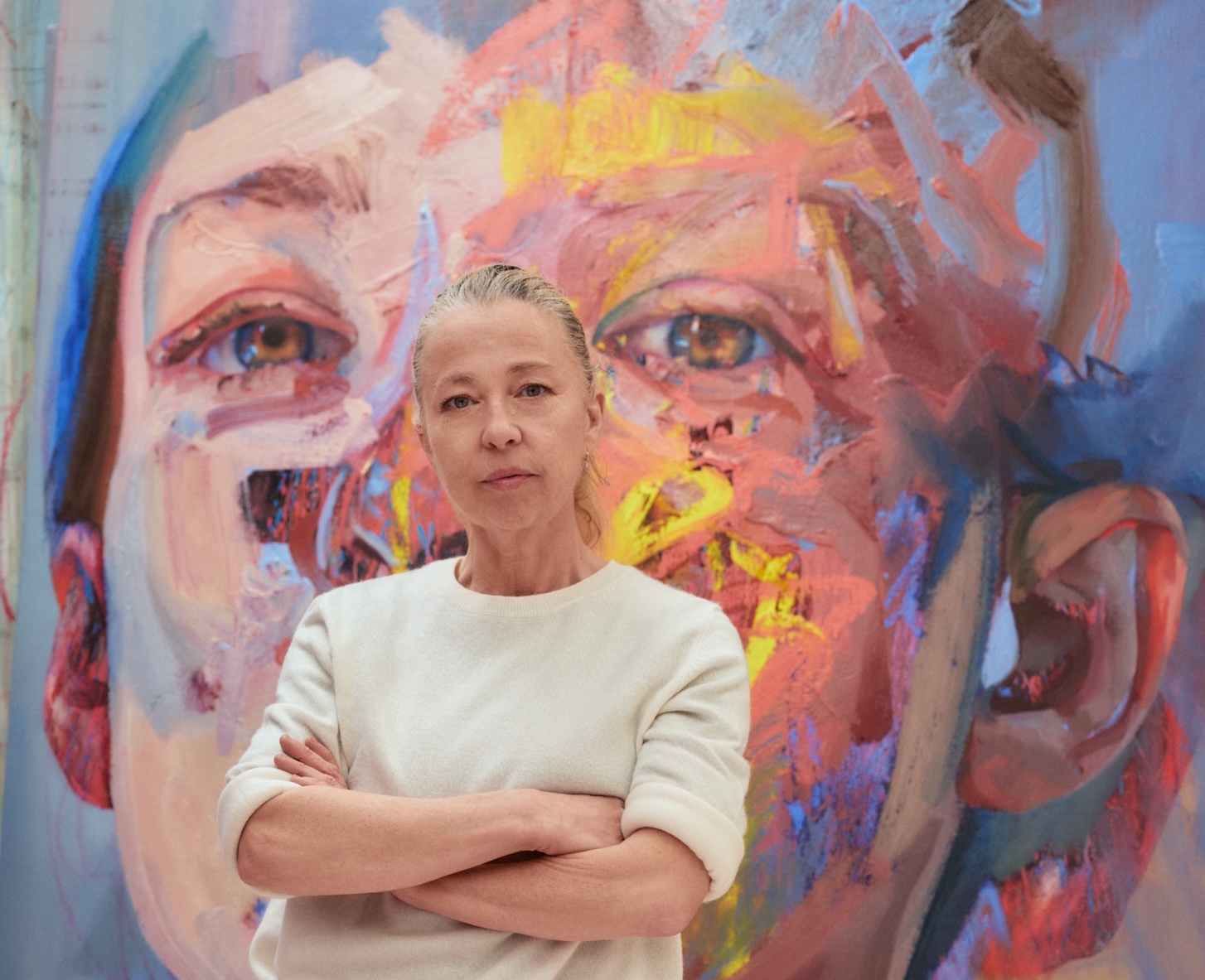
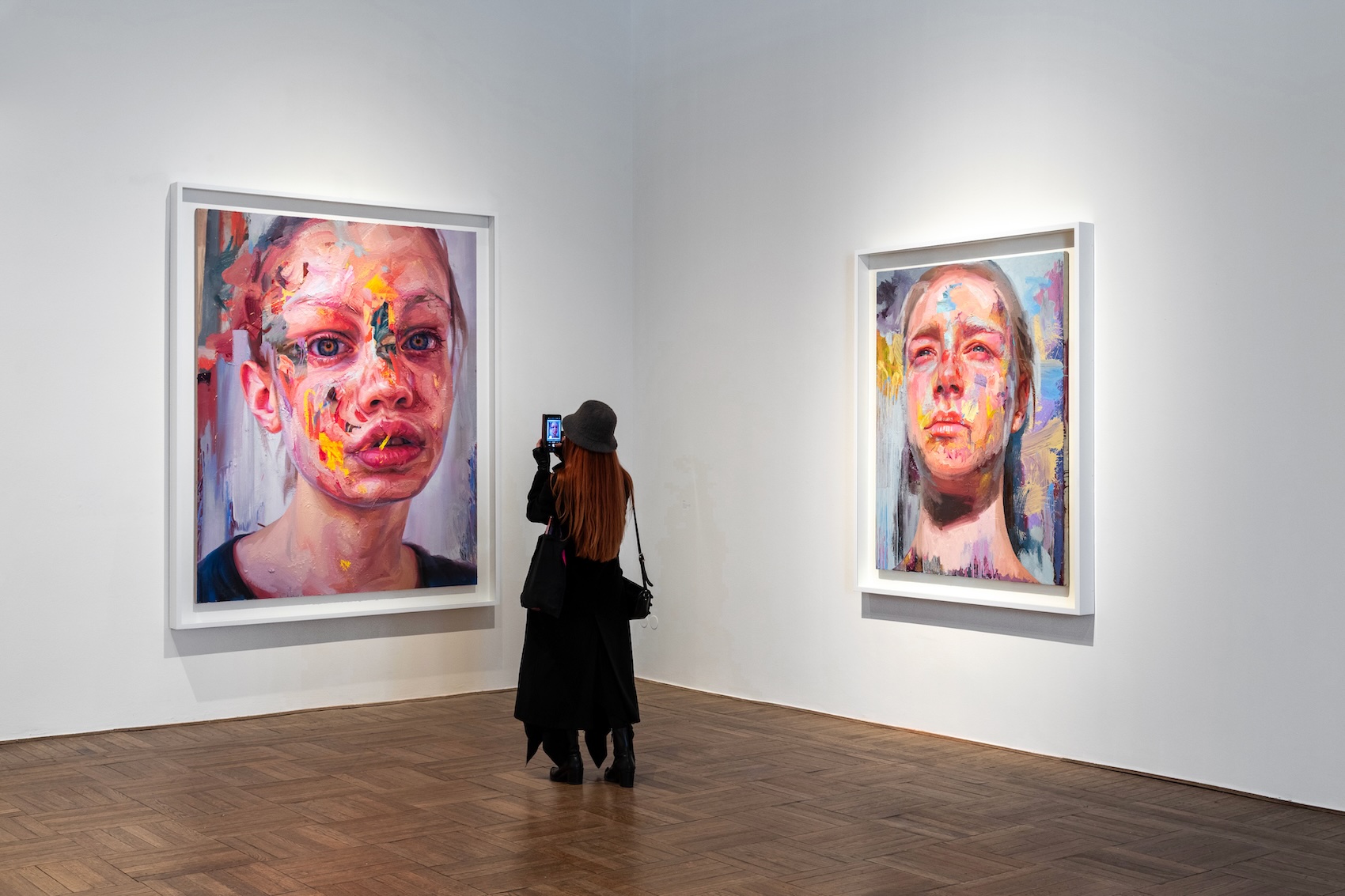
Saville creates monumental paintings such as the seminal work on display in the exhibition, ‘Propped’, which she submitted as her degree thesis in 1992; in it, the artist’s body is depicted on a stool, viewed from below looking upwards. On this, like rock carvings, appears the phrase: “If we continue to speak in this monotonous way, as men have spoken for centuries, we will disappoint one another”. ‘It is a work that has not aged. A startling self-portrait, a large, robust, Rubenesque body that still has much to say, rendered through a palette of earthy and pink hues that spill over the support with a tonal application in the Venetian manner’ said Elisabetta Barisoni, director of Ca’ Pesaro, describing the artist’s painting, which places her own body – or that of other subjects – at the centre of the composition in a monumental pose. Saville uses painting as her medium of expression, a medium which, at the time of her debut, her colleagues considered outdated. The monumental format was, in fact, initially a means of asserting herself, but she subsequently retained it and it became her signature style, emphasised Barisoni.
The works are displayed in chronological order, beginning with ‘Hybrid’ (1997)—which has not been exhibited since it was created—alongside portraits characterised by striking use of colour and light, such as the double portrait of Jenny and her sister, ‘Hyphen’ (1999) and the artist’s face, reclining, reflected on the floor in “Reverse” (2002–2003).
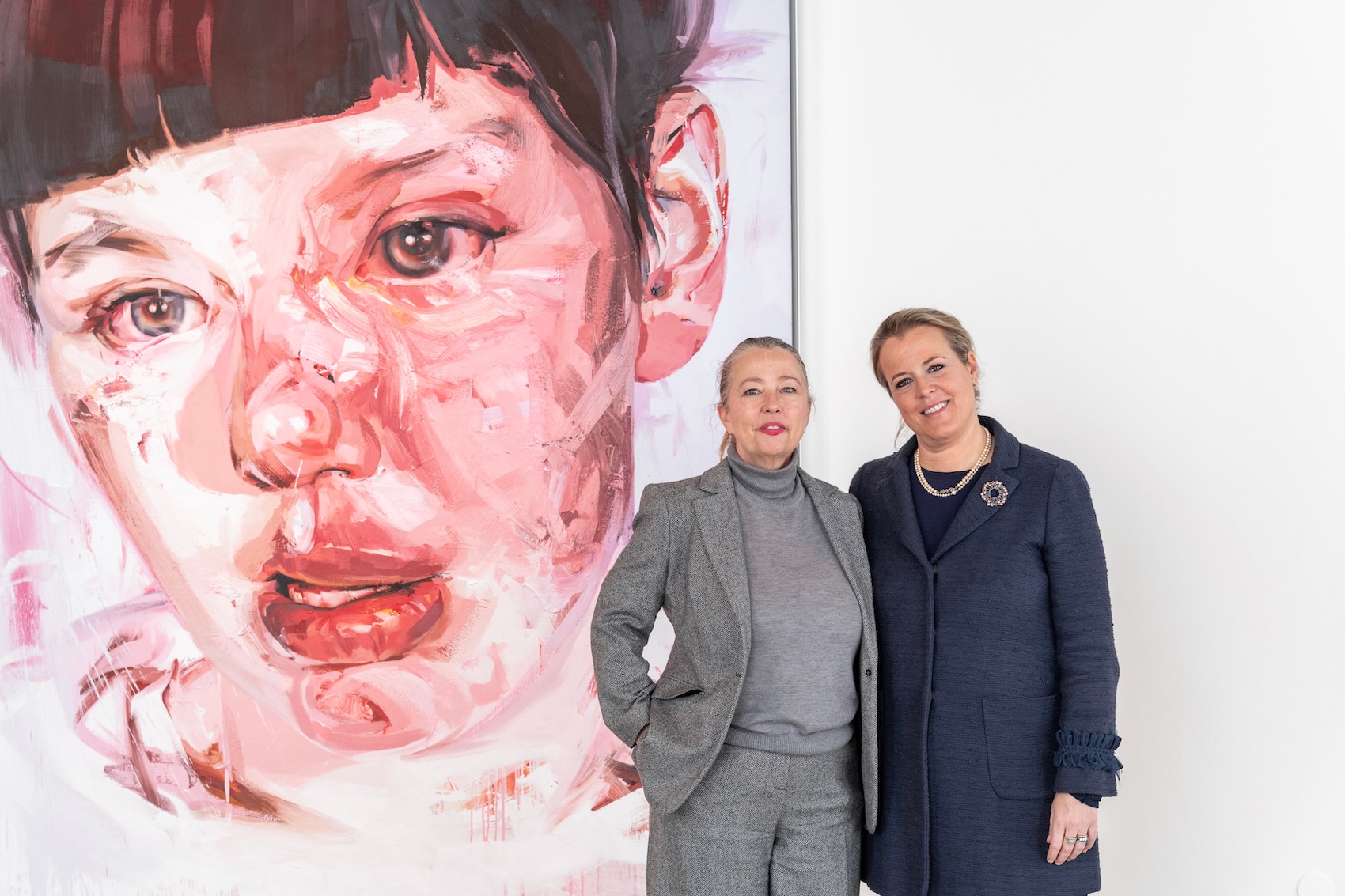
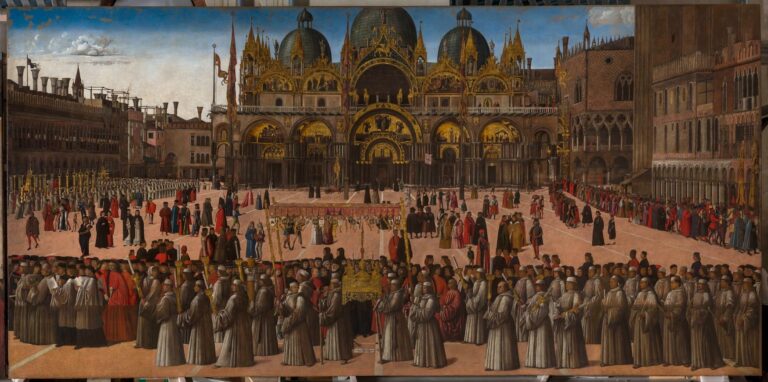
Venetian painting, and in particular Titian’s use of colour, has become an essential point of reference for her, both in terms of her use of colour and her rendering of texture.
Saville has, in fact, had a long-standing connection with Venice, dating back to her childhood, to the extent that she is familiar with all its museums and architecture: ‘Ever since I was a child, I used to come here with my uncle, who taught art history courses in the city. My relationship with Italian art did not begin with modern or contemporary art but with the works of the masters of the past. As a figurative painter, I have always adored the Italian tradition,’ explains Saville. ‘I grew up in an environment where conceptual art predominated. In the UK we had painters like Bacon and Freud. Figurative art existed, but it wasn’t the most fashionable, and with my figurative style I was outside the dominant trends of the time. Nevertheless, I have stuck to this approach of mine. I’ve always loved Venetian art, Titian in particular; I’ve always felt a close connection to his artistic language. There hasn’t been a single time I’ve gone to the Biennale without returning to the Frari to see the Assumption.’ Incidentally, in 2019, whilst the work was being restored, the artist also had the opportunity to climb the scaffolding and observe all the details up close.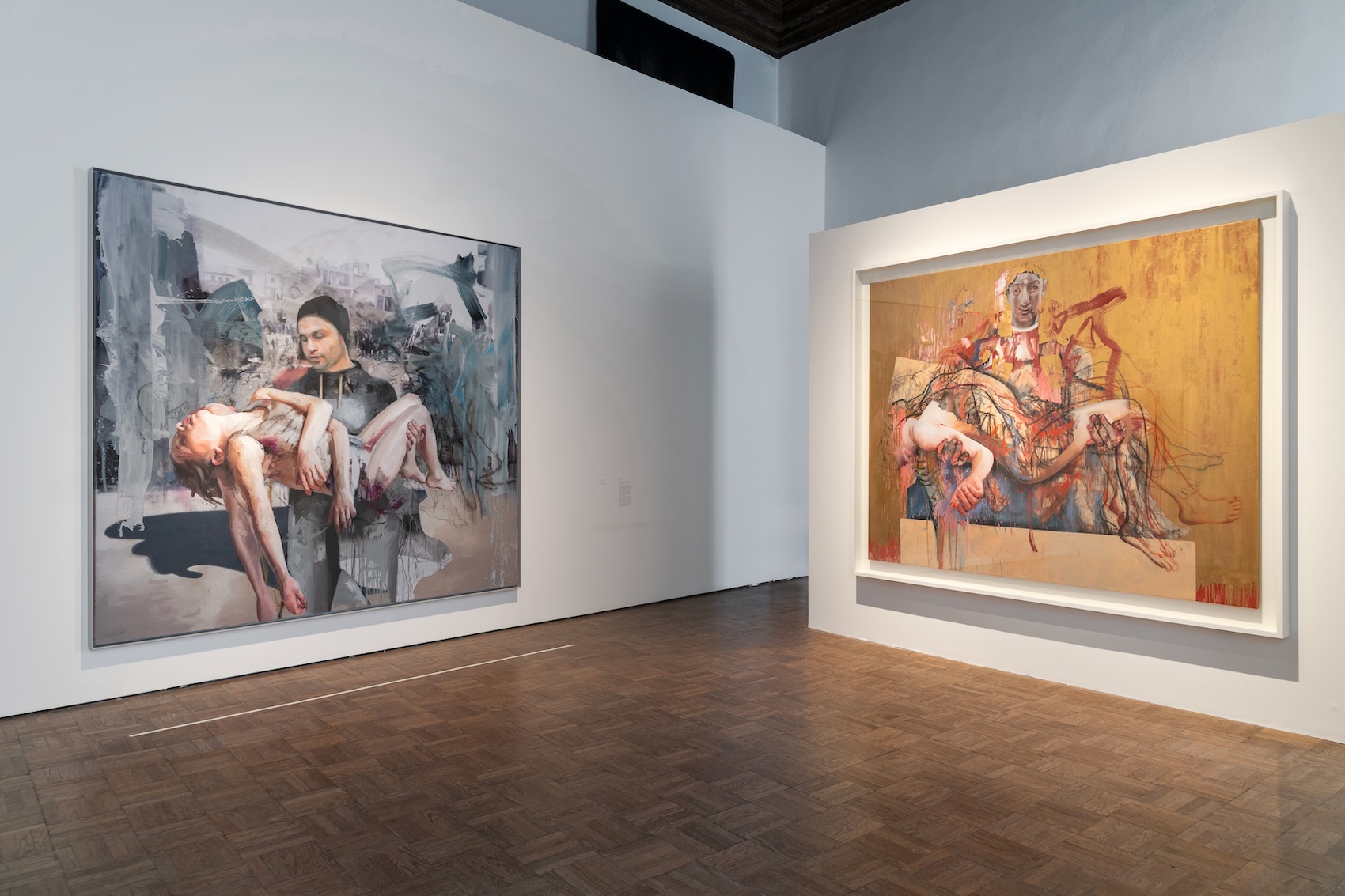
‘Organising an exhibition here in Venice is a dream from my youth coming true,’ says the artist. ‘This exhibition reaffirms the confidence I had in myself and my style back when, as a woman, painting nude figures was considered highly controversial. Today, however, the atmosphere is different from when I first started painting; there are various possibilities and different styles coexisting,’ says the painter, explaining that in her early days it was rare for museum directors and curators to organise solo exhibitions for female painters. ‘In the past, I made a point of not complaining about the limited opportunities given to female artists, and I always told myself that I would simply work so that my paintings would speak for me. Today, those difficulties have been partly overcome; women are much more present in the art world and in all roles within society, and the door has been thrown wide open to different perspectives and narratives.”
Around 2020, Saville embarked on an in-depth exploration of colour, in which gazes and faces bear the names of figures from mythology or literature.
The final room, in fact, presents previously unseen works such as ‘Venus and Adonis’ and “Danaë”, which, iconographically reimagined in Jenny Saville’s style, were created specifically for the Ca’ Pesaro exhibition as a tribute to Titian and the Venetian painting tradition, confirming the role of the lagoon city in her work: ‘This exhibition encompasses all the paths I have followed, with numerous references including Velázquez, Bacon, De Kooning and, above all, Titian,’ the artist continues. ‘In my career I have also used abstraction, but I remain a figurative painter and in this I am profoundly European.’ Now, after a moment’s hesitation, she has decided to carry on painting: “I want to keep working, drawing inspiration from Titian,” she concluded. “Today, from a political and technological perspective, and given the ongoing wars, the situation is difficult. For a moment I thought that in times like these, painting was futile; instead, we must continue to contribute positive and authentic things, and painting is one of them.’