

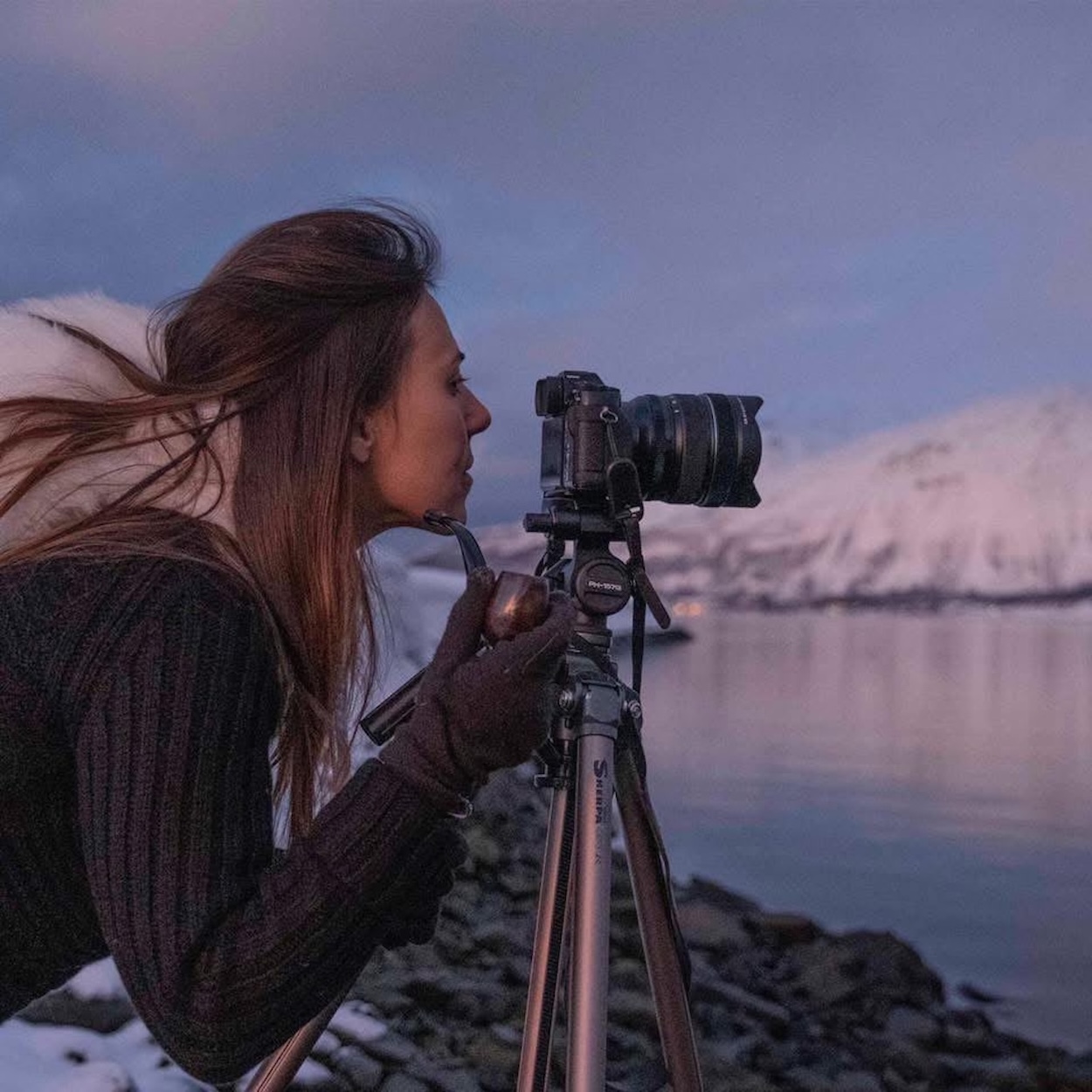
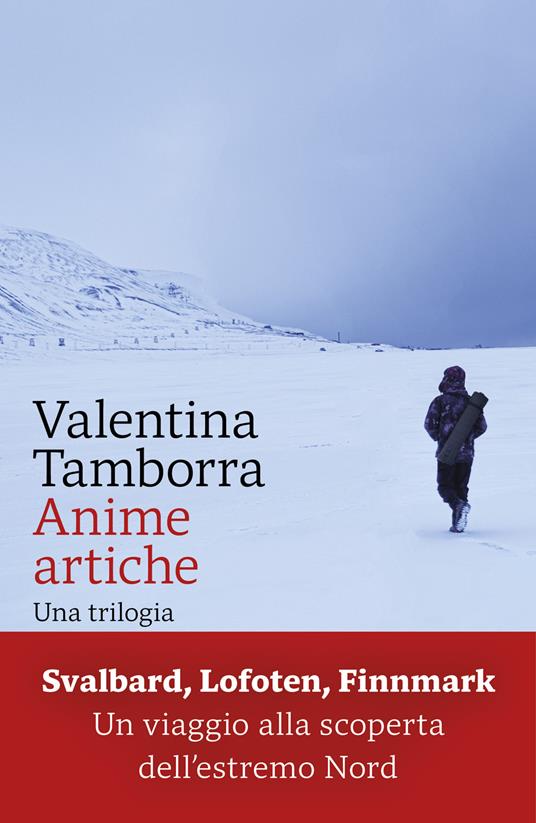
Tamborra’s adventure begins in the Svalbard archipelago, where anyone can enter without a visa: in fact, people from over 50 different nationalities live in the capital, Longyearbyen. A world – where you only leave the town if you are armed to protect yourself from bears – suspended in the oxymoron of the blinding white of the ice and the darkness of the coal mines. On her visit there, Valentina discovered that beneath the snow, beyond the permafrost, ‘the heart of the Arctic is black’ and that the first permanent inhabitants of that outpost in the far north were, in fact, miners. Little by little, she begins to get to know them but, above all, to recognise them by looking into their eyes: ‘The underside of their lower eyelids, in fact, remains black even after being washed several times,’ she explains.
Thanks to Tommy, she ventures into the narrow tunnels, shudders at the sound of the mountain settling, and, with her camera, documents the work in the mine, where everything is black except for the glittering ice crystals.
There, amongst the ice, there is also the Global Seed Vault, a Garden of Eden where all the world’s seeds are preserved in case of wars, natural disasters and climate change, and the Arctic World Archive, which, as a testament to future generations, preserves a database of world art and culture. Even the Vatican Library has a copy of Dante’s Divine Comedy stored there.
And so, against a backdrop of horizons stretching as far as the eye can see, the reporter also visits the abandoned Russian mining settlements of the ghost towns of Pyramiden and Barentsburg, and travels as far as Ny-Ålesund, the world’s northernmost settlement, home to the CNR’s scientific research centre, where Valentina saw polar bears for the first time. There, researchers are studying the effects of permafrost thaw: ‘Svalbard is the world’s litmus test,’ she says.
The real emergency there now, however, is not climate change, but the withdrawal, from 2022, of voting rights for foreign residents in Longyearbyen, imposed by the Norwegian government. ‘Now only those with Norwegian citizenship can vote. It is a decision that violates rights and the Svalbard Treaty, taken for geopolitical reasons, given the latest developments and Russia’s territorial claims,’ explains Tamborra, recounting that, all of a sudden, she found herself wondering where that utopia had gone, that world without borders, where equality reigned, from when she first arrived.
After several trips, in 2025 Tamborra returned to document the green transition that had materialised with the closure of Gruve 7, the last mine still operating on the islands: “My miner friends told me: ‘We’re disappearing; no one will know we ever existed. Come back if you still want to go down the mine.’ – the reporter recounts. – Keeping a record and memory of who we are is a lesson for the future. Now some have found work on the mainland, whilst others will turn to tourism. Svalbard is becoming increasingly touristy; flights have already tripled and the ships are getting bigger and more destructive, whilst the doors of houses – which have always been left open to provide shelter in the event of sudden storms or the arrival of a bear – are starting to be locked. The question is: which has the greater impact – the mine or the tourists?’ Even amongst the fishermen of Lofoten, Tamborra has encountered concerns about a world undergoing profound change, one that is moving at breakneck speed and, with overtourism, is leaving ancient knowledge behind.
Soon, in fact, it winds its way down the Norwegian coast towards the Lofoten Islands, where the mountains are reflected in the sea below, bathed in golden-yellow sunsets, and fishing is a way of life.
Here begins a project tracing the footsteps of the Venetian navigator and nobleman Pietro Querini, who in 1431, whilst heading north, was shipwrecked in the Lofoten Islands following a storm and was rescued by fishermen from the island of Røst: ‘That is where imports of stockfish – or rather, salted cod – to Venice began,’ he recalls, noting that he was able to consult his diary at the Vatican Apostolic Library. Even today, Røst hosts the Querinifest, dedicated to Pietro Querini and the historic friendship between Venice and the island, so much so that a work of art was even created which, three years ago, was taken to the Arsenale in Venice.
Acting as Valentina’s guide on these islands, as she discovers the fishermen and whalers, is Kjersti, a Lutheran priest whom she first met in Røst whilst working on Querini: ‘She introduced me to the community and taught me how to approach such a fragile world and the people who live there. Today, Kjersti is a dear friend.’
In the Lofoten Islands in particular, alongside the problem of the high suicide rate exacerbated by the long dark season – the section of the book devoted to the islands opens, sadly, with a funeral – there is the issue of the future of fishing: “With global warming, the Arctic is warming four times faster than the rest of the Earth, so the fish are heading further and further out to sea in search of colder waters where fishing boats cannot reach. – explains Tamborra – Many fishermen are abandoning their small boats or deciding to switch to fishing tourism.”
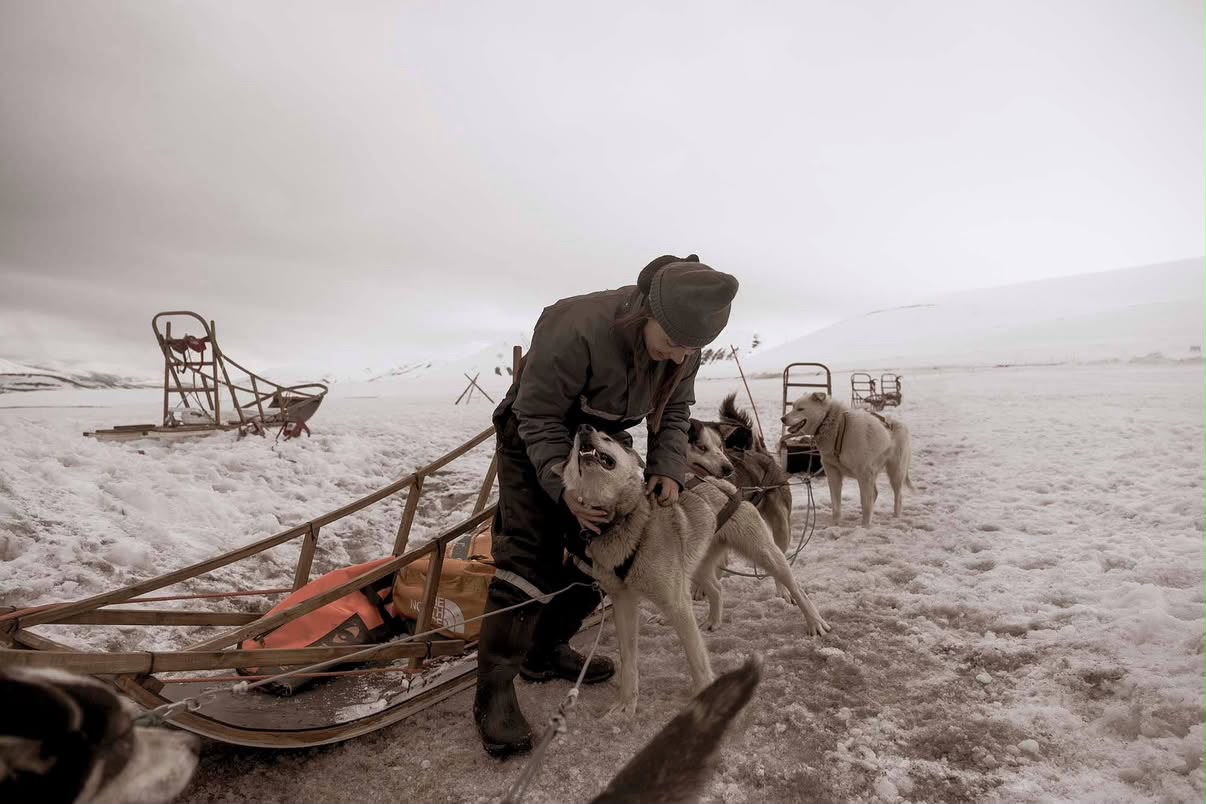
The final location featured in the trilogy is Finnmark, where, against the endless horizon of the tundra, the Sámi – Europe’s last indigenous people – defend their identity against the cold and modernity. Around 8,000 nomadic souls live in harmony with the rhythms of nature in Sápmi, a territory that straddles the borders of Norway, Sweden, Finland and Russia. Devoted to reindeer herding, they follow the animals’ migrations, and Valentina travelled with them across the tundra by quad bike and snowmobile to witness the branding and slaughter of the animals. She also had the privilege of being invited to the Nissetoget, when, on the last day of the year, men and women dress up as demons and dance around the fire, as well as to the Riddu Riddu, a festival celebrating Sámi music and culture following centuries of discriminatory policies. Since the 1600s, in fact, the Sami have been victims of Christianisation and, from the 1800s onwards, of ‘Norwegianisation’, which first deprived them of their pagan religion and then of their language and rituals: ‘The drums were burnt and the shamans put to death,’ recalls Tamborra. ‘A major achievement came in 2022 when the Sami took part in the Venice Biennale for the first time.’
Nature is sacred to them, and they now find themselves having to defend their pastures against the installation of wind turbines driven by green economy policies – but that is not all.
Above all, they must contend with a changing climate: ‘Reindeer are increasingly unable to find food in the wild, and herders have to feed them; consequently, we are moving from nomadic herding to semi-nomadic, if not entirely sedentary, practices, whilst the thinness of the ice makes traditional migration routes unsafe.’
It was right here in Tamborra that, after witnessing one of the most beautiful Northern Lights displays, Tamborra, whilst returning by snowmobile with Terje, experienced the terror of a white-out during a snowstorm that made it impossible to see anything around them: ‘The cabin where we’d planned to take shelter was buried in snow, and my guide carried on driving for hours without being able to see a hand’s breadth in front of us,’ he says. ‘The next day we learnt that a herder had died, crushed by a snowmobile that had overturned. ’ she says. ‘Some places are truly extreme, and if something goes wrong in the Arctic, it really goes wrong.’
Now that the Arctic is on everyone’s lips – a new destination within easy reach – this is a fundamental issue for her: ‘When you go there, you must do so with a sense of awe for nature and respect for those who live in those places. The tables have now turned, and peoples who were once considered marginal have today become central. Those who live in close contact with the extreme can guide us towards the future, and we must listen to them. – and she concludes – ‘To speak of the Arctic is to speak of what concerns us all.’
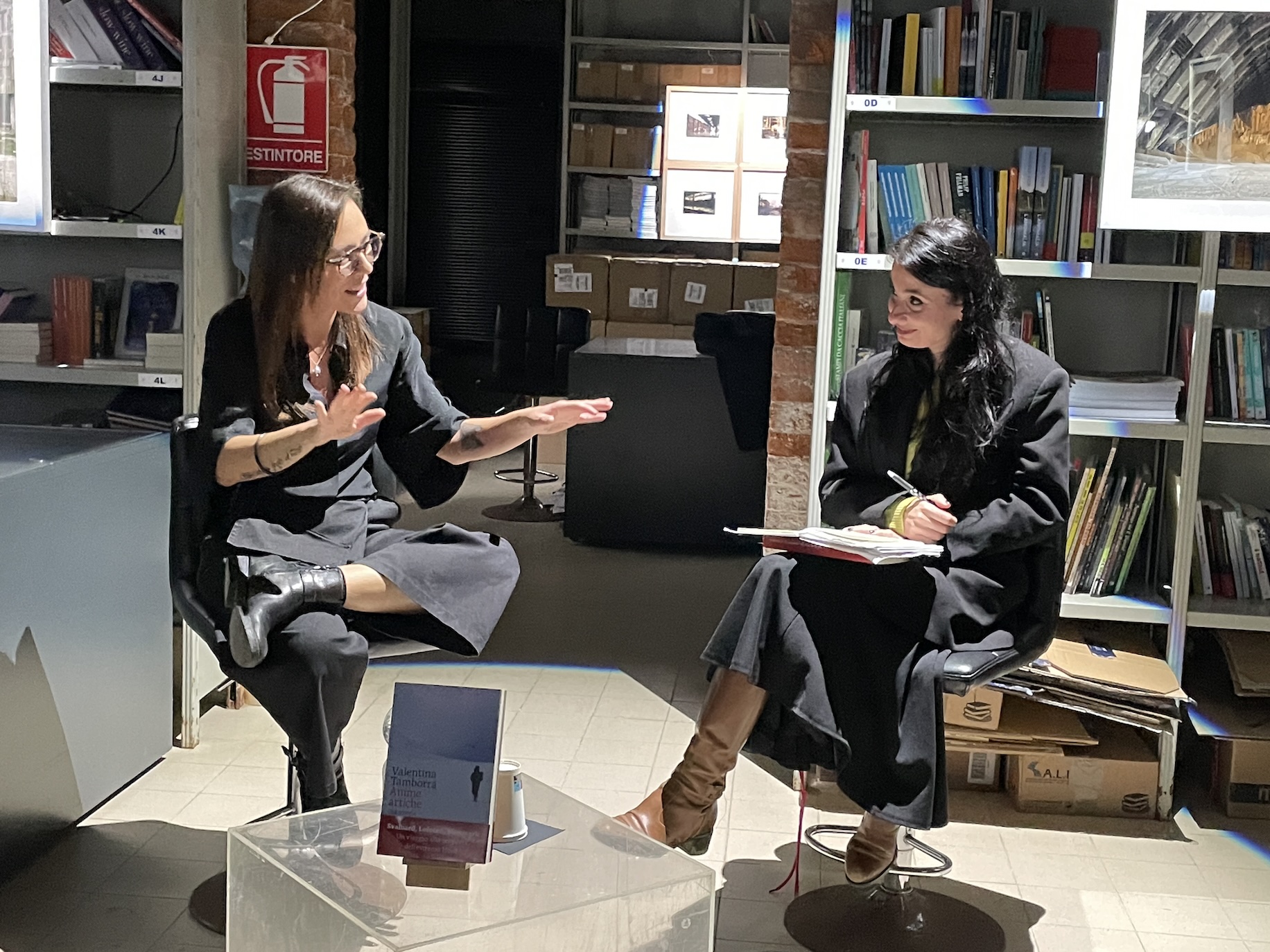
Amidst moments of reflection, emotion and adventure, as you read the book – which manages to make those lands and the people it describes feel familiar – one realises that Tamborra’s trilogy is not merely a geographical map but, above all, a human one, because it speaks of encounters and bonds forged on tiptoe which, protected by the Arctic ice, are destined to last forever.