

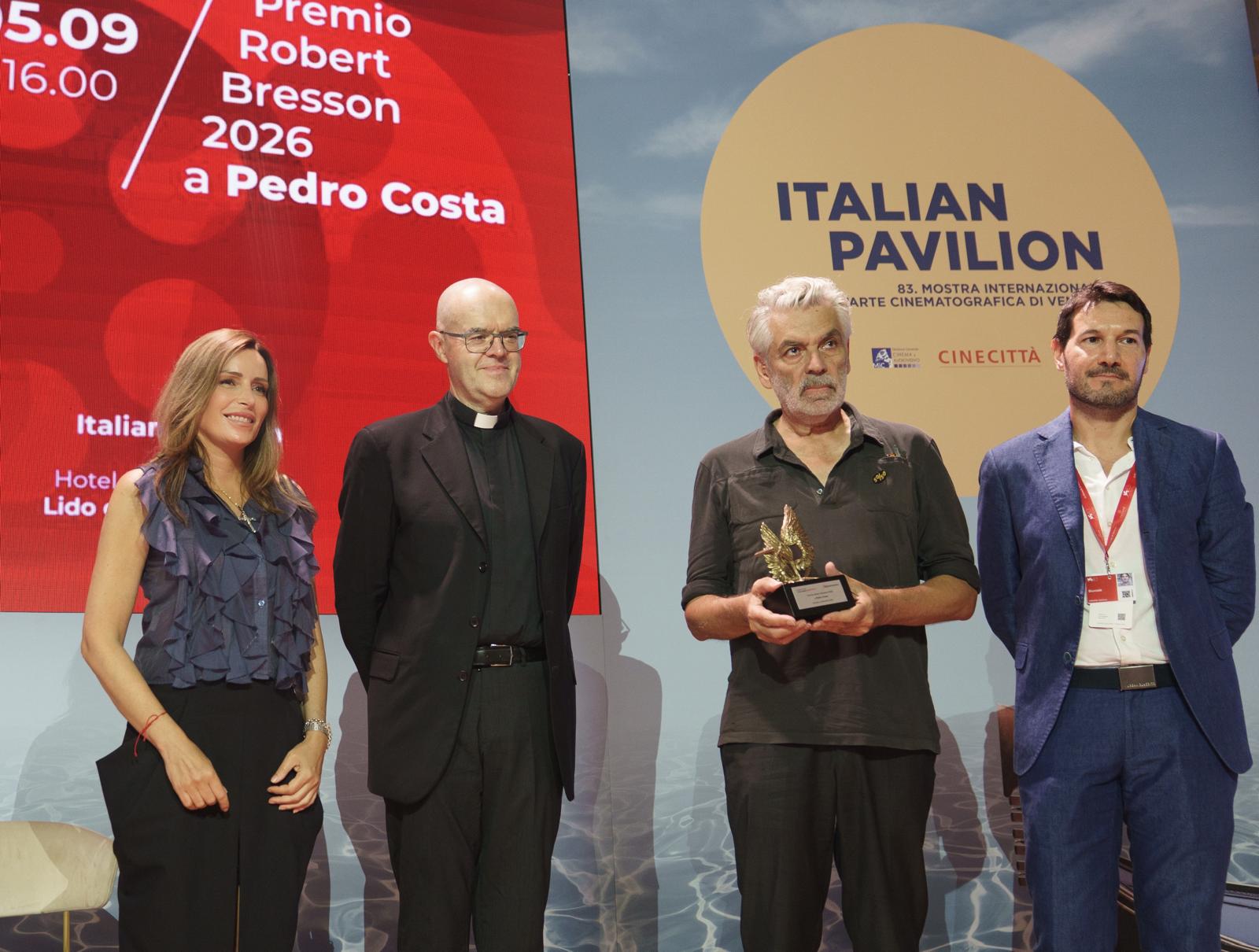
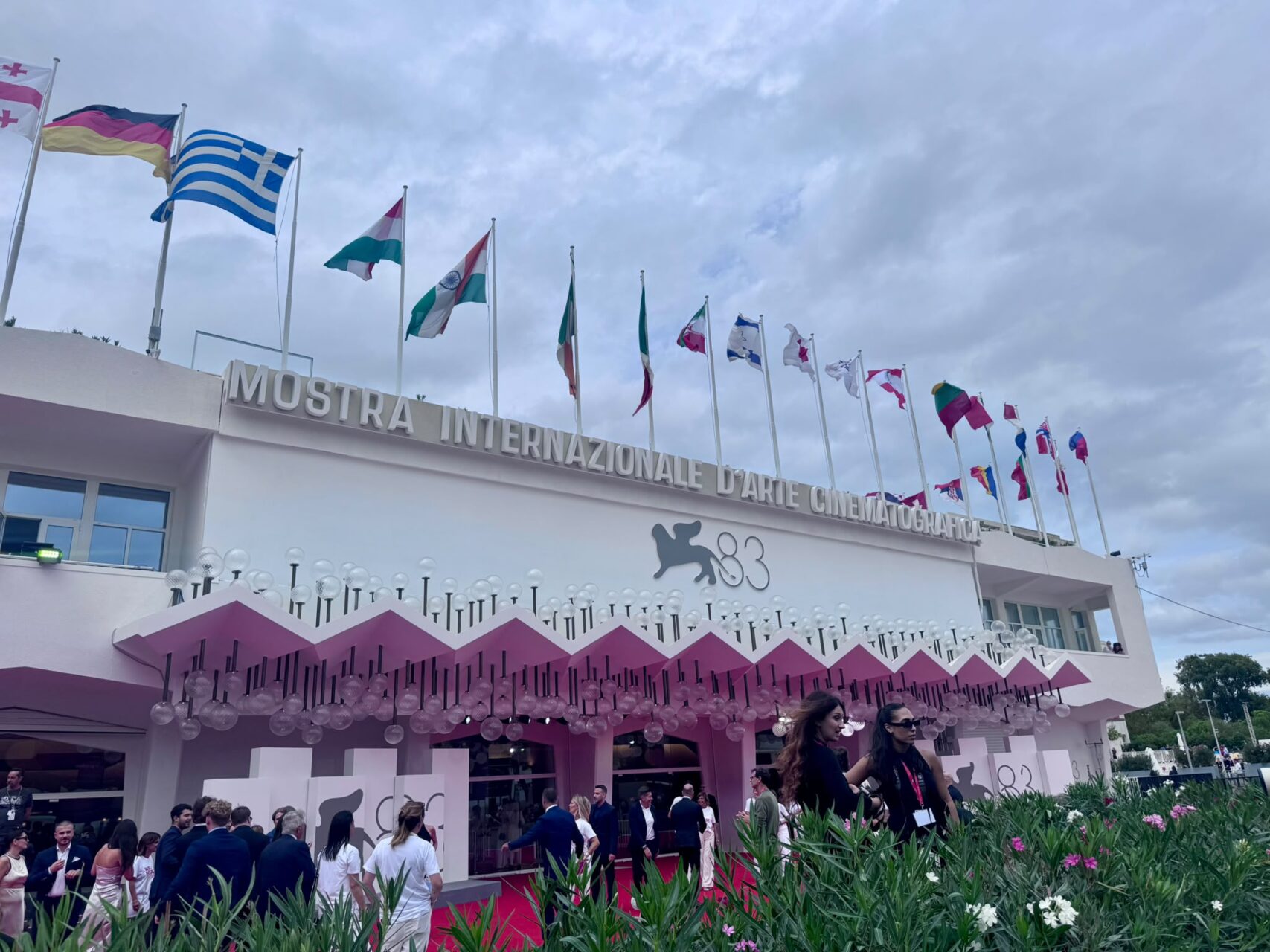
The ceremony was opened by the festival director, Alberto Barbera, who noted that Pedro Costa is “a champion of ambitious, uncompromising cinema, a filmmaker whose works delve into a higher dimension of our existence and help us grapple with issues that go beyond cinema itself.” In Costa’s films, which are rooted in the margins of society—particularly through the stories of the residents of Lisbon’s poor neighborhoods—reality is neither sugarcoated nor made more accessible to the viewer. It is precisely this perspective that the Bresson Prize sought to honor. The citation paints a portrait of a director who, over more than thirty years of work, “has stripped cinema of everything superfluous: lighting, tracking shots, music, acting. He has inherited Robert Bresson’s ethical rigor and transformed it into a lesson in humanity within the dark homes of a demolished neighborhood, among the men and women forgotten by history.” Yet his cinema does not console or redeem. His focus is on time, the face, and the light that survives the shadow. His legacy to the marginalized: a form. And to us, an uncompromising testimony to that search for the spiritual meaning of life that the Award recognizes.” Monsignor Davide Milani, president of the Fondazione Ente dello Spettacolo, explained the significance of the award. “Often, when awarding prizes, there is a misunderstanding about who bestows prestige upon whom,” he observed. “The Bible reminds us that ‘iron sharpens iron, and friendship is sharpened by the gaze of the other.’ Indeed, the gaze of the Ente dello Spettacolo is sharpened the moment it rests upon the cinema of Pedro Costa.”
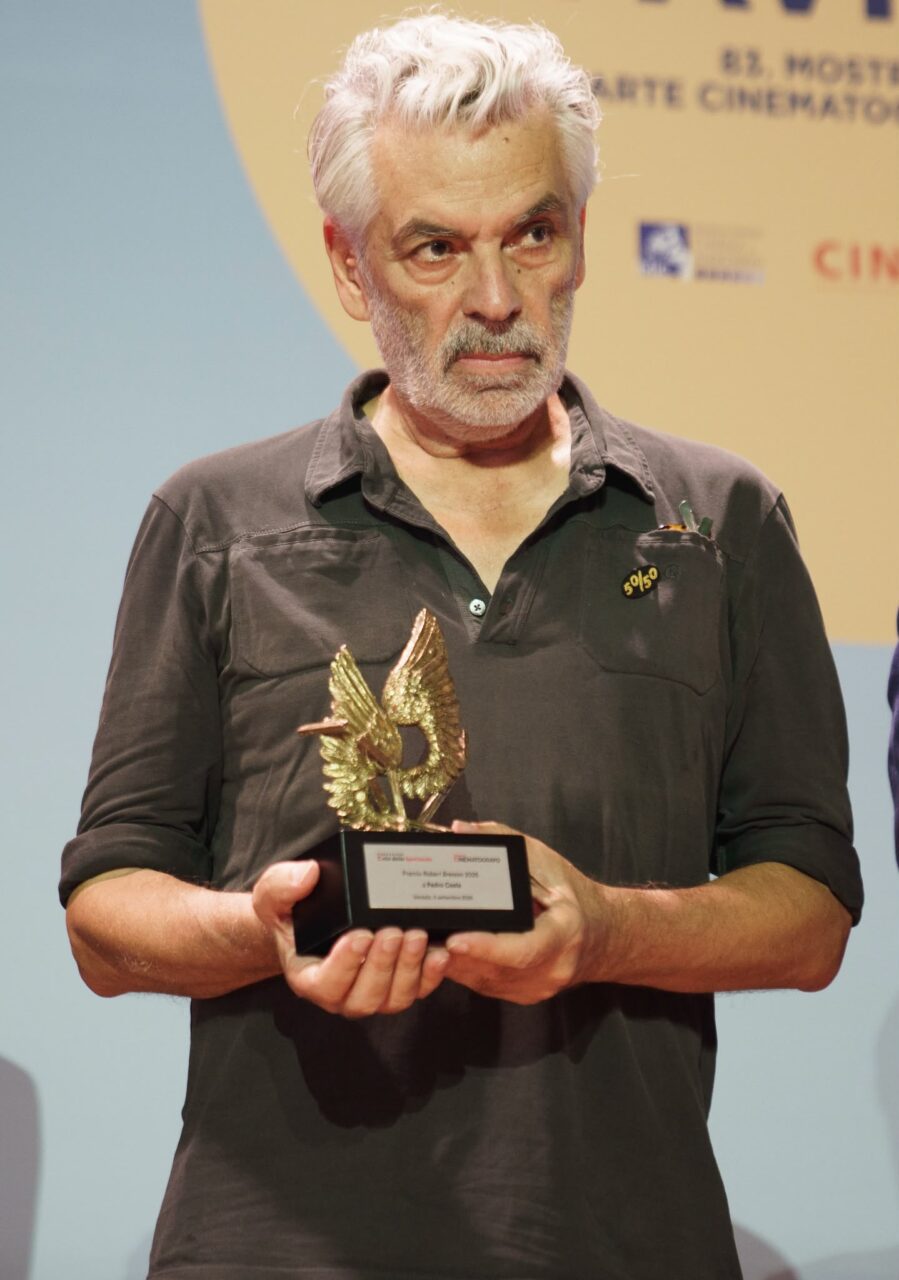
The Portuguese director accepted the award by emphasizing his vision of cinema, which seems to respond almost directly to the award’s rationale: “The calling of cinema has always been this: to try to understand something mysterious about human beings and the world through image and sound.” Costa, however, did not shy away from his most radical conception of the seventh art. On the contrary, he reaffirmed it in no uncertain terms: “Cinema isn’t simply about putting together a crew and touring the film festivals. Cinema is the art of rebellion.” A rebellion that, for the director, means first and foremost refusing to look the other way: “When it stops confronting reality, or refuses to see it, it is no longer cinema; it ceases to exist.” This recognition comes at a particularly significant moment in Costa’s career. In Venice, the director looked back on his filmography and outlined the contours of his next, long-awaited musical feature film, which grew out of the short film *As filhas do fogo*. Once again, then, a cinema that chooses to remain on the margins, to slow down the gaze, and to make room for what normally risks going unseen. It is perhaps precisely in this choice not to simplify reality that Pedro Costa’s cinema most deeply connects with the legacy of Robert Bresson and the spirit of an award that, for 27 editions, has sought—through cinema—a trace of the spiritual meaning of life.