
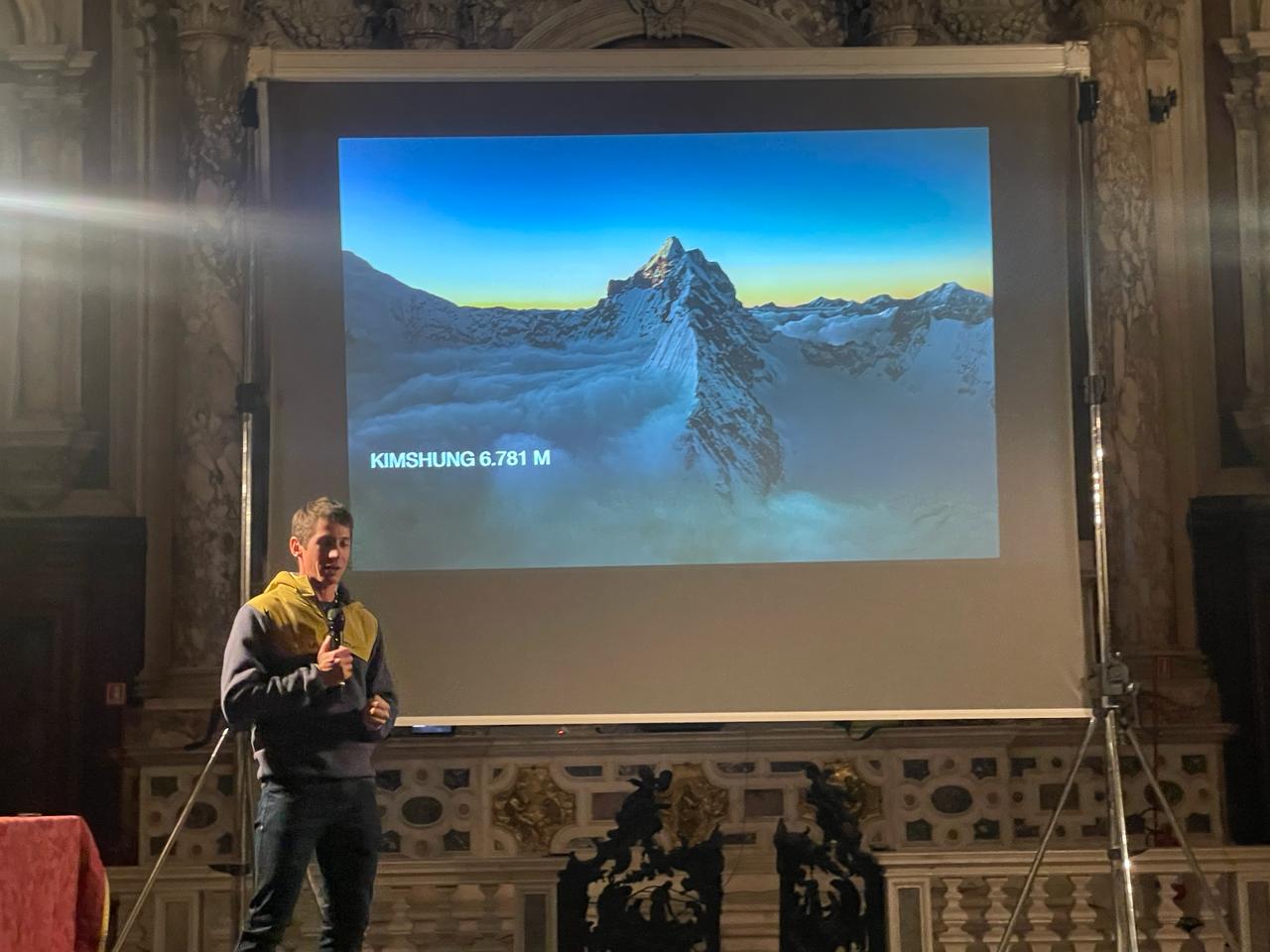
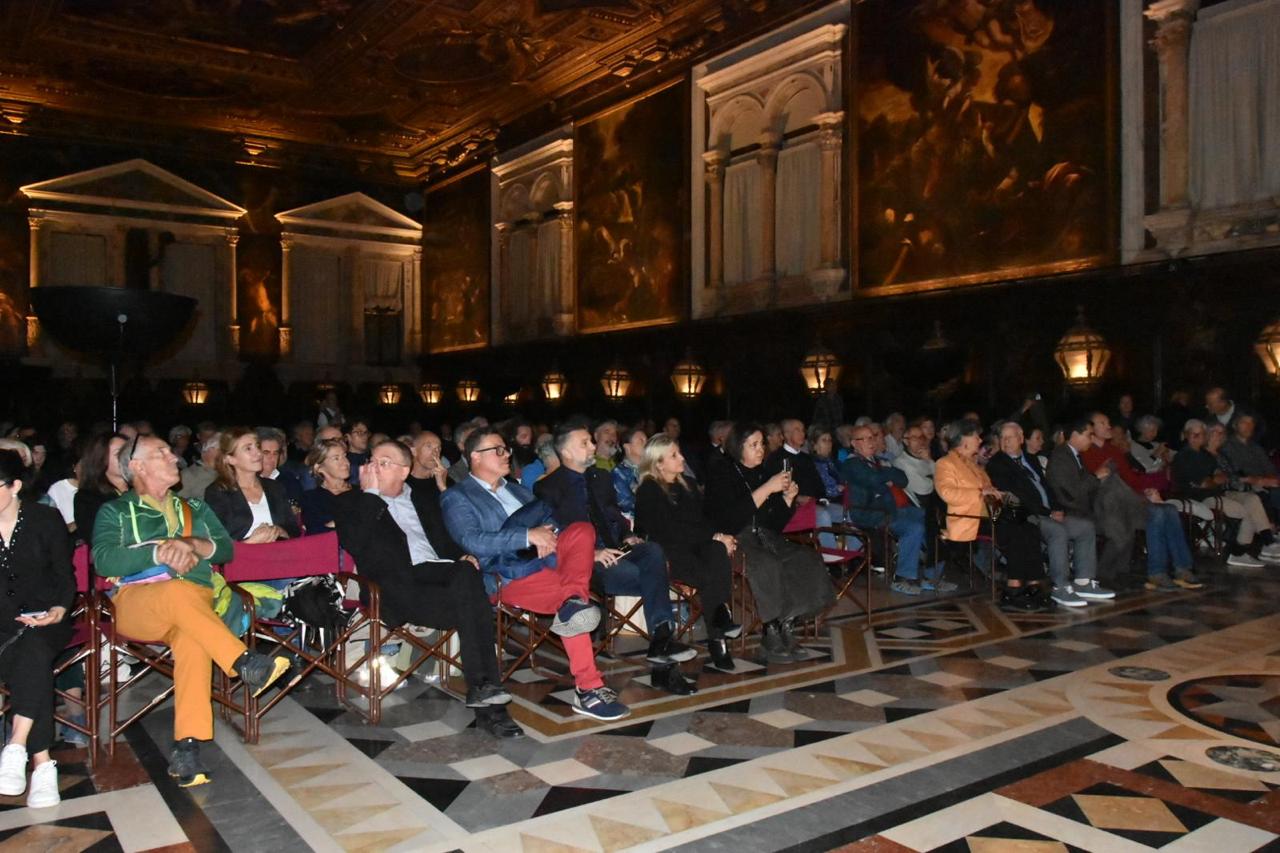
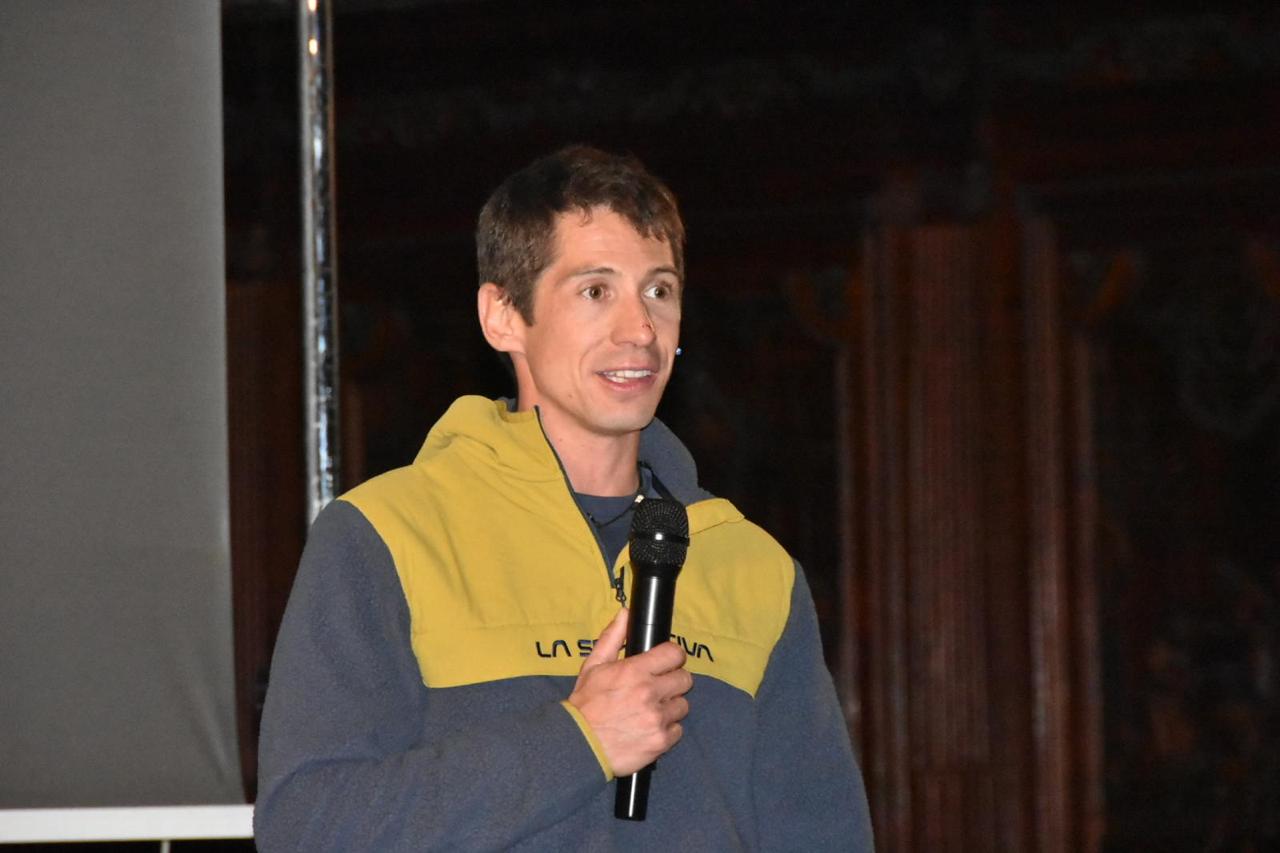
During the evening, Cazzanelli drew the attention of the more than 200 people present upwards, but this time not to admire Tintoretto’s masterpieces. His, in fact, is not A form of mountaineering that isn’t just about grades and elevation gains: ‘For me, what really matters are the stories,’ he says.
As he pointed out the vertical rock faces he had tackled, he recounted his most memorable feat, one he had dreamt of for a full ten years: the ascent of the unclimbed summit of Kimshung at 6,781 metres, in the Himalayan range between Nepal and Tibet.
It was 24 April 2015 when, whilst he was flying with his colleague Gianpaolo Corona, Nepal was devastated by a major earthquake which caused thousands of deaths: ‘We arrived in a devastated Kathmandu. Immediately We were called upon by the Italian Embassy to provide assistance in the “Langtang, a valley off the beaten track where we were due to go on our expedition, was the area hardest hit by the earthquake,” he says, adding that they vowed to return the following year, not just to achieve this feat but to help get the valley back on its feet. In fact, following the earthquake, Cazzanelli, together with other colleagues, set up the the Sanonani project, which runs an orphanage on the outskirts of Kathmandu.
He returned with Corona in the autumn of 2016, but they had to turn back about 200 metres from the summit because of the strong wind: ‘At the time, we thought we’d achieved something incredible, that we’d conquered the mountain. We hadn’t understood a thing; we were light years away from our goal.’
Carried away by their enthusiasm, they extended their stay and, shortly afterwards, attempted the climb again. However, halfway up the face, A shower of rocks struck François’s right arm, and he underwent emergency surgery in Kathmandu: “I’m alive thanks to Gianpaolo, who helped me descend 18 pitches; luckily, we already had the anchors in place from our previous attempt.”
A risk that, however, taught him a valuable lesson: ‘At that moment We could only see our destination. We hadn’t realised that the mountain had changed 'because of the strong wind, which had dried out the snow and ice'.
Cazzanelli wanted nothing more to do with that peak, until, in 2022, Corona asked him to attempt the climb again once their respective expeditions were over: Cazzanelli set off for K2 and Corona for Annapurna, where, however, he had an accident that left him unable to climb any further, so much so that he asked François to see the Himalayan project through to completion on his behalf as well.
So François began asking members of various climbing parties to join him: in 2024, eight of them set off on the expedition, including his friend Giuseppe Vidoni: “The first attempt was cut short by bad weather and the second by an SOS from a nearby climbing party, whom we immediately set out to help,” recalls the guide from the Aosta Valley.
On his return to Italy, he decided not to give up on the project, and continued to train in the mountains near his home. Con Vidoni He opened a route on the east face of the Peuterey Ridge on Mont Blanc: ‘It is a A mountain little known to mountaineers; only collectors go there. Giuseppe and I We wanted to do it quickly in a single day because we wanted to climb with the same aim we’d had in the Himalayas. ‘Once we reached the summit, we realised that we could fulfil our dream of climbing Kimshung.’
Cazzanelli, who usually enjoys sharing the mountains with others, decided whilst preparing for the expedition to Kimshung in mid-July 2025 to undertake a solo trek linking all the south-facing ridges of the Monte Rosa massif: ‘I covered more than 30 km with 6,000 metres of elevation gain, almost all of it above 4,000 metres. What interested me was testing myself’, this sort of effort could come in handy for the Himalayas. – he adds – My aim was to do it in 12 hours, and it took me 11.’
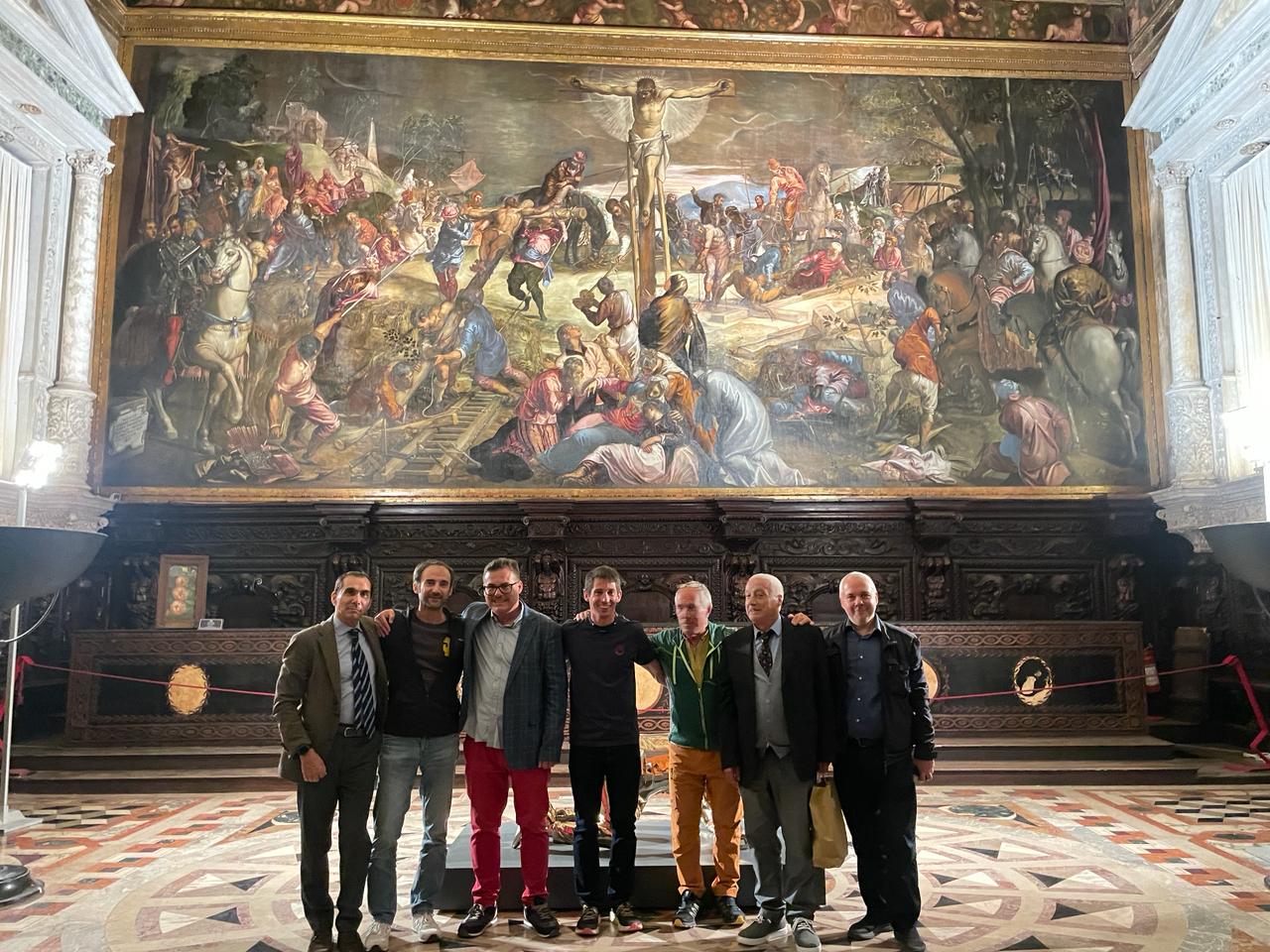
And so, exactly a year ago, Cazzanelli set off once more for Kimshung: ‘Setting out from the vast, lush forests, we reached base camp and spent a month getting to know the mountain’, waiting for the time to be right to attempt to climb the peak I’d been chasing for 10 years,” says Cazzanelli. “We broke trail across pristine glaciers and sought our own route through a labyrinth of crevasses. Upon reaching the highest point we’d reached in 2024, we realised we’d never been so close to our great dream. Having entered the upper reaches of the mountain, on the final 200-metre slope that would lead to the summit, The mountains around us were getting smaller and the sheer verticality was beginning to overwhelm us. - and continues - Once we reached the summit of Kimshung The best part, however, wasn’t reaching the summit, but the chance to share the experience with friends'. The new route, opened together with Vidoni and two French mountaineers, Lukas Waldner and Benjamin Zörer, whom they met along the way, named it ‘Destiny’, in honour of all the stories that have intertwined over the past 10 years in the pursuit of the summit, and their feat is recounted in the film ‘La montagna del destino’ (The Mountain of Destiny), directed by filmmaker Damiano Levati.
‘It’s the climb that has moved and challenged me the most so far in my whole life’. Once again, the mountains have taught us that ‘To achieve a dream, what really matters is the journey to get there,’ continues Cazzanelli, noting that mountaineers still have a great thirst for adventure and for testing themselves against the unknown.
That is precisely why, to prepare for the ascent of Gasherbrum in Pakistan, he also opened a new route on the north-east face of the Eastern Breithorn – a mountain near his home – in April.
The Breithorn is climbed regularly all year round, but few mountaineers have ventured onto its highly mysterious north face, where mixed climbing reigns supreme: ‘Mixed climbing is the fairest and most comprehensive way to tackle the mountain’. ‘Along the same stretch of rope, you’ll encounter sections of ice, snow and rock that you’ll have to climb with your bare hands in the cold.’
She called the route ‘In Search of the Dragon’: “Reinhold Messner said years ago that ‘the dragon is dead’ and that the end of adventure would destroy rock climbing,” explains Cazzanelli. “This route is a tribute to this dragon, which is in fact in the prime of life, ‘There’s still so much to discover in the mountains.’
The evening concluded with an awards ceremony for the participants in the expedition to the Atlas Mountains in Morocco, which took members of the Giovane Montagna club in Venice to the summit of Toubkal, the highest peak in the range; several young people took part: ‘The branch has undergone a revival in recent times’. - h"As President Tita Piasentini said – Although the number of members has remained stable, 'Over the past year, around ten new recruits aged between 25 and 40 have ensured a natural generational change.'