

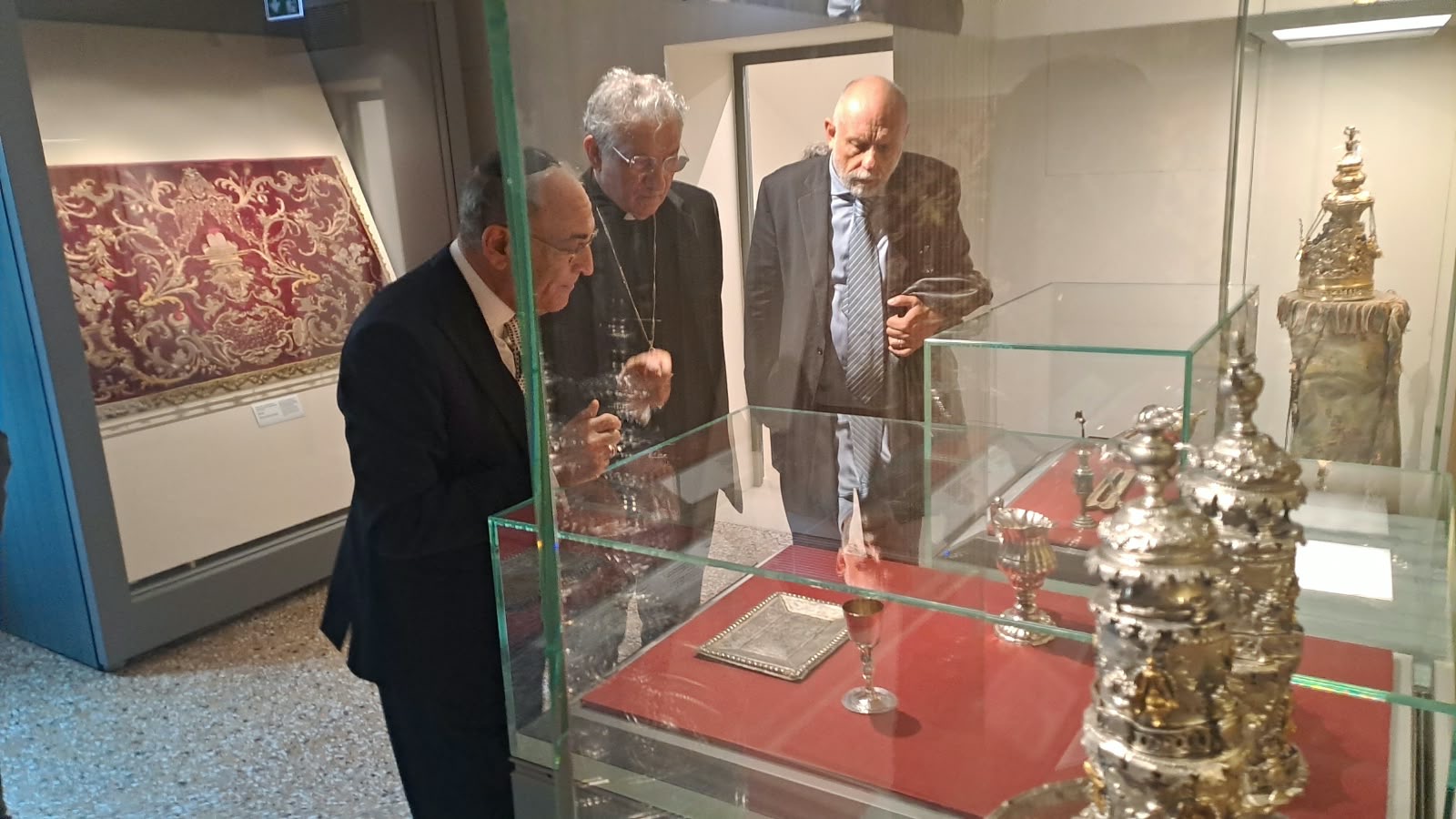
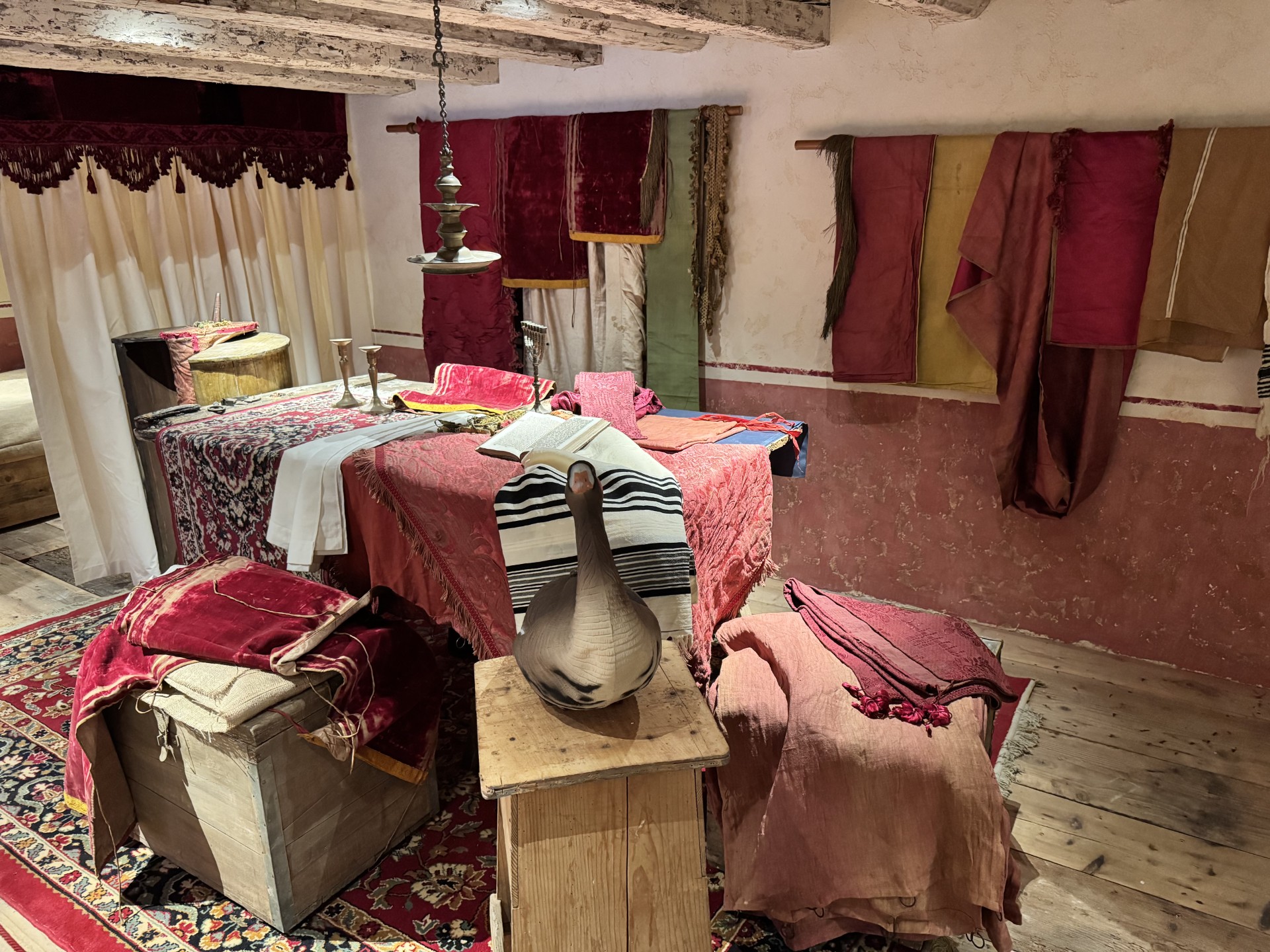
A new museum itinerary that goes beyond the religious dimension to also illustrate what daily life was like in the Ghetto. Among other things, an entire section is dedicated to the reconstruction of a typical Jewish home: a cramped space, limited in size and with a very low ceiling, designed to convey the living conditions of the past. Multimedia installations and immersive content guide visitors—even the youngest ones—through an engaging narrative. One example is the room where children can immerse themselves in the story through play, with the tale of Noah in a gondola and a puppet theater. Or the Sukkah of the Scola Canton, furnished with simple furnishings and adorned each year for Sukkot with plant decorations designed to recreate the ceiling. A hut that evokes the precariousness of human existence—used in this context until the late 19th century—now features an interactive table at its center where visitors can select the various seasons of the year to learn about the corresponding Jewish holidays. Inside the museum, the journey continues along three threads: Jewish institutions and the relationships between their representatives and the Venetian Republic; daily life and permitted trades; and the rituals and construction of the three Renaissance synagogues, which have now also been restored to their former splendor. Thus, in addition to a chronological timeline displayed on a large LED screen, there is a space commemorating the Diaspora—represented by a pile of suitcases—and the activities associated with the so-called pawnshops. “Although anti-Semitism was very strong in the city, Jews were considered essential here for several reasons,” explained Landau. First of all, because they had access to large sums of money thanks to their friendships and family ties with Jewish bankers throughout Europe. Venice was constantly at war, and the doge would ask them for loans, threatening to expel them from the Ghetto if they failed to come up with the necessary ducats. And so it went on until 1797. The other reason is linked to the friendly relationship the Jews had with the Ottomans. The only people allowed to leave the Ghetto in the evening, when the gates were closed, were doctors: by the end of the sixteenth century, they had obtained permission to no longer have to wear a yellow head covering.”
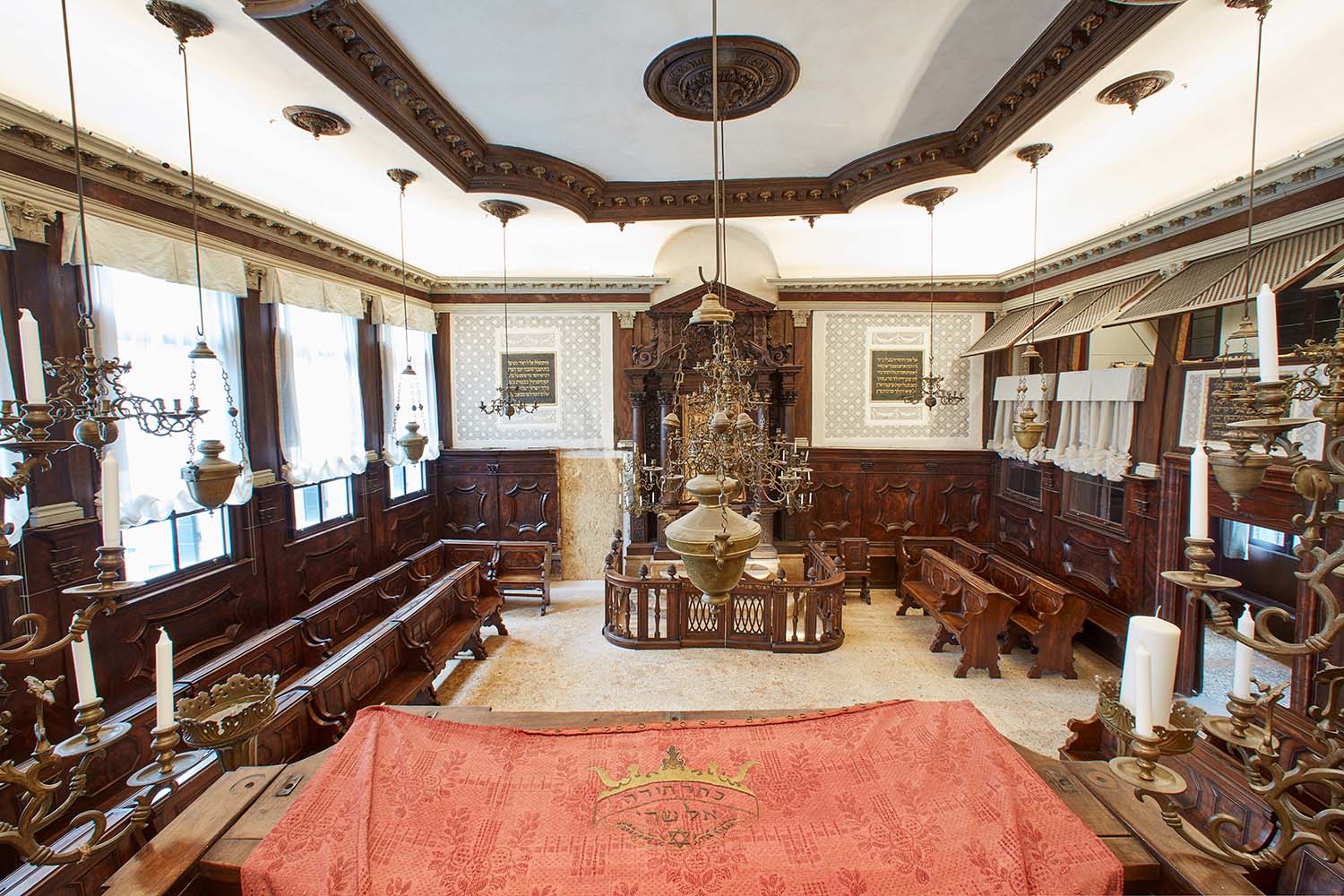
Toward the end of the tour, there is a room dedicated to a more recent period, which refers to the era of emancipation—a term used to describe the integration of Jews into Venetian society—and features several donations from members of the community as well as objects that belonged to the Ravà family. A separate section should be devoted to the significant conservation restoration of the three synagogues. As for the Scola Tedesca, the faux-marble walls were cleaned (since Jews were not permitted to handle precious materials) and the structural elements were repaired, with the pulpit moved to the center. “We restored the early 18th-century ceiling, which bears traces of the earlier one,” explained Landau. In the Canton Synagogue—redecorated in the 18th century, though the structure remained original—work was carried out on the wooden surfaces, gilding, hangings, and floor. Here, one can see the image of a hand grasping a sword, a rare decorative exception among historic synagogues, given that Jewish tradition prohibits the depiction of people. “During the work, an inscription was also discovered that attests to the date of construction of this synagogue.” Finally, there is the Scola Italiana, with its wood restored to its former glory and the original flooring recovered—which, according to legend, is inhabited… by a ghost. “Jews were not allowed to perform any practical tasks, so they had to rely on local artisans. That’s why the carvings resemble those found in churches.”
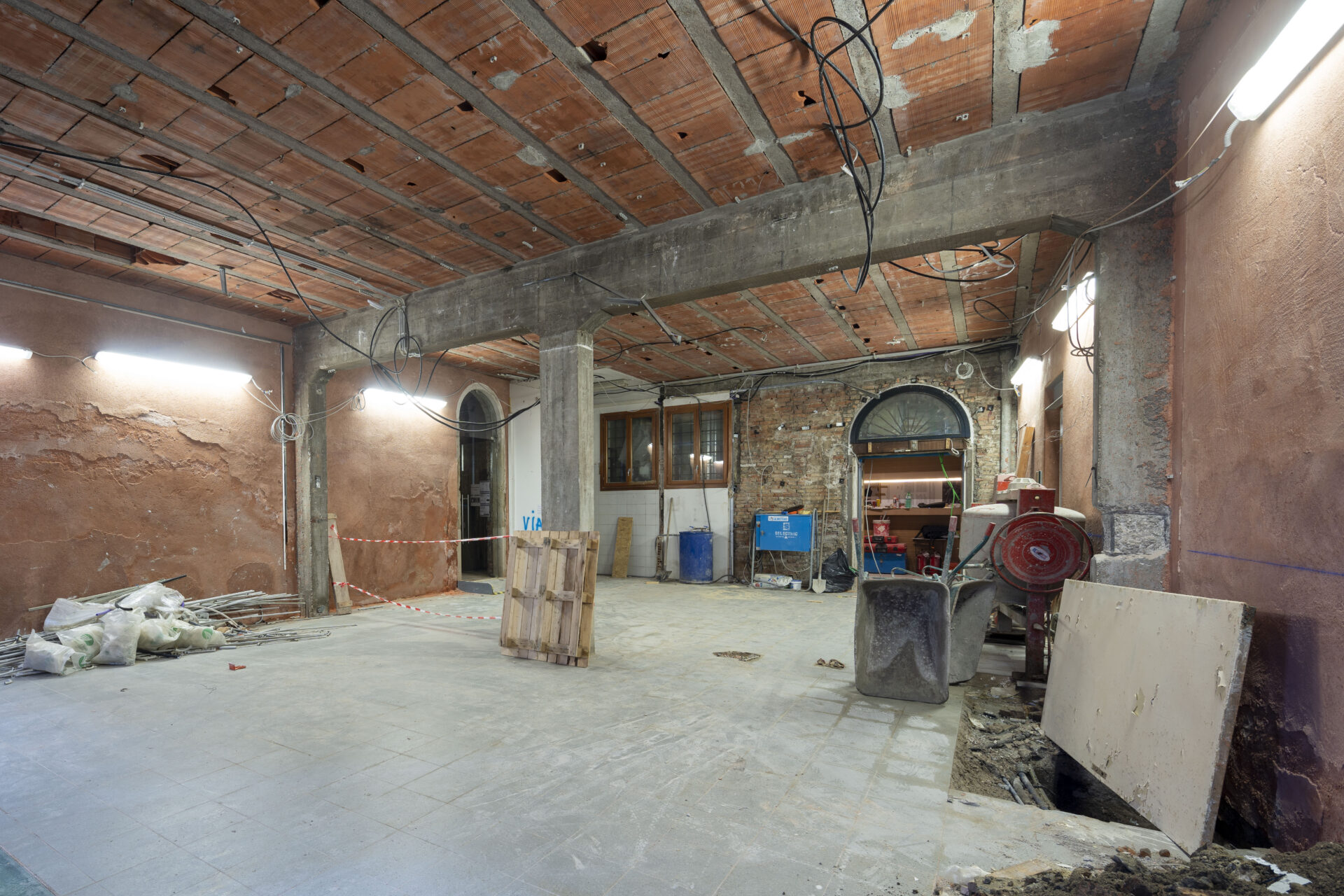
Beginning in November 2020, the overall work was carried out by a consortium led by Lares, along with Costruzioni e Restauri G. Salmstrari and Fiel, under the supervision of the Superintendency. All of this was done in close collaboration with the architectural firm “Ampl Pedron - La Tegola.” The exhibition design, meanwhile, was entrusted to Magni & Guicciardini of Florence. The new museum will be managed by Opera Laboratori, an Italian cultural organization specializing in the management, promotion, and conservation of artistic, historical, and museum heritage. Visits will be available from 10 a.m. to 3:30 p.m.; full-price tickets cost 18 euros, reduced-price tickets 14 euros, while Venice residents will pay 11 euros. As noted by Opera Laboratori, educational group experiences for families and schools will also be offered to those interested. Additionally, events open to the public will be organized at the museum on an ongoing basis. This new project stems from the desire to restore unity and centrality to a unique complex, with the synagogues in the Ghetto Novo integrated into the tour without losing their identity as places of worship. All of them engage in dialogue with one another, including the two located in the Ghetto Vecchio: the Levantine Synagogue and the Spanish Synagogue. “The goal,” says Paolo Navarro Dina, vice president of the Venetian Jewish Community, “is to give everyone the opportunity to learn about our history and traditions, to gain a deeper understanding of Judaism as a whole. This is particularly important at this difficult time, given what is happening in the world.”