

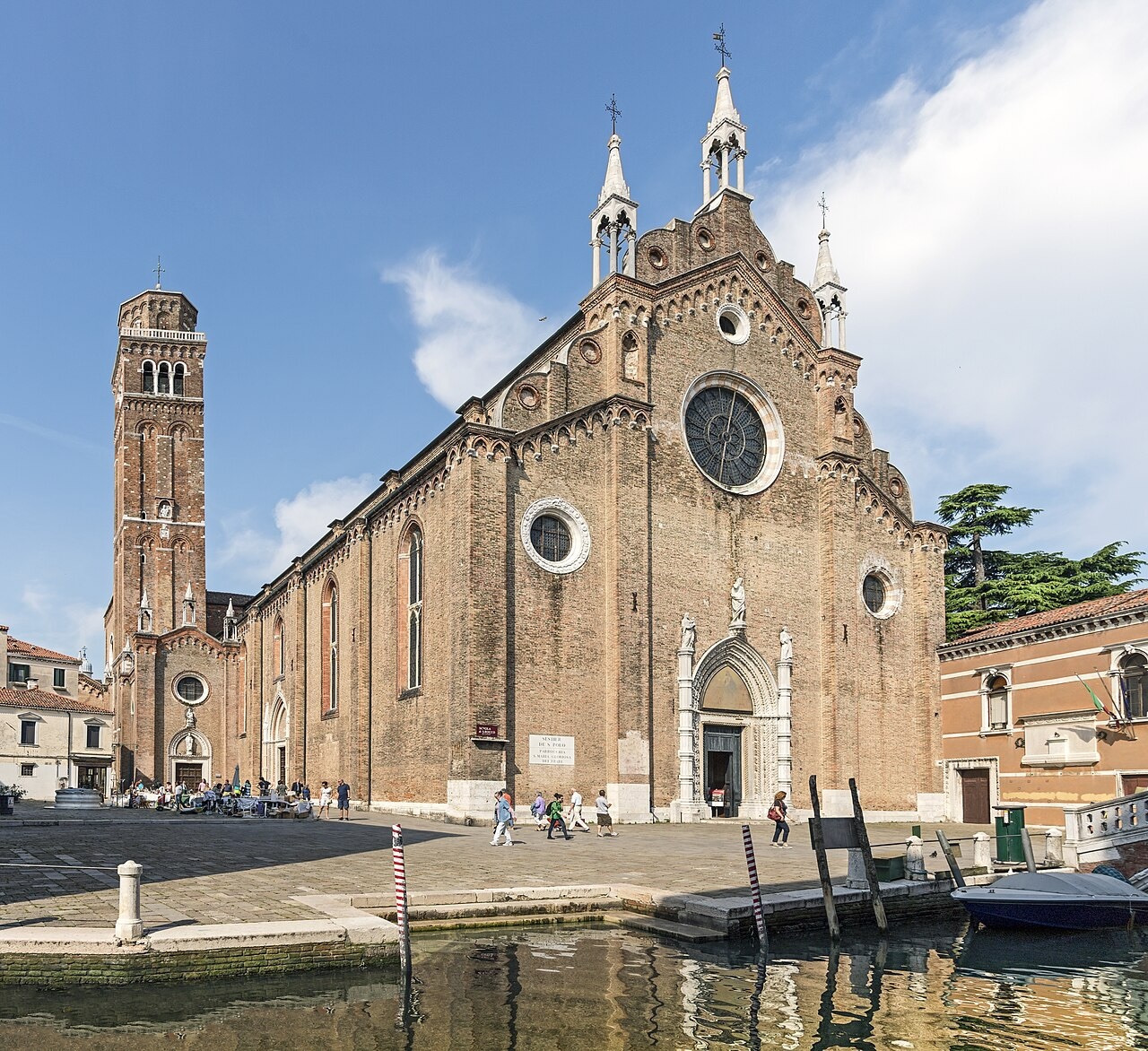
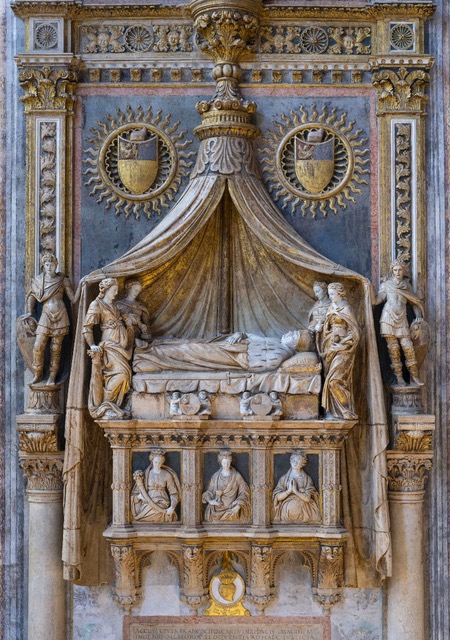
The intervention presented the restorers with a particularly complex conservation challenge on a total surface area of over 100 square meters. The intervention in fact focused both on the sculptural structure in Istrian stone and on the extensive pictorial decoration on the wall. «It was a demanding restoration that we completed quite quickly, thanks also to the greater number of workers who worked consistently» explains Melissa Conn, director of the Venice office of Save Venice. The stone surfaces were severely altered and obscured by significant deposits of dirt and the old layers of wax that had been deposited over the years: «The stone, now grey, was full of dust and it seems that no cleaning had been done since the beginning of the 1980s ‘1980s», says Melissa Conn. The bases were also affected by humidity and salt rise phenomena: «However, this was not the main problem. In fact, the work did not have any detachments» Conn said, explaining that in any case it was necessary to make sure that there were no parts to be secured to avoid possible collapses.
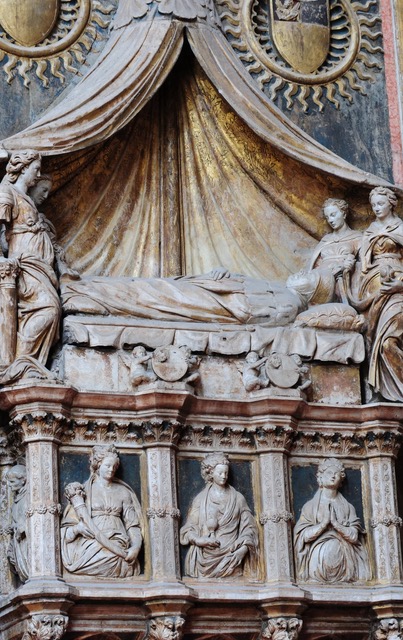
The most significant was the recovery on Istrian stone of the surviving gilding and polychromes, including azurite, cinnabar, and white lead spreads in the flesh tones, which showed widespread lifting, flaking, and adhesion problems. «It was determined that the sculptures had been painted, particularly on the white lead faces and red lips. - Conn explains - We have confirmed that it was once typical to paint statues. A usage already known in ancient Greece that was later lost in 1500. In fact, today we have a hard time imagining polychrome statues» Conn continues, saying that the polychromy has been recovered as much as possible without however making any pictorial integration.
«From below you can see the white faces but not the red lips. All the details that cannot be gleaned from the ground will be published in an upcoming volume published by Lineadacqua, thanks to the support of Ferigo, Claudia and Alvise Foscari Widmann Rezzonico, through the Save Venice Foundation - ETS. In the volume, with photos by Matteo De Fina, leading scholars will analyze the success and conservation events of his funerary monument, also rereading the figure and history of Francesco Foscari, including the notorious scandal of his son who was exiled from Venice. The most complex part of the project consisted of the recovery of the surrounding frescoes, which Egidio Arlango and his collaborators also carried out. Years earlier, the restorer had also worked on the marble frame of Titian's “Pala dell'Assunta”. «It took a long time to clean the frescoes, which were so dirty, and then integrate the missing color to provide a uniform reading for those looking from below» Conn emphasized. In fact, the frescoes were compromised by humidity, the presence of soluble salts, plaster detachments and surface deposits. Furthermore, there was a complex stratification of renovations, stucco work and reconstructions carried out over the centuries: «The frescoes are mainly from the ‘400s but a part dates back to modifications and adjustments from later periods»
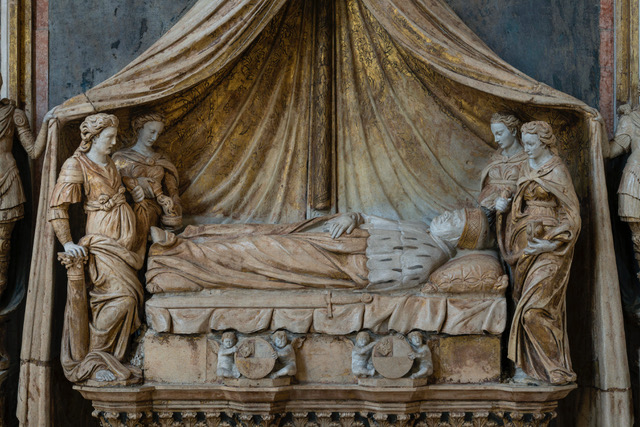
The restoration as a whole, while fully respecting the work's layered history, made it possible to secure all the very fragile materials and thoroughly clean their surfaces, restoring full legibility and luminosity to the sculptures, gilding, polychromes, and frescoes. «Save Venice's commitment to the Frari family is now decades old," said Frederick Ilchman, Chairman of Save Venice. "The restoration of the Monument to Francesco Foscari continues this commitment, restoring clarity and chromatic vivacity to a work in which the history, ambition, and memory of the Republic are carved into the very fabric of the church."»
Save Venice's work at Frari continues. After the restoration over the years of very important works such as Titian's “Altarpiece of the Assumption” and “Pesaro Altarpiece” and Donatello's Saint John the Baptist, the interventions now continue on Giovanni Bellini's “Triptych of the Frari” on the altar of the sacristy, which is being handled by the restorer Giulio Bono in the laboratory set up in the Chapter House. Recently started, the intervention will last about two years: «The frame is full of holes due to woodworms, it needs to be consolidated and the structure returned».
The restoration of the altar of San Giuseppe da Copertino and the three stucco sculptures by Alessandro Vittoria, which were originally part of a previous altar, should begin this spring with the Arlango company: «The sculptures are falling apart. We will try to save the altar» Conn concludes. Furthermore, on October 31st, at 5pm, The Blessing of the Transfiguration of Titian will be held in the Church of San Salvador. After restoration, it returns to the high altar, with the Solemn Pontifical Mass presided over by Cardinal Angelo Bagnasco. While the work on the Chapel of Sant'Anna and the work on the painting “Conversion of San Pantalon” by Paolo Veronese are about to conclude in the church of San Pantalon.
Francesca Catalano